P28647
Gene name |
Adora3 |
Protein name |
Adenosine receptor A3 |
Names |
TGPCR1 |
Species |
Rattus norvegicus (Rat) |
KEGG Pathway |
rno:100911796 |
EC number |
|
Protein Class |
|
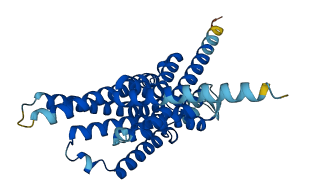
Descriptions
The autoinhibited protein was predicted that may have potential autoinhibitory elements via cis-regPred.
Autoinhibitory domains (AIDs)
Target domain |
|
Relief mechanism |
|
Assay |
cis-regPred |
Accessory elements
No accessory elements
Autoinhibited structure

Activated structure
1 structures for P28647
| Entry ID | Method | Resolution | Chain | Position | Source |
|---|---|---|---|---|---|
| AF-P28647-F1 | Predicted | AlphaFoldDB |
No variants for P28647
| Variant ID(s) | Position | Change | Description | Diseaes Association | Provenance |
|---|---|---|---|---|---|
| No variants for P28647 | |||||
No associated diseases with P28647
1 regional properties for P28647
| Type | Name | Position | InterPro Accession |
|---|---|---|---|
| domain | GPCR, rhodopsin-like, 7TM | 31 - 284 | IPR017452 |
6 GO annotations of cellular component
| Name | Definition |
|---|---|
| integral component of plasma membrane | The component of the plasma membrane consisting of the gene products and protein complexes having at least some part of their peptide sequence embedded in the hydrophobic region of the membrane. |
| neuromuscular junction | The junction between the axon of a motor neuron and a muscle fiber. In response to the arrival of action potentials, the presynaptic button releases molecules of neurotransmitters into the synaptic cleft. These diffuse across the cleft and transmit the signal to the postsynaptic membrane of the muscle fiber, leading to a change in post-synaptic potential. |
| plasma membrane | The membrane surrounding a cell that separates the cell from its external environment. It consists of a phospholipid bilayer and associated proteins. |
| presynaptic membrane | A specialized area of membrane of the axon terminal that faces the plasma membrane of the neuron or muscle fiber with which the axon terminal establishes a synaptic junction; many synaptic junctions exhibit structural presynaptic characteristics, such as conical, electron-dense internal protrusions, that distinguish it from the remainder of the axon plasma membrane. |
| Schaffer collateral - CA1 synapse | A synapse between the Schaffer collateral axon of a CA3 pyramidal cell and a CA1 pyramidal cell. |
| synapse | The junction between an axon of one neuron and a dendrite of another neuron, a muscle fiber or a glial cell. As the axon approaches the synapse it enlarges into a specialized structure, the presynaptic terminal bouton, which contains mitochondria and synaptic vesicles. At the tip of the terminal bouton is the presynaptic membrane; facing it, and separated from it by a minute cleft (the synaptic cleft) is a specialized area of membrane on the receiving cell, known as the postsynaptic membrane. In response to the arrival of nerve impulses, the presynaptic terminal bouton secretes molecules of neurotransmitters into the synaptic cleft. These diffuse across the cleft and transmit the signal to the postsynaptic membrane. |
2 GO annotations of molecular function
| Name | Definition |
|---|---|
| G protein-coupled adenosine receptor activity | Combining with adenosine and transmitting the signal across the membrane by activating an associated G-protein; promotes the exchange of GDP for GTP on the alpha subunit of a heterotrimeric G-protein complex. |
| G protein-coupled receptor activity | Combining with an extracellular signal and transmitting the signal across the membrane by activating an associated G-protein; promotes the exchange of GDP for GTP on the alpha subunit of a heterotrimeric G-protein complex. |
18 GO annotations of biological process
| Name | Definition |
|---|---|
| calcium-mediated signaling | Any intracellular signal transduction in which the signal is passed on within the cell via calcium ions. |
| G protein-coupled adenosine receptor signaling pathway | The series of molecular signals generated as a consequence of a receptor binding to extracellular adenosine and transmitting the signal to a heterotrimeric G-protein complex to initiate a change in cell activity. |
| G protein-coupled receptor signaling pathway | The series of molecular signals initiated by a ligand binding to its receptor, in which the activated receptor promotes the exchange of GDP for GTP on the alpha-subunit of an associated heterotrimeric G-protein complex. The GTP-bound activated alpha-G-protein then dissociates from the beta- and gamma-subunits to further transmit the signal within the cell. The pathway begins with receptor-ligand interaction, and ends with regulation of a downstream cellular process. The pathway can start from the plasma membrane, Golgi or nuclear membrane. |
| histamine secretion by mast cell | The regulated release of histamine by a mast cell or group of mast cells. |
| mast cell degranulation | The regulated exocytosis of secretory granules containing preformed mediators such as histamine, serotonin, and neutral proteases by a mast cell. |
| mucus secretion | The regulated release of mucus by the mucosa. Mucus is a viscous slimy secretion consisting of mucins and various inorganic salts dissolved in water, with suspended epithelial cells and leukocytes. The mucosa, or mucous membrane, is the membrane covered with epithelium that lines the tubular organs of the body. Mucins are carbohydrate-rich glycoproteins that have a lubricating and protective function. |
| negative regulation of cell migration | Any process that stops, prevents, or reduces the frequency, rate or extent of cell migration. |
| negative regulation of cell population proliferation | Any process that stops, prevents or reduces the rate or extent of cell proliferation. |
| negative regulation of NF-kappaB transcription factor activity | Any process that stops, prevents, or reduces the frequency, rate or extent of the activity of the transcription factor NF-kappaB. |
| phosphatidylinositol 3-kinase signaling | A series of reactions within the signal-receiving cell, mediated by the intracellular phosphatidylinositol 3-kinase (PI3K). Many cell surface receptor linked signaling pathways signal through PI3K to regulate numerous cellular functions. |
| positive regulation of calcium-mediated signaling | Any process that activates or increases the frequency, rate or extent of calcium-mediated signaling. |
| positive regulation of inflammatory response | Any process that activates or increases the frequency, rate or extent of the inflammatory response. |
| positive regulation of leukocyte migration | Any process that activates or increases the frequency, rate, or extent of leukocyte migration. |
| positive regulation of mast cell degranulation | Any process that activates or increases the frequency, rate or extent of mast cell degranulation. |
| positive regulation of mucus secretion | Any process that activates or increases the frequency, rate or extent of the regulated release of mucus from a cell or a tissue. |
| positive regulation of phosphatidylinositol 3-kinase signaling | Any process that activates or increases the frequency, rate or extent of signal transduction mediated by the phosphatidylinositol 3-kinase cascade. |
| regulation of norepinephrine secretion | Any process that modulates the frequency, rate or extent of the regulated release of norepinephrine. |
| regulation of synaptic vesicle exocytosis | Any process that modulates the frequency, rate or extent of synaptic vesicle exocytosis. |
121 homologous proteins in AiPD
| UniProt AC | Gene Name | Protein Name | Species | Evidence Code |
|---|---|---|---|---|
| Q2YDN1 | GPR161 | G protein-coupled receptor 161 | Bos taurus (Bovine) | PR |
| Q0GBZ5 | HCRTR1 | Orexin/Hypocretin receptor type 1 | Bos taurus (Bovine) | PR |
| Q17QD8 | GPR37L1 | G-protein coupled receptor 37-like 1 | Bos taurus (Bovine) | PR |
| Q8SPN1 | PROKR2 | Prokineticin receptor 2 | Bos taurus (Bovine) | PR |
| P46626 | ADRB3 | Beta-3 adrenergic receptor | Bos taurus (Bovine) | PR |
| O46639 | TRHR | Thyrotropin-releasing hormone receptor | Bos taurus (Bovine) | PR |
| Q8SPN2 | PROKR1 | Prokineticin receptor 1 | Bos taurus (Bovine) | PR |
| B9VR26 | CMLKR1 | Chemerin-like receptor 1 | Bos taurus (Bovine) | PR |
| P18130 | ADRA1A | Alpha-1A adrenergic receptor | Bos taurus (Bovine) | PR |
| B4XF06 | GPR39 | G-protein coupled receptor 39 | Bos taurus (Bovine) | PR |
| O18913 | OPN1LW | Long-wave-sensitive opsin 1 | Felis catus (Cat) (Felis silvestris catus) | PR |
| P28683 | PRA1 | Green-sensitive opsin | Gallus gallus (Chicken) | PR |
| Q9N298 | HTR1A | 5-hydroxytryptamine receptor 1A | Pan troglodytes (Chimpanzee) | PR |
| P08099 | Rh2 | Opsin Rh2 | Drosophila melanogaster (Fruit fly) | PR |
| P06002 | ninaE | Opsin Rh1 | Drosophila melanogaster (Fruit fly) | PR |
| Q4LBB9 | Octbeta2R | Octopamine receptor beta-2R | Drosophila melanogaster (Fruit fly) | PR |
| Q8NFJ6 | PROKR2 | Prokineticin receptor 2 | Homo sapiens (Human) | PR |
| Q13585 | GPR50 | Melatonin-related receptor | Homo sapiens (Human) | PR |
| Q9BZJ6 | GPR63 | Probable G-protein coupled receptor 63 | Homo sapiens (Human) | PR |
| Q9H3N8 | HRH4 | Histamine H4 receptor | Homo sapiens (Human) | PR |
| P28336 | NMBR | Neuromedin-B receptor | Homo sapiens (Human) | PR |
| Q9Y5Y3 | GPR45 | Probable G-protein coupled receptor 45 | Homo sapiens (Human) | PR |
| P08913 | ADRA2A | Alpha-2A adrenergic receptor | Homo sapiens (Human) | PR |
| P41597 | CCR2 | C-C chemokine receptor type 2 | Homo sapiens (Human) | PR |
| P51681 | CCR5 | C-C chemokine receptor type 5 | Homo sapiens (Human) | PR |
| Q8TCW9 | PROKR1 | Prokineticin receptor 1 | Homo sapiens (Human) | PR |
| Q99788 | CMKLR1 | Chemerin-like receptor 1 | Homo sapiens (Human) | PR |
| P08908 | HTR1A | 5-hydroxytryptamine receptor 1A | Homo sapiens (Human) | PR |
| P30559 | OXTR | Oxytocin receptor | Homo sapiens (Human) | PR |
| P32239 | CCKBR | Gastrin/cholecystokinin type B receptor | Homo sapiens (Human) | PR |
| O60883 | GPR37L1 | G-protein coupled receptor 37-like 1 | Homo sapiens (Human) | PR |
| Q8TDU9 | RXFP4 | Relaxin-3 receptor 2 | Homo sapiens (Human) | PR |
| P04000 | OPN1LW | Long-wave-sensitive opsin 1 | Homo sapiens (Human) | PR |
| Q6U736 | OPN5 | Opsin-5 | Homo sapiens (Human) | PR |
| P34972 | CNR2 | Cannabinoid receptor 2 | Homo sapiens (Human) | PR |
| P24530 | EDNRB | Endothelin receptor type B | Homo sapiens (Human) | PR |
| P35348 | ADRA1A | Alpha-1A adrenergic receptor | Homo sapiens (Human) | PR |
| Q6W5P4 | NPSR1 | Neuropeptide S receptor | Homo sapiens (Human) | PR |
| O43613 | HCRTR1 | Orexin/Hypocretin receptor type 1 | Homo sapiens (Human) | PR |
| P61073 | CXCR4 | C-X-C chemokine receptor type 4 | Homo sapiens (Human) | PR |
| Q9BXC0 | HCAR1 | Hydroxycarboxylic acid receptor 1 | Homo sapiens (Human) | PR |
| P30556 | AGTR1 | Type-1 angiotensin II receptor | Homo sapiens (Human) | PR |
| Q15761 | NPY5R | Neuropeptide Y receptor type 5 | Homo sapiens (Human) | PR |
| Q8N6U8 | GPR161 | G-protein coupled receptor 161 | Homo sapiens (Human) | PR |
| Q6DWJ6 | GPR139 | Probable G-protein coupled receptor 139 | Homo sapiens (Human) | PR |
| P21462 | FPR1 | fMet-Leu-Phe receptor | Homo sapiens (Human) | PR |
| P35414 | APLNR | Apelin receptor | Homo sapiens (Human) | PR |
| P46091 | CMKLR2 | Chemerin-like receptor 2 | Homo sapiens (Human) | PR |
| P32745 | SSTR3 | Somatostatin receptor type 3 | Homo sapiens (Human) | PR |
| P41439 | FOLR3 | Folate receptor gamma | Homo sapiens (Human) | PR |
| P19973 | Lsp1 | Lymphocyte-specific protein 1 | Mus musculus (Mouse) | PR |
| O54799 | Nmbr | Neuromedin-B receptor | Mus musculus (Mouse) | PR |
| Q64264 | Htr1a | 5-hydroxytryptamine receptor 1A | Mus musculus (Mouse) | PR |
| P51675 | Ccr1 | C-C chemokine receptor type 1 | Mus musculus (Mouse) | PR |
| Q5U431 | Gpr39 | G-protein coupled receptor 39 | Mus musculus (Mouse) | PR |
| Q99JG2 | Gpr37l1 | G-protein coupled receptor 37-like 1 | Mus musculus (Mouse) | PR |
| P97295 | Npy2r | Neuropeptide Y receptor type 2 | Mus musculus (Mouse) | PR |
| O08786 | Cckar | Cholecystokinin receptor type A | Mus musculus (Mouse) | PR |
| P56481 | Cckbr | Gastrin/cholecystokinin type B receptor | Mus musculus (Mouse) | PR |
| P30731 | Gpr83 | G-protein coupled receptor 83 | Mus musculus (Mouse) | PR |
| P97468 | Cmklr1 | Chemerin-like receptor 1 | Mus musculus (Mouse) | PR |
| P21761 | Trhr | Thyrotropin-releasing hormone receptor | Mus musculus (Mouse) | PR |
| Q5QD16 | Taar3 | Trace amine-associated receptor 3 | Mus musculus (Mouse) | PR |
| P97292 | Hrh2 | Histamine H2 receptor | Mus musculus (Mouse) | PR |
| Q9EQQ3 | Gpr63 | Probable G-protein coupled receptor 63 | Mus musculus (Mouse) | PR |
| Q924H0 | Npffr2 | Neuropeptide FF receptor 2 | Mus musculus (Mouse) | PR |
| P34971 | Adrb1 | Beta-1 adrenergic receptor | Mus musculus (Mouse) | PR |
| Q91ZY2 | Hrh4 | Histamine H4 receptor | Mus musculus (Mouse) | PR |
| O88416 | Gpr33 | Probable G-protein coupled receptor 33 | Mus musculus (Mouse) | PR |
| Q8K087 | Cmklr2 | Chemerin-like receptor 2 | Mus musculus (Mouse) | PR |
| P70658 | Cxcr4 | C-X-C chemokine receptor type 4 | Mus musculus (Mouse) | PR |
| Q9WV08 | Aplnr | Apelin receptor | Mus musculus (Mouse) | PR |
| P97718 | Adra1a | Alpha-1A adrenergic receptor | Mus musculus (Mouse) | PR |
| Q8BZP8 | Npsr1 | Neuropeptide S receptor | Mus musculus (Mouse) | PR |
| Q8K458 | Prokr2 | Prokineticin receptor 2 | Mus musculus (Mouse) | PR |
| P58308 | Hcrtr2 | Orexin receptor type 2 | Mus musculus (Mouse) | PR |
| Q7TQP3 | Gpr119 | Glucose-dependent insulinotropic receptor | Mus musculus (Mouse) | PR |
| Q8BGE9 | Rxfp3 | Relaxin-3 receptor 1 | Mus musculus (Mouse) | PR |
| Q6VZZ7 | Opn5 | Opsin-5 | Mus musculus (Mouse) | PR |
| Q8CIM5 | Gpr84 | G-protein coupled receptor 84 | Mus musculus (Mouse) | PR |
| P25962 | Adrb3 | Beta-3 adrenergic receptor | Mus musculus (Mouse) | PR |
| Q80UC8 | Gpr139 | Probable G-protein coupled receptor 139 | Mus musculus (Mouse) | PR |
| P0C5I1 | Gpr25 | Probable G-protein coupled receptor 25 | Mus musculus (Mouse) | PR |
| P47936 | Cnr2 | Cannabinoid receptor 2 | Mus musculus (Mouse) | PR |
| Q5QD13 | Taar6 | Trace amine-associated receptor 6 | Mus musculus (Mouse) | PR |
| P35846 | Folr1 | Folate receptor alpha | Mus musculus (Mouse) | PR |
| P58307 | Hcrtr1 | Orexin/Hypocretin receptor type 1 | Mus musculus (Mouse) | PR |
| Q8C131 | Hcar1 | Hydroxycarboxylic acid receptor 1 | Mus musculus (Mouse) | PR |
| Q9EQQ4 | Gpr45 | Probable G-protein coupled receptor 45 | Mus musculus (Mouse) | PR |
| B2RPY5 | Gpr161 | G-protein coupled receptor 161 | Mus musculus (Mouse) | PR |
| Q764M9 | CXCR4 | C-X-C chemokine receptor type 4 | Sus scrofa (Pig) | PR |
| Q9EQD2 | Npffr2 | Neuropeptide FF receptor 2 | Rattus norvegicus (Rat) | PR |
| O08565 | Cxcr4 | C-X-C chemokine receptor type 4 | Rattus norvegicus (Rat) | PR |
| Q01717 | Trhr | Thyrotropin-releasing hormone receptor | Rattus norvegicus (Rat) | PR |
| P30936 | Sstr3 | Somatostatin receptor type 3 | Rattus norvegicus (Rat) | PR |
| Q9JHG3 | Aplnr | Apelin receptor | Rattus norvegicus (Rat) | PR |
| P43140 | Adra1a | Alpha-1A adrenergic receptor | Rattus norvegicus (Rat) | PR |
| P19327 | Htr1a | 5-hydroxytryptamine receptor 1A | Rattus norvegicus (Rat) | PR |
| P56719 | Hcrtr2 | Orexin receptor type 2 | Rattus norvegicus (Rat) | PR |
| P28564 | Htr1b | 5-hydroxytryptamine receptor 1B | Rattus norvegicus (Rat) | PR |
| P56718 | Hcrtr1 | Orexin/Hypocretin receptor type 1 | Rattus norvegicus (Rat) | PR |
| P25102 | Hrh2 | Histamine H2 receptor | Rattus norvegicus (Rat) | PR |
| P23944 | Adra1d | Alpha-1D adrenergic receptor | Rattus norvegicus (Rat) | PR |
| Q8R415 | Prokr2 | Prokineticin receptor 2 | Rattus norvegicus (Rat) | PR |
| Q5QD24 | Taar3 | Trace amine-associated receptor 3 | Rattus norvegicus (Rat) | PR |
| P0C0W8 | Gpr139 | Probable G-protein coupled receptor 139 | Rattus norvegicus (Rat) | PR |
| P28647 | Adora3 | Adenosine receptor A3 | Rattus norvegicus (Rat) | PR |
| P35370 | Oprl1 | Nociceptin receptor | Rattus norvegicus (Rat) | PR |
| P46090 | Cmklr2 | Chemerin-like receptor 2 | Rattus norvegicus (Rat) | PR |
| O97664 | CMKLR2 | Chemerin-like receptor 2 | Macaca mulatta (Rhesus macaque) | PR |
| O97666 | APLNR | Apelin receptor | Macaca mulatta (Rhesus macaque) | PR |
| Q56H79 | NPSR1 | Neuropeptide S receptor | Macaca mulatta (Rhesus macaque) | PR |
| Q18904 | npr-8 | Probable G-protein coupled receptor npr-8 | Caenorhabditis elegans | PR |
| Q09388 | gar-2 | Muscarinic acetylcholine receptor gar-2 | Caenorhabditis elegans | PR |
| Q10042 | K01A12.3 | Probable G-protein coupled receptor K01A12.3 | Caenorhabditis elegans | PR |
| B3DM66 | gpr161 | G-protein coupled receptor 161 | Xenopus tropicalis (Western clawed frog) (Silurana tropicalis) | PR |
| Q9W6A6 | opn1mw4 | Green-sensitive opsin-4 | Danio rerio (Zebrafish) (Brachydanio rerio) | PR |
| Q9W6A5 | opn1mw1 | Green-sensitive opsin-1 | Danio rerio (Zebrafish) (Brachydanio rerio) | PR |
| Q8AYM7 | opn1mw3 | Green-sensitive opsin-3 | Danio rerio (Zebrafish) (Brachydanio rerio) | PR |
| Q8AYN0 | opn1lw2 | Red-sensitive opsin-2 | Danio rerio (Zebrafish) (Brachydanio rerio) | PR |
| Q90X46 | gpr161 | G-protein coupled receptor 161 | Danio rerio (Zebrafish) (Brachydanio rerio) | PR |
| 10 | 20 | 30 | 40 | 50 | 60 |
| MKANNTTTSA | LWLQITYITM | EAAIGLCAVV | GNMLVIWVVK | LNRTLRTTTF | YFIVSLALAD |
| 70 | 80 | 90 | 100 | 110 | 120 |
| IAVGVLVIPL | AIAVSLEVQM | HFYACLFMSC | VLLVFTHASI | MSLLAIAVDR | YLRVKLTVRY |
| 130 | 140 | 150 | 160 | 170 | 180 |
| RTVTTQRRIW | LFLGLCWLVS | FLVGLTPMFG | WNRKVTLELS | QNSSTLSCHF | RSVVGLDYMV |
| 190 | 200 | 210 | 220 | 230 | 240 |
| FFSFITWILI | PLVVMCIIYL | DIFYIIRNKL | SQNLTGFRET | RAFYGREFKT | AKSLFLVLFL |
| 250 | 260 | 270 | 280 | 290 | 300 |
| FALCWLPLSI | INFVSYFNVK | IPEIAMCLGI | LLSHANSMMN | PIVYACKIKK | FKETYFVILR |
| 310 | |||||
| ACRLCQTSDS | LDSNLEQTTE |