Q9ZWS9
Gene name |
ARR3 (At1g59940, F23H11.25) |
Protein name |
Two-component response regulator ARR3 |
Names |
|
Species |
Arabidopsis thaliana (Mouse-ear cress) |
KEGG Pathway |
ath:AT1G59940 |
EC number |
|
Protein Class |
|
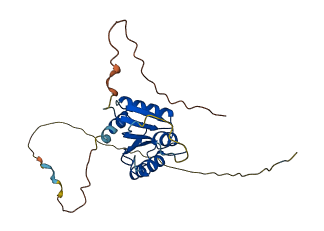
Descriptions
The autoinhibited protein was predicted that may have potential autoinhibitory elements via cis-regPred.
Autoinhibitory domains (AIDs)
Target domain |
|
Relief mechanism |
|
Assay |
cis-regPred |
Accessory elements
No accessory elements
Autoinhibited structure

Activated structure
1 structures for Q9ZWS9
| Entry ID | Method | Resolution | Chain | Position | Source |
|---|---|---|---|---|---|
| AF-Q9ZWS9-F1 | Predicted | AlphaFoldDB |
46 variants for Q9ZWS9
| Variant ID(s) | Position | Change | Description | Diseaes Association | Provenance |
|---|---|---|---|---|---|
| tmp_1_22066891_G_A | 2 | A>V | No | 1000Genomes | |
| tmp_1_22066861_C_A | 12 | R>M | No | 1000Genomes | |
| ENSVATH01406461 | 17 | G>C | No | 1000Genomes | |
| ENSVATH05004740 | 23 | L>F | No | 1000Genomes | |
| ENSVATH01406459 | 24 | E>G | No | 1000Genomes | |
| ENSVATH01406456 | 29 | D>N | No | 1000Genomes | |
| ENSVATH01406453 | 50 | R>S | No | 1000Genomes | |
| ENSVATH14362165 | 53 | R>Q | No | 1000Genomes | |
| tmp_1_22066621_C_T | 66 | W>* | No | 1000Genomes | |
| tmp_1_22066590_C_T | 77 | D>N | No | 1000Genomes | |
| tmp_1_22066478_A_C | 90 | L>W | No | 1000Genomes | |
| ENSVATH13655730 | 103 | Y>F | No | 1000Genomes | |
| ENSVATH13655706 | 115 | F>C | No | 1000Genomes | |
| tmp_1_22066310_C_T | 120 | V>I | No | 1000Genomes | |
| tmp_1_22066304_T_G | 122 | I>L | No | 1000Genomes | |
| ENSVATH05004720 | 127 | N>S | No | 1000Genomes | |
| ENSVATH01406434 | 129 | M>I | No | 1000Genomes | |
| ENSVATH05004716 | 135 | C>* | No | 1000Genomes | |
| ENSVATH05004715 | 167 | A>S | No | 1000Genomes | |
| ENSVATH05004714 | 167 | A>V | No | 1000Genomes | |
| ENSVATH05004713 | 169 | E>D | No | 1000Genomes | |
| ENSVATH01406428 | 174 | K>N | No | 1000Genomes | |
| tmp_1_22066061_T_G | 177 | T>P | No | 1000Genomes | |
| tmp_1_22066058_G_T | 178 | P>T | No | 1000Genomes | |
| ENSVATH14362138 | 179 | P>L | No | 1000Genomes | |
| tmp_1_22066051_G_A | 180 | P>L | No | 1000Genomes | |
| ENSVATH05004709 | 181 | P>L | No | 1000Genomes | |
| ENSVATH05004710 | 181 | P>S | No | 1000Genomes | |
| ENSVATH00106779 | 186 | A>S | No | 1000Genomes | |
| ENSVATH01406426 | 194 | D>E | No | 1000Genomes | |
| ENSVATH01406427 | 194 | D>N | No | 1000Genomes | |
| ENSVATH13655690 | 197 | V>M | No | 1000Genomes | |
| ENSVATH01406425 | 205 | D>V | No | 1000Genomes | |
| ENSVATH01406424 | 207 | E>D | No | 1000Genomes | |
| tmp_1_22065968_C_T | 208 | D>N | No | 1000Genomes | |
| ENSVATH01406423 | 209 | S>A | No | 1000Genomes | |
| ENSVATH13655688 | 211 | T>I | No | 1000Genomes | |
| ENSVATH01406422 | 214 | P>L | No | 1000Genomes | |
| ENSVATH13655687 | 214 | P>S | No | 1000Genomes | |
| ENSVATH08691063 | 215 | E>G | No | 1000Genomes | |
| ENSVATH13655686 | 217 | A>T | No | 1000Genomes | |
| ENSVATH01406420 | 220 | L>P | No | 1000Genomes | |
| ENSVATH00106777 | 224 | P>S | No | 1000Genomes | |
| ENSVATH05004705 | 225 | M>I | No | 1000Genomes | |
| ENSVATH05004706 | 225 | M>L | No | 1000Genomes | |
| tmp_1_22065894_C_G | 232 | A>Y | No | 1000Genomes |
No associated diseases with Q9ZWS9
1 regional properties for Q9ZWS9
| Type | Name | Position | InterPro Accession |
|---|---|---|---|
| domain | Signal transduction response regulator, receiver domain | 33 - 161 | IPR001789 |
2 GO annotations of cellular component
| Name | Definition |
|---|---|
| cytoplasm | The contents of a cell excluding the plasma membrane and nucleus, but including other subcellular structures. |
| nucleus | A membrane-bounded organelle of eukaryotic cells in which chromosomes are housed and replicated. In most cells, the nucleus contains all of the cell's chromosomes except the organellar chromosomes, and is the site of RNA synthesis and processing. In some species, or in specialized cell types, RNA metabolism or DNA replication may be absent. |
1 GO annotations of molecular function
| Name | Definition |
|---|---|
| phosphorelay response regulator activity | Responds to a phosphorelay sensor to initiate a change in cell state or activity. The activity of the response regulator is regulated by transfer of a phosphate from a histidine residue in the sensor, to an aspartate residue in the response regulator. Many but not all response regulators act as transcriptional regulators to elicit a response. |
7 GO annotations of biological process
| Name | Definition |
|---|---|
| circadian rhythm | Any biological process in an organism that recurs with a regularity of approximately 24 hours. |
| cytokinin-activated signaling pathway | The series of molecular signals generated by the binding of a cytokinin to a receptor, and ending with the regulation of a downstream cellular process, e.g. transcription. |
| phosphorelay signal transduction system | A conserved series of molecular signals found in prokaryotes and eukaryotes; involves autophosphorylation of a histidine kinase and the transfer of the phosphate group to an aspartate that then acts as a phospho-donor to response regulator proteins. |
| red light signaling pathway | The series of molecular signals initiated upon sensing of red light by a photoreceptor molecule. Red light is electromagnetic radiation of wavelength of 580-700nm. An example of this response is seen at the beginning of many plant species developmental stages. These include germination, and the point when cotyledon expansion is triggered. In certain species these processes take place in response to absorption of red light by the pigment molecule phytochrome, but the signal can be reversed by exposure to far red light. During the initial phase the phytochrome molecule is only present in the red light absorbing form, but on absorption of red light it changes to a far red light absorbing form, triggering progress through development. An immediate short period of exposure to far red light entirely returns the pigment to its initial state and prevents triggering of the developmental process. A thirty minute break between red and subsequent far red light exposure renders the red light effect irreversible, and development then occurs regardless of whether far red light exposure subsequently occurs. |
| regulation of DNA-templated transcription | Any process that modulates the frequency, rate or extent of cellular DNA-templated transcription. |
| response to cytokinin | Any process that results in a change in state or activity of a cell or an organism (in terms of movement, secretion, enzyme production, gene expression, etc.) as a result of a cytokinin stimulus. |
| response to red light | Any process that results in a change in state or activity of a cell or an organism (in terms of movement, secretion, enzyme production, gene expression, etc.) as a result of a red light stimulus. Red light is electromagnetic radiation of wavelength of 580-700nm. An example of this response is seen at the beginning of many plant species developmental stages. These include germination, and the point when cotyledon expansion is triggered. In certain species these processes take place in response to absorption of red light by the pigment molecule phytochrome, but the signal can be reversed by exposure to far red light. During the initial phase the phytochrome molecule is only present in the red light absorbing form, but on absorption of red light it changes to a far red light absorbing form, triggering progress through development. An immediate short period of exposure to far red light entirely returns the pigment to its initial state and prevents triggering of the developmental process. A thirty minute break between red and subsequent far red light exposure renders the red light effect irreversible, and development then occurs regardless of whether far red light exposure subsequently occurs. |
18 homologous proteins in AiPD
| UniProt AC | Gene Name | Protein Name | Species | Evidence Code |
|---|---|---|---|---|
| P23769 | GATA2 | Endothelial transcription factor GATA-2 | Homo sapiens (Human) | PR |
| O09100 | Gata2 | Endothelial transcription factor GATA-2 | Mus musculus (Mouse) | PR |
| Q942A1 | RR4 | Two-component response regulator ORR4 | Oryza sativa subsp japonica (Rice) | PR |
| Q6H468 | RR11 | Two-component response regulator ORR11 | Oryza sativa subsp japonica (Rice) | PR |
| Q0PVB3 | RR7 | Two-component response regulator ORR7 | Oryza sativa subsp japonica (Rice) | PR |
| Q7Y0W5 | EHD1 | Two-component response regulator ORR30 | Oryza sativa subsp japonica (Rice) | PR |
| Q9SKN6 | GATA13 | Putative GATA transcription factor 13 | Arabidopsis thaliana (Mouse-ear cress) | PR |
| Q9LT45 | GATA29 | GATA transcription factor 29 | Arabidopsis thaliana (Mouse-ear cress) | PR |
| Q6LA43 | APRR2 | Two-component response regulator-like APRR2 | Arabidopsis thaliana (Mouse-ear cress) | PR |
| Q8L4M6 | GATA3 | GATA transcription factor 3 | Arabidopsis thaliana (Mouse-ear cress) | PR |
| O65515 | GATA7 | GATA transcription factor 7 | Arabidopsis thaliana (Mouse-ear cress) | PR |
| O80366 | ARR9 | Two-component response regulator ARR9 | Arabidopsis thaliana (Mouse-ear cress) | PR |
| Q93WK5 | APRR7 | Two-component response regulator-like APRR7 | Arabidopsis thaliana (Mouse-ear cress) | PR |
| Q9FJ16 | APRR4 | Putative two-component response regulator-like APRR4 | Arabidopsis thaliana (Mouse-ear cress) | PR |
| Q9FXD6 | ARR11 | Two-component response regulator ARR11 | Arabidopsis thaliana (Mouse-ear cress) | PR |
| Q9LKL2 | APRR1 | Two-component response regulator-like APRR1 | Arabidopsis thaliana (Mouse-ear cress) | PR |
| Q9SB04 | ARR5 | Two-component response regulator ARR5 | Arabidopsis thaliana (Mouse-ear cress) | PR |
| Q9LVG4 | APRR3 | Two-component response regulator-like APRR3 | Arabidopsis thaliana (Mouse-ear cress) | PR |
| 10 | 20 | 30 | 40 | 50 | 60 |
| MAKDGGVSCL | RRSEMIGIGI | GELESPPLDS | DQVHVLAVDD | SLVDRIVIER | LLRITSCKVT |
| 70 | 80 | 90 | 100 | 110 | 120 |
| AVDSGWRALE | FLGLDDDKAA | VEFDRLKVDL | IITDYCMPGM | TGYELLKKIK | ESTSFKEVPV |
| 130 | 140 | 150 | 160 | 170 | 180 |
| VIMSSENVMT | RIDRCLEEGA | EDFLLKPVKL | ADVKRLRSYL | TRDVKVAAEG | NKRKLTTPPP |
| 190 | 200 | 210 | 220 | 230 | |
| PPPLSATSSM | ESSDSTVESP | LSMVDDEDSL | TMSPESATSL | VDSPMRSPGL | A |