P14211
Gene name |
Calr |
Protein name |
Calreticulin |
Names |
CRP55, Calregulin, Endoplasmic reticulum resident protein 60, ERp60, HACBP |
Species |
Mus musculus (Mouse) |
KEGG Pathway |
mmu:12317 |
EC number |
|
Protein Class |
|
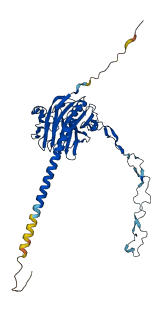
Descriptions
The autoinhibited protein was predicted that may have potential autoinhibitory elements via cis-regPred.
Autoinhibitory domains (AIDs)
Target domain |
|
Relief mechanism |
|
Assay |
cis-regPred |
Accessory elements
No accessory elements
Autoinhibited structure

Activated structure
5 structures for P14211
| Entry ID | Method | Resolution | Chain | Position | Source |
|---|---|---|---|---|---|
| 3O0V | X-ray | 230 A | PDB | ||
| 3O0W | X-ray | 195 A | PDB | ||
| 3O0X | X-ray | 201 A | PDB | ||
| 3RG0 | X-ray | 257 A | PDB | ||
| AF-P14211-F1 | Predicted | AlphaFoldDB |
19 variants for P14211
| Variant ID(s) | Position | Change | Description | Diseaes Association | Provenance |
|---|---|---|---|---|---|
| rs257496300 | 15 | A>V | No | EVA | |
| rs13464147 | 82 | E>G | No | EVA | |
| rs223178582 | 88 | G>D | No | EVA | |
| rs3388972416 | 110 | V>E | No | EVA | |
| rs3388972443 | 121 | D>N | No | EVA | |
| rs3389001277 | 138 | G>D | No | EVA | |
| rs3388993846 | 141 | T>S | No | EVA | |
| rs3388972406 | 153 | K>N | No | EVA | |
| rs3388996751 | 173 | T>R | No | EVA | |
| rs262080130 | 212 | D>N | No | EVA | |
| rs3389001321 | 257 | M>I | No | EVA | |
| rs3389001313 | 285 | Y>* | No | EVA | |
| rs3388994314 | 308 | Y>* | No | EVA | |
| rs3388997044 | 349 | V>D | No | EVA | |
| rs3388996967 | 361 | Q>H | No | EVA | |
| rs579865199 | 386 | E>D | No | EVA | |
| rs3388983322 | 392 | D>G | No | EVA | |
| rs3388993888 | 407 | E>K | No | EVA | |
| rs211821831 | 408 | S>A | No | EVA |
No associated diseases with P14211
3 regional properties for P14211
| Type | Name | Position | InterPro Accession |
|---|---|---|---|
| conserved_site | Calreticulin/calnexin, conserved site | 98 - 113 | IPR018124-1 |
| conserved_site | Calreticulin/calnexin, conserved site | 130 - 138 | IPR018124-2 |
| conserved_site | Calreticulin/calnexin, conserved site | 242 - 254 | IPR018124-3 |
Functions
28 GO annotations of cellular component
| Name | Definition |
|---|---|
| acrosomal vesicle | A structure in the head of a spermatozoon that contains acid hydrolases, and is concerned with the breakdown of the outer membrane of the ovum during fertilization. It lies just beneath the plasma membrane and is derived from the lysosome. |
| cell surface | The external part of the cell wall and/or plasma membrane. |
| collagen-containing extracellular matrix | An extracellular matrix consisting mainly of proteins (especially collagen) and glycosaminoglycans (mostly as proteoglycans) that provides not only essential physical scaffolding for the cellular constituents but can also initiate crucial biochemical and biomechanical cues required for tissue morphogenesis, differentiation and homeostasis. The components are secreted by cells in the vicinity and form a sheet underlying or overlying cells such as endothelial and epithelial cells. |
| cortical granule | A secretory vesicle that is stored under the cell membrane of an egg. These vesicles fuse with the egg plasma membrane as part of egg activation and are part of the block to polyspermy. |
| cytolytic granule | A specialized secretory lysosome that is present in cells with cytolytic capability such as cytotoxic T lymphocytes and natural killer cells. Cytolytic granules mediate the storage and regulated excretion of lytic molecules for killing of target cells. |
| cytoplasm | The contents of a cell excluding the plasma membrane and nucleus, but including other subcellular structures. |
| cytosol | The part of the cytoplasm that does not contain organelles but which does contain other particulate matter, such as protein complexes. |
| endoplasmic reticulum | The irregular network of unit membranes, visible only by electron microscopy, that occurs in the cytoplasm of many eukaryotic cells. The membranes form a complex meshwork of tubular channels, which are often expanded into slitlike cavities called cisternae. The ER takes two forms, rough (or granular), with ribosomes adhering to the outer surface, and smooth (with no ribosomes attached). |
| endoplasmic reticulum lumen | The volume enclosed by the membranes of the endoplasmic reticulum. |
| endoplasmic reticulum membrane | The lipid bilayer surrounding the endoplasmic reticulum. |
| endoplasmic reticulum quality control compartment | A subcompartment of the endoplasmic reticulum in which proteins with improper or incorrect folding accumulate. Enzymes in this compartment direct proteins with major folding problems to translocation to the cytosol and degradation, and proteins with minor folding problems to the ER, to interact with chaperon proteins. |
| external side of plasma membrane | The leaflet of the plasma membrane that faces away from the cytoplasm and any proteins embedded or anchored in it or attached to its surface. |
| extracellular region | The space external to the outermost structure of a cell. For cells without external protective or external encapsulating structures this refers to space outside of the plasma membrane. This term covers the host cell environment outside an intracellular parasite. |
| extracellular space | That part of a multicellular organism outside the cells proper, usually taken to be outside the plasma membranes, and occupied by fluid. |
| Golgi apparatus | A membrane-bound cytoplasmic organelle of the endomembrane system that further processes the core oligosaccharides (e.g. N-glycans) added to proteins in the endoplasmic reticulum and packages them into membrane-bound vesicles. The Golgi apparatus operates at the intersection of the secretory, lysosomal, and endocytic pathways. |
| intracellular membrane-bounded organelle | Organized structure of distinctive morphology and function, bounded by a single or double lipid bilayer membrane and occurring within the cell. Includes the nucleus, mitochondria, plastids, vacuoles, and vesicles. Excludes the plasma membrane. |
| membrane | A lipid bilayer along with all the proteins and protein complexes embedded in it an attached to it. |
| MHC class I peptide loading complex | A large, multisubunit complex which consists of the MHC class I-beta 2 microglobulin dimer, the transporter associated with antigen presentation (TAP), tapasin (an MHC-encoded membrane protein), the chaperone calreticulin and the thiol oxidoreductase ERp57. Functions in the assembly of peptides with newly synthesized MHC class I molecules. |
| nuclear envelope | The double lipid bilayer enclosing the nucleus and separating its contents from the rest of the cytoplasm; includes the intermembrane space, a gap of width 20-40 nm (also called the perinuclear space). |
| nucleus | A membrane-bounded organelle of eukaryotic cells in which chromosomes are housed and replicated. In most cells, the nucleus contains all of the cell's chromosomes except the organellar chromosomes, and is the site of RNA synthesis and processing. In some species, or in specialized cell types, RNA metabolism or DNA replication may be absent. |
| perinuclear region of cytoplasm | Cytoplasm situated near, or occurring around, the nucleus. |
| phagocytic vesicle | A membrane-bounded intracellular vesicle that arises from the ingestion of particulate material by phagocytosis. |
| plasma membrane | The membrane surrounding a cell that separates the cell from its external environment. It consists of a phospholipid bilayer and associated proteins. |
| polysome | A multiribosomal structure representing a linear array of ribosomes held together by messenger RNA. They represent the active complexes in cellular protein synthesis and are able to incorporate amino acids into polypeptides both in vivo and in vitro. |
| protein-containing complex | A stable assembly of two or more macromolecules, i.e. proteins, nucleic acids, carbohydrates or lipids, in which at least one component is a protein and the constituent parts function together. |
| sarcoplasmic reticulum | A fine reticular network of membrane-limited elements that pervades the sarcoplasm of a muscle cell; continuous over large portions of the cell and with the nuclear envelope; that part of the endoplasmic reticulum specialized for calcium release, uptake and storage. |
| sarcoplasmic reticulum lumen | The volume enclosed by the membranes of the sarcoplasmic reticulum. |
| smooth endoplasmic reticulum | The smooth endoplasmic reticulum (smooth ER or SER) has no ribosomes attached to it. The smooth ER is the recipient of the proteins synthesized in the rough ER. Those proteins to be exported are passed to the Golgi complex, the resident proteins are returned to the rough ER and the lysosomal proteins after phosphorylation of their mannose residues are passed to the lysosomes. Glycosylation of the glycoproteins also continues. The smooth ER is the site of synthesis of lipids, including the phospholipids. The membranes of the smooth ER also contain enzymes that catalyze a series of reactions to detoxify both lipid-soluble drugs and harmful products of metabolism. Large quantities of certain compounds such as phenobarbital cause an increase in the amount of the smooth ER. |
10 GO annotations of molecular function
| Name | Definition |
|---|---|
| calcium ion binding | Binding to a calcium ion (Ca2+). |
| carbohydrate binding | Binding to a carbohydrate, which includes monosaccharides, oligosaccharides and polysaccharides as well as substances derived from monosaccharides by reduction of the carbonyl group (alditols), by oxidation of one or more hydroxy groups to afford the corresponding aldehydes, ketones, or carboxylic acids, or by replacement of one or more hydroxy group(s) by a hydrogen atom. Cyclitols are generally not regarded as carbohydrates. |
| hormone binding | Binding to an hormone, a naturally occurring substance secreted by specialized cells that affect the metabolism or behavior of cells possessing functional receptors for the hormone. Hormones may be produced by the same, or different, cell as express the receptor. |
| integrin binding | Binding to an integrin. |
| iron ion binding | Binding to an iron (Fe) ion. |
| mRNA binding | Binding to messenger RNA (mRNA), an intermediate molecule between DNA and protein. mRNA includes UTR and coding sequences, but does not contain introns. |
| nuclear androgen receptor binding | Binding to a nuclear androgen receptor. |
| peptide binding | Binding to a peptide, an organic compound comprising two or more amino acids linked by peptide bonds. |
| ubiquitin protein ligase binding | Binding to a ubiquitin protein ligase enzyme, any of the E3 proteins. |
| unfolded protein binding | Binding to an unfolded protein. |
34 GO annotations of biological process
| Name | Definition |
|---|---|
| cardiac muscle cell differentiation | The process in which a cardiac muscle precursor cell acquires specialized features of a cardiac muscle cell. Cardiac muscle cells are striated muscle cells that are responsible for heart contraction. |
| cellular response to electrical stimulus | Any process that results in a change in state or activity of a cell (in terms of movement, secretion, enzyme production, gene expression, etc.) as a result of an electrical stimulus. |
| cellular response to lithium ion | Any process that results in a change in state or activity of a cell (in terms of movement, secretion, enzyme production, gene expression, etc.) as a result of a lithium (Li+) ion stimulus. |
| cellular response to organic substance | Any process that results in a change in state or activity of a cell (in terms of movement, secretion, enzyme production, gene expression, etc.) as a result of an organic substance stimulus. |
| cellular response to virus | Any process that results in a change in state or activity of a cell (in terms of movement, secretion, enzyme production, gene expression, etc.) as a result of a stimulus from a virus. |
| cellular senescence | A cell aging process stimulated in response to cellular stress, whereby normal cells lose the ability to divide through irreversible cell cycle arrest. |
| cortical actin cytoskeleton organization | A process that is carried out at the cellular level which results in the assembly, arrangement of constituent parts, or disassembly of actin-based cytoskeletal structures in the cell cortex, i.e. just beneath the plasma membrane. |
| negative regulation of DNA-templated transcription | Any process that stops, prevents, or reduces the frequency, rate or extent of cellular DNA-templated transcription. |
| negative regulation of intracellular steroid hormone receptor signaling pathway | Any process that stops, prevents, or reduces the frequency, rate or extent of the activity of any intracellular steroid hormone receptor signaling pathway. |
| negative regulation of neuron differentiation | Any process that stops, prevents, or reduces the frequency, rate or extent of neuron differentiation. |
| negative regulation of retinoic acid receptor signaling pathway | Any process that stops, prevents, or reduces the frequency, rate or extent of retinoic acid receptor signaling pathway activity. |
| negative regulation of transcription by RNA polymerase II | Any process that stops, prevents, or reduces the frequency, rate or extent of transcription mediated by RNA polymerase II. |
| negative regulation of translation | Any process that stops, prevents, or reduces the frequency, rate or extent of the chemical reactions and pathways resulting in the formation of proteins by the translation of mRNA or circRNA. |
| negative regulation of trophoblast cell migration | Any process that stops, prevents or reduces the frequency, rate or extent of trophoblast cell migration. |
| peptide antigen assembly with MHC class I protein complex | The binding of a peptide to the antigen binding groove of an MHC class I protein complex. Class I here refers to classical class I molecules. |
| positive regulation of cell cycle | Any process that activates or increases the rate or extent of progression through the cell cycle. |
| positive regulation of cell population proliferation | Any process that activates or increases the rate or extent of cell proliferation. |
| positive regulation of dendritic cell chemotaxis | Any process that activates or increases the frequency, rate or extent of dendritic cell chemotaxis. |
| positive regulation of endothelial cell migration | Any process that increases the rate, frequency, or extent of the orderly movement of an endothelial cell into the extracellular matrix to form an endothelium. |
| positive regulation of gene expression | Any process that increases the frequency, rate or extent of gene expression. Gene expression is the process in which a gene's coding sequence is converted into a mature gene product (protein or RNA). |
| positive regulation of NIK/NF-kappaB signaling | Any process that activates or increases the frequency, rate or extent of NIK/NF-kappaB signaling. |
| positive regulation of phagocytosis | Any process that activates or increases the frequency, rate or extent of phagocytosis. |
| positive regulation of substrate adhesion-dependent cell spreading | Any process that activates or increases the frequency, rate or extent of substrate adhesion-dependent cell spreading. |
| protein export from nucleus | The directed movement of a protein from the nucleus into the cytoplasm. |
| protein folding | The process of assisting in the covalent and noncovalent assembly of single chain polypeptides or multisubunit complexes into the correct tertiary structure. |
| protein localization to nucleus | A process in which a protein transports or maintains the localization of another protein to the nucleus. |
| protein stabilization | Any process involved in maintaining the structure and integrity of a protein and preventing it from degradation or aggregation. |
| regulation of meiotic nuclear division | Any process that modulates the frequency, rate or extent of meiotic nuclear division, the process in which the nucleus of a diploid cell divides twice forming four haploid cells, one or more of which usually function as gametes. |
| response to estradiol | Any process that results in a change in state or activity of a cell or an organism (in terms of movement, secretion, enzyme production, gene expression, etc.) as a result of stimulus by estradiol, a C18 steroid hormone hydroxylated at C3 and C17 that acts as a potent estrogen. |
| response to glycoside | Any process that results in a change in state or activity of a cell or an organism (in terms of movement, secretion, enzyme production, gene expression, etc.) as a result of a glycoside stimulus. |
| response to testosterone | Any process that results in a change in state or activity of a cell or an organism (in terms of movement, secretion, enzyme production, gene expression, etc.) as a result of a testosterone stimulus. |
| response to xenobiotic stimulus | Any process that results in a change in state or activity of a cell or an organism (in terms of movement, secretion, enzyme production, gene expression, etc.) as a result of a stimulus from a xenobiotic, a compound foreign to the organim exposed to it. It may be synthesized by another organism (like ampicilin) or it can be a synthetic chemical. |
| spermatogenesis | The developmental process by which male germ line stem cells self renew or give rise to successive cell types resulting in the development of a spermatozoa. |
| ubiquitin-dependent ERAD pathway | The series of steps necessary to target endoplasmic reticulum (ER)-resident proteins for degradation by the cytoplasmic proteasome. Begins with recognition of the ER-resident protein, includes retrotranslocation (dislocation) of the protein from the ER to the cytosol, protein ubiquitination necessary for correct substrate transfer, transport of the protein to the proteasome, and ends with degradation of the protein by the cytoplasmic proteasome. |
15 homologous proteins in AiPD
| UniProt AC | Gene Name | Protein Name | Species | Evidence Code |
|---|---|---|---|---|
| Q2TBR8 | CALR3 | Calreticulin-3 | Bos taurus (Bovine) | PR |
| P52193 | CALR | Calreticulin | Bos taurus (Bovine) | PR |
| P29413 | Calr | Calreticulin | Drosophila melanogaster (Fruit fly) | PR |
| P27797 | CALR | Calreticulin | Homo sapiens (Human) | PR |
| Q96L12 | CALR3 | Calreticulin-3 | Homo sapiens (Human) | PR |
| Q9D9Q6 | Calr3 | Calreticulin-3 | Mus musculus (Mouse) | PR |
| P52194 | Clgn | Calmegin | Mus musculus (Mouse) | PR |
| P28491 | CALR | Calreticulin | Sus scrofa (Pig) | PR |
| P18418 | Calr | Calreticulin | Rattus norvegicus (Rat) | PR |
| Q9SLY8 | CRO1 | Calreticulin | Oryza sativa subsp japonica (Rice) | PR |
| P27798 | crt-1 | Calreticulin | Caenorhabditis elegans | PR |
| Q7Z1E6 | crt | Calreticulin | Bombyx mori (Silk moth) | PR |
| Q38858 | CRT2 | Calreticulin-2 | Arabidopsis thaliana (Mouse-ear cress) | PR |
| O04151 | CRT1 | Calreticulin-1 | Arabidopsis thaliana (Mouse-ear cress) | PR |
| O04153 | CRT3 | Calreticulin-3 | Arabidopsis thaliana (Mouse-ear cress) | PR |
| 10 | 20 | 30 | 40 | 50 | 60 |
| MLLSVPLLLG | LLGLAAADPA | IYFKEQFLDG | DAWTNRWVES | KHKSDFGKFV | LSSGKFYGDL |
| 70 | 80 | 90 | 100 | 110 | 120 |
| EKDKGLQTSQ | DARFYALSAK | FEPFSNKGQT | LVVQFTVKHE | QNIDCGGGYV | KLFPSGLDQK |
| 130 | 140 | 150 | 160 | 170 | 180 |
| DMHGDSEYNI | MFGPDICGPG | TKKVHVIFNY | KGKNVLINKD | IRCKDDEFTH | LYTLIVRPDN |
| 190 | 200 | 210 | 220 | 230 | 240 |
| TYEVKIDNSQ | VESGSLEDDW | DFLPPKKIKD | PDAAKPEDWD | ERAKIDDPTD | SKPEDWDKPE |
| 250 | 260 | 270 | 280 | 290 | 300 |
| HIPDPDAKKP | EDWDEEMDGE | WEPPVIQNPE | YKGEWKPRQI | DNPDYKGTWI | HPEIDNPEYS |
| 310 | 320 | 330 | 340 | 350 | 360 |
| PDANIYAYDS | FAVLGLDLWQ | VKSGTIFDNF | LITNDEAYAE | EFGNETWGVT | KAAEKQMKDK |
| 370 | 380 | 390 | 400 | 410 | |
| QDEEQRLKEE | EEDKKRKEEE | EAEDKEDDDD | RDEDEDEEDE | KEEDEEESPG | QAKDEL |