P02511
Gene name |
CRYAB |
Protein name |
Alpha-crystallin B chain |
Names |
Alpha(B)-crystallin, Heat shock protein beta-5, HspB5, Renal carcinoma antigen NY-REN-27, Rosenthal fiber component |
Species |
Homo sapiens (Human) |
KEGG Pathway |
hsa:1410 |
EC number |
|
Protein Class |
|
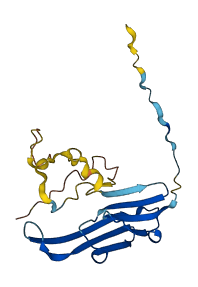
Descriptions
The autoinhibited protein was predicted that may have potential autoinhibitory elements via cis-regPred.
Autoinhibitory domains (AIDs)
Target domain |
|
Relief mechanism |
|
Assay |
cis-regPred |
Accessory elements
No accessory elements
Autoinhibited structure

Activated structure
21 structures for P02511
| Entry ID | Method | Resolution | Chain | Position | Source |
|---|---|---|---|---|---|
| 2KLR | NMR | - | A/B | 1-175 | PDB |
| 2N0K | NMR | - | A/B | 64-152 | PDB |
| 2WJ7 | X-ray | 263 A | A/B/C/D/E | 67-157 | PDB |
| 2Y1Y | X-ray | 200 A | A | 71-157 | PDB |
| 2Y1Z | X-ray | 250 A | A/B | 67-157 | PDB |
| 2Y22 | X-ray | 370 A | A/B/C/D/E/F | 67-157 | PDB |
| 2YGD | EM | 940 A | A/B/C/D/E/F/G/H/I/J/K/L/M/N/O/P/Q/R/S/T/U/V/W/X | 1-175 | PDB |
| 3J07 | Other | - | A/B/C/D/E/F/G/H/I/J/K/L/M/N/O/P/Q/R/S/T/U/V/W/X | 1-175 | PDB |
| 3L1G | X-ray | 332 A | A | 68-162 | PDB |
| 3SGM | X-ray | 170 A | A/B/C/D | 90-100 | PDB |
| 3SGN | X-ray | 281 A | A/B | 90-100 | PDB |
| 3SGO | X-ray | 256 A | A | 90-100 | PDB |
| 3SGP | X-ray | 140 A | A/B/C/D | 90-100 | PDB |
| 3SGR | X-ray | 217 A | A/B/C/D/E/F | 90-100 | PDB |
| 3SGS | X-ray | 170 A | A | 95-100 | PDB |
| 4M5S | X-ray | 137 A | PDB | ||
| 4M5T | X-ray | 200 A | PDB | ||
| 5VVV | X-ray | 280 A | B/D | 38-50 | PDB |
| 6BP9 | NMR | - | A/B | 64-152 | PDB |
| 7ROJ | X-ray | 160 A | A/B/C/D/E/F/G/H/I/J/K/L | 90-100 | PDB |
| AF-P02511-F1 | Predicted | AlphaFoldDB |
189 variants for P02511
| Variant ID(s) | Position | Change | Description | Diseaes Association | Provenance |
|---|---|---|---|---|---|
|
RCV000037215 RCV002247423 rs397516686 RCV001787334 RCV001358809 |
1 | M>I | Cardiomyopathy Dilated cardiomyopathy 1II [ClinVar] | Yes |
ClinVar dbSNP |
|
rs1264081192 CA16622110 RCV002429855 RCV001215997 RCV001198000 |
4 | A>T | Variant assessed as Somatic; 0.0 impact. Cataract 16 multiple types Dilated cardiomyopathy 1II [NCI-TCGA, ClinVar] | Yes |
ClinGen ClinVar NCI-TCGA TOPMed dbSNP gnomAD |
|
RCV000183326 RCV002492824 CA308248 rs794728982 |
6 | H>Y | Myofibrillar myopathy 2 [ClinVar] | Yes |
ClinGen ClinVar Ensembl dbSNP |
|
RCV001320471 rs1555165608 CA382601186 |
7 | H>Q | Dilated cardiomyopathy 1II [ClinVar] | Yes |
ClinGen gnomAD ClinVar dbSNP |
|
CA088054 RCV000208269 rs782654756 |
8 | P>S | Primary dilated cardiomyopathy [ClinVar] | Yes |
ClinGen ClinVar ExAC dbSNP gnomAD |
|
CA088693 RCV000208522 rs781902168 RCV000805399 |
11 | R>C | Primary dilated cardiomyopathy Dilated cardiomyopathy 1II [ClinVar] | Yes |
ClinGen ClinVar ExAC TOPMed dbSNP gnomAD |
|
RCV002224032 RCV002491775 rs781902168 RCV001238547 CA382601088 |
11 | R>G | Myofibrillar myopathy 2 Dilated cardiomyopathy 1II [ClinVar] | Yes |
ClinGen ClinVar ExAC TOPMed dbSNP gnomAD |
|
CA6275586 COSM1676439 RCV001784639 RCV001089962 rs782809283 |
11 | R>H | large_intestine Dilated cardiomyopathy 1II [Cosmic, ClinVar] | Yes |
ClinGen cosmic curated ClinVar ExAC TOPMed dbSNP gnomAD |
|
rs930811941 RCV001294994 CA228546619 |
12 | R>H | Variant assessed as Somatic; impact. Dilated cardiomyopathy 1II [NCI-TCGA, ClinVar] | Yes |
ClinGen ClinVar NCI-TCGA TOPMed dbSNP |
|
rs1349139935 RCV002357199 RCV001799760 CA382601037 RCV002486434 RCV001349060 |
13 | P>T | Myofibrillar myopathy 2 Dilated cardiomyopathy 1II [ClinVar] | Yes |
ClinGen ClinVar TOPMed dbSNP gnomAD |
|
RCV000655017 rs1555165595 CA382601020 |
14 | F>V | Dilated cardiomyopathy 1II [ClinVar] | Yes |
ClinGen ClinVar Ensembl dbSNP |
|
RCV000701130 rs868946460 CA382600951 |
16 | P>L | Dilated cardiomyopathy 1II [ClinVar] | Yes |
ClinGen ClinVar Ensembl dbSNP |
|
RCV001170408 CA6275582 RCV002348589 rs373032047 RCV001873570 |
18 | H>Y | Cardiomyopathy Dilated cardiomyopathy 1II [ClinVar] | Yes |
ClinGen ClinVar ESP ExAC TOPMed dbSNP gnomAD |
|
CA130925 rs387907337 RCV000034841 |
20 | P>S | Cataract 16 multiple types [ClinVar] | Yes |
ClinGen ClinVar Ensembl dbSNP |
|
RCV000043523 rs281865141 |
21 | S>missing | Myofibrillar myopathy 2 [ClinVar] | Yes |
ClinVar dbSNP |
|
RCV002221577 rs782316391 RCV002477550 RCV000690116 CA6275578 |
22 | R>H | Myofibrillar myopathy 2 Dilated cardiomyopathy 1II [ClinVar] | Yes |
ClinGen ClinVar ExAC TOPMed dbSNP gnomAD |
|
rs1965461881 RCV001215221 |
26 | Q>K | Dilated cardiomyopathy 1II [ClinVar] | Yes |
ClinVar dbSNP |
|
RCV001222669 rs1965460969 |
29 | G>A | Dilated cardiomyopathy 1II [ClinVar] | Yes |
ClinVar dbSNP |
|
RCV002445232 RCV001288578 CA6275575 CA6275576 rs148500053 RCV001041728 |
29 | G>R | Dilated cardiomyopathy 1II [ClinVar] | Yes |
ClinGen 1000Genomes ESP ExAC TOPMed gnomAD ClinVar dbSNP |
|
CA10629845 RCV002502201 RCV000351023 RCV000310381 RCV000394369 rs886047688 |
34 | E>D | Myofibrillar myopathy 2 Myofibrillar Myopathy, Dominant Cataract 16 multiple types Fatal infantile hypertonic myofibrillar myopathy [ClinVar] | Yes |
ClinGen ClinVar dbSNP gnomAD |
|
CA382600643 RCV001318397 rs1555165569 |
35 | S>F | Dilated cardiomyopathy 1II [ClinVar] | Yes |
ClinGen ClinVar dbSNP gnomAD |
|
rs1237590699 RCV002320266 RCV001046299 RCV001759969 CA382600606 |
38 | F>L | Dilated cardiomyopathy 1II [ClinVar] | Yes |
ClinGen ClinVar TOPMed dbSNP gnomAD |
|
RCV000692847 RCV002369867 RCV001595033 RCV000764953 rs145768025 CA6275571 |
39 | P>A | Myofibrillar myopathy 2 Dilated cardiomyopathy 1II [ClinVar] | Yes |
ClinGen ClinVar ESP ExAC TOPMed dbSNP gnomAD |
|
RCV000296232 RCV000154694 RCV001550214 RCV000335745 CA181184 rs149787233 RCV000655018 RCV000617272 RCV000371984 |
39 | P>L | Myofibrillar myopathy 2 Cataract 16 multiple types Fatal infantile hypertonic myofibrillar myopathy Dilated cardiomyopathy 1II [ClinVar] | Yes |
ClinGen ClinVar ESP ExAC TOPMed dbSNP gnomAD |
|
RCV000686008 rs149787233 CA382600584 |
39 | P>Q | Dilated cardiomyopathy 1II [ClinVar] | Yes |
ClinGen ClinVar ESP ExAC TOPMed dbSNP gnomAD |
|
RCV002507422 RCV000813755 CA382600591 rs145768025 RCV002352426 |
39 | P>S | Myofibrillar myopathy 2 Dilated cardiomyopathy 1II [ClinVar] | Yes |
ClinGen ClinVar ESP ExAC TOPMed dbSNP gnomAD |
|
RCV000814438 rs782122417 RCV002501114 CA6275569 |
40 | T>M | Myofibrillar myopathy 2 Dilated cardiomyopathy 1II [ClinVar] | Yes |
ClinGen ClinVar ExAC TOPMed dbSNP gnomAD |
|
rs1965457564 RCV001236658 |
44 | L>P | Dilated cardiomyopathy 1II [ClinVar] | Yes |
ClinVar dbSNP |
|
CA382600496 RCV001201855 rs1450798906 |
45 | S>G | Dilated cardiomyopathy 1II [ClinVar] | Yes |
ClinGen ClinVar TOPMed dbSNP |
|
RCV000537892 rs931730154 CA228546453 |
45 | S>N | Dilated cardiomyopathy 1II [ClinVar] | Yes |
ClinGen ClinVar TOPMed dbSNP gnomAD |
|
CA6275563 rs781846534 RCV002392793 RCV000705119 RCV000402992 |
50 | R>Q | Dilated cardiomyopathy 1II [ClinVar] | Yes |
ClinGen ClinVar ExAC TOPMed dbSNP gnomAD |
|
RCV000320693 RCV000375343 RCV000280721 VAR_014608 RCV000769291 RCV000726131 RCV001082909 RCV000037211 CA133792 RCV000620871 rs2234704 |
51 | P>L | Myofibrillar myopathy 2 Cardiomyopathy Cataract 16 multiple types Fatal infantile hypertonic myofibrillar myopathy Dilated cardiomyopathy 1II [ClinVar] | Yes |
ClinGen ClinVar UniProt 1000Genomes ESP ExAC TOPMed dbSNP gnomAD |
|
rs387907338 RCV000034842 CA130927 RCV001852700 |
56 | R>W | Variant assessed as Somatic; 0.0 impact. Cataract 16 multiple types Dilated cardiomyopathy 1II [NCI-TCGA, ClinVar] | Yes |
ClinGen ClinVar NCI-TCGA TOPMed dbSNP gnomAD |
|
RCV001106239 RCV001106238 rs1555165546 RCV001106237 |
59 | S>N | Myofibrillar myopathy 2 Cataract 16 multiple types Fatal infantile hypertonic myofibrillar myopathy [ClinVar] | Yes |
ClinVar dbSNP |
|
rs1291858452 CA382599754 RCV003135960 RCV001312930 |
68 | M>L | Dilated cardiomyopathy 1II [ClinVar] | Yes |
ClinGen ClinVar TOPMed dbSNP gnomAD |
|
RCV000691763 rs139750142 CA6275538 VAR_084806 |
69 | R>C | Variant assessed as Somatic; 0.0 impact. Dilated cardiomyopathy 1II CTRCT16; unknown pathological significance [NCI-TCGA, ClinVar, UniProt] | Yes |
ClinGen ClinVar UniProt 1000Genomes ESP ExAC NCI-TCGA TOPMed dbSNP gnomAD |
|
RCV002418719 RCV001211410 rs987496548 CA228545656 |
69 | R>H | Dilated cardiomyopathy 1II [ClinVar] | Yes |
ClinGen ClinVar TOPMed dbSNP gnomAD |
|
RCV001052378 rs987496548 |
69 | R>L | Dilated cardiomyopathy 1II [ClinVar] | Yes |
ClinVar dbSNP |
|
rs139750142 RCV001326086 CA6275539 |
69 | R>S | Dilated cardiomyopathy 1II [ClinVar] | Yes |
ClinGen ClinVar 1000Genomes ESP ExAC TOPMed dbSNP gnomAD |
|
rs781913291 RCV001214336 |
74 | R>G | Dilated cardiomyopathy 1II [ClinVar] | Yes |
ClinVar dbSNP |
|
rs1965416729 RCV001060872 |
83 | H>D | Dilated cardiomyopathy 1II [ClinVar] | Yes |
ClinVar dbSNP |
|
RCV002477816 RCV000797026 RCV002223943 CA382599230 rs1256600488 |
92 | K>R | Myofibrillar myopathy 2 Dilated cardiomyopathy 1II [ClinVar] | Yes |
ClinGen ClinVar TOPMed dbSNP gnomAD |
|
rs547282752 RCV002436638 RCV001060121 RCV001295296 CA382599215 |
93 | V>L | Dilated cardiomyopathy 1II [ClinVar] | Yes |
ClinVar dbSNP ClinGen ExAC TOPMed gnomAD |
|
CA6275529 RCV000820487 rs553865461 |
96 | D>G | Dilated cardiomyopathy 1II [ClinVar] | Yes |
ClinGen ClinVar 1000Genomes ExAC dbSNP gnomAD |
|
rs1965414373 RCV001304485 |
101 | H>L | Dilated cardiomyopathy 1II [ClinVar] | Yes |
ClinVar dbSNP |
|
rs1029108489 RCV000702354 CA228545602 |
101 | H>N | Dilated cardiomyopathy 1II [ClinVar] | Yes |
ClinGen ClinVar TOPMed dbSNP |
|
RCV000203405 RCV001091029 CA250008 rs144451841 |
107 | R>L | Developmental cataract [ClinVar] | Yes |
ClinGen ClinVar 1000Genomes ExAC dbSNP gnomAD |
|
CA10587716 RCV000254552 rs886039099 RCV001854985 |
108 | Q>H | Dilated cardiomyopathy 1II [ClinVar] | Yes |
ClinGen ClinVar TOPMed dbSNP |
|
CA382596838 VAR_079841 RCV000655020 RCV000491328 rs1114167341 |
109 | D>G | Cardiomyopathy, familial restrictive, 1 Dilated cardiomyopathy 1II probable disease-associated variant found in patients with restrictive cardiomyopathy; reduces CRYAB and DES localization at the Z-bands and the intercalated disk in the myocardium; cytoplasmic aggregations of CRYAB and DES [ClinVar, UniProt] | Yes |
ClinGen ClinVar UniProt Ensembl dbSNP |
|
rs387907339 RCV000034843 CA261275 VAR_069528 |
109 | D>H | Myofibrillar myopathy 2 MFM2 [ClinVar, UniProt] | Yes |
ClinGen ClinVar UniProt dbSNP gnomAD |
|
RCV000032215 RCV002504850 RCV000183328 RCV000694268 rs281865142 |
115 | S>missing | Myofibrillar myopathy 2 Dilated cardiomyopathy 1II [ClinVar] | Yes |
ClinVar dbSNP |
|
RCV000216552 CA10577205 rs876657766 RCV001347839 |
118 | F>S | Dilated cardiomyopathy 1II [ClinVar] | Yes |
ClinGen ClinVar Ensembl dbSNP |
|
CA341434 RCV000018465 rs104894201 VAR_007899 |
120 | R>G | Myofibrillar myopathy 2 MFM2; decreased interactions with wild-type CRYAA and CRYAB but increased interactions with wild-type CRYBB2 and CRYGC; cytoplasmic aggregation [ClinVar, UniProt] | Yes |
ClinGen ClinVar UniProt Ensembl dbSNP |
|
RCV001229768 rs781915800 |
121 | K>T | Dilated cardiomyopathy 1II [ClinVar] | Yes |
ClinVar dbSNP |
|
COSM232102 rs782206421 RCV001319225 RCV000220200 RCV002347838 CA6275470 |
123 | R>Q | Variant assessed as Somatic; 0.0 impact. skin Dilated cardiomyopathy 1II [NCI-TCGA, Cosmic, ClinVar] | Yes |
ClinGen cosmic curated ClinVar ExAC NCI-TCGA TOPMed dbSNP gnomAD |
|
rs534473091 RCV002481349 RCV000813845 RCV000439958 CA6275471 |
123 | R>W | Myofibrillar myopathy 2 Variant assessed as Somatic; 0.0 impact. Dilated cardiomyopathy 1II [ClinVar, NCI-TCGA] | Yes |
ClinGen ClinVar ExAC NCI-TCGA TOPMed dbSNP gnomAD |
|
CA382596493 RCV001318195 rs374661019 |
125 | P>A | Dilated cardiomyopathy 1II [ClinVar] | Yes |
ClinGen ClinVar 1000Genomes ESP ExAC TOPMed dbSNP gnomAD |
|
RCV002348722 CA6275468 rs374661019 RCV001216668 |
125 | P>S | Dilated cardiomyopathy 1II [ClinVar] | Yes |
ClinGen ClinVar 1000Genomes ESP ExAC TOPMed dbSNP gnomAD |
|
RCV000537120 RCV000770311 CA6275465 rs371079119 RCV003139867 |
136 | S>T | Cardiomyopathy Dilated cardiomyopathy 1II [ClinVar] | Yes |
ClinGen ClinVar ESP ExAC TOPMed dbSNP gnomAD |
|
rs387907336 RCV000034840 CA130923 |
140 | D>N | Cataract 16 multiple types [ClinVar] | Yes |
ClinGen ClinVar Ensembl dbSNP |
|
rs1965359147 RCV001215921 |
142 | V>F | Dilated cardiomyopathy 1II [ClinVar] | Yes |
ClinVar dbSNP |
|
CA382596116 rs782629197 RCV001170407 |
143 | L>F | Cardiomyopathy [ClinVar] | Yes |
ClinGen ClinVar ExAC TOPMed dbSNP gnomAD |
|
rs781852612 RCV002543114 CA6275461 RCV001304822 |
145 | V>L | Dilated cardiomyopathy 1II Inborn genetic diseases [ClinVar] | Yes |
ClinGen ClinVar ExAC TOPMed dbSNP gnomAD |
|
RCV000018466 rs1566402656 |
150 | K>missing | Cataract 16 multiple types [ClinVar] | Yes |
ClinVar dbSNP |
|
rs104894202 RCV000018468 CA257674 |
151 | Q>* | Myofibrillar myopathy 2 [ClinVar] | Yes |
ClinGen ClinVar TOPMed dbSNP |
|
RCV000768500 rs868980796 CA382595826 |
153 | S>F | Hypertrophic cardiomyopathy [ClinVar] | Yes |
ClinGen ClinVar Ensembl dbSNP |
|
RCV000547444 rs1555165228 CA382595805 |
154 | G>D | Dilated cardiomyopathy 1II [ClinVar] | Yes |
ClinGen ClinVar Ensembl dbSNP |
|
RCV000297606 RCV000620796 VAR_070035 RCV000157153 RCV000352488 RCV000398508 RCV000037217 CA130921 RCV000203359 RCV000852658 RCV001170406 rs150516929 RCV000658624 RCV000034839 |
154 | G>S | Myofibrillar Myopathy, Dominant Cataract 16 multiple types Cardiomyopathy Fatal infantile hypertonic myofibrillar myopathy Primary familial hypertrophic cardiomyopathy Hypertrophic cardiomyopathy Developmental cataract Dilated cardiomyopathy 1II CMD1II [ClinVar, UniProt] | Yes |
ClinGen ClinVar UniProt 1000Genomes ESP ExAC TOPMed dbSNP gnomAD |
|
rs1566402514 RCV000018467 |
155 | P>missing | Myofibrillar myopathy 2 [ClinVar] | Yes |
ClinVar dbSNP |
|
RCV000794223 CA6275458 rs374169381 |
157 | R>C | Variant assessed as Somatic; 0.0 impact. Dilated cardiomyopathy 1II [NCI-TCGA, ClinVar] | Yes |
ClinGen ClinVar ESP ExAC NCI-TCGA TOPMed dbSNP gnomAD |
|
CA130919 rs141638421 RCV002490468 RCV002336111 VAR_070036 RCV000034838 |
157 | R>H | Myofibrillar myopathy 2 Dilated cardiomyopathy 1II CMD1II [ClinVar, UniProt] | Yes |
ClinGen ClinVar UniProt 1000Genomes ESP ExAC TOPMed dbSNP gnomAD |
|
CA382595618 RCV001103196 RCV000999592 RCV001103197 rs1592506005 RCV001105110 RCV003141922 |
161 | I>T | Myofibrillar myopathy 2 Cataract 16 multiple types Fatal infantile hypertonic myofibrillar myopathy Hypertrophic cardiomyopathy [ClinVar] | Yes |
ClinGen ClinVar Ensembl dbSNP |
|
CA133795 RCV000037218 rs186242388 RCV002513474 RCV001528959 |
163 | R>C | Dilated cardiomyopathy 1II [ClinVar] | Yes |
ClinGen ClinVar 1000Genomes ExAC TOPMed dbSNP gnomAD |
|
RCV001229707 COSM201191 CA6275453 RCV001587258 rs782207078 |
163 | R>H | Variant assessed as Somatic; 0.0 impact. large_intestine Dilated cardiomyopathy 1II [NCI-TCGA, Cosmic, ClinVar] | Yes |
ClinGen cosmic curated ClinVar ExAC NCI-TCGA TOPMed dbSNP gnomAD |
|
rs1965354125 RCV001326252 |
167 | P>A | Dilated cardiomyopathy 1II [ClinVar] | Yes |
ClinVar dbSNP |
|
RCV001861505 CA16605857 rs370803064 VAR_084807 RCV000444563 RCV003168646 COSM1351251 RCV000770310 |
171 | A>T | Variant assessed as Somatic; 0.0 impact. Cardiomyopathy large_intestine Dilated cardiomyopathy 1II CTRCT16; unknown pathological significance [NCI-TCGA, ClinVar, Cosmic, UniProt] | Yes |
ClinGen cosmic curated ClinVar UniProt ESP NCI-TCGA TOPMed dbSNP gnomAD |
|
RCV001175167 rs1965352990 |
172 | A>missing | Myofibrillar myopathy 2 [ClinVar] | Yes |
ClinVar dbSNP |
|
rs1566402173 RCV001334970 |
174 | K>missing | Myofibrillar myopathy 2 [ClinVar] | Yes |
ClinVar dbSNP |
|
RCV001069900 rs1965352034 |
174 | K>N | Dilated cardiomyopathy 1II [ClinVar] | Yes |
ClinVar dbSNP |
|
CA6275591 rs782200688 |
2 | D>N | No |
ClinGen ExAC TOPMed gnomAD |
|
|
CA6275589 rs370579035 |
3 | I>V | No |
ClinGen ESP ExAC TOPMed gnomAD |
|
|
rs1555165616 CA382601277 |
4 | A>V | No |
ClinGen gnomAD |
|
|
rs1002278304 CA228546656 |
6 | H>L | No |
ClinGen Ensembl |
|
|
CA382601195 rs1467726434 |
7 | H>P | No |
ClinGen TOPMed |
|
|
CA382601193 rs1467726434 |
7 | H>R | No |
ClinGen TOPMed |
|
|
rs1555165611 RCV000658625 CA382601201 RCV002422443 |
7 | H>Y | No |
ClinGen ClinVar Ensembl dbSNP |
|
|
rs1555165607 CA382601154 |
8 | P>L | No |
ClinGen gnomAD |
|
|
CA6275587 rs142776559 |
9 | W>* | No |
ClinGen ESP ExAC TOPMed gnomAD |
|
|
CA6275584 rs375933774 |
12 | R>C | No |
ClinGen 1000Genomes ESP ExAC TOPMed gnomAD |
|
|
rs930811941 CA382601042 |
12 | R>L | No |
ClinGen TOPMed |
|
|
CA382601034 rs1349139935 |
13 | P>A | No |
ClinGen TOPMed gnomAD |
|
|
CA382601029 rs1461109639 |
13 | P>L | No |
ClinGen TOPMed gnomAD |
|
|
rs1349139935 CA382601038 |
13 | P>S | No |
ClinGen TOPMed gnomAD |
|
|
CA382601010 rs876657445 |
14 | F>L | No |
ClinGen gnomAD |
|
|
rs1555165594 CA382601014 |
14 | F>S | No |
ClinGen gnomAD |
|
|
CA382600930 rs1592509903 |
17 | F>S | No |
ClinGen Ensembl |
|
|
CA382600912 rs1592509887 |
18 | H>P | No |
ClinGen Ensembl |
|
|
CA382600898 rs1592509871 |
19 | S>P | No |
ClinGen Ensembl |
|
|
rs537074990 CA6275581 |
19 | S>Y | Variant assessed as Somatic; 0.0 impact. [NCI-TCGA] | No |
ClinGen 1000Genomes ExAC NCI-TCGA gnomAD |
| rs281865141 | 21 | S>A | Variant assessed as Somatic; impact. [NCI-TCGA] | No | NCI-TCGA |
|
rs781928709 CA6275579 |
22 | R>C | No |
ClinGen ExAC gnomAD |
|
|
rs781928709 CA382600848 |
22 | R>S | No |
ClinGen ExAC gnomAD |
|
|
rs1555165587 CA382600829 RCV000619952 |
23 | L>P | No |
ClinGen ClinVar Ensembl dbSNP |
|
|
rs199510583 CA6275577 |
25 | D>E | No |
ClinGen 1000Genomes ExAC gnomAD |
|
|
CA382600781 rs1334674429 |
26 | Q>H | No |
ClinGen TOPMed gnomAD |
|
|
rs1555165583 CA382600776 |
27 | F>I | No |
ClinGen gnomAD |
|
| TCGA novel | 27 | F>L | Variant assessed as Somatic; impact. [NCI-TCGA] | No | NCI-TCGA |
|
CA382600752 rs1555165582 |
28 | F>S | No |
ClinGen gnomAD |
|
|
rs11549440 CA228546537 |
30 | E>* | No |
ClinGen Ensembl |
|
|
rs782249531 CA6275574 |
31 | H>P | No |
ClinGen ExAC gnomAD |
|
|
CA382600706 rs1456180939 |
31 | H>Y | No |
ClinGen TOPMed |
|
|
CA382600633 rs1203161146 |
36 | D>G | No |
ClinGen TOPMed gnomAD |
|
|
CA382600554 rs1592509632 |
41 | S>A | No |
ClinGen Ensembl |
|
|
CA228546495 rs2234703 VAR_014607 |
41 | S>Y | No |
ClinGen UniProt Ensembl dbSNP |
|
|
CA6275567 rs782547574 |
42 | T>A | No |
ClinGen ExAC TOPMed gnomAD |
|
|
rs1359865460 CA382600525 |
43 | S>A | No |
ClinGen TOPMed |
|
|
CA6275565 rs782720245 |
44 | L>M | No |
ClinGen ExAC gnomAD |
|
|
CA382600475 rs1555165557 |
46 | P>S | No |
ClinGen gnomAD |
|
|
CA382600461 rs1555165556 |
47 | F>L | No |
ClinGen gnomAD |
|
|
CA382600399 rs1555165555 |
50 | R>W | Variant assessed as Somatic; 0.0 impact. [NCI-TCGA] | No |
ClinGen NCI-TCGA gnomAD |
|
CA6275562 RCV000520016 rs781986102 |
56 | R>Q | No |
ClinGen ClinVar ExAC TOPMed dbSNP gnomAD |
|
|
CA6275561 rs782423443 |
58 | P>S | No |
ClinGen ExAC TOPMed gnomAD |
|
|
CA382600204 rs1555165546 |
59 | S>T | No |
ClinGen gnomAD |
|
|
rs1592509476 CA382600151 |
61 | F>I | No |
ClinGen Ensembl |
|
|
CA6275559 rs781935850 |
61 | F>Y | No |
ClinGen ExAC gnomAD |
|
| TCGA novel | 62 | D>G | Variant assessed as Somatic; impact. [NCI-TCGA] | No | NCI-TCGA |
|
rs375886627 CA228546353 |
63 | T>A | No |
ClinGen ESP |
|
|
rs782356793 RCV000519140 CA382600061 |
63 | T>I | No |
ClinGen ClinVar ExAC dbSNP gnomAD |
|
|
rs782356793 CA6275558 |
63 | T>N | No |
ClinGen ExAC gnomAD |
|
|
rs1555165540 CA382600035 |
65 | L>I | No |
ClinGen gnomAD |
|
|
rs1195519970 CA382600027 |
65 | L>P | No |
ClinGen TOPMed |
|
|
CA382599740 rs1555165424 |
68 | M>I | No |
ClinGen gnomAD |
|
|
rs17850134 CA382599671 |
71 | E>D | No |
ClinGen TOPMed |
|
|
CA382599701 rs1555165418 |
71 | E>K | No |
ClinGen gnomAD |
|
| TCGA novel | 71 | E>Q | Variant assessed as Somatic; impact. [NCI-TCGA] | No | NCI-TCGA |
|
rs542645787 CA6275536 |
73 | D>H | No |
ClinGen 1000Genomes ExAC TOPMed gnomAD |
|
|
rs1555165409 CA382599603 |
75 | F>S | No |
ClinGen gnomAD |
|
|
CA6275533 rs782223550 |
85 | S>F | No |
ClinGen ExAC gnomAD |
|
| TCGA novel | 87 | E>D | Variant assessed as Somatic; impact. [NCI-TCGA] | No | NCI-TCGA |
|
CA184155 rs797044515 RCV000156091 |
89 | L>F | No |
ClinGen ClinVar Ensembl dbSNP |
|
|
rs1185490043 CA382599279 |
90 | K>N | No |
ClinGen TOPMed gnomAD |
|
|
CA6275531 rs201474470 |
90 | K>R | No |
ClinGen 1000Genomes ExAC TOPMed gnomAD |
|
|
CA228545617 rs201474470 |
90 | K>T | No |
ClinGen 1000Genomes ExAC TOPMed gnomAD |
|
|
rs547282752 CA6275530 |
93 | V>M | No |
ClinGen ExAC TOPMed gnomAD |
|
|
CA6275528 rs782452521 |
97 | V>M | No |
ClinGen ExAC gnomAD |
|
|
rs1168775790 CA382599145 |
98 | I>T | No |
ClinGen TOPMed |
|
|
rs782728956 CA6275526 |
106 | E>D | No |
ClinGen ExAC gnomAD |
|
|
COSM923057 CA6275525 rs782520163 |
107 | R>C | Variant assessed as Somatic; 0.0 impact. endometrium [NCI-TCGA, Cosmic] | No |
ClinGen cosmic curated ExAC NCI-TCGA gnomAD |
|
rs144451841 CA6275524 |
107 | R>H | No |
ClinGen 1000Genomes ExAC gnomAD |
|
|
CA382596835 rs1555165258 |
109 | D>E | No |
ClinGen gnomAD |
|
|
CA382596844 rs387907339 |
109 | D>Y | No |
ClinGen gnomAD |
|
|
rs1555165257 CA382596726 |
113 | F>L | No |
ClinGen gnomAD |
|
|
rs1555165252 CA382596651 |
117 | E>D | No |
ClinGen gnomAD |
|
|
CA6275472 rs781915800 |
121 | K>R | No |
ClinGen ExAC TOPMed gnomAD |
|
|
CA6275469 rs782635893 |
124 | I>M | No |
ClinGen ExAC TOPMed gnomAD |
|
|
CA10577191 RCV000216338 rs876657444 |
124 | I>V | No |
ClinGen ClinVar Ensembl dbSNP |
|
|
CA382596421 rs1286547434 |
127 | D>E | No |
ClinGen TOPMed |
|
|
rs899795789 CA228543697 |
129 | D>G | No |
ClinGen Ensembl |
|
|
CA382596386 rs1327383479 |
129 | D>N | No |
ClinGen TOPMed |
|
|
CA382596355 rs1566402887 |
130 | P>L | No |
ClinGen Ensembl |
|
|
CA382596349 rs1208156922 |
131 | L>V | No |
ClinGen TOPMed |
|
|
CA6275466 rs782672409 |
133 | I>V | No |
ClinGen ExAC gnomAD |
|
|
rs1555165243 CA382596254 |
135 | S>* | No |
ClinGen gnomAD |
|
|
rs371079119 CA382596245 |
136 | S>P | No |
ClinGen ESP ExAC TOPMed gnomAD |
|
|
CA6275463 rs782629197 |
143 | L>V | No |
ClinGen ExAC TOPMed gnomAD |
|
|
CA382596053 rs1246649844 |
145 | V>E | No |
ClinGen TOPMed gnomAD |
|
|
rs781852612 CA6275462 |
145 | V>M | No |
ClinGen ExAC TOPMed gnomAD |
|
|
CA382596035 rs1555165234 |
146 | N>I | No |
ClinGen gnomAD |
|
|
rs1555165234 CA382596038 |
146 | N>S | No |
ClinGen gnomAD |
|
|
rs1555165235 CA382596044 |
146 | N>Y | No |
ClinGen gnomAD |
|
|
rs782799100 CA6275460 |
147 | G>E | No |
ClinGen ExAC gnomAD |
|
|
CA382595999 rs782799100 |
147 | G>V | No |
ClinGen ExAC gnomAD |
|
|
CA382595928 rs1592506131 |
150 | K>R | No |
ClinGen Ensembl |
|
| TCGA novel | 150 | K>T | Variant assessed as Somatic; impact. [NCI-TCGA] | No | NCI-TCGA |
|
rs104894202 CA382595905 |
151 | Q>E | No |
ClinGen TOPMed |
|
|
CA6275459 rs782145127 |
151 | Q>R | No |
ClinGen ExAC gnomAD |
|
|
rs1592506105 CA382595858 |
152 | V>A | No |
ClinGen Ensembl |
|
|
rs1160682106 CA382595837 |
153 | S>A | No |
ClinGen TOPMed gnomAD |
|
|
CA382595763 rs1555165227 |
156 | E>K | No |
ClinGen gnomAD |
|
|
rs907356354 CA228543625 |
158 | T>P | No |
ClinGen Ensembl |
|
|
rs1555165225 CA382595681 |
159 | I>L | No |
ClinGen gnomAD |
|
|
rs782115863 CA6275455 |
159 | I>T | No |
ClinGen ExAC gnomAD |
|
|
rs1555165224 CA382595627 |
161 | I>V | No |
ClinGen gnomAD |
|
|
rs199861008 CA6275454 |
162 | T>I | No |
ClinGen ExAC TOPMed gnomAD |
|
|
rs1348837968 CA382595528 |
165 | E>K | No |
ClinGen TOPMed |
|
| TCGA novel | 167 | P>L | Variant assessed as Somatic; impact. [NCI-TCGA] | No | NCI-TCGA |
|
rs1555165218 CA382595350 |
172 | A>D | No |
ClinGen gnomAD |
|
|
rs11549441 CA228543539 |
172 | A>P | No |
ClinGen Ensembl |
|
|
rs1801966 CA228543521 |
176 | K>K | No |
ClinGen Ensembl |
5 associated diseases with P02511
[MIM: 608810]: Myopathy, myofibrillar, 2 (MFM2)
A form of myofibrillar myopathy, a group of chronic neuromuscular disorders characterized at ultrastructural level by disintegration of the sarcomeric Z disk and myofibrils, and replacement of the normal myofibrillar markings by small dense granules, or larger hyaline masses, or amorphous material. MFM2 is characterized by weakness of the proximal and distal limb muscles, weakness of the neck, velopharynx and trunk muscles, hypertrophic cardiomyopathy, and cataract in a subset of patients. {ECO:0000269|PubMed:12601044, ECO:0000269|PubMed:14681890, ECO:0000269|PubMed:21920752, ECO:0000269|PubMed:9731540}. Note=The disease is caused by variants affecting the gene represented in this entry.
[MIM: 613763]: Cataract 16, multiple types (CTRCT16)
An opacification of the crystalline lens of the eye that frequently results in visual impairment or blindness. Opacities vary in morphology, are often confined to a portion of the lens, and may be static or progressive. In general, the more posteriorly located and dense an opacity, the greater the impact on visual function. CTRCT16 includes posterior polar cataract, among others. Posterior polar cataract is a subcapsular opacity, usually disk-shaped, located at the back of the lens. {ECO:0000269|PubMed:11577372, ECO:0000269|PubMed:18587492, ECO:0000269|PubMed:21866213}. Note=The disease is caused by variants affecting the gene represented in this entry.
[MIM: 613869]: Myopathy, myofibrillar, fatal infantile hypertonic, alpha-B crystallin-related (MFMFIH-CRYAB)
A form of myofibrillar myopathy, a group of chronic neuromuscular disorders characterized at ultrastructural level by disintegration of the sarcomeric Z disk and myofibrils, and replacement of the normal myofibrillar markings by small dense granules, or larger hyaline masses, or amorphous material. MFMFIH-CRYAB has onset in the first weeks of life after a normal neonatal period. Affected infants show rapidly progressive muscular rigidity of the trunk and limbs associated with increasing respiratory difficulty resulting in death before age 3 years. {ECO:0000269|PubMed:21337604}. Note=The disease is caused by variants affecting the gene represented in this entry.
[MIM: 615184]: Cardiomyopathy, dilated 1II (CMD1II)
A disorder characterized by ventricular dilation and impaired systolic function, resulting in congestive heart failure and arrhythmia. Patients are at risk of premature death. {ECO:0000269|PubMed:16483541, ECO:0000269|PubMed:16793013}. Note=The disease is caused by variants affecting the gene represented in this entry.
Without disease ID
- A form of myofibrillar myopathy, a group of chronic neuromuscular disorders characterized at ultrastructural level by disintegration of the sarcomeric Z disk and myofibrils, and replacement of the normal myofibrillar markings by small dense granules, or larger hyaline masses, or amorphous material. MFM2 is characterized by weakness of the proximal and distal limb muscles, weakness of the neck, velopharynx and trunk muscles, hypertrophic cardiomyopathy, and cataract in a subset of patients. {ECO:0000269|PubMed:12601044, ECO:0000269|PubMed:14681890, ECO:0000269|PubMed:21920752, ECO:0000269|PubMed:9731540}. Note=The disease is caused by variants affecting the gene represented in this entry.
- An opacification of the crystalline lens of the eye that frequently results in visual impairment or blindness. Opacities vary in morphology, are often confined to a portion of the lens, and may be static or progressive. In general, the more posteriorly located and dense an opacity, the greater the impact on visual function. CTRCT16 includes posterior polar cataract, among others. Posterior polar cataract is a subcapsular opacity, usually disk-shaped, located at the back of the lens. {ECO:0000269|PubMed:11577372, ECO:0000269|PubMed:18587492, ECO:0000269|PubMed:21866213}. Note=The disease is caused by variants affecting the gene represented in this entry.
- A form of myofibrillar myopathy, a group of chronic neuromuscular disorders characterized at ultrastructural level by disintegration of the sarcomeric Z disk and myofibrils, and replacement of the normal myofibrillar markings by small dense granules, or larger hyaline masses, or amorphous material. MFMFIH-CRYAB has onset in the first weeks of life after a normal neonatal period. Affected infants show rapidly progressive muscular rigidity of the trunk and limbs associated with increasing respiratory difficulty resulting in death before age 3 years. {ECO:0000269|PubMed:21337604}. Note=The disease is caused by variants affecting the gene represented in this entry.
- A disorder characterized by ventricular dilation and impaired systolic function, resulting in congestive heart failure and arrhythmia. Patients are at risk of premature death. {ECO:0000269|PubMed:16483541, ECO:0000269|PubMed:16793013}. Note=The disease is caused by variants affecting the gene represented in this entry.
Functions
20 GO annotations of cellular component
| Name | Definition |
|---|---|
| actin filament bundle | An assembly of actin filaments that are on the same axis but may be oriented with the same or opposite polarities and may be packed with different levels of tightness. |
| axon | The long process of a neuron that conducts nerve impulses, usually away from the cell body to the terminals and varicosities, which are sites of storage and release of neurotransmitter. |
| cardiac myofibril | A cardiac myofibril is a myofibril specific to cardiac muscle cells. |
| cell surface | The external part of the cell wall and/or plasma membrane. |
| cytoplasm | The contents of a cell excluding the plasma membrane and nucleus, but including other subcellular structures. |
| cytosol | The part of the cytoplasm that does not contain organelles but which does contain other particulate matter, such as protein complexes. |
| dendritic spine | A small, membranous protrusion from a dendrite that forms a postsynaptic compartment, typically receiving input from a single presynapse. They function as partially isolated biochemical and an electrical compartments. Spine morphology is variable:they can be thin, stubby, mushroom, or branched, with a continuum of intermediate morphologies. They typically terminate in a bulb shape, linked to the dendritic shaft by a restriction. Spine remodeling is though to be involved in synaptic plasticity. |
| extracellular exosome | A vesicle that is released into the extracellular region by fusion of the limiting endosomal membrane of a multivesicular body with the plasma membrane. Extracellular exosomes, also simply called exosomes, have a diameter of about 40-100 nm. |
| Golgi apparatus | A membrane-bound cytoplasmic organelle of the endomembrane system that further processes the core oligosaccharides (e.g. N-glycans) added to proteins in the endoplasmic reticulum and packages them into membrane-bound vesicles. The Golgi apparatus operates at the intersection of the secretory, lysosomal, and endocytic pathways. |
| lysosome | A small lytic vacuole that has cell cycle-independent morphology found in most animal cells and that contains a variety of hydrolases, most of which have their maximal activities in the pH range 5-6. The contained enzymes display latency if properly isolated. About 40 different lysosomal hydrolases are known and lysosomes have a great variety of morphologies and functions. |
| M band | The midline of aligned thick filaments in a sarcomere; location of specific proteins that link thick filaments. Depending on muscle type the M band consists of different numbers of M lines. |
| microtubule cytoskeleton | The part of the cytoskeleton (the internal framework of a cell) composed of microtubules and associated proteins. |
| mitochondrion | A semiautonomous, self replicating organelle that occurs in varying numbers, shapes, and sizes in the cytoplasm of virtually all eukaryotic cells. It is notably the site of tissue respiration. |
| nucleoplasm | That part of the nuclear content other than the chromosomes or the nucleolus. |
| nucleus | A membrane-bounded organelle of eukaryotic cells in which chromosomes are housed and replicated. In most cells, the nucleus contains all of the cell's chromosomes except the organellar chromosomes, and is the site of RNA synthesis and processing. In some species, or in specialized cell types, RNA metabolism or DNA replication may be absent. |
| perikaryon | The portion of the cell soma (neuronal cell body) that excludes the nucleus. |
| postsynaptic density | An electron dense network of proteins within and adjacent to the postsynaptic membrane of an asymmetric, neuron-neuron synapse. Its major components include neurotransmitter receptors and the proteins that spatially and functionally organize them such as anchoring and scaffolding molecules, signaling enzymes and cytoskeletal components. |
| protein-containing complex | A stable assembly of two or more macromolecules, i.e. proteins, nucleic acids, carbohydrates or lipids, in which at least one component is a protein and the constituent parts function together. |
| synaptic membrane | A specialized area of membrane on either the presynaptic or the postsynaptic side of a synapse, the junction between a nerve fiber of one neuron and another neuron or muscle fiber or glial cell. |
| Z disc | Platelike region of a muscle sarcomere to which the plus ends of actin filaments are attached. |
9 GO annotations of molecular function
| Name | Definition |
|---|---|
| amyloid-beta binding | Binding to an amyloid-beta peptide/protein. |
| identical protein binding | Binding to an identical protein or proteins. |
| metal ion binding | Binding to a metal ion. |
| microtubule binding | Binding to a microtubule, a filament composed of tubulin monomers. |
| protein homodimerization activity | Binding to an identical protein to form a homodimer. |
| protein-containing complex binding | Binding to a macromolecular complex. |
| structural constituent of eye lens | The action of a molecule that contributes to the structural integrity of the lens of an eye. |
| structural molecule activity | The action of a molecule that contributes to the structural integrity of a complex or its assembly within or outside a cell. |
| unfolded protein binding | Binding to an unfolded protein. |
26 GO annotations of biological process
| Name | Definition |
|---|---|
| apoptotic process involved in morphogenesis | Any apoptotic process that contributes to the shaping of an anatomical structure. |
| cellular response to gamma radiation | Any process that results in a change in state or activity of a cell (in terms of movement, secretion, enzyme production, gene expression, etc.) as a result of a gamma radiation stimulus. Gamma radiation is a form of electromagnetic radiation (EMR) or light emission of a specific frequency produced from sub-atomic particle interaction, such as electron-positron annihilation and radioactive decay. Gamma rays are generally characterized as EMR having the highest frequency and energy, and also the shortest wavelength, within the electromagnetic radiation spectrum. |
| lens development in camera-type eye | The process whose specific outcome is the progression of the lens over time, from its formation to the mature structure. The lens is a transparent structure in the eye through which light is focused onto the retina. An example of this process is found in Mus musculus. |
| microtubule polymerization or depolymerization | Assembly or disassembly of microtubules by the addition or removal of tubulin heterodimers from a microtubule. |
| multicellular organism aging | An aging process that has as participant a whole multicellular organism. Multicellular organism aging includes loss of functions such as resistance to disease, homeostasis, and fertility, as well as wear and tear. Multicellular organisms aging includes processes like cellular senescence and organ senescence, but is more inclusive. May precede death (GO:0016265) of an organism and may succeed developmental maturation (GO:0021700). |
| muscle contraction | A process in which force is generated within muscle tissue, resulting in a change in muscle geometry. Force generation involves a chemo-mechanical energy conversion step that is carried out by the actin/myosin complex activity, which generates force through ATP hydrolysis. |
| muscle organ development | The process whose specific outcome is the progression of the muscle over time, from its formation to the mature structure. The muscle is an organ consisting of a tissue made up of various elongated cells that are specialized to contract and thus to produce movement and mechanical work. |
| negative regulation of amyloid fibril formation | Any process that stops, prevents or reduces the frequency, rate or extent of amyloid fibril formation. |
| negative regulation of apoptotic process | Any process that stops, prevents, or reduces the frequency, rate or extent of cell death by apoptotic process. |
| negative regulation of cell growth | Any process that stops, prevents, or reduces the frequency, rate, extent or direction of cell growth. |
| negative regulation of cysteine-type endopeptidase activity involved in apoptotic process | Any process that stops, prevents, or reduces the frequency, rate or extent of a cysteine-type endopeptidase activity involved in the apoptotic process. |
| negative regulation of DNA-templated transcription | Any process that stops, prevents, or reduces the frequency, rate or extent of cellular DNA-templated transcription. |
| negative regulation of gene expression | Any process that decreases the frequency, rate or extent of gene expression. Gene expression is the process in which a gene's coding sequence is converted into a mature gene product (protein or RNA). |
| negative regulation of intracellular transport | Any process that stops, prevents, or reduces the frequency, rate or extent of the directed movement of substances within cells. |
| negative regulation of protein-containing complex assembly | Any process that stops, prevents, or reduces the frequency, rate or extent of protein complex assembly. |
| negative regulation of reactive oxygen species metabolic process | Any process that stops, prevents or reduces the frequency, rate or extent of reactive oxygen species metabolic process. |
| protein folding | The process of assisting in the covalent and noncovalent assembly of single chain polypeptides or multisubunit complexes into the correct tertiary structure. |
| protein refolding | The process carried out by a cell that restores the biological activity of an unfolded or misfolded protein, using helper proteins such as chaperones. |
| protein stabilization | Any process involved in maintaining the structure and integrity of a protein and preventing it from degradation or aggregation. |
| regulation of cell death | Any process that modulates the rate or frequency of cell death. Cell death is the specific activation or halting of processes within a cell so that its vital functions markedly cease, rather than simply deteriorating gradually over time, which culminates in cell death. |
| response to estradiol | Any process that results in a change in state or activity of a cell or an organism (in terms of movement, secretion, enzyme production, gene expression, etc.) as a result of stimulus by estradiol, a C18 steroid hormone hydroxylated at C3 and C17 that acts as a potent estrogen. |
| response to heat | Any process that results in a change in state or activity of a cell or an organism (in terms of movement, secretion, enzyme production, gene expression, etc.) as a result of a heat stimulus, a temperature stimulus above the optimal temperature for that organism. |
| response to hydrogen peroxide | Any process that results in a change in state or activity of a cell or an organism (in terms of movement, secretion, enzyme production, gene expression, etc.) as a result of a hydrogen peroxide (H2O2) stimulus. |
| response to hypoxia | Any process that results in a change in state or activity of a cell or an organism (in terms of movement, secretion, enzyme production, gene expression, etc.) as a result of a stimulus indicating lowered oxygen tension. Hypoxia, defined as a decline in O2 levels below normoxic levels of 20.8 - 20.95%, results in metabolic adaptation at both the cellular and organismal level. |
| stress-activated MAPK cascade | The series of molecular signals in which a stress-activated MAP kinase cascade relays a signal; MAP kinase cascades involve at least three protein kinase activities and culminate in the phosphorylation and activation of a MAP kinase. |
| tubulin complex assembly | The aggregation and bonding together of alpha- and beta-tubulin to form a tubulin heterodimer. |
11 homologous proteins in AiPD
| UniProt AC | Gene Name | Protein Name | Species | Evidence Code |
|---|---|---|---|---|
| P02518 | Hsp27 | Heat shock protein 27 | Drosophila melanogaster (Fruit fly) | PR |
| Q9UJY1 | HSPB8 | Heat shock protein beta-8 | Homo sapiens (Human) | PR |
| Q9JK92 | Hspb8 | Heat shock protein beta-8 | Mus musculus (Mouse) | PR |
| Q9EPX0 | Hspb8 | Heat shock protein beta-8 | Rattus norvegicus (Rat) | PR |
| Q20363 | sip-1 | Stress-induced protein 1 | Caenorhabditis elegans | PR |
| Q9XIE3 | HSP17.6A | 17.6 kDa class I heat shock protein 1 | Arabidopsis thaliana (Mouse-ear cress) | PR |
| P19037 | HSP18.1 | 18.1 kDa class I heat shock protein | Arabidopsis thaliana (Mouse-ear cress) | PR |
| Q38806 | HSP22.0 | 22.0 kDa heat shock protein | Arabidopsis thaliana (Mouse-ear cress) | PR |
| O49710 | HSP15.4 | 15.4 kDa class V heat shock protein | Arabidopsis thaliana (Mouse-ear cress) | PR |
| O64564 | HSP18.5 | 18.5 kDa class IV heat shock protein | Arabidopsis thaliana (Mouse-ear cress) | PR |
| A5JV83 | hspb11 | Heat shock protein beta-11 | Danio rerio (Zebrafish) (Brachydanio rerio) | PR |
| 10 | 20 | 30 | 40 | 50 | 60 |
| MDIAIHHPWI | RRPFFPFHSP | SRLFDQFFGE | HLLESDLFPT | STSLSPFYLR | PPSFLRAPSW |
| 70 | 80 | 90 | 100 | 110 | 120 |
| FDTGLSEMRL | EKDRFSVNLD | VKHFSPEELK | VKVLGDVIEV | HGKHEERQDE | HGFISREFHR |
| 130 | 140 | 150 | 160 | 170 | |
| KYRIPADVDP | LTITSSLSSD | GVLTVNGPRK | QVSGPERTIP | ITREEKPAVT | AAPKK |