P40763
Gene name |
STAT3 |
Protein name |
Signal transducer and activator of transcription 3 |
Names |
Acute-phase response factor |
Species |
Homo sapiens (Human) |
KEGG Pathway |
hsa:6774 |
EC number |
|
Protein Class |
|
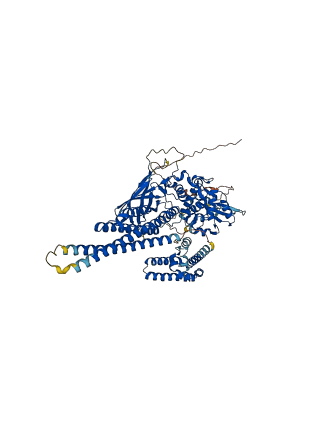
Descriptions
The autoinhibited protein was predicted that may have potential autoinhibitory elements via cis-regPred.
Autoinhibitory domains (AIDs)
Target domain |
|
Relief mechanism |
|
Assay |
cis-regPred |
Accessory elements
No accessory elements
Autoinhibited structure

Activated structure
387 variants for P40763
| Variant ID(s) | Position | Change | Description | Diseaes Association | Provenance |
|---|---|---|---|---|---|
|
RCV000707027 rs780720013 CA8575728 RCV001772013 |
13 | R>Q | Hyper-IgE recurrent infection syndrome 1 [ClinVar] | Yes |
ClinGen ClinVar ExAC TOPMed dbSNP gnomAD |
|
RCV000813071 CA8575726 rs751281347 |
24 | D>N | Hyper-IgE recurrent infection syndrome 1 [ClinVar] | Yes |
ClinGen ClinVar ExAC dbSNP |
|
RCV000814155 CA290747730 rs748204289 |
35 | A>S | Hyper-IgE recurrent infection syndrome 1 [ClinVar] | Yes |
ClinGen ClinVar Ensembl dbSNP |
|
rs2082709836 RCV001214267 |
84 | R>* | Hyper-IgE recurrent infection syndrome 1 [ClinVar] | Yes |
ClinVar dbSNP |
|
rs2082663522 RCV001201701 |
94 | Y>C | Hyper-IgE recurrent infection syndrome 1 [ClinVar] | Yes |
ClinVar dbSNP |
|
CA399596589 rs1408283351 RCV000686341 |
103 | R>W | Hyper-IgE recurrent infection syndrome 1 [ClinVar] | Yes |
ClinGen ClinVar TOPMed dbSNP gnomAD |
|
RCV001128401 rs2082662438 |
104 | I>T | Hyper-IgE recurrent infection syndrome 1 [ClinVar] | Yes |
ClinVar dbSNP |
|
RCV001048762 CA8575660 rs774724351 |
122 | A>V | Hyper-IgE recurrent infection syndrome 1 [ClinVar] | Yes |
ClinGen ClinVar ExAC TOPMed dbSNP gnomAD |
|
rs574370336 CA8575646 RCV001198591 RCV001433648 RCV001816659 RCV000658779 |
125 | Q>E | STAT3-related early-onset multisystem autoimmune disease Hyper-IgE recurrent infection syndrome 1 [ClinVar] | Yes |
ClinGen ClinVar 1000Genomes ExAC TOPMed dbSNP gnomAD |
|
COSM401714 CA8575644 rs777883261 RCV001350580 |
126 | G>E | lung Hyper-IgE recurrent infection syndrome 1 [Cosmic, ClinVar] | Yes |
ClinGen cosmic curated ClinVar ExAC dbSNP gnomAD |
|
RCV000804971 rs1222451818 CA399595232 |
129 | A>T | Hyper-IgE recurrent infection syndrome 1 [ClinVar] | Yes |
ClinGen ClinVar dbSNP gnomAD |
|
rs1008624238 CA399595159 CA399595160 RCV001348486 |
136 | V>L | Hyper-IgE recurrent infection syndrome 1 [ClinVar] | Yes |
ClinGen ClinVar TOPMed dbSNP gnomAD |
|
rs869312890 RCV000210417 RCV000653281 CA357942 |
152 | R>W | Variant assessed as Somatic; 0.0 impact. Hyper-IgE recurrent infection syndrome 1 STAT3-related early-onset multisystem autoimmune disease [NCI-TCGA, ClinVar] | Yes |
ClinGen ClinVar NCI-TCGA dbSNP gnomAD |
|
rs2082347176 RCV001242795 |
154 | R>G | Hyper-IgE recurrent infection syndrome 1 [ClinVar] | Yes |
ClinVar dbSNP |
|
RCV002524075 RCV000498783 rs1555568535 CA399594876 |
159 | E>K | Hyper-IgE recurrent infection syndrome 1 [ClinVar] | Yes |
ClinGen ClinVar Ensembl dbSNP |
|
RCV000653279 CA399594800 rs1555568530 |
166 | E>D | Hyper-IgE recurrent infection syndrome 1 [ClinVar] | Yes |
ClinGen ClinVar Ensembl dbSNP |
|
CA8575623 rs758408552 RCV000707113 |
175 | N>H | Hyper-IgE recurrent infection syndrome 1 [ClinVar] | Yes |
ClinGen ClinVar ExAC dbSNP gnomAD |
|
RCV001221973 CA290743001 rs895801743 RCV001773499 |
194 | S>L | Hyper-IgE recurrent infection syndrome 1 [ClinVar] | Yes |
ClinGen ClinVar TOPMed dbSNP gnomAD |
|
RCV001058346 CA399594084 rs1356637796 |
209 | A>V | Hyper-IgE recurrent infection syndrome 1 [ClinVar] | Yes |
ClinGen ClinVar TOPMed dbSNP |
|
RCV001040165 rs2082274785 |
259 | C>Y | Hyper-IgE recurrent infection syndrome 1 [ClinVar] | Yes |
ClinVar dbSNP |
|
CA399592874 rs1598422720 RCV000810893 RCV000996548 |
260 | L>P | Hyper-IgE recurrent infection syndrome 1 [ClinVar] | Yes |
ClinGen ClinVar Ensembl dbSNP |
|
CA399592836 rs1451984094 RCV001058775 COSM3983453 |
262 | R>Q | ovary Hyper-IgE recurrent infection syndrome 1 [Cosmic, ClinVar] | Yes |
ClinGen cosmic curated ClinVar dbSNP gnomAD |
|
CA399591569 rs1598415756 RCV001027629 |
271 | A>V | Inherited Immunodeficiency Diseases [ClinVar] | Yes |
ClinGen ClinVar Ensembl dbSNP |
|
COSM979475 RCV000811844 RCV000523018 CA399591436 rs1555566945 |
278 | R>C | Variant assessed as Somatic; impact. endometrium Hyper-IgE recurrent infection syndrome 1 [NCI-TCGA, Cosmic, ClinVar] | Yes |
ClinGen cosmic curated ClinVar Ensembl NCI-TCGA dbSNP |
|
rs2082128828 RCV001054381 |
278 | R>H | Hyper-IgE recurrent infection syndrome 1 [ClinVar] | Yes |
ClinVar dbSNP |
|
RCV002552008 CA399591248 RCV001027634 rs1598415635 |
290 | K>N | Hyper-IgE recurrent infection syndrome 1 Inherited Immunodeficiency Diseases [ClinVar] | Yes |
ClinGen ClinVar Ensembl dbSNP |
|
RCV000817552 rs1598415625 CA399591227 |
292 | S>C | Hyper-IgE recurrent infection syndrome 1 [ClinVar] | Yes |
ClinGen ClinVar Ensembl dbSNP |
|
RCV001212461 rs2082128125 |
292 | S>T | Hyper-IgE recurrent infection syndrome 1 [ClinVar] | Yes |
ClinVar dbSNP |
|
rs1567718244 RCV000686060 CA399590773 |
325 | R>W | Hyper-IgE recurrent infection syndrome 1 [ClinVar] | Yes |
ClinGen ClinVar Ensembl dbSNP |
|
RCV000556500 rs1555566820 CA399590725 |
329 | M>K | Hyper-IgE recurrent infection syndrome 1 [ClinVar] | Yes |
ClinGen ClinVar Ensembl dbSNP |
|
CA399590723 RCV002552425 RCV001027631 rs1555566820 RCV001805975 |
329 | M>R | STAT3-related early-onset multisystem autoimmune disease Hyper-IgE recurrent infection syndrome 1 Inherited Immunodeficiency Diseases [ClinVar] | Yes |
ClinGen ClinVar Ensembl dbSNP |
| VAR_078445 | 330 | P>S | ADMIO1; increases transcriptional activity; increases binding to ISL1 promoter region; decreases glucose stimulated insulin secretion [UniProt] | Yes | UniProt |
|
CA260531 RCV000427432 RCV000030463 RCV000536459 rs193922716 |
335 | R>W | Variant assessed as Somatic; impact. Hyper-IgE recurrent infection syndrome 1 [NCI-TCGA, ClinVar] | Yes |
ClinGen ClinVar Ensembl NCI-TCGA dbSNP |
|
RCV000210413 rs869312887 CA357936 |
344 | Q>H | STAT3-related early-onset multisystem autoimmune disease [ClinVar] | Yes |
ClinGen ClinVar dbSNP gnomAD |
|
CA8575491 rs755524497 RCV001225168 |
350 | R>M | Hyper-IgE recurrent infection syndrome 1 [ClinVar] | Yes |
ClinGen ClinVar ExAC dbSNP gnomAD |
|
CA357951 rs869312891 RCV000210422 |
353 | V>F | STAT3-related early-onset multisystem autoimmune disease [ClinVar] | Yes |
ClinGen ClinVar Ensembl dbSNP |
|
rs2082009323 RCV001201610 |
355 | F>C | Hyper-IgE recurrent infection syndrome 1 [ClinVar] | Yes |
ClinVar dbSNP |
|
RCV001338602 CA399590082 rs1456534236 |
356 | P>T | Hyper-IgE recurrent infection syndrome 1 [ClinVar] | Yes |
ClinGen ClinVar TOPMed dbSNP gnomAD |
|
RCV001345067 rs2082008489 |
362 | L>F | Hyper-IgE recurrent infection syndrome 1 [ClinVar] | Yes |
ClinVar dbSNP |
|
CA10649263 rs886052942 RCV000305916 |
367 | C>W | Hyper-IgE syndrome [ClinVar] | Yes |
ClinGen ClinVar Ensembl dbSNP |
|
RCV002559276 CA8575445 RCV001200221 rs781724933 |
375 | V>I | Hyper-IgE recurrent infection syndrome 1 [ClinVar] | Yes |
ClinGen ClinVar ExAC dbSNP gnomAD |
|
rs2081912356 RCV001328610 |
377 | A>T | STAT3-related early-onset multisystem autoimmune disease [ClinVar] | Yes |
ClinVar dbSNP |
|
RCV000019969 VAR_037365 rs113994136 CA290736664 |
382 | R>L | Hyper-IgE recurrent infection syndrome 1 HIES1 [ClinVar, UniProt] | Yes |
ClinGen ClinVar UniProt Ensembl dbSNP |
|
CA341506 RCV001027632 RCV000019967 VAR_037366 RCV001059385 RCV001311887 rs113994136 |
382 | R>Q | Hyper-IgE recurrent infection syndrome 1 Inherited Immunodeficiency Diseases HIES1; loss of function [ClinVar, UniProt] | Yes |
ClinGen ClinVar UniProt Ensembl dbSNP |
|
CA341504 VAR_037367 RCV000814004 RCV000019966 RCV003149573 rs113994135 RCV000259784 COSM247623 |
382 | R>W | prostate Hyper-IgE recurrent infection syndrome 1 STAT3-related early-onset multisystem autoimmune disease HIES1; loss of function; reduced DNA-binding ability [Cosmic, ClinVar, UniProt] | Yes |
ClinGen cosmic curated ClinVar UniProt Ensembl dbSNP |
| VAR_037368 | 384 | F>L | HIES1 [UniProt] | Yes | UniProt |
| VAR_037369 | 384 | F>S | HIES1 [UniProt] | Yes | UniProt |
|
rs2081905517 RCV001566818 RCV001220202 |
389 | T>A | Hyper-IgE recurrent infection syndrome 1 [ClinVar] | Yes |
ClinVar dbSNP |
|
VAR_037370 CA264235 rs397514766 RCV000054835 |
389 | T>I | Hyper-IgE recurrent infection syndrome 1 HIES1; loss of function [ClinVar, UniProt] | Yes |
ClinGen ClinVar UniProt Ensembl dbSNP |
|
VAR_071885 RCV000133537 CA170585 rs587777648 |
392 | K>R | STAT3-related early-onset multisystem autoimmune disease ADMIO1 [ClinVar, UniProt] | Yes |
ClinGen ClinVar UniProt Ensembl dbSNP |
| VAR_075414 | 395 | N>Y | HIES1; unknown pathological significance; reduced DNA-binding ability [UniProt] | Yes | UniProt |
|
rs1598406231 RCV000809569 CA399588769 |
400 | N>I | Hyper-IgE recurrent infection syndrome 1 [ClinVar] | Yes |
ClinGen ClinVar Ensembl dbSNP |
|
RCV000804908 CA399588579 rs138001349 |
410 | H>Q | Hyper-IgE recurrent infection syndrome 1 [ClinVar] | Yes |
ClinGen ClinVar ESP ExAC TOPMed dbSNP gnomAD |
|
rs2081903545 RCV001343329 |
410 | H>Y | Hyper-IgE recurrent infection syndrome 1 [ClinVar] | Yes |
ClinVar dbSNP |
|
RCV001047258 rs1567713850 |
412 | T>A | Hyper-IgE recurrent infection syndrome 1 [ClinVar] | Yes |
ClinVar dbSNP |
|
RCV001045489 CA399588516 RCV000781883 rs1567713850 |
412 | T>S | Hyper-IgE syndrome Hyper-IgE recurrent infection syndrome 1 [ClinVar] | Yes |
ClinGen ClinVar Ensembl dbSNP |
|
rs2081894973 RCV001218921 |
414 | R>T | Hyper-IgE recurrent infection syndrome 1 [ClinVar] | Yes |
ClinVar dbSNP |
|
rs193922717 RCV000030464 COSM3701220 RCV000210430 CA260534 |
415 | E>K | liver Hyper-IgE recurrent infection syndrome 1 STAT3-related early-onset multisystem autoimmune disease [Cosmic, ClinVar] | Yes |
ClinGen cosmic curated ClinVar Ensembl dbSNP |
|
RCV000704931 rs1567713821 CA399588484 |
417 | R>G | Hyper-IgE recurrent infection syndrome 1 [ClinVar] | Yes |
ClinGen ClinVar Ensembl dbSNP |
|
rs869312893 CA357956 RCV000210425 |
420 | N>K | STAT3-related early-onset multisystem autoimmune disease [ClinVar] | Yes |
ClinGen ClinVar Ensembl dbSNP |
|
RCV000489679 CA357947 RCV001302951 RCV001775103 RCV000210420 rs869312888 |
421 | G>R | STAT3-related early-onset multisystem autoimmune disease Hyper-IgE recurrent infection syndrome 1 [ClinVar] | Yes |
ClinGen ClinVar Ensembl dbSNP |
|
CA399588452 rs1220754190 RCV001324610 |
422 | G>S | Hyper-IgE recurrent infection syndrome 1 [ClinVar] | Yes |
ClinGen ClinVar TOPMed dbSNP gnomAD |
|
CA341508 VAR_037371 RCV001333533 RCV000019968 COSM436636 rs113994137 |
423 | R>Q | Variant assessed as Somatic; impact. breast STAT3-related early-onset multisystem autoimmune disease Hyper-IgE recurrent infection syndrome 1 HIES1 [NCI-TCGA, Cosmic, ClinVar, UniProt] | Yes |
ClinGen cosmic curated ClinVar UniProt Ensembl NCI-TCGA dbSNP |
| VAR_075415 | 425 | N>Y | HIES1; unknown pathological significance; reduced DNA-binding ability [UniProt] | Yes | UniProt |
|
RCV001253455 rs2081712040 |
437 | H>L | STAT3-related early-onset multisystem autoimmune disease [ClinVar] | Yes |
ClinVar dbSNP |
|
RCV000822142 CA399587812 rs1598399795 |
437 | H>Q | Hyper-IgE recurrent infection syndrome 1 [ClinVar] | Yes |
ClinGen ClinVar Ensembl dbSNP |
| VAR_037372 | 437 | H>Y | HIES1; loss of function [UniProt] | Yes | UniProt |
|
CA399587727 rs1555564776 RCV000653280 |
443 | T>I | Hyper-IgE recurrent infection syndrome 1 [ClinVar] | Yes |
ClinGen ClinVar Ensembl dbSNP |
|
RCV001222015 rs2081709628 |
450 | L>F | Hyper-IgE recurrent infection syndrome 1 [ClinVar] | Yes |
ClinVar dbSNP |
|
RCV001001784 RCV000548514 RCV001812114 CA293771 rs149214040 RCV000335699 |
461 | V>L | Hyper-IgE recurrent infection syndrome 1 [ClinVar] | Yes |
ClinGen ClinVar 1000Genomes ExAC TOPMed dbSNP gnomAD |
|
rs113994138 RCV001851955 RCV000255324 RCV000019965 |
463 | V>missing | Hyper-IgE recurrent infection syndrome 1 [ClinVar] | Yes |
ClinVar dbSNP |
| VAR_037373 | 463 | V>del | HIES1; loss of function [UniProt] | Yes | UniProt |
|
CA399587307 RCV000813988 rs1598397592 |
465 | S>A | Hyper-IgE recurrent infection syndrome 1 [ClinVar] | Yes |
ClinGen ClinVar Ensembl dbSNP |
|
RCV002521588 RCV000417632 rs1057521091 CA16607583 |
466 | N>T | Hyper-IgE recurrent infection syndrome 1 [ClinVar] | Yes |
ClinGen ClinVar Ensembl dbSNP |
|
rs1598397528 CA399587130 RCV000815404 |
479 | W>C | Hyper-IgE recurrent infection syndrome 1 [ClinVar] | Yes |
ClinGen ClinVar Ensembl dbSNP |
|
RCV000585775 CA399586908 rs1555564365 |
489 | N>K | Adenoid cystic carcinoma [ClinVar] | Yes |
ClinGen ClinVar Ensembl dbSNP |
|
RCV003151129 RCV000653285 CA8575300 COSM1717514 rs146620441 |
498 | I>V | ovary NS Hyper-IgE recurrent infection syndrome 1 [Cosmic, ClinVar] | Yes |
ClinGen cosmic curated ClinVar 1000Genomes ESP ExAC TOPMed dbSNP gnomAD |
|
RCV000816092 rs1598397096 CA399586578 |
506 | E>K | Hyper-IgE recurrent infection syndrome 1 [ClinVar] | Yes |
ClinGen ClinVar Ensembl dbSNP |
|
CA8575297 RCV001306031 RCV000299414 rs145786768 RCV001420949 |
507 | V>F | Hyper-IgE recurrent infection syndrome 1 [ClinVar] | Yes |
ClinGen ClinVar 1000Genomes ESP ExAC TOPMed dbSNP gnomAD |
|
CA399584267 rs1567708724 RCV000691777 |
546 | W>R | Hyper-IgE recurrent infection syndrome 1 [ClinVar] | Yes |
ClinGen ClinVar Ensembl dbSNP |
|
RCV001760404 CA399583241 rs1459473021 RCV001320728 |
586 | M>T | Hyper-IgE recurrent infection syndrome 1 [ClinVar] | Yes |
ClinGen ClinVar TOPMed dbSNP gnomAD |
|
RCV000030468 CA260540 rs193922719 RCV002513264 |
591 | K>M | Hyper-IgE recurrent infection syndrome 1 [ClinVar] | Yes |
ClinGen ClinVar Ensembl dbSNP |
|
rs193922720 RCV000030469 CA260543 |
594 | E>K | Hyper-IgE recurrent infection syndrome 1 [ClinVar] | Yes |
ClinGen ClinVar Ensembl dbSNP |
|
CA399582925 rs1598393473 RCV000819114 |
611 | S>G | Hyper-IgE recurrent infection syndrome 1 [ClinVar] | Yes |
ClinGen ClinVar Ensembl dbSNP |
| VAR_037375 | 611 | S>N | HIES1 [UniProt] | Yes | UniProt |
|
RCV000605582 rs1555563871 CA399582815 |
618 | G>D | Hyper-IgE recurrent infection syndrome 1 [ClinVar] | Yes |
ClinGen ClinVar Ensembl dbSNP |
|
RCV000989850 RCV000688477 CA399582788 rs1567708034 |
620 | T>I | Hyper-IgE recurrent infection syndrome 1 [ClinVar] | Yes |
ClinGen ClinVar Ensembl dbSNP |
| VAR_037376 | 621 | F>V | HIES1 [UniProt] | Yes | UniProt |
| VAR_037377 | 622 | T>I | HIES1 [UniProt] | Yes | UniProt |
|
RCV000809972 CA399582514 rs1598392123 |
635 | Q>H | Hyper-IgE recurrent infection syndrome 1 [ClinVar] | Yes |
ClinGen ClinVar Ensembl dbSNP |
|
CA399582508 rs1567707544 RCV000706399 |
636 | S>P | Hyper-IgE recurrent infection syndrome 1 [ClinVar] | Yes |
ClinGen ClinVar Ensembl dbSNP |
| VAR_037378 | 637 | V>L | HIES1 [UniProt] | Yes | UniProt |
|
RCV000019970 VAR_037379 rs113994139 CA341510 RCV000587895 RCV000317206 RCV000653282 |
637 | V>M | Hyper-IgE syndrome Variant assessed as Somatic; impact. Hyper-IgE recurrent infection syndrome 1 HIES1; reduced DNA-binding ability [ClinVar, NCI-TCGA, UniProt] | Yes |
ClinGen ClinVar UniProt Ensembl NCI-TCGA dbSNP |
|
CA8575185 RCV000414550 RCV001036591 COSM1155743 rs769031989 RCV001420711 |
640 | Y>F | Variant assessed as Somatic; 0.0 impact. liver haematopoietic_and_lymphoid_tissue Hyper-IgE recurrent infection syndrome 1 [NCI-TCGA, Cosmic, ClinVar] | Yes |
ClinGen cosmic curated ClinVar ExAC NCI-TCGA dbSNP gnomAD |
|
RCV001337284 rs2081521901 |
644 | Q>missing | Hyper-IgE recurrent infection syndrome 1 [ClinVar] | Yes |
ClinVar dbSNP |
| VAR_037380 | 644 | Q>del | HIES1 [UniProt] | Yes | UniProt |
|
RCV000133538 rs587777649 VAR_071886 CA170587 |
646 | N>K | STAT3-related early-onset multisystem autoimmune disease ADMIO1 [ClinVar, UniProt] | Yes |
ClinGen ClinVar UniProt dbSNP gnomAD |
|
rs2081520804 RCV001123670 |
655 | M>L | Hyper-IgE recurrent infection syndrome 1 [ClinVar] | Yes |
ClinVar dbSNP |
|
RCV001234435 rs2081520452 |
657 | Y>missing | Hyper-IgE recurrent infection syndrome 1 [ClinVar] | Yes |
ClinVar dbSNP |
|
CA260546 rs193922721 VAR_037381 RCV000792130 RCV000030470 |
657 | Y>C | Hyper-IgE recurrent infection syndrome 1 HIES1; reduced DNA-binding ability [ClinVar, UniProt] | Yes |
ClinGen ClinVar UniProt Ensembl dbSNP |
|
VAR_071887 CA170590 COSM1155742 rs587777650 RCV000133539 RCV001254616 |
658 | K>N | haematopoietic_and_lymphoid_tissue STAT3-related early-onset multisystem autoimmune disease ADMIO1 [Cosmic, ClinVar, UniProt] | Yes |
ClinGen cosmic curated ClinVar Ensembl dbSNP UniProt |
|
RCV001267795 rs2081520204 |
658 | K>R | STAT3-related early-onset multisystem autoimmune disease [ClinVar] | Yes |
ClinVar dbSNP |
|
RCV001860114 RCV000585688 rs1555563717 CA399581938 |
659 | I>N | Hyper-IgE recurrent infection syndrome 1 [ClinVar] | Yes |
ClinGen ClinVar Ensembl dbSNP |
|
RCV000255312 RCV000586892 rs886039434 CA10588650 RCV000792133 |
660 | M>T | Hyper-IgE syndrome Hyper-IgE recurrent infection syndrome 1 [ClinVar] | Yes |
ClinGen ClinVar Ensembl dbSNP |
|
RCV001234436 rs2081519463 |
661 | D>V | Hyper-IgE recurrent infection syndrome 1 [ClinVar] | Yes |
ClinVar dbSNP |
|
COSM1155739 rs747639500 CA8575178 RCV002560162 RCV001193229 |
661 | D>Y | Variant assessed as Somatic; 0.0 impact. haematopoietic_and_lymphoid_tissue Hyper-IgE recurrent infection syndrome 1 [NCI-TCGA, Cosmic, ClinVar] | Yes |
ClinGen cosmic curated ClinVar ExAC NCI-TCGA dbSNP gnomAD |
|
RCV000210428 CA357959 rs869312889 RCV000788237 |
663 | T>I | STAT3-related early-onset multisystem autoimmune disease [ClinVar] | Yes |
ClinGen ClinVar Ensembl dbSNP |
|
RCV000818722 CA399581788 rs1598391980 |
665 | I>F | Hyper-IgE recurrent infection syndrome 1 [ClinVar] | Yes |
ClinGen ClinVar Ensembl dbSNP |
|
rs1407556958 RCV001050700 |
672 | Y>C | Hyper-IgE recurrent infection syndrome 1 [ClinVar] | Yes |
ClinVar dbSNP |
|
CA290732175 CA8575174 rs780466766 RCV001057008 |
684 | G>R | Hyper-IgE recurrent infection syndrome 1 [ClinVar] | Yes |
ClinGen ExAC TOPMed gnomAD ClinVar dbSNP |
|
rs139701269 RCV001070774 CA8575172 RCV000781324 |
694 | H>Q | Hyper-IgE recurrent infection syndrome 1 [ClinVar] | Yes |
ClinGen ClinVar ESP ExAC TOPMed dbSNP gnomAD |
|
rs747667389 RCV000934028 CA8575160 |
702 | A>T | Hyper-IgE recurrent infection syndrome 1 [ClinVar] | Yes |
ClinGen ClinVar ExAC TOPMed dbSNP gnomAD |
|
rs869312894 RCV000210433 CA357962 |
703 | A>T | STAT3-related early-onset multisystem autoimmune disease [ClinVar] | Yes |
ClinGen ClinVar Ensembl dbSNP |
|
RCV001217584 rs2081288410 |
705 | Y>H | Hyper-IgE recurrent infection syndrome 1 [ClinVar] | Yes |
ClinVar dbSNP |
|
CA399580232 RCV000493323 RCV000695153 rs1131691476 |
706 | L>P | Hyper-IgE recurrent infection syndrome 1 [ClinVar] | Yes |
ClinGen ClinVar Ensembl dbSNP |
|
RCV001027633 rs1598381169 CA399580229 |
707 | K>E | Inherited Immunodeficiency Diseases [ClinVar] | Yes |
ClinGen ClinVar Ensembl dbSNP |
|
CA399580197 rs1598381121 RCV000989849 |
711 | I>S | Hyper-IgE recurrent infection syndrome 1 [ClinVar] | Yes |
ClinGen ClinVar Ensembl dbSNP |
|
RCV000493699 CA399580199 RCV003139697 rs1131691937 |
711 | I>V | Hyper-IgE recurrent infection syndrome 1 [ClinVar] | Yes |
ClinGen ClinVar Ensembl dbSNP |
|
rs193922722 CA260548 RCV000030471 |
712 | C>R | Hyper-IgE recurrent infection syndrome 1 [ClinVar] | Yes |
ClinGen ClinVar Ensembl dbSNP |
|
rs2081287195 RCV001302950 |
714 | T>I | Hyper-IgE recurrent infection syndrome 1 [ClinVar] | Yes |
ClinVar dbSNP |
|
RCV001027630 RCV002063763 RCV001216892 RCV000624252 rs1064794957 RCV003105918 RCV000482055 CA16620408 |
715 | P>L | Inborn genetic diseases Hyper-IgE recurrent infection syndrome 1 Inherited Immunodeficiency Diseases STAT3-related early-onset multisystem autoimmune disease [ClinVar] | Yes |
ClinGen ClinVar TOPMed dbSNP gnomAD |
|
rs869312892 RCV000210415 RCV000653278 VAR_071888 RCV000224259 CA357939 |
716 | T>M | Hyper-IgE recurrent infection syndrome 1 STAT3-related early-onset multisystem autoimmune disease ADMIO1 [ClinVar, UniProt] | Yes |
ClinGen ClinVar UniProt Ensembl dbSNP |
|
CA8575127 RCV001719019 rs151033214 RCV000707338 RCV000768099 |
743 | G>V | Hyper-IgE recurrent infection syndrome 1 [ClinVar] | Yes |
ClinGen ClinVar ESP ExAC TOPMed dbSNP gnomAD |
|
CA8575092 RCV000604841 RCV001543695 rs140604473 RCV001069947 |
763 | S>L | Variant assessed as Somatic; 0.0 impact. Hyper-IgE recurrent infection syndrome 1 [NCI-TCGA, ClinVar] | Yes |
ClinGen ClinVar 1000Genomes ESP ExAC NCI-TCGA TOPMed dbSNP gnomAD |
|
RCV002068676 rs779485558 CA8575086 |
766 | A>T | Hyper-IgE recurrent infection syndrome 1 [ClinVar] | Yes |
ClinGen ClinVar ExAC TOPMed dbSNP gnomAD |
|
RCV001350424 CA399578888 rs1191676333 |
768 | S>F | Hyper-IgE recurrent infection syndrome 1 [ClinVar] | Yes |
ClinGen ClinVar TOPMed dbSNP |
|
rs1041081083 CA290747772 |
5 | N>S | No |
ClinGen gnomAD |
|
|
CA399597972 rs1386600261 |
5 | N>Y | No |
ClinGen gnomAD |
|
|
rs1462777520 CA399597801 |
21 | L>V | Variant assessed as Somatic; 0.0 impact. [NCI-TCGA] | No |
ClinGen NCI-TCGA gnomAD |
|
rs1803125 CA290747736 VAR_018683 |
32 | Q>K | No |
ClinGen UniProt Ensembl dbSNP |
|
|
rs1340218209 CA399597669 |
33 | F>V | No |
ClinGen gnomAD |
|
|
rs1292306960 CA399597643 |
36 | P>S | No |
ClinGen TOPMed |
|
|
CA8575702 rs766994331 |
45 | Y>* | No |
ClinGen ExAC TOPMed gnomAD |
|
|
COSM291497 rs868859792 CA290747053 |
46 | A>V | large_intestine prostate [Cosmic] | No |
ClinGen cosmic curated Ensembl |
| TCGA novel | 47 | A>T | Variant assessed as Somatic; impact. [NCI-TCGA] | No | NCI-TCGA |
|
rs766875947 CA8575699 |
48 | S>I | No |
ClinGen ExAC gnomAD |
|
|
rs766875947 CA290747046 |
48 | S>N | No |
ClinGen ExAC gnomAD |
|
|
CA8575696 rs775122881 |
65 | D>G | No |
ClinGen ExAC gnomAD |
|
|
CA290747040 rs375760579 |
66 | Q>E | No |
ClinGen ESP |
|
|
CA399596992 rs1187104418 |
68 | Y>H | No |
ClinGen TOPMed |
|
|
rs1281834571 CA399596871 |
79 | Y>C | No |
ClinGen gnomAD |
|
|
CA8575693 rs776494537 |
82 | N>S | No |
ClinGen ExAC gnomAD |
|
|
CA399596832 rs1423582073 |
85 | R>K | No |
ClinGen TOPMed |
|
|
rs1344374375 CA399596771 |
91 | Q>R | No |
ClinGen gnomAD |
|
| TCGA novel | 99 | M>R | Variant assessed as Somatic; impact. [NCI-TCGA] | No | NCI-TCGA |
|
CA399596631 rs1452139691 |
99 | M>V | No |
ClinGen gnomAD |
|
|
rs1417279405 CA399596587 |
103 | R>Q | No |
ClinGen gnomAD |
|
|
rs749626783 CA8575668 |
107 | R>Q | No |
ClinGen ExAC gnomAD |
|
|
rs780604324 CA8575667 |
108 | C>Y | No |
ClinGen ExAC gnomAD |
|
|
CA399596474 rs1215714766 |
113 | S>L | No |
ClinGen gnomAD |
|
|
CA290746475 rs964892419 |
114 | R>C | No |
ClinGen Ensembl |
|
|
CA399596466 rs1344978308 |
114 | R>H | Variant assessed as Somatic; 0.0 impact. [NCI-TCGA] | No |
ClinGen NCI-TCGA TOPMed gnomAD |
|
rs1360347337 CA399596457 |
115 | L>F | No |
ClinGen gnomAD |
|
|
rs1234764558 CA399596424 |
118 | T>I | No |
ClinGen TOPMed |
|
|
CA8575663 rs757305223 |
118 | T>S | No |
ClinGen ExAC gnomAD |
|
|
rs751614036 CA8575662 |
121 | T>S | No |
ClinGen ExAC TOPMed gnomAD |
|
|
CA399596379 rs1440082733 |
122 | A>P | No |
ClinGen gnomAD |
|
|
CA399596357 rs1475754644 |
123 | A>G | No |
ClinGen TOPMed gnomAD |
|
|
CA399596363 rs1410411796 |
123 | A>T | No |
ClinGen gnomAD |
|
|
CA399596352 rs1475754644 RCV001193228 |
123 | A>V | No |
ClinGen ClinVar TOPMed dbSNP gnomAD |
|
| TCGA novel | 127 | G>A | Variant assessed as Somatic; impact. [NCI-TCGA] | No | NCI-TCGA |
|
CA399595218 rs1195908534 |
130 | N>S | No |
ClinGen gnomAD |
|
|
CA399595217 rs1195908534 |
130 | N>T | No |
ClinGen gnomAD |
|
|
CA399595205 rs1598426516 |
131 | H>P | No |
ClinGen Ensembl |
|
|
CA399595191 rs1442943787 |
133 | T>P | No |
ClinGen TOPMed |
|
|
rs1008624238 CA290743555 |
136 | V>M | Variant assessed as Somatic; 0.0 impact. [NCI-TCGA] | No |
ClinGen NCI-TCGA TOPMed gnomAD |
|
rs17878478 VAR_018679 CA8575638 |
143 | M>I | No |
ClinGen UniProt ESP ExAC TOPMed dbSNP gnomAD |
|
|
CA399595032 rs1598426415 |
147 | H>P | No |
ClinGen Ensembl |
|
|
CA399595033 rs1477283446 |
147 | H>Y | No |
ClinGen TOPMed |
|
|
rs1567723290 CA399594980 |
152 | R>Q | No |
ClinGen Ensembl |
|
|
CA290743268 rs1029086530 |
158 | L>I | No |
ClinGen Ensembl |
|
|
rs967009897 CA290743266 |
165 | V>L | No |
ClinGen TOPMed gnomAD |
|
|
rs995902901 CA290743258 |
175 | N>K | No |
ClinGen Ensembl |
|
|
CA8575622 rs748237742 |
179 | L>F | No |
ClinGen ExAC gnomAD |
|
|
rs866556426 CA290743255 |
181 | S>I | No |
ClinGen Ensembl |
|
|
CA8575604 rs748184550 |
184 | D>G | No |
ClinGen ExAC gnomAD |
|
|
rs749529243 CA8575601 |
188 | L>M | No |
ClinGen ExAC TOPMed gnomAD |
|
|
rs781034418 CA8575600 |
189 | N>K | No |
ClinGen ExAC TOPMed gnomAD |
|
|
rs1423110870 CA399594478 |
194 | S>T | No |
ClinGen gnomAD |
|
| TCGA novel | 195 | V>L | Variant assessed as Somatic; impact. [NCI-TCGA] | No | NCI-TCGA |
|
CA8575598 rs751411956 |
196 | T>N | No |
ClinGen ExAC gnomAD |
|
|
rs1048207886 CA290742998 |
197 | R>K | No |
ClinGen Ensembl |
|
|
CA8575597 rs374063766 |
198 | Q>H | No |
ClinGen ESP ExAC gnomAD |
|
|
CA290742982 rs993574412 |
198 | Q>K | No |
ClinGen Ensembl |
|
|
rs753370239 CA8575592 |
215 | R>G | No |
ClinGen ExAC TOPMed gnomAD |
|
|
rs1175109539 CA399593804 |
216 | S>G | No |
ClinGen TOPMed |
|
|
rs1325088493 CA399593754 |
218 | V>L | No |
ClinGen gnomAD |
|
|
CA399593752 rs1325088493 |
218 | V>M | No |
ClinGen gnomAD |
|
|
CA8575565 rs762301765 |
219 | S>N | No |
ClinGen ExAC TOPMed gnomAD |
|
|
rs762301765 CA290742863 |
219 | S>T | No |
ClinGen ExAC TOPMed gnomAD |
|
|
CA8575563 rs764674735 |
222 | A>V | No |
ClinGen ExAC gnomAD |
|
|
rs1004741102 CA290742846 |
227 | A>V | No |
ClinGen TOPMed |
|
|
rs993916477 CA290742842 |
229 | E>G | No |
ClinGen Ensembl |
|
|
rs1348311948 CA399593516 |
229 | E>K | No |
ClinGen TOPMed |
|
|
rs1284111065 CA399593473 |
231 | V>M | No |
ClinGen TOPMed |
|
|
CA399593408 rs1205738213 |
234 | T>S | No |
ClinGen TOPMed |
|
|
CA8575557 rs371541785 |
236 | T>R | No |
ClinGen ESP ExAC gnomAD |
|
|
rs773138024 CA8575558 |
236 | T>S | No |
ClinGen ExAC gnomAD |
|
|
rs1064793452 RCV000486355 |
237 | D>missing | No |
ClinVar dbSNP |
|
|
CA8575556 rs376677265 |
237 | D>N | No |
ClinGen ESP ExAC TOPMed gnomAD |
|
|
CA8575552 rs755746762 |
242 | D>E | No |
ClinGen ExAC gnomAD |
|
|
rs1279915769 CA399593156 |
245 | R>G | No |
ClinGen gnomAD |
|
|
CA399593127 rs1221396883 |
246 | R>Q | No |
ClinGen gnomAD |
|
| TCGA novel | 246 | R>W | Variant assessed as Somatic; impact. [NCI-TCGA] | No | NCI-TCGA |
|
CA8575551 rs750141391 |
247 | Q>* | No |
ClinGen ExAC |
|
|
CA290742774 rs757347742 |
248 | Q>P | No |
ClinGen Ensembl |
|
|
CA399593060 rs1269919034 |
249 | I>M | No |
ClinGen gnomAD |
|
|
CA8575550 rs767159289 |
249 | I>T | No |
ClinGen ExAC gnomAD |
|
| TCGA novel | 251 | C>Y | Variant assessed as Somatic; impact. [NCI-TCGA] | No | NCI-TCGA |
|
rs764478072 CA8575548 |
260 | L>V | No |
ClinGen ExAC gnomAD |
|
|
rs763564047 CA8575546 |
264 | E>K | No |
ClinGen ExAC gnomAD |
|
|
rs775421377 CA8575545 |
265 | N>K | No |
ClinGen ExAC gnomAD |
|
|
rs749302989 CA8575537 |
267 | I>V | No |
ClinGen ExAC gnomAD |
|
|
rs779422770 CA8575536 |
268 | T>K | No |
ClinGen ExAC gnomAD |
|
|
CA8575534 rs745393806 |
273 | S>P | No |
ClinGen ExAC gnomAD |
|
| TCGA novel | 275 | L>F | Variant assessed as Somatic; impact. [NCI-TCGA] | No | NCI-TCGA |
|
CA290739364 rs1064110 |
288 | Q>H | No |
ClinGen Ensembl |
|
|
CA399591122 rs1372134244 |
300 | Q>H | No |
ClinGen gnomAD |
|
|
rs1598415588 CA399591116 |
301 | H>P | No |
ClinGen Ensembl |
|
|
CA399591101 RCV000761952 rs1161466672 |
302 | R>Q | No |
ClinGen ClinVar dbSNP gnomAD |
|
|
rs1598415577 CA399591102 |
302 | R>W | No |
ClinGen Ensembl |
|
| TCGA novel | 308 | R>I | Variant assessed as Somatic; impact. [NCI-TCGA] | No | NCI-TCGA |
|
CA399591000 rs1274332868 |
309 | I>T | No |
ClinGen TOPMed |
|
|
rs765856200 CA8575527 |
310 | V>M | No |
ClinGen ExAC gnomAD |
|
| TCGA novel | 311 | E>K | Variant assessed as Somatic; impact. [NCI-TCGA] | No | NCI-TCGA |
|
rs1002835395 CA290739285 |
318 | K>E | No |
ClinGen TOPMed gnomAD |
|
|
rs1281630344 CA399590771 |
325 | R>Q | No |
ClinGen TOPMed |
|
|
rs1320566169 CA399590761 |
326 | Q>P | No |
ClinGen gnomAD |
|
|
rs759527569 CA8575499 |
327 | P>A | No |
ClinGen ExAC gnomAD |
|
|
CA399590743 rs1598414939 |
328 | C>R | No |
ClinGen Ensembl |
|
|
CA399590709 rs1427784630 |
330 | P>R | No |
ClinGen gnomAD |
|
|
rs1085307931 CA399590697 RCV000488939 |
331 | M>R | No |
ClinGen ClinVar Ensembl dbSNP |
|
| TCGA novel | 334 | D>Y | Variant assessed as Somatic; impact. [NCI-TCGA] | No | NCI-TCGA |
|
CA8575498 rs776115471 |
335 | R>Q | No |
ClinGen ExAC gnomAD |
|
|
rs1354754513 CA399590638 |
337 | L>V | No |
ClinGen TOPMed |
|
|
rs371953916 CA8575496 |
338 | V>I | No |
ClinGen ESP ExAC TOPMed gnomAD |
|
|
RCV000494272 CA399590593 rs1131691377 |
341 | T>I | No |
ClinGen ClinVar Ensembl dbSNP |
|
|
COSM1227807 CA399590591 rs1249457196 |
342 | G>S | large_intestine [Cosmic] | No |
ClinGen cosmic curated TOPMed |
|
CA8575493 rs748496600 |
347 | T>A | No |
ClinGen ExAC gnomAD |
|
|
rs368454926 CA290739159 |
349 | V>I | No |
ClinGen ESP |
|
|
rs1456534236 CA399590079 |
356 | P>S | Variant assessed as Somatic; 0.0 impact. [NCI-TCGA] | No |
ClinGen NCI-TCGA TOPMed gnomAD |
|
rs769072802 CA8575473 |
358 | L>W | No |
ClinGen ExAC gnomAD |
|
|
CA399589960 rs1450095389 |
366 | V>M | No |
ClinGen TOPMed |
|
| TCGA novel | 369 | D>= | Variant assessed as Somatic; impact. [NCI-TCGA] | No | NCI-TCGA |
|
rs1567715988 CA399589907 |
370 | K>R | No |
ClinGen Ensembl |
|
| TCGA novel | 372 | S>F | Variant assessed as Somatic; impact. [NCI-TCGA] | No | NCI-TCGA |
|
CA399589419 rs1449703019 |
374 | D>Y | No |
ClinGen gnomAD |
|
|
rs781724933 CA399589383 |
375 | V>F | No |
ClinGen ExAC gnomAD |
|
|
CA8575444 rs373083464 |
376 | A>V | No |
ClinGen ESP ExAC TOPMed gnomAD |
|
| TCGA novel | 378 | L>R | Variant assessed as Somatic; impact. [NCI-TCGA] | No | NCI-TCGA |
| TCGA novel | 379 | R>G | Variant assessed as Somatic; impact. [NCI-TCGA] | No | NCI-TCGA |
|
rs566350932 CA8575418 |
390 | N>S | No |
ClinGen 1000Genomes ExAC gnomAD |
|
| TCGA novel | 391 | T>K | Variant assessed as Somatic; impact. [NCI-TCGA] | No | NCI-TCGA |
|
CA399588977 rs1401418993 |
392 | K>E | No |
ClinGen gnomAD |
|
|
CA399588781 rs1455469288 |
400 | N>Y | No |
ClinGen gnomAD |
|
|
rs1598406213 CA399588747 |
401 | N>T | No |
ClinGen Ensembl |
|
|
rs1243282547 CA399588726 |
402 | G>A | No |
ClinGen gnomAD |
|
|
CA8575415 COSM1383360 rs763754846 |
402 | G>S | large_intestine [Cosmic] | No |
ClinGen cosmic curated ExAC TOPMed gnomAD |
|
rs1442343135 CA399588636 |
407 | E>A | No |
ClinGen gnomAD |
|
| TCGA novel | 409 | K>T | Variant assessed as Somatic; impact. [NCI-TCGA] | No | NCI-TCGA |
| TCGA novel | 411 | L>* | Variant assessed as Somatic; impact. [NCI-TCGA] | No | NCI-TCGA |
|
rs1413822678 CA399588473 |
418 | C>F | No |
ClinGen gnomAD |
|
|
RCV000658778 rs1555565595 CA399588468 |
419 | G>R | No |
ClinGen ClinVar Ensembl dbSNP |
|
|
CA399588445 rs1290480970 |
423 | R>* | No |
ClinGen TOPMed |
|
|
rs1471859658 CA399588442 |
424 | A>T | No |
ClinGen gnomAD |
|
|
CA8575378 rs768739455 |
424 | A>V | No |
ClinGen ExAC gnomAD |
|
| TCGA novel | 425 | N>I | Variant assessed as Somatic; impact. [NCI-TCGA] | No | NCI-TCGA |
|
COSM1521518 rs749583802 CA8575377 |
427 | D>G | lung Variant assessed as Somatic; 0.0 impact. [Cosmic, NCI-TCGA] | No |
ClinGen cosmic curated ExAC NCI-TCGA gnomAD |
|
rs1598399811 CA399587946 |
428 | A>P | No |
ClinGen Ensembl |
|
| TCGA novel | 440 | T>I | Variant assessed as Somatic; impact. [NCI-TCGA] | No | NCI-TCGA |
|
CA290734235 rs867552191 |
442 | E>* | No |
ClinGen Ensembl |
|
|
rs771888821 CA8575353 |
444 | E>A | No |
ClinGen ExAC gnomAD |
|
|
CA399587719 rs1288968449 |
444 | E>K | Variant assessed as Somatic; 0.0 impact. [NCI-TCGA] | No |
ClinGen NCI-TCGA gnomAD |
|
CA399587696 rs1175778700 |
445 | V>A | No |
ClinGen gnomAD |
|
|
rs1180308108 CA399587699 |
445 | V>L | No |
ClinGen TOPMed |
|
|
rs1397083680 CA399587677 |
446 | Y>C | No |
ClinGen gnomAD |
|
|
CA8575350 rs768150168 |
451 | K>Q | No |
ClinGen ExAC gnomAD |
|
|
CA290734229 rs967484458 |
452 | I>T | No |
ClinGen TOPMed |
|
|
rs748564923 CA8575349 |
454 | L>P | No |
ClinGen ExAC TOPMed gnomAD |
|
|
CA290734228 rs34460718 |
455 | E>* | No |
ClinGen Ensembl |
|
| rs113994138 | 463 | V>missing | Variant assessed as Somatic; impact. [NCI-TCGA] | No | NCI-TCGA |
|
rs1057521091 CA16620413 RCV000486952 |
466 | N>S | No |
ClinGen ClinVar Ensembl dbSNP |
|
|
COSM3672455 rs1057520377 RCV000424764 CA16607238 |
472 | N>D | Variant assessed as Somatic; impact. prostate [NCI-TCGA, Cosmic] | No |
ClinGen cosmic curated ClinVar Ensembl NCI-TCGA dbSNP |
| TCGA novel | 481 | N>I | Variant assessed as Somatic; impact. [NCI-TCGA] | No | NCI-TCGA |
|
CA399587093 rs1311415179 |
482 | M>V | No |
ClinGen gnomAD |
|
|
rs1332809491 CA399587052 |
485 | N>D | No |
ClinGen gnomAD |
|
|
rs751900728 CA8575326 |
485 | N>K | No |
ClinGen ExAC gnomAD |
|
|
rs199996352 CA8575325 |
487 | P>S | No |
ClinGen 1000Genomes ExAC gnomAD |
|
| TCGA novel | 488 | K>* | Variant assessed as Somatic; impact. [NCI-TCGA] | No | NCI-TCGA |
| TCGA novel | 491 | N>T | Variant assessed as Somatic; impact. [NCI-TCGA] | No | NCI-TCGA |
|
CA8575299 rs763944667 |
503 | Q>H | No |
ClinGen ExAC gnomAD |
|
|
rs1281575473 CA399586428 |
510 | W>R | No |
ClinGen gnomAD |
|
|
rs1598397036 CA399586299 RCV000788825 |
514 | S>T | No |
ClinGen ClinVar Ensembl dbSNP |
|
|
CA8575296 rs765182656 |
518 | R>Q | Variant assessed as Somatic; 0.0 impact. [NCI-TCGA] | No |
ClinGen ExAC NCI-TCGA gnomAD |
|
CA399586142 RCV000788799 rs1598397013 |
521 | S>N | No |
ClinGen ClinVar Ensembl dbSNP |
|
|
rs759053963 CA8575295 |
523 | E>K | Variant assessed as Somatic; 0.0 impact. [NCI-TCGA] | No |
ClinGen ExAC NCI-TCGA gnomAD |
|
rs776053336 CA8575294 |
524 | Q>K | No |
ClinGen ExAC gnomAD |
|
|
rs1319979477 CA399585897 |
531 | K>R | No |
ClinGen gnomAD |
|
| TCGA novel | 535 | P>L | Variant assessed as Somatic; impact. [NCI-TCGA] | No | NCI-TCGA |
|
CA8575264 rs769706649 |
535 | P>S | No |
ClinGen ExAC gnomAD |
|
|
CA8575263 rs372641163 |
536 | G>V | No |
ClinGen ESP ExAC gnomAD |
|
|
CA8575262 rs781353111 |
542 | C>Y | No |
ClinGen ExAC gnomAD |
|
|
CA399584331 rs1598394688 |
544 | I>L | No |
ClinGen Ensembl |
|
|
rs1141129 CA290732630 |
548 | K>N | No |
ClinGen Ensembl |
|
| TCGA novel | 554 | M>L | Variant assessed as Somatic; impact. [NCI-TCGA] | No | NCI-TCGA |
|
rs1471271759 CA399583888 |
555 | A>T | No |
ClinGen gnomAD |
|
|
rs754677708 CA8575241 |
555 | A>V | No |
ClinGen ExAC gnomAD |
|
|
CA399583818 rs1371837147 |
558 | G>A | No |
ClinGen TOPMed |
|
| TCGA novel | 561 | F>L | Variant assessed as Somatic; impact. [NCI-TCGA] | No | NCI-TCGA |
|
rs1064116 CA290732525 VAR_037374 |
561 | F>Y | No |
ClinGen UniProt Ensembl dbSNP |
|
|
CA8575238 rs749943696 |
563 | V>F | No |
ClinGen ExAC gnomAD |
|
|
CA8575237 rs749943696 |
563 | V>I | No |
ClinGen ExAC gnomAD |
|
|
rs948739783 CA290732514 |
570 | D>E | No |
ClinGen Ensembl |
|
|
CA8575234 rs751201012 |
576 | I>T | No |
ClinGen ExAC gnomAD |
|
| TCGA novel | 577 | L>M | Variant assessed as Somatic; impact. [NCI-TCGA] | No | NCI-TCGA |
|
RCV000479618 rs1064796762 CA16620412 |
582 | E>K | No |
ClinGen ClinVar Ensembl dbSNP |
|
|
rs756779964 CA8575217 |
585 | I>T | No |
ClinGen ExAC gnomAD |
|
|
CA399583258 rs1167039513 |
585 | I>V | No |
ClinGen TOPMed |
|
|
CA8575215 rs149791519 |
595 | R>W | No |
ClinGen ESP ExAC |
|
|
CA8575214 rs758127158 |
596 | A>T | No |
ClinGen ExAC TOPMed gnomAD |
|
|
rs1397194993 CA399583101 |
597 | I>T | No |
ClinGen gnomAD |
|
|
CA8575212 rs765516506 |
600 | T>A | No |
ClinGen ExAC gnomAD |
|
|
CA399583052 rs1420345012 |
600 | T>I | No |
ClinGen TOPMed gnomAD |
|
|
CA399583053 rs1420345012 |
600 | T>S | No |
ClinGen TOPMed gnomAD |
|
|
CA8575211 rs759905653 |
601 | K>R | No |
ClinGen ExAC gnomAD |
|
|
rs759905653 RCV001090843 |
601 | K>T | No |
ClinVar dbSNP |
|
|
rs865836493 CA290732409 |
603 | P>Q | No |
ClinGen Ensembl |
|
|
rs1064122 CA290732396 |
609 | R>S | No |
ClinGen Ensembl |
|
|
RCV000254755 rs886039546 CA10588651 |
614 | S>G | No |
ClinGen ClinVar Ensembl dbSNP |
|
|
RCV000788454 CA399582860 rs1598393453 |
615 | K>E | No |
ClinGen ClinVar Ensembl dbSNP |
|
|
rs1064794899 CA16620411 RCV000480426 |
616 | E>Q | Variant assessed as Somatic; impact. [NCI-TCGA] | No |
ClinGen ClinVar Ensembl NCI-TCGA dbSNP |
|
CA8575207 rs773386939 |
619 | V>I | No |
ClinGen ExAC gnomAD |
|
|
RCV000498330 rs1555563854 RCV000586185 CA399582773 CA399582775 |
621 | F>L | No |
ClinGen ClinVar Ensembl dbSNP |
|
|
rs1306360590 CA399582779 |
621 | F>Y | No |
ClinGen gnomAD |
|
|
CA235970 rs786205503 RCV000171258 |
623 | W>L | No |
ClinGen ClinVar Ensembl dbSNP |
|
| TCGA novel | 629 | S>N | Variant assessed as Somatic; impact. [NCI-TCGA] | No | NCI-TCGA |
|
rs1466712110 CA399582487 |
638 | E>K | Variant assessed as Somatic; 0.0 impact. [NCI-TCGA] | No |
ClinGen NCI-TCGA gnomAD |
|
RCV001290672 rs2081522163 |
640 | Y>F | No |
ClinVar dbSNP |
|
| TCGA novel | 640 | Y>H | Variant assessed as Somatic; impact. [NCI-TCGA] | No | NCI-TCGA |
|
CA399582345 rs1598392074 |
646 | N>S | No |
ClinGen Ensembl |
|
|
CA8575182 RCV001200220 rs770986654 RCV001526946 COSM1155744 |
647 | N>I | Variant assessed as Somatic; 0.0 impact. haematopoietic_and_lymphoid_tissue [NCI-TCGA, Cosmic] | No |
ClinGen cosmic curated ClinVar ExAC NCI-TCGA dbSNP gnomAD |
|
rs770986654 CA8575183 |
647 | N>S | Variant assessed as Somatic; 0.0 impact. [NCI-TCGA] | No |
ClinGen ExAC NCI-TCGA gnomAD |
|
CA16620410 rs1064796922 RCV000479714 |
648 | M>K | No |
ClinGen ClinVar Ensembl dbSNP |
|
| TCGA novel | 649 | S>P | Variant assessed as Somatic; impact. [NCI-TCGA] | No | NCI-TCGA |
|
rs1064794421 RCV000481189 CA16620409 |
657 | Y>Q | No |
ClinGen ClinVar Ensembl dbSNP |
|
|
rs1324831487 CA399581755 |
667 | V>A | No |
ClinGen TOPMed gnomAD |
|
|
rs1324831487 CA399581753 |
667 | V>G | No |
ClinGen TOPMed gnomAD |
|
|
rs1340488106 CA399581762 |
667 | V>L | No |
ClinGen gnomAD |
|
|
CA399581683 rs1407556958 |
672 | Y>F | No |
ClinGen gnomAD |
|
| TCGA novel | 679 | K>N | Variant assessed as Somatic; impact. [NCI-TCGA] | No | NCI-TCGA |
| TCGA novel | 682 | A>T | Variant assessed as Somatic; impact. [NCI-TCGA] | No | NCI-TCGA |
|
rs373256669 COSM706311 CA399581459 |
683 | F>L | lung [Cosmic] | No |
ClinGen cosmic curated ESP ExAC TOPMed gnomAD |
| TCGA novel | 686 | Y>D | Variant assessed as Somatic; impact. [NCI-TCGA] | No | NCI-TCGA |
|
CA8575173 rs756441740 |
687 | C>Y | No |
ClinGen ExAC |
|
|
rs1425974175 CA399581285 |
697 | A>G | No |
ClinGen TOPMed gnomAD |
|
|
rs1244109795 CA399581292 |
697 | A>T | No |
ClinGen TOPMed |
|
| rs1173682056 | 701 | S>= | Variant assessed as Somatic; 0.0 impact. [NCI-TCGA] | No | NCI-TCGA |
|
CA399580260 rs1173682056 |
701 | S>R | No |
ClinGen TOPMed gnomAD |
|
|
rs778450270 CA8575159 |
702 | A>G | No |
ClinGen ExAC gnomAD |
|
|
RCV000523482 rs1555562364 CA399580215 |
709 | K>E | No |
ClinGen ClinVar Ensembl dbSNP |
|
| TCGA novel | 709 | K>N | Variant assessed as Somatic; impact. [NCI-TCGA] | No | NCI-TCGA |
|
CA399580212 rs1265717948 |
709 | K>R | No |
ClinGen gnomAD |
|
|
rs1064794957 CA399580170 |
715 | P>R | No |
ClinGen TOPMed gnomAD |
|
|
CA170581 rs1555562255 |
717 | T>I | No |
ClinGen Ensembl |
|
|
rs1598380422 CA399580153 |
717 | T>P | No |
ClinGen Ensembl |
|
|
CA399580145 rs1196027016 |
718 | C>Y | No |
ClinGen TOPMed |
|
| TCGA novel | 719 | S>N | Variant assessed as Somatic; impact. [NCI-TCGA] | No | NCI-TCGA |
|
CA8575139 rs761802498 CA8575138 |
720 | N>K | No |
ClinGen ExAC gnomAD |
|
|
CA399580126 rs1598380385 |
721 | T>P | No |
ClinGen Ensembl |
|
|
CA8575137 rs774279920 |
721 | T>S | No |
ClinGen ExAC gnomAD |
|
|
rs748822559 CA8575135 |
723 | D>A | No |
ClinGen ExAC gnomAD |
|
|
rs775171412 CA8575134 |
723 | D>E | No |
ClinGen ExAC TOPMed gnomAD |
|
|
rs769372865 CA8575133 |
725 | P>L | Variant assessed as Somatic; 0.0 impact. [NCI-TCGA] | No |
ClinGen ExAC NCI-TCGA gnomAD |
|
CA290727526 rs11547455 |
727 | S>F | No |
ClinGen Ensembl |
|
|
rs1293678815 CA399580076 |
729 | R>C | No |
ClinGen gnomAD |
|
|
rs886052941 CA10645663 |
739 | N>S | No |
ClinGen Ensembl |
|
|
CA8575130 rs757779747 |
740 | N>H | No |
ClinGen ExAC gnomAD |
|
|
rs1449859858 CA399579182 |
753 | E>G | No |
ClinGen TOPMed |
|
|
CA399579132 rs1313800550 |
756 | T>N | No |
ClinGen TOPMed |
|
|
CA8575093 rs759106857 |
762 | T>I | Variant assessed as Somatic; 0.0 impact. [NCI-TCGA] | No |
ClinGen ExAC NCI-TCGA gnomAD |
|
rs759106857 CA399579008 |
762 | T>S | No |
ClinGen ExAC gnomAD |
|
|
CA399578993 rs140604473 |
763 | S>W | No |
ClinGen 1000Genomes ESP ExAC TOPMed gnomAD |
|
|
rs145244024 CA8575088 |
765 | C>W | No |
ClinGen 1000Genomes ESP ExAC TOPMed gnomAD |
|
|
rs773766015 CA8575089 |
765 | C>Y | No |
ClinGen ExAC gnomAD |
|
|
rs948537906 CA290726858 |
766 | A>V | No |
ClinGen TOPMed |
|
|
rs183996904 CA8575085 |
767 | T>A | No |
ClinGen 1000Genomes ExAC gnomAD |
|
|
CA399578866 rs1372796820 |
770 | M>V | No |
ClinGen TOPMed |
2 associated diseases with P40763
[MIM: 147060]: Hyper-IgE recurrent infection syndrome 1, autosomal dominant (HIES1)
A rare disorder of immunity and connective tissue characterized by immunodeficiency, chronic eosinophilia, distinctive coarse facial appearance, abnormal dentition, hyperextensibility of the joints, and bone fractures. {ECO:0000269|PubMed:17676033, ECO:0000269|PubMed:17881745, ECO:0000269|PubMed:23342295, ECO:0000269|PubMed:26293184}. Note=The disease is caused by variants affecting the gene represented in this entry.
[MIM: 615952]: Autoimmune disease, multisystem, infantile-onset, 1 (ADMIO1)
A disorder characterized by early childhood onset of a spectrum of autoimmune manifestations affecting multiple organs, including insulin-dependent diabetes mellitus and autoimmune enteropathy or celiac disease. Other features include short stature, non-specific dermatitis, hypothyroidism, autoimmune arthritis, and delayed puberty. {ECO:0000269|PubMed:25038750, ECO:0000269|PubMed:28073828}. Note=The disease is caused by variants affecting the gene represented in this entry.
Without disease ID
- A rare disorder of immunity and connective tissue characterized by immunodeficiency, chronic eosinophilia, distinctive coarse facial appearance, abnormal dentition, hyperextensibility of the joints, and bone fractures. {ECO:0000269|PubMed:17676033, ECO:0000269|PubMed:17881745, ECO:0000269|PubMed:23342295, ECO:0000269|PubMed:26293184}. Note=The disease is caused by variants affecting the gene represented in this entry.
- A disorder characterized by early childhood onset of a spectrum of autoimmune manifestations affecting multiple organs, including insulin-dependent diabetes mellitus and autoimmune enteropathy or celiac disease. Other features include short stature, non-specific dermatitis, hypothyroidism, autoimmune arthritis, and delayed puberty. {ECO:0000269|PubMed:25038750, ECO:0000269|PubMed:28073828}. Note=The disease is caused by variants affecting the gene represented in this entry.
5 regional properties for P40763
| Type | Name | Position | InterPro Accession |
|---|---|---|---|
| domain | SH2 domain | 580 - 674 | IPR000980 |
| domain | STAT transcription factor, protein interaction | 2 - 122 | IPR013799 |
| domain | STAT transcription factor, all-alpha domain | 145 - 312 | IPR013800 |
| domain | STAT transcription factor, DNA-binding | 326 - 464 | IPR013801 |
| domain | STAT3, SH2 domain | 554 - 715 | IPR035855 |
Functions
8 GO annotations of cellular component
| Name | Definition |
|---|---|
| chromatin | The ordered and organized complex of DNA, protein, and sometimes RNA, that forms the chromosome. |
| cytoplasm | The contents of a cell excluding the plasma membrane and nucleus, but including other subcellular structures. |
| cytosol | The part of the cytoplasm that does not contain organelles but which does contain other particulate matter, such as protein complexes. |
| nucleoplasm | That part of the nuclear content other than the chromosomes or the nucleolus. |
| nucleus | A membrane-bounded organelle of eukaryotic cells in which chromosomes are housed and replicated. In most cells, the nucleus contains all of the cell's chromosomes except the organellar chromosomes, and is the site of RNA synthesis and processing. In some species, or in specialized cell types, RNA metabolism or DNA replication may be absent. |
| plasma membrane | The membrane surrounding a cell that separates the cell from its external environment. It consists of a phospholipid bilayer and associated proteins. |
| RNA polymerase II transcription regulator complex | A transcription factor complex that acts at a regulatory region of a gene transcribed by RNA polymerase II. |
| transcription regulator complex | A protein complex that is capable of associating with DNA by direct binding, or via other DNA-binding proteins or complexes, and regulating transcription. |
18 GO annotations of molecular function
| Name | Definition |
|---|---|
| chromatin DNA binding | Binding to DNA that is assembled into chromatin. |
| DNA binding | Any molecular function by which a gene product interacts selectively and non-covalently with DNA (deoxyribonucleic acid). |
| DNA-binding transcription activator activity, RNA polymerase II-specific | A DNA-binding transcription factor activity that activates or increases transcription of specific gene sets transcribed by RNA polymerase II. |
| DNA-binding transcription factor activity | A transcription regulator activity that modulates transcription of gene sets via selective and non-covalent binding to a specific double-stranded genomic DNA sequence (sometimes referred to as a motif) within a cis-regulatory region. Regulatory regions include promoters (proximal and distal) and enhancers. Genes are transcriptional units, and include bacterial operons. |
| DNA-binding transcription factor activity, RNA polymerase II-specific | A DNA-binding transcription factor activity that modulates the transcription of specific gene sets transcribed by RNA polymerase II. |
| DNA-binding transcription factor binding | Binding to a DNA-binding transcription factor, a protein that interacts with a specific DNA sequence (sometimes referred to as a motif) within the regulatory region of a gene to modulate transcription. |
| identical protein binding | Binding to an identical protein or proteins. |
| nuclear receptor activity | A DNA-binding transcription factor activity regulated by binding to a ligand that modulates the transcription of specific gene sets transcribed by RNA polymerase II. Nuclear receptor ligands are usually lipid-based (such as a steroid hormone) and the binding of the ligand to its receptor often occurs in the cytoplasm, which leads to its tranlocation to the nucleus. |
| primary miRNA binding | Binding to a primary microRNA (pri-miRNA) transcript, an RNA molecule that is processed into a short hairpin-shaped structure called a pre-miRNA and finally into a functional miRNA. Both double-stranded and single-stranded regions of a pri-miRNA are required for binding. |
| protein dimerization activity | The formation of a protein dimer, a macromolecular structure consists of two noncovalently associated identical or nonidentical subunits. |
| protein homodimerization activity | Binding to an identical protein to form a homodimer. |
| protein kinase binding | Binding to a protein kinase, any enzyme that catalyzes the transfer of a phosphate group, usually from ATP, to a protein substrate. |
| protein phosphatase binding | Binding to a protein phosphatase. |
| RNA polymerase II cis-regulatory region sequence-specific DNA binding | Binding to a specific upstream regulatory DNA sequence (transcription factor recognition sequence or binding site) located in cis relative to the transcription start site (i.e., on the same strand of DNA) of a gene transcribed by RNA polymerase II. |
| RNA polymerase II-specific DNA-binding transcription factor binding | Binding to a sequence-specific DNA binding RNA polymerase II transcription factor, any of the factors that interact selectively and non-covalently with a specific DNA sequence in order to modulate transcription. |
| signaling adaptor activity | The binding activity of a molecule that brings together two or more molecules in a signaling pathway, permitting those molecules to function in a coordinated way. Adaptor molecules themselves do not have catalytic activity. |
| signaling receptor binding | Binding to one or more specific sites on a receptor molecule, a macromolecule that undergoes combination with a hormone, neurotransmitter, drug or intracellular messenger to initiate a change in cell function. |
| transcription cis-regulatory region binding | Binding to a specific sequence of DNA that is part of a regulatory region that controls transcription of that section of the DNA. The transcribed region might be described as a gene, cistron, or operon. |
66 GO annotations of biological process
| Name | Definition |
|---|---|
| astrocyte differentiation | The process in which a relatively unspecialized cell acquires the specialized features of an astrocyte. An astrocyte is the most abundant type of glial cell. Astrocytes provide support for neurons and regulate the environment in which they function. |
| cell population proliferation | The multiplication or reproduction of cells, resulting in the expansion of a cell population. |
| cellular response to hormone stimulus | Any process that results in a change in state or activity of a cell (in terms of movement, secretion, enzyme production, gene expression, etc.) as a result of a hormone stimulus. |
| cellular response to interleukin-17 | Any process that results in a change in state or activity of a cell (in terms of movement, secretion, enzyme production, gene expression, etc.) as a result of an interleukin-17 stimulus. |
| cellular response to leptin stimulus | Any process that results in a change in state or activity of a cell (in terms of movement, secretion, enzyme production, gene expression, etc.) as a result of a leptin stimulus. Leptin is a hormone manufactured primarily in the adipocytes of white adipose tissue, and the level of circulating leptin is directly proportional to the total amount of fat in the body. It plays a key role in regulating energy intake and energy expenditure, including appetite and metabolism. |
| cytokine-mediated signaling pathway | The series of molecular signals initiated by the binding of a cytokine to a receptor on the surface of a cell, and ending with the regulation of a downstream cellular process, e.g. transcription. |
| defense response | Reactions, triggered in response to the presence of a foreign body or the occurrence of an injury, which result in restriction of damage to the organism attacked or prevention/recovery from the infection caused by the attack. |
| eating behavior | The specific behavior of an organism relating to the intake of food, any substance (usually solid) that can be metabolized by an organism to give energy and build tissue. |
| energy homeostasis | Any process involved in the balance between food intake (energy input) and energy expenditure. |
| eye photoreceptor cell differentiation | The process in which a relatively unspecialized cell acquires the specialized features of a photoreceptor cell, as found in the eye, the primary visual organ of most organisms. |
| glucose homeostasis | Any process involved in the maintenance of an internal steady state of glucose within an organism or cell. |
| growth hormone receptor signaling pathway | The series of molecular signals generated as a consequence of growth hormone receptor binding to its physiological ligand. |
| growth hormone receptor signaling pathway via JAK-STAT | The process in which STAT proteins (Signal Transducers and Activators of Transcription) are activated by members of the JAK (janus activated kinase) family of tyrosine kinases, following the binding of physiological ligands to the growth hormone receptor. Once activated, STATs dimerize and translocate to the nucleus and modulate the expression of target genes. |
| inflammatory response | The immediate defensive reaction (by vertebrate tissue) to infection or injury caused by chemical or physical agents. The process is characterized by local vasodilation, extravasation of plasma into intercellular spaces and accumulation of white blood cells and macrophages. |
| interleukin-6-mediated signaling pathway | The series of molecular signals initiated by interleukin-6 binding to a receptor on the surface of a target cell, and ending with the regulation of a downstream cellular process, e.g. transcription. |
| intracellular receptor signaling pathway | The series of molecular signals initiated by a ligand binding to a receptor located within a cell. |
| leptin-mediated signaling pathway | The series of molecular signals initiated by leptin binding to its receptor on the surface of a cell, and ending with the regulation of a downstream cellular process, e.g. transcription. Leptin is a hormone manufactured primarily in the adipocytes of white adipose tissue, and the level of circulating leptin is directly proportional to the total amount of fat in the body. |
| mRNA transcription by RNA polymerase II | The cellular synthesis of messenger RNA (mRNA) from a DNA template by RNA polymerase II, originating at an RNA polymerase II promoter. |
| negative regulation of autophagy | Any process that stops, prevents, or reduces the frequency, rate or extent of autophagy. Autophagy is the process in which cells digest parts of their own cytoplasm. |
| negative regulation of cell population proliferation | Any process that stops, prevents or reduces the rate or extent of cell proliferation. |
| negative regulation of gene expression | Any process that decreases the frequency, rate or extent of gene expression. Gene expression is the process in which a gene's coding sequence is converted into a mature gene product (protein or RNA). |
| negative regulation of glycolytic process | Any process that stops, prevents, or reduces the frequency, rate or extent of glycolysis. |
| negative regulation of neuron migration | Any process that stops, prevents or reduces the frequency, rate or extent of neuron migration. |
| negative regulation of primary miRNA processing | Any process that stops, prevents or reduces the frequency, rate or extent of primary microRNA processing. |
| negative regulation of stem cell differentiation | Any process that stops, prevents or reduces the frequency, rate or extent of stem cell differentiation. |
| negative regulation of transcription by RNA polymerase II | Any process that stops, prevents, or reduces the frequency, rate or extent of transcription mediated by RNA polymerase II. |
| nervous system development | The process whose specific outcome is the progression of nervous tissue over time, from its formation to its mature state. |
| phosphorylation | The process of introducing a phosphate group into a molecule, usually with the formation of a phosphoric ester, a phosphoric anhydride or a phosphoric amide. |
| positive regulation of angiogenesis | Any process that activates or increases angiogenesis. |
| positive regulation of cell migration | Any process that activates or increases the frequency, rate or extent of cell migration. |
| positive regulation of cytokine production involved in inflammatory response | Any process that activates or increases the frequency, rate or extent of cytokine production involved in inflammatory response. |
| positive regulation of DNA-templated transcription | Any process that activates or increases the frequency, rate or extent of cellular DNA-templated transcription. |
| positive regulation of erythrocyte differentiation | Any process that activates or increases the frequency, rate or extent of erythrocyte differentiation. |
| positive regulation of gene expression | Any process that increases the frequency, rate or extent of gene expression. Gene expression is the process in which a gene's coding sequence is converted into a mature gene product (protein or RNA). |
| positive regulation of interleukin-1 beta production | Any process that activates or increases the frequency, rate, or extent of interleukin-1 beta production. |
| positive regulation of interleukin-10 production | Any process that activates or increases the frequency, rate, or extent of interleukin-10 production. |
| positive regulation of interleukin-6 production | Any process that activates or increases the frequency, rate, or extent of interleukin-6 production. |
| positive regulation of interleukin-8 production | Any process that activates or increases the frequency, rate, or extent of interleukin-8 production. |
| positive regulation of metalloendopeptidase activity | Any process that activates or increases the frequency, rate or extent of metalloendopeptidase activity. |
| positive regulation of miRNA transcription | Any process that activates or increases the frequency, rate or extent of microRNA (miRNA) gene transcription. |
| positive regulation of miRNA-mediated gene silencing | A process that activates or increases the frequency, rate or extent of gene silencing by a microRNA (miRNA). |
| positive regulation of NF-kappaB transcription factor activity | Any process that activates or increases the frequency, rate or extent of activity of the transcription factor NF-kappaB. |
| positive regulation of Notch signaling pathway | Any process that activates or increases the frequency, rate or extent of the Notch signaling pathway. |
| positive regulation of transcription by RNA polymerase II | Any process that activates or increases the frequency, rate or extent of transcription from an RNA polymerase II promoter. |
| positive regulation of tumor necrosis factor production | Any process that activates or increases the frequency, rate or extent of tumor necrosis factor production. |
| positive regulation of vascular endothelial cell proliferation | Any process that activates or increases the frequency, rate or extent of vascular endothelial cell proliferation. |
| protein import into nucleus | The directed movement of a protein from the cytoplasm to the nucleus. |
| radial glial cell differentiation | The process in which neuroepithelial cells of the neural tube give rise to radial glial cells, specialized bipotential progenitors cells of the brain. Differentiation includes the processes involved in commitment of a cell to a specific fate. |
| receptor signaling pathway via JAK-STAT | Any process in which STAT proteins (Signal Transducers and Activators of Transcription) and JAK (Janus Activated Kinase) proteins convey a signal to trigger a change in the activity or state of a cell. The receptor signaling pathway via JAK-STAT begins with activation of a receptor and proceeeds through STAT protein activation by members of the JAK family of tyrosine kinases. STAT proteins dimerize and subsequently translocate to the nucleus. The pathway ends with regulation of target gene expression by STAT proteins. |
| regulation of cell cycle | Any process that modulates the rate or extent of progression through the cell cycle. |
| regulation of cell population proliferation | Any process that modulates the frequency, rate or extent of cell proliferation. |
| regulation of DNA-templated transcription | Any process that modulates the frequency, rate or extent of cellular DNA-templated transcription. |
| regulation of feeding behavior | Any process that modulates the rate, frequency or extent of the behavior associated with the intake of food. |
| regulation of multicellular organism growth | Any process that modulates the frequency, rate or extent of growth of the body of an organism so that it reaches its usual body size. |
| regulation of transcription by RNA polymerase II | Any process that modulates the frequency, rate or extent of transcription mediated by RNA polymerase II. |
| response to estradiol | Any process that results in a change in state or activity of a cell or an organism (in terms of movement, secretion, enzyme production, gene expression, etc.) as a result of stimulus by estradiol, a C18 steroid hormone hydroxylated at C3 and C17 that acts as a potent estrogen. |
| response to leptin | Any process that results in a change in state or activity of a cell or an organism (in terms of movement, secretion, enzyme production, gene expression, etc.) as a result of a leptin stimulus. Leptin is a hormone manufactured primarily in the adipocytes of white adipose tissue, and the level of circulating leptin is directly proportional to the total amount of fat in the body. It plays a key role in regulating energy intake and energy expenditure, including appetite and metabolism]. |
| response to peptide hormone | Any process that results in a change in state or activity of a cell or an organism (in terms of movement, secretion, enzyme production, gene expression, etc.) as a result of a peptide hormone stimulus. A peptide hormone is any of a class of peptides that are secreted into the blood stream and have endocrine functions in living animals. |
| retinal rod cell differentiation | The process in which a relatively unspecialized cell acquires the specialized features of a retinal rod cell. |
| sexual reproduction | A type of reproduction that combines the genetic material of two gametes (such as a sperm or egg cell or fungal spores). The gametes have an haploid genome (with a single set of chromosomes, the product of a meiotic division) and combines with one another to produce a zygote (diploid). |
| signal transduction | The cellular process in which a signal is conveyed to trigger a change in the activity or state of a cell. Signal transduction begins with reception of a signal (e.g. a ligand binding to a receptor or receptor activation by a stimulus such as light), or for signal transduction in the absence of ligand, signal-withdrawal or the activity of a constitutively active receptor. Signal transduction ends with regulation of a downstream cellular process, e.g. regulation of transcription or regulation of a metabolic process. Signal transduction covers signaling from receptors located on the surface of the cell and signaling via molecules located within the cell. For signaling between cells, signal transduction is restricted to events at and within the receiving cell. |
| somatic stem cell population maintenance | Any process by which an organism retains a population of somatic stem cells, undifferentiated cells in the embryo or adult which can undergo unlimited division and give rise to cell types of the body other than those of the germ-line. |
| T-helper 17 cell lineage commitment | The process in which a CD4-positive, alpha-beta T cell becomes committed to becoming a T-helper 17 cell, a CD4-positive, alpha-beta T cell with the phenotype RORgamma-t-positive that produces IL-17. |
| T-helper 17 type immune response | An immune response which is associated with resistance to intracellular bacteria with a key role in inflammation and tissue injury. This immune response is associated with pathological autoimmune conditions such as multiple sclerosis, arthritis and psoriasis which is typically orchestrated by the production of particular cytokines by T-helper 17 cells, most notably interleukin-17, IL-21 and IL-22. |
| temperature homeostasis | A homeostatic process in which an organism modulates its internal body temperature. |
| transforming growth factor beta receptor signaling pathway | The series of molecular signals initiated by an extracellular ligand binding to a transforming growth factor beta receptor on the surface of a target cell, and ending with the regulation of a downstream cellular process, e.g. transcription. |
15 homologous proteins in AiPD
| UniProt AC | Gene Name | Protein Name | Species | Evidence Code |
|---|---|---|---|---|
| P61635 | STAT3 | Signal transducer and activator of transcription 3 | Bos taurus (Bovine) | PR |
| Q6DV79 | STAT3 | Signal transducer and activator of transcription 3 | Gallus gallus (Chicken) | PR |
| P52630 | STAT2 | Signal transducer and activator of transcription 2 | Homo sapiens (Human) | PR |
| P42224 | STAT1 | Signal transducer and activator of transcription 1-alpha/beta | Homo sapiens (Human) | PR |
| Q14765 | STAT4 | Signal transducer and activator of transcription 4 | Homo sapiens (Human) | PR |
| P42229 | STAT5A | Signal transducer and activator of transcription 5A | Homo sapiens (Human) | PR |
| P51692 | STAT5B | Signal transducer and activator of transcription 5B | Homo sapiens (Human) | PR |
| P42230 | Stat5a | Signal transducer and activator of transcription 5A | Mus musculus (Mouse) | PR |
| P42228 | Stat4 | Signal transducer and activator of transcription 4 | Mus musculus (Mouse) | PR |
| P42225 | Stat1 | Signal transducer and activator of transcription 1 | Mus musculus (Mouse) | PR |
| Q9WVL2 | Stat2 | Signal transducer and activator of transcription 2 | Mus musculus (Mouse) | PR |
| P42227 | Stat3 | Signal transducer and activator of transcription 3 | Mus musculus (Mouse) | PR |
| Q19S50 | STAT3 | Signal transducer and activator of transcription 3 | Sus scrofa (Pig) | PR |
| P52631 | Stat3 | Signal transducer and activator of transcription 3 | Rattus norvegicus (Rat) | PR |
| Q9NAD6 | sta-1 | Signal transducer and activator of transcription 1 | Caenorhabditis elegans | PR |
| 10 | 20 | 30 | 40 | 50 | 60 |
| MAQWNQLQQL | DTRYLEQLHQ | LYSDSFPMEL | RQFLAPWIES | QDWAYAASKE | SHATLVFHNL |
| 70 | 80 | 90 | 100 | 110 | 120 |
| LGEIDQQYSR | FLQESNVLYQ | HNLRRIKQFL | QSRYLEKPME | IARIVARCLW | EESRLLQTAA |
| 130 | 140 | 150 | 160 | 170 | 180 |
| TAAQQGGQAN | HPTAAVVTEK | QQMLEQHLQD | VRKRVQDLEQ | KMKVVENLQD | DFDFNYKTLK |
| 190 | 200 | 210 | 220 | 230 | 240 |
| SQGDMQDLNG | NNQSVTRQKM | QQLEQMLTAL | DQMRRSIVSE | LAGLLSAMEY | VQKTLTDEEL |
| 250 | 260 | 270 | 280 | 290 | 300 |
| ADWKRRQQIA | CIGGPPNICL | DRLENWITSL | AESQLQTRQQ | IKKLEELQQK | VSYKGDPIVQ |
| 310 | 320 | 330 | 340 | 350 | 360 |
| HRPMLEERIV | ELFRNLMKSA | FVVERQPCMP | MHPDRPLVIK | TGVQFTTKVR | LLVKFPELNY |
| 370 | 380 | 390 | 400 | 410 | 420 |
| QLKIKVCIDK | DSGDVAALRG | SRKFNILGTN | TKVMNMEESN | NGSLSAEFKH | LTLREQRCGN |
| 430 | 440 | 450 | 460 | 470 | 480 |
| GGRANCDASL | IVTEELHLIT | FETEVYHQGL | KIDLETHSLP | VVVISNICQM | PNAWASILWY |
| 490 | 500 | 510 | 520 | 530 | 540 |
| NMLTNNPKNV | NFFTKPPIGT | WDQVAEVLSW | QFSSTTKRGL | SIEQLTTLAE | KLLGPGVNYS |
| 550 | 560 | 570 | 580 | 590 | 600 |
| GCQITWAKFC | KENMAGKGFS | FWVWLDNIID | LVKKYILALW | NEGYIMGFIS | KERERAILST |
| 610 | 620 | 630 | 640 | 650 | 660 |
| KPPGTFLLRF | SESSKEGGVT | FTWVEKDISG | KTQIQSVEPY | TKQQLNNMSF | AEIIMGYKIM |
| 670 | 680 | 690 | 700 | 710 | 720 |
| DATNILVSPL | VYLYPDIPKE | EAFGKYCRPE | SQEHPEADPG | SAAPYLKTKF | ICVTPTTCSN |
| 730 | 740 | 750 | 760 | ||
| TIDLPMSPRT | LDSLMQFGNN | GEGAEPSAGG | QFESLTFDME | LTSECATSPM |