P35439
Gene name |
Grin1 (Nmdar1) |
Protein name |
Glutamate receptor ionotropic, NMDA 1 |
Names |
GluN1, Glutamate [NMDA] receptor subunit zeta-1, N-methyl-D-aspartate receptor subunit NR1, NMD-R1 |
Species |
Rattus norvegicus (Rat) |
KEGG Pathway |
rno:24408 |
EC number |
|
Protein Class |
|
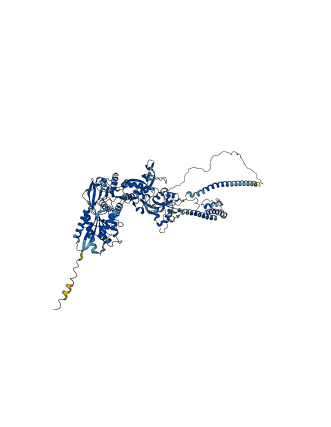
Descriptions
The autoinhibited protein was predicted that may have potential autoinhibitory elements via cis-regPred.
Autoinhibitory domains (AIDs)
Target domain |
|
Relief mechanism |
|
Assay |
cis-regPred |
Accessory elements
No accessory elements
Autoinhibited structure

Activated structure
86 structures for P35439
| Entry ID | Method | Resolution | Chain | Position | Source |
|---|---|---|---|---|---|
| 1PB7 | X-ray | 135 A | PDB | ||
| 1PB8 | X-ray | 145 A | PDB | ||
| 1PB9 | X-ray | 160 A | PDB | ||
| 1PBQ | X-ray | 190 A | PDB | ||
| 1Y1M | X-ray | 180 A | PDB | ||
| 1Y1Z | X-ray | 150 A | PDB | ||
| 1Y20 | X-ray | 140 A | PDB | ||
| 2A5T | X-ray | 200 A | A | 394-544 | PDB |
| 3Q41 | X-ray | 340 A | A/B/C | 21-393 | PDB |
| 4KCC | X-ray | 189 A | PDB | ||
| 4KFQ | X-ray | 220 A | PDB | ||
| 4NF4 | X-ray | 200 A | PDB | ||
| 4NF5 | X-ray | 190 A | PDB | ||
| 4NF6 | X-ray | 210 A | PDB | ||
| 4NF8 | X-ray | 186 A | PDB | ||
| 4PE5 | X-ray | 396 A | A/C | 23-847 | PDB |
| 5DEX | X-ray | 240 A | PDB | ||
| 5FXG | EM | 680 A | A/C | 23-863 | PDB |
| 5FXH | EM | 610 A | A/C | 23-863 | PDB |
| 5FXI | EM | 640 A | A/C | 23-863 | PDB |
| 5FXJ | EM | 650 A | A/C | 23-863 | PDB |
| 5FXK | EM | 640 A | A/C | 23-863 | PDB |
| 5I56 | X-ray | 228 A | PDB | ||
| 5I57 | X-ray | 170 A | PDB | ||
| 5I58 | X-ray | 252 A | PDB | ||
| 5I59 | X-ray | 225 A | PDB | ||
| 5JTY | X-ray | 272 A | PDB | ||
| 5U8C | X-ray | 160 A | PDB | ||
| 5VIH | X-ray | 240 A | PDB | ||
| 5VII | X-ray | 195 A | PDB | ||
| 5VIJ | X-ray | 210 A | PDB | ||
| 6CNA | EM | 460 A | A/C | 25-838 | PDB |
| 6MM9 | EM | 597 A | A/C | 1-838 | PDB |
| 6MMA | EM | 631 A | A/C | 1-838 | PDB |
| 6MMB | EM | 1270 A | A/C | 1-838 | PDB |
| 6MMG | EM | 623 A | A/C | 1-838 | PDB |
| 6MMH | EM | 821 A | A/C | 1-838 | PDB |
| 6MMI | EM | 893 A | A/C | 1-838 | PDB |
| 6MMJ | EM | 1650 A | A/C | 1-838 | PDB |
| 6MMK | EM | 608 A | A/C | 1-838 | PDB |
| 6MML | EM | 714 A | A/C | 1-838 | PDB |
| 6MMM | EM | 684 A | A/C | 1-838 | PDB |
| 6MMN | EM | 751 A | A/C | 1-838 | PDB |
| 6MMP | EM | 688 A | A/C | 1-838 | PDB |
| 6MMR | EM | 513 A | A/C | 1-838 | PDB |
| 6MMS | EM | 538 A | A/C | 1-838 | PDB |
| 6MMT | EM | 746 A | A/C | 1-838 | PDB |
| 6MMU | EM | 530 A | A/C | 1-838 | PDB |
| 6MMV | EM | 471 A | A/C | 1-797 | PDB |
| 6MMW | EM | 620 A | A/C | 1-838 | PDB |
| 6MMX | EM | 699 A | A/C | 1-838 | PDB |
| 6OVD | X-ray | 210 A | PDB | ||
| 6OVE | X-ray | 200 A | PDB | ||
| 6USU | X-ray | 209 A | PDB | ||
| 6USV | X-ray | 230 A | PDB | ||
| 6UZ6 | X-ray | 166 A | PDB | ||
| 6UZG | X-ray | 194 A | PDB | ||
| 6UZR | X-ray | 187 A | PDB | ||
| 6UZW | X-ray | 213 A | PDB | ||
| 6UZX | X-ray | 241 A | PDB | ||
| 6WHR | EM | 399 A | A/C | 1-938 | PDB |
| 6WHS | EM | 400 A | A/C | 1-938 | PDB |
| 6WHT | EM | 439 A | A/C | 1-938 | PDB |
| 6WHU | EM | 393 A | A/C | 1-938 | PDB |
| 6WHV | EM | 405 A | A/C | 1-938 | PDB |
| 6WHW | EM | 409 A | A/C | 1-938 | PDB |
| 6WHX | EM | 409 A | A/C | 1-938 | PDB |
| 6WHY | EM | 403 A | A/C | 1-938 | PDB |
| 6WI0 | EM | 427 A | A/C | 1-938 | PDB |
| 6WI1 | EM | 362 A | A/C | 1-847 | PDB |
| 7SAA | EM | 297 A | A/C | 1-847 | PDB |
| 7SAB | EM | 430 A | A/C | 1-847 | PDB |
| 7SAC | EM | 369 A | A/C | 1-847 | PDB |
| 7SAD | EM | 396 A | A/C | 1-847 | PDB |
| 7TE9 | EM | 392 A | A/C | 1-838 | PDB |
| 7TEB | EM | 423 A | A/C | 1-838 | PDB |
| 7TEE | EM | 659 A | A/C | 1-838 | PDB |
| 7TEQ | EM | 751 A | A/C | 1-838 | PDB |
| 7TER | EM | 523 A | A/C | 1-838 | PDB |
| 7TES | EM | 470 A | A/C | 1-838 | PDB |
| 7TET | EM | 445 A | A/C | 1-838 | PDB |
| 7YFG | EM | 360 A | A/C | 1-847 | PDB |
| 7YFH | EM | 300 A | A/C | 1-847 | PDB |
| 7YFI | EM | 330 A | A/C | 1-798 | PDB |
| 8HDK | EM | 430 A | A/C | 1-796 | PDB |
| AF-P35439-F1 | Predicted | AlphaFoldDB |
No variants for P35439
| Variant ID(s) | Position | Change | Description | Diseaes Association | Provenance |
|---|---|---|---|---|---|
| No variants for P35439 | |||||
No associated diseases with P35439
4 regional properties for P35439
| Type | Name | Position | InterPro Accession |
|---|---|---|---|
| domain | Ionotropic glutamate receptor, C-terminal | 433 - 824 | IPR001320 |
| domain | Receptor, ligand binding region | 42 - 358 | IPR001828 |
| domain | Calmodulin-binding domain C0, NMDA receptor, NR1 subunit | 835 - 863 | IPR018882 |
| domain | Ionotropic glutamate receptor, L-glutamate and glycine-binding domain | 439 - 545 | IPR019594 |
Functions
30 GO annotations of cellular component
| Name | Definition |
|---|---|
| anchoring junction | A cell junction that mechanically attaches a cell (and its cytoskeleton) to neighboring cells or to the extracellular matrix. |
| cell surface | The external part of the cell wall and/or plasma membrane. |
| cytoplasm | The contents of a cell excluding the plasma membrane and nucleus, but including other subcellular structures. |
| dendrite | A neuron projection that has a short, tapering, morphology. Dendrites receive and integrate signals from other neurons or from sensory stimuli, and conduct nerve impulses towards the axon or the cell body. In most neurons, the impulse is conveyed from dendrites to axon via the cell body, but in some types of unipolar neuron, the impulse does not travel via the cell body. |
| dendrite membrane | The portion of the plasma membrane surrounding a dendrite. |
| dendritic branch | A dendrite arising from another dendrite. |
| dendritic spine | A small, membranous protrusion from a dendrite that forms a postsynaptic compartment, typically receiving input from a single presynapse. They function as partially isolated biochemical and an electrical compartments. Spine morphology is variable:they can be thin, stubby, mushroom, or branched, with a continuum of intermediate morphologies. They typically terminate in a bulb shape, linked to the dendritic shaft by a restriction. Spine remodeling is though to be involved in synaptic plasticity. |
| endoplasmic reticulum | The irregular network of unit membranes, visible only by electron microscopy, that occurs in the cytoplasm of many eukaryotic cells. The membranes form a complex meshwork of tubular channels, which are often expanded into slitlike cavities called cisternae. The ER takes two forms, rough (or granular), with ribosomes adhering to the outer surface, and smooth (with no ribosomes attached). |
| endoplasmic reticulum membrane | The lipid bilayer surrounding the endoplasmic reticulum. |
| excitatory synapse | A synapse in which an action potential in the presynaptic cell increases the probability of an action potential occurring in the postsynaptic cell. |
| glutamatergic synapse | A synapse that uses glutamate as a neurotransmitter. |
| hippocampal mossy fiber to CA3 synapse | One of the giant synapses that form between the mossy fiber axons of dentate gyrus granule cells and the large complex spines of CA3 pyramidal cells. It consists of a giant bouton known as the mossy fiber expansion, synapsed to the complex, multiheaded spine (thorny excresence) of a CA3 pyramidal cell. |
| integral component of plasma membrane | The component of the plasma membrane consisting of the gene products and protein complexes having at least some part of their peptide sequence embedded in the hydrophobic region of the membrane. |
| integral component of postsynaptic density membrane | The component of the postsynaptic density membrane consisting of the gene products and protein complexes having at least some part of their peptide sequence embedded in the hydrophobic region of the membrane. |
| integral component of presynaptic membrane | The component of the presynaptic membrane consisting of the gene products and protein complexes having at least some part of their peptide sequence embedded in the hydrophobic region of the membrane. |
| membrane | A lipid bilayer along with all the proteins and protein complexes embedded in it an attached to it. |
| neuron projection | A prolongation or process extending from a nerve cell, e.g. an axon or dendrite. |
| neuronal cell body | The portion of a neuron that includes the nucleus, but excludes cell projections such as axons and dendrites. |
| NMDA selective glutamate receptor complex | An assembly of four or five subunits which form a structure with an extracellular N-terminus and a large loop that together form the ligand binding domain. The C-terminus is intracellular. The ionotropic glutamate receptor complex itself acts as a ligand gated ion channel; on binding glutamate, charged ions pass through a channel in the center of the receptor complex. NMDA receptors are composed of assemblies of NR1 subunits (Figure 3) and NR2 subunits, which can be one of four separate gene products (NR2A-D). Expression of both subunits are required to form functional channels. The glutamate binding domain is formed at the junction of NR1 and NR2 subunits. NMDA receptors are permeable to calcium ions as well as being permeable to other ions. Thus NMDA receptor activation leads to a calcium influx into the post-synaptic cells, a signal thought to be crucial for the induction of NMDA-receptor dependent LTP and LTD. |
| parallel fiber to Purkinje cell synapse | An excitatory synapse formed by the parallel fibers of granule cells synapsing onto the dendrites of Purkinje cells. |
| plasma membrane | The membrane surrounding a cell that separates the cell from its external environment. It consists of a phospholipid bilayer and associated proteins. |
| postsynaptic density | An electron dense network of proteins within and adjacent to the postsynaptic membrane of an asymmetric, neuron-neuron synapse. Its major components include neurotransmitter receptors and the proteins that spatially and functionally organize them such as anchoring and scaffolding molecules, signaling enzymes and cytoskeletal components. |
| postsynaptic density membrane | The membrane component of the postsynaptic density. This is the region of the postsynaptic membrane in which the population of neurotransmitter receptors involved in synaptic transmission are concentrated. |
| postsynaptic membrane | A specialized area of membrane facing the presynaptic membrane on the tip of the nerve ending and separated from it by a minute cleft (the synaptic cleft). Neurotransmitters cross the synaptic cleft and transmit the signal to the postsynaptic membrane. |
| synapse | The junction between an axon of one neuron and a dendrite of another neuron, a muscle fiber or a glial cell. As the axon approaches the synapse it enlarges into a specialized structure, the presynaptic terminal bouton, which contains mitochondria and synaptic vesicles. At the tip of the terminal bouton is the presynaptic membrane; facing it, and separated from it by a minute cleft (the synaptic cleft) is a specialized area of membrane on the receiving cell, known as the postsynaptic membrane. In response to the arrival of nerve impulses, the presynaptic terminal bouton secretes molecules of neurotransmitters into the synaptic cleft. These diffuse across the cleft and transmit the signal to the postsynaptic membrane. |
| synaptic cleft | The narrow gap that separates the presynaptic and postsynaptic membranes, into which neurotransmitter is released. |
| synaptic membrane | A specialized area of membrane on either the presynaptic or the postsynaptic side of a synapse, the junction between a nerve fiber of one neuron and another neuron or muscle fiber or glial cell. |
| synaptic vesicle | A secretory organelle, typically 50 nm in diameter, of presynaptic nerve terminals; accumulates in high concentrations of neurotransmitters and secretes these into the synaptic cleft by fusion with the 'active zone' of the presynaptic plasma membrane. |
| synaptic vesicle membrane | The lipid bilayer surrounding a synaptic vesicle. |
| terminal bouton | Terminal inflated portion of the axon, containing the specialized apparatus necessary to release neurotransmitters. The axon terminus is considered to be the whole region of thickening and the terminal bouton is a specialized region of it. |
21 GO annotations of molecular function
| Name | Definition |
|---|---|
| amyloid-beta binding | Binding to an amyloid-beta peptide/protein. |
| calcium channel activity | Enables the facilitated diffusion of a calcium ion (by an energy-independent process) involving passage through a transmembrane aqueous pore or channel without evidence for a carrier-mediated mechanism. |
| calcium ion binding | Binding to a calcium ion (Ca2+). |
| calmodulin binding | Binding to calmodulin, a calcium-binding protein with many roles, both in the calcium-bound and calcium-free states. |
| cation channel activity | Enables the energy-independent passage of cations across a lipid bilayer down a concentration gradient. |
| enzyme binding | Binding to an enzyme, a protein with catalytic activity. |
| glutamate binding | Binding to glutamate, the anion of 2-aminopentanedioic acid. |
| glutamate receptor binding | Binding to a glutamate receptor. |
| glutamate-gated calcium ion channel activity | Enables the transmembrane transfer of a calcium ion by a channel that opens when glutamate has been bound by the channel complex or one of its constituent parts. |
| glycine binding | Binding to glycine, aminoethanoic acid. |
| ionotropic glutamate receptor activity | Catalysis of the transmembrane transfer of an ion by a channel that opens when glutamate has been bound by the channel complex or one of its constituent parts. |
| ligand-gated ion channel activity | Enables the transmembrane transfer of an ion by a channel that opens when a specific ligand has been bound by the channel complex or one of its constituent parts. |
| ligand-gated ion channel activity involved in regulation of presynaptic membrane potential | Any ligand-gated ion channel activity, occurring in the presynaptic membrane, that is involved in regulation of presynaptic membrane potential. |
| neurotransmitter binding | Binding to a neurotransmitter, any chemical substance that is capable of transmitting (or inhibiting the transmission of) a nerve impulse from a neuron to another cell. |
| NMDA glutamate receptor activity | An cation channel that opens in response to binding by extracellular glutmate, but only if glycine is also bound and the membrane is depolarized. Voltage gating is indirect, due to ejection of bound magnesium from the pore at permissive voltages. |
| phosphatase binding | Binding to a phosphatase. |
| protein-containing complex binding | Binding to a macromolecular complex. |
| signaling receptor activity | Receiving a signal and transmitting it in the cell to initiate a change in cell activity. A signal is a physical entity or change in state that is used to transfer information in order to trigger a response. |
| signaling receptor binding | Binding to one or more specific sites on a receptor molecule, a macromolecule that undergoes combination with a hormone, neurotransmitter, drug or intracellular messenger to initiate a change in cell function. |
| transmitter-gated ion channel activity involved in regulation of postsynaptic membrane potential | Any transmitter-gated ion channel activity that is involved in regulation of postsynaptic membrane potential. |
| voltage-gated cation channel activity | Enables the transmembrane transfer of a cation by a voltage-gated channel. A cation is a positively charged ion. A voltage-gated channel is a channel whose open state is dependent on the voltage across the membrane in which it is embedded. |
66 GO annotations of biological process
| Name | Definition |
|---|---|
| adult locomotory behavior | Locomotory behavior in a fully developed and mature organism. |
| associative learning | Learning by associating a stimulus (the cause) with a particular outcome (the effect). |
| calcium ion homeostasis | Any process involved in the maintenance of an internal steady state of calcium ions within an organism or cell. |
| calcium ion transmembrane import into cytosol | A process in which a calcium ion is transported from one side of a membrane to the other into the cytosol by means of some agent such as a transporter or pore. |
| calcium ion transport | The directed movement of calcium (Ca) ions into, out of or within a cell, or between cells, by means of some agent such as a transporter or pore. |
| cation transmembrane transport | The process in which a cation is transported across a membrane. |
| cation transport | The directed movement of cations, atoms or small molecules with a net positive charge, into, out of or within a cell, or between cells, by means of some agent such as a transporter or pore. |
| cellular calcium ion homeostasis | Any process involved in the maintenance of an internal steady state of calcium ions at the level of a cell. |
| cellular response to manganese ion | Any process that results in a change in state or activity of a cell (in terms of movement, secretion, enzyme production, gene expression, etc.) as a result of a manganese ion stimulus. |
| cerebral cortex development | The progression of the cerebral cortex over time from its initial formation until its mature state. The cerebral cortex is the outer layered region of the telencephalon. |
| chemical synaptic transmission | The vesicular release of classical neurotransmitter molecules from a presynapse, across a chemical synapse, the subsequent activation of neurotransmitter receptors at the postsynapse of a target cell (neuron, muscle, or secretory cell) and the effects of this activation on the postsynaptic membrane potential and ionic composition of the postsynaptic cytosol. This process encompasses both spontaneous and evoked release of neurotransmitter and all parts of synaptic vesicle exocytosis. Evoked transmission starts with the arrival of an action potential at the presynapse. |
| conditioned taste aversion | A conditioned aversion to a specific chemical compound as a result of that compound being coupled with a noxious stimulus. |
| excitatory postsynaptic potential | A process that leads to a temporary increase in postsynaptic potential due to the flow of positively charged ions into the postsynaptic cell. The flow of ions that causes an EPSP is an excitatory postsynaptic current (EPSC) and makes it easier for the neuron to fire an action potential. |
| ionotropic glutamate receptor signaling pathway | The series of molecular signals initiated by glutamate binding to a glutamate receptor on the surface of the target cell, followed by the movement of ions through a channel in the receptor complex, and ending with the regulation of a downstream cellular process, e.g. transcription. |
| learning | Any process in an organism in which a relatively long-lasting adaptive behavioral change occurs as the result of experience. |
| learning or memory | The acquisition and processing of information and/or the storage and retrieval of this information over time. |
| long-term memory | The memory process that deals with the storage, retrieval and modification of information a long time (typically weeks, months or years) after receiving that information. This type of memory is typically dependent on gene transcription regulated by second messenger activation. |
| male mating behavior | The specific behavior of a male organism that is associated with reproduction. |
| memory | The activities involved in the mental information processing system that receives (registers), modifies, stores, and retrieves informational stimuli. The main stages involved in the formation and retrieval of memory are encoding (processing of received information by acquisition), storage (building a permanent record of received information as a result of consolidation) and retrieval (calling back the stored information and use it in a suitable way to execute a given task). |
| negative regulation of neuron apoptotic process | Any process that stops, prevents, or reduces the frequency, rate or extent of cell death by apoptotic process in neurons. |
| neuromuscular process | Any process pertaining to the functions of the nervous and muscular systems of an organism. |
| neuron cellular homeostasis | The cellular homeostatic process that preserves a neuron in a stable, differentiated functional and structural state. |
| olfactory learning | Any process in an organism in which a relatively long-lasting adaptive behavioral change occurs in response to (repeated) exposure to an olfactory cue. |
| pons maturation | A developmental process, independent of morphogenetic (shape) change, that is required for the pons to attain its fully functional state. The pons lies above the medulla and next to the cerebellum. The pons conveys information about movement from the cerebral hemisphere to the cerebellum. |
| positive regulation of apoptotic process | Any process that activates or increases the frequency, rate or extent of cell death by apoptotic process. |
| positive regulation of calcium ion transport into cytosol | Any process that increases the rate of the directed movement of calcium ions into the cytosol of a cell. The cytosol is that part of the cytoplasm that does not contain membranous or particulate subcellular components. |
| positive regulation of cell death | Any process that increases the rate or frequency of cell death. Cell death is the specific activation or halting of processes within a cell so that its vital functions markedly cease, rather than simply deteriorating gradually over time, which culminates in cell death. |
| positive regulation of cysteine-type endopeptidase activity | Any process that activates or increases the frequency, rate or extent of cysteine-type endopeptidase activity. |
| positive regulation of dendritic spine maintenance | Any process that activates or increases the frequency, rate or extent of dendritic spine maintenance. |
| positive regulation of excitatory postsynaptic potential | Any process that enhances the establishment or increases the extent of the excitatory postsynaptic potential (EPSP) which is a temporary increase in postsynaptic potential due to the flow of positively charged ions into the postsynaptic cell. The flow of ions that causes an EPSP is an excitatory postsynaptic current (EPSC) and makes it easier for the neuron to fire an action potential. |
| positive regulation of reactive oxygen species biosynthetic process | Any process that activates or increases the frequency, rate or extent of reactive oxygen species biosynthetic process. |
| positive regulation of Schwann cell migration | Any process that activates or increases the frequency, rate or extent of Schwann cell migration. |
| positive regulation of synaptic transmission, glutamatergic | Any process that activates, maintains or increases the frequency, rate or extent of glutamatergic synaptic transmission, the process of communication from a neuron to another neuron across a synapse using the neurotransmitter glutamate. |
| positive regulation of transcription by RNA polymerase II | Any process that activates or increases the frequency, rate or extent of transcription from an RNA polymerase II promoter. |
| prepulse inhibition | The process in which a startle magnitude is reduced when the startling stimulus is preceded by a low-intensity prepulse. |
| propylene metabolic process | The chemical reactions and pathways involving propylene, an alkene produced by catalytic or thermal cracking of hydrocarbons or as a by-product of petroleum refining. It is used mainly in the preparation of alkylates for gasoline and in the production of polypropylene, acrylonitrile, propylene oxide and a number of other industrial chemicals. |
| protein heterotetramerization | The formation of a protein heterotetramer, a macromolecular structure consisting of four noncovalently associated subunits, of which not all are identical. |
| protein localization to postsynaptic membrane | A process in which a protein is transported to, or maintained in, a location within a postsynaptic membrane. |
| protein-containing complex assembly | The aggregation, arrangement and bonding together of a set of macromolecules to form a protein-containing complex. |
| regulation of axonogenesis | Any process that modulates the frequency, rate or extent of axonogenesis, the generation of an axon, the long process of a neuron. |
| regulation of cation transmembrane transport | Any process that modulates the frequency, rate or extent of cation transmembrane transport. |
| regulation of cell communication | Any process that modulates the frequency, rate or extent of cell communication. Cell communication is the process that mediates interactions between a cell and its surroundings. Encompasses interactions such as signaling or attachment between one cell and another cell, between a cell and an extracellular matrix, or between a cell and any other aspect of its environment. |
| regulation of dendrite morphogenesis | Any process that modulates the frequency, rate or extent of dendrite morphogenesis. |
| regulation of long-term neuronal synaptic plasticity | A process that modulates long-term neuronal synaptic plasticity, the ability of neuronal synapses to change long-term as circumstances require. Long-term neuronal synaptic plasticity generally involves increase or decrease in actual synapse numbers. |
| regulation of membrane potential | Any process that modulates the establishment or extent of a membrane potential, the electric potential existing across any membrane arising from charges in the membrane itself and from the charges present in the media on either side of the membrane. |
| regulation of neuron apoptotic process | Any process that modulates the occurrence or rate of cell death by apoptotic process in neurons. |
| regulation of neuronal synaptic plasticity | A process that modulates neuronal synaptic plasticity, the ability of neuronal synapses to change as circumstances require. They may alter function, such as increasing or decreasing their sensitivity, or they may increase or decrease in actual numbers. |
| regulation of respiratory gaseous exchange | Any process that modulates the frequency, rate or extent of the process of gaseous exchange between an organism and its environment. |
| regulation of synapse assembly | Any process that modulates the frequency, rate or extent of synapse assembly, the aggregation, arrangement and bonding together of a set of components to form a synapse. |
| regulation of synaptic plasticity | A process that modulates synaptic plasticity, the ability of synapses to change as circumstances require. They may alter function, such as increasing or decreasing their sensitivity, or they may increase or decrease in actual numbers. |
| response to amine | Any process that results in a change in state or activity of a cell or an organism (in terms of movement, secretion, enzyme production, gene expression, etc.) as a result of an amine stimulus. An amine is a compound formally derived from ammonia by replacing one, two or three hydrogen atoms by hydrocarbyl groups. |
| response to amphetamine | Any process that results in a change in state or activity of a cell or an organism (in terms of movement, secretion, enzyme production, gene expression, etc.) as a result of an amphetamine stimulus. Amphetamines consist of a group of compounds related to alpha-methylphenethylamine. |
| response to calcium ion | Any process that results in a change in state or activity of a cell or an organism (in terms of movement, secretion, enzyme production, gene expression, etc.) as a result of a calcium ion stimulus. |
| response to ethanol | Any process that results in a change in state or activity of a cell or an organism (in terms of movement, secretion, enzyme production, gene expression, etc.) as a result of an ethanol stimulus. |
| response to fungicide | Any process that results in a change in state or activity of a cell or an organism (in terms of movement, secretion, enzyme production, gene expression, etc.) as a result of a fungicide stimulus. Fungicides are chemicals used to kill fungi. |
| response to glycine | Any process that results in a change in state or activity of a cell or an organism (in terms of movement, secretion, enzyme production, gene expression, etc.) as a result of a glycine stimulus. |
| response to morphine | Any process that results in a change in state or activity of a cell or an organism (in terms of movement, secretion, enzyme production, gene expression, etc.) as a result of a morphine stimulus. Morphine is an opioid alkaloid, isolated from opium, with a complex ring structure. |
| response to organic cyclic compound | Any process that results in a change in state or activity of a cell or an organism (in terms of movement, secretion, enzyme production, gene expression, etc.) as a result of an organic cyclic compound stimulus. |
| rhythmic process | Any process pertinent to the generation and maintenance of rhythms in the physiology of an organism. |
| sensory perception of pain | The series of events required for an organism to receive a painful stimulus, convert it to a molecular signal, and recognize and characterize the signal. Pain is medically defined as the physical sensation of discomfort or distress caused by injury or illness, so can hence be described as a harmful stimulus which signals current (or impending) tissue damage. Pain may come from extremes of temperature, mechanical damage, electricity or from noxious chemical substances. This is a neurological process. |
| social behavior | Behavior directed towards society, or taking place between members of the same species. Occurs predominantly, or only, in individuals that are part of a group. |
| startle response | An action or movement due to the application of a sudden unexpected stimulus. |
| suckling behavior | Specific behavior of a newborn or infant mammal that results in the derivation of nourishment from the breast. |
| synaptic transmission, glutamatergic | The vesicular release of glutamate from a presynapse, across a chemical synapse, the subsequent activation of glutamate receptors at the postsynapse of a target cell (neuron, muscle, or secretory cell) and the effects of this activation on the postsynaptic membrane potential and ionic composition of the postsynaptic cytosol. This process encompasses both spontaneous and evoked release of neurotransmitter and all parts of synaptic vesicle exocytosis. Evoked transmission starts with the arrival of an action potential at the presynapse. |
| transcription by RNA polymerase II | The synthesis of RNA from a DNA template by RNA polymerase II (RNAP II), originating at an RNA polymerase II promoter. Includes transcription of messenger RNA (mRNA) and certain small nuclear RNAs (snRNAs). |
| visual learning | Any process in an organism in which a change in behavior of an individual occurs in response to repeated exposure to a visual cue. |
10 homologous proteins in AiPD
| UniProt AC | Gene Name | Protein Name | Species | Evidence Code |
|---|---|---|---|---|
| P19491 | Gria2 | Glutamate receptor 2 | Rattus norvegicus (Rat) | PR |
| Q8VHN2 | Grin3b | Glutamate receptor ionotropic, NMDA 3B | Rattus norvegicus (Rat) | PR |
| Q9SDQ4 | GLR3.7 | Glutamate receptor 3.7 | Arabidopsis thaliana (Mouse-ear cress) | PR |
| Q9SHV1 | GLR2.2 | Glutamate receptor 2.2 | Arabidopsis thaliana (Mouse-ear cress) | PR |
| Q9SHV2 | GLR2.3 | Glutamate receptor 2.3 | Arabidopsis thaliana (Mouse-ear cress) | PR |
| O81776 | GLR2.4 | Glutamate receptor 2.4 | Arabidopsis thaliana (Mouse-ear cress) | PR |
| O04660 | GLR2.1 | Glutamate receptor 2.1 | Arabidopsis thaliana (Mouse-ear cress) | PR |
| O81078 | GLR2.9 | Glutamate receptor 2.9 | Arabidopsis thaliana (Mouse-ear cress) | PR |
| Q84W41 | GLR3.6 | Glutamate receptor 3.6 | Arabidopsis thaliana (Mouse-ear cress) | PR |
| Q9C8E7 | GLR3.3 | Glutamate receptor 3.3 | Arabidopsis thaliana (Mouse-ear cress) | PR |
| 10 | 20 | 30 | 40 | 50 | 60 |
| MSTMHLLTFA | LLFSCSFARA | ACDPKIVNIG | AVLSTRKHEQ | MFREAVNQAN | KRHGSWKIQL |
| 70 | 80 | 90 | 100 | 110 | 120 |
| NATSVTHKPN | AIQMALSVCE | DLISSQVYAI | LVSHPPTPND | HFTPTPVSYT | AGFYRIPVLG |
| 130 | 140 | 150 | 160 | 170 | 180 |
| LTTRMSIYSD | KSIHLSFLRT | VPPYSHQSSV | WFEMMRVYNW | NHIILLVSDD | HEGRAAQKRL |
| 190 | 200 | 210 | 220 | 230 | 240 |
| ETLLEERESK | AEKVLQFDPG | TKNVTALLME | ARELEARVII | LSASEDDAAT | VYRAAAMLNM |
| 250 | 260 | 270 | 280 | 290 | 300 |
| TGSGYVWLVG | EREISGNALR | YAPDGIIGLQ | LINGKNESAH | ISDAVGVVAQ | AVHELLEKEN |
| 310 | 320 | 330 | 340 | 350 | 360 |
| ITDPPRGCVG | NTNIWKTGPL | FKRVLMSSKY | ADGVTGRVEF | NEDGDRKFAN | YSIMNLQNRK |
| 370 | 380 | 390 | 400 | 410 | 420 |
| LVQVGIYNGT | HVIPNDRKII | WPGGETEKPR | GYQMSTRLKI | VTIHQEPFVY | VKPTMSDGTC |
| 430 | 440 | 450 | 460 | 470 | 480 |
| KEEFTVNGDP | VKKVICTGPN | DTSPGSPRHT | VPQCCYGFCI | DLLIKLARTM | NFTYEVHLVA |
| 490 | 500 | 510 | 520 | 530 | 540 |
| DGKFGTQERV | NNSNKKEWNG | MMGELLSGQA | DMIVAPLTIN | NERAQYIEFS | KPFKYQGLTI |
| 550 | 560 | 570 | 580 | 590 | 600 |
| LVKKEIPRST | LDSFMQPFQS | TLWLLVGLSV | HVVAVMLYLL | DRFSPFGRFK | VNSEEEEEDA |
| 610 | 620 | 630 | 640 | 650 | 660 |
| LTLSSAMWFS | WGVLLNSGIG | EGAPRSFSAR | ILGMVWAGFA | MIIVASYTAN | LAAFLVLDRP |
| 670 | 680 | 690 | 700 | 710 | 720 |
| EERITGINDP | RLRNPSDKFI | YATVKQSSVD | IYFRRQVELS | TMYRHMEKHN | YESAAEAIQA |
| 730 | 740 | 750 | 760 | 770 | 780 |
| VRDNKLHAFI | WDSAVLEFEA | SQKCDLVTTG | ELFFRSGFGI | GMRKDSPWKQ | NVSLSILKSH |
| 790 | 800 | 810 | 820 | 830 | 840 |
| ENGFMEDLDK | TWVRYQECDS | RSNAPATLTF | ENMAGVFMLV | AGGIVAGIFL | IFIEIAYKRH |
| 850 | 860 | 870 | 880 | 890 | 900 |
| KDARRKQMQL | AFAAVNVWRK | NLQDRKSGRA | EPDPKKKATF | RAITSTLASS | FKRRRSSKDT |
| 910 | 920 | 930 | |||
| STGGGRGALQ | NQKDTVLPRR | AIEREEGQLQ | LCSRHRES |