Q61165
Gene name |
Slc9a1 (Nhe1) |
Protein name |
Sodium/hydrogen exchanger 1 |
Names |
Na(+)/H(+) exchanger 1, NHE-1, Solute carrier family 9 member 1 |
Species |
Mus musculus (Mouse) |
KEGG Pathway |
mmu:20544 |
EC number |
|
Protein Class |
|
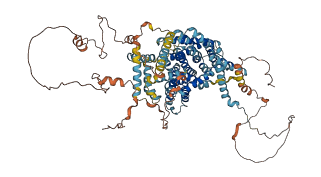
Descriptions
The autoinhibited protein was predicted that may have potential autoinhibitory elements via cis-regPred.
Autoinhibitory domains (AIDs)
Target domain |
|
Relief mechanism |
|
Assay |
cis-regPred |
Accessory elements
No accessory elements
Autoinhibited structure

Activated structure
1 structures for Q61165
| Entry ID | Method | Resolution | Chain | Position | Source |
|---|---|---|---|---|---|
| AF-Q61165-F1 | Predicted | AlphaFoldDB |
33 variants for Q61165
| Variant ID(s) | Position | Change | Description | Diseaes Association | Provenance |
|---|---|---|---|---|---|
| rs27557932 | 22 | V>M | No | EVA | |
| rs3388721497 | 49 | G>R | No | EVA | |
| rs3388725036 | 65 | P>L | No | EVA | |
| rs3394890728 | 86 | G>D | No | EVA | |
| rs3388713250 | 86 | G>S | No | EVA | |
| rs3388721456 | 217 | L>P | No | EVA | |
| rs864288497 | 240 | A>V | No | EVA | |
| rs3388717467 | 277 | L>F | No | EVA | |
| rs3388696048 | 283 | E>Q | No | EVA | |
| rs3388717092 | 375 | I>S | No | EVA | |
| rs3388717878 | 384 | K>N | No | EVA | |
| rs3388725032 | 384 | K>T | No | EVA | |
| rs3388717176 | 385 | Y>H | No | EVA | |
| rs3388707282 | 402 | L>P | No | EVA | |
| rs3388721443 | 413 | W>* | No | EVA | |
| rs3394920088 | 415 | W>R | No | EVA | |
| rs3388720480 | 434 | L>V | No | EVA | |
| rs3388696004 | 461 | L>M | No | EVA | |
| rs3388695992 | 463 | G>E | No | EVA | |
| rs3388717094 | 549 | H>R | No | EVA | |
| rs3388722452 | 567 | I>T | No | EVA | |
| rs3394725736 | 591 | E>S | No | EVA | |
| rs3388713255 | 597 | G>D | No | EVA | |
| rs3388722466 | 603 | S>Y | No | EVA | |
| rs3394725732 | 613 | I>T | No | EVA | |
| rs3394920076 | 616 | K>M | No | EVA | |
| rs3388707275 | 646 | T>N | No | EVA | |
| rs3388704544 | 686 | N>K | No | EVA | |
| rs3388696023 | 723 | I>V | No | EVA | |
| rs1134796986 | 740 | E>D | No | EVA | |
| rs1133596681 | 744 | K>N | No | EVA | |
| rs1133264952 | 744 | K>T | No | EVA | |
| rs3388720135 | 753 | R>S | No | EVA |
No associated diseases with Q61165
Functions
18 GO annotations of cellular component
| Name | Definition |
|---|---|
| apical plasma membrane | The region of the plasma membrane located at the apical end of the cell. |
| basolateral plasma membrane | The region of the plasma membrane that includes the basal end and sides of the cell. Often used in reference to animal polarized epithelial membranes, where the basal membrane is the part attached to the extracellular matrix, or in plant cells, where the basal membrane is defined with respect to the zygotic axis. |
| cation-transporting ATPase complex | Protein complex that carries out the reaction: ATP + H2O + cation(out) = ADP + phosphate + cation(in). |
| cell surface | The external part of the cell wall and/or plasma membrane. |
| cytoplasm | The contents of a cell excluding the plasma membrane and nucleus, but including other subcellular structures. |
| endoplasmic reticulum | The irregular network of unit membranes, visible only by electron microscopy, that occurs in the cytoplasm of many eukaryotic cells. The membranes form a complex meshwork of tubular channels, which are often expanded into slitlike cavities called cisternae. The ER takes two forms, rough (or granular), with ribosomes adhering to the outer surface, and smooth (with no ribosomes attached). |
| endoplasmic reticulum membrane | The lipid bilayer surrounding the endoplasmic reticulum. |
| integral component of plasma membrane | The component of the plasma membrane consisting of the gene products and protein complexes having at least some part of their peptide sequence embedded in the hydrophobic region of the membrane. |
| intercalated disc | A complex cell-cell junction at which myofibrils terminate in cardiomyocytes; mediates mechanical and electrochemical integration between individual cardiomyocytes. The intercalated disc contains regions of tight mechanical attachment (fasciae adherentes and desmosomes) and electrical coupling (gap junctions) between adjacent cells. |
| membrane | A lipid bilayer along with all the proteins and protein complexes embedded in it an attached to it. |
| membrane raft | Any of the small (10-200 nm), heterogeneous, highly dynamic, sterol- and sphingolipid-enriched membrane domains that compartmentalize cellular processes. Small rafts can sometimes be stabilized to form larger platforms through protein-protein and protein-lipid interactions. |
| mitochondrion | A semiautonomous, self replicating organelle that occurs in varying numbers, shapes, and sizes in the cytoplasm of virtually all eukaryotic cells. It is notably the site of tissue respiration. |
| nucleoplasm | That part of the nuclear content other than the chromosomes or the nucleolus. |
| perinuclear region of cytoplasm | Cytoplasm situated near, or occurring around, the nucleus. |
| plasma membrane | The membrane surrounding a cell that separates the cell from its external environment. It consists of a phospholipid bilayer and associated proteins. |
| sarcolemma | The outer membrane of a muscle cell, consisting of the plasma membrane, a covering basement membrane (about 100 nm thick and sometimes common to more than one fiber), and the associated loose network of collagen fibers. |
| T-tubule | Invagination of the plasma membrane of a muscle cell that extends inward from the cell surface around each myofibril. The ends of T-tubules make contact with the sarcoplasmic reticulum membrane. |
| transporter complex | A protein complex facilitating transport of molecules (proteins, small molecules, nucleic acids) into, out of or within a cell, or between cells. |
5 GO annotations of molecular function
| Name | Definition |
|---|---|
| calcium-dependent protein binding | Binding to a protein or protein complex in the presence of calcium. |
| calmodulin binding | Binding to calmodulin, a calcium-binding protein with many roles, both in the calcium-bound and calcium-free states. |
| potassium:proton antiporter activity | Enables the transfer of a solute or solutes from one side of a membrane to the other according to the reaction: K+(in) + H+(out) = K+(out) + H+(in). |
| protein phosphatase 2B binding | Binding to a protein phosphatase 2B. |
| sodium:proton antiporter activity | Enables the transfer of a solute or solutes from one side of a membrane to the other according to the reaction: Na+(out) + H+(in) = Na+(in) + H+(out). |
39 GO annotations of biological process
| Name | Definition |
|---|---|
| cardiac muscle cell contraction | The actin filament-based process in which cytoplasmic actin filaments slide past one another resulting in contraction of a cardiac muscle cell. |
| cardiac muscle cell differentiation | The process in which a cardiac muscle precursor cell acquires specialized features of a cardiac muscle cell. Cardiac muscle cells are striated muscle cells that are responsible for heart contraction. |
| cellular response to acidic pH | Any process that results in a change in state or activity of a cell (in terms of movement, secretion, enzyme production, gene expression, etc.) as a result of a pH stimulus with pH < 7. pH is a measure of the acidity or basicity of an aqueous solution. |
| cellular response to antibiotic | Any process that results in a change in state or activity of a cell (in terms of movement, secretion, enzyme production, gene expression, etc.) as a result of an antibiotic stimulus. An antibiotic is a chemical substance produced by a microorganism which has the capacity to inhibit the growth of or to kill other microorganisms. |
| cellular response to cold | Any process that results in a change in state or activity of a cell (in terms of movement, secretion, enzyme production, gene expression, etc.) as a result of a cold stimulus, a temperature stimulus below the optimal temperature for that organism. |
| cellular response to electrical stimulus | Any process that results in a change in state or activity of a cell (in terms of movement, secretion, enzyme production, gene expression, etc.) as a result of an electrical stimulus. |
| cellular response to epinephrine stimulus | Any process that results in a change in state or activity of a cell (in terms of movement, secretion, enzyme production, gene expression, etc.) as a result of an epinephrine stimulus. Epinephrine is a catecholamine that has the formula C9H13NO3; it is secreted by the adrenal medulla to act as a hormone, and released by certain neurons to act as a neurotransmitter active in the central nervous system. |
| cellular response to hypoxia | Any process that results in a change in state or activity of a cell (in terms of movement, secretion, enzyme production, gene expression, etc.) as a result of a stimulus indicating lowered oxygen tension. Hypoxia, defined as a decline in O2 levels below normoxic levels of 20.8 - 20.95%, results in metabolic adaptation at both the cellular and organismal level. |
| cellular response to insulin stimulus | Any process that results in a change in state or activity of a cell (in terms of movement, secretion, enzyme production, gene expression, etc.) as a result of an insulin stimulus. Insulin is a polypeptide hormone produced by the islets of Langerhans of the pancreas in mammals, and by the homologous organs of other organisms. |
| cellular sodium ion homeostasis | Any process involved in the maintenance of an internal steady state of sodium ions at the level of a cell. |
| hyaluronan catabolic process | The chemical reactions and pathways resulting in the breakdown of hyaluronan, the naturally occurring anionic form of hyaluronic acid, any member of a group of glycosaminoglycans, the repeat units of which consist of beta-1,4 linked D-glucuronyl-beta-(1,3)-N-acetyl-D-glucosamine. |
| negative regulation of apoptotic process | Any process that stops, prevents, or reduces the frequency, rate or extent of cell death by apoptotic process. |
| neuron death | The process of cell death in a neuron. |
| positive regulation of action potential | Any process that activates or increases the frequency, rate or extent of action potential creation, propagation or termination. This typically occurs via modulation of the activity or expression of voltage-gated ion channels. |
| positive regulation of apoptotic process | Any process that activates or increases the frequency, rate or extent of cell death by apoptotic process. |
| positive regulation of calcineurin-NFAT signaling cascade | Any process that activates or increases the frequency, rate or extent of signaling via the calcineurin-NFAT signaling cascade. |
| positive regulation of calcium:sodium antiporter activity | Any process that activates or increases the frequency, rate or extent of calcium:sodium antiporter activity. |
| positive regulation of cardiac muscle hypertrophy | Any process that increases the rate, frequency or extent of the enlargement or overgrowth of all or part of the heart due to an increase in size (not length) of individual cardiac muscle fibers, without cell division. |
| positive regulation of cell growth | Any process that activates or increases the frequency, rate, extent or direction of cell growth. |
| positive regulation of intracellular signal transduction | Any process that activates or increases the frequency, rate or extent of intracellular signal transduction. |
| positive regulation of mitochondrial membrane permeability | Any process that increases the frequency, rate or extent of the passage or uptake of molecules by the mitochondrial membrane. |
| positive regulation of the force of heart contraction | Any process that increases the force of heart muscle contraction. |
| positive regulation of transcription by RNA polymerase II | Any process that activates or increases the frequency, rate or extent of transcription from an RNA polymerase II promoter. |
| potassium ion transmembrane transport | A process in which a potassium ion is transported from one side of a membrane to the other. |
| protein complex oligomerization | The process of creating protein oligomers, compounds composed of a small number, usually between three and ten, of component monomers; protein oligomers may be composed of different or identical monomers. Oligomers may be formed by the polymerization of a number of monomers or the depolymerization of a large protein polymer. |
| proton transmembrane transport | The directed movement of a proton across a membrane. |
| regulation of cardiac muscle contraction by calcium ion signaling | Any process that modulates the frequency, rate or extent of cardiac muscle contraction by changing the calcium ion signals that trigger contraction. |
| regulation of intracellular pH | Any process that modulates the internal pH of a cell, measured by the concentration of the hydrogen ion. |
| regulation of pH | Any process involved in the maintenance of an internal equilibrium of hydrogen ions, thereby modulating the internal pH, within an organism or cell. |
| regulation of sensory perception of pain | Any process that modulates the frequency, rate or extent of the sensory perception of pain, the series of events required for an organism to receive a painful stimulus, convert it to a molecular signal, and recognize and characterize the signal. |
| regulation of the force of heart contraction | Any process that modulates the extent of heart contraction, changing the force with which blood is propelled. |
| regulation of the force of heart contraction by cardiac conduction | A cardiac conduction process that modulates the extent of heart contraction, changing the force with which blood is propelled. |
| response to acidic pH | Any process that results in a change in state or activity of a cell or an organism (in terms of movement, secretion, enzyme production, gene expression, etc.) as a result of a pH stimulus with pH < 7. pH is a measure of the acidity or basicity of an aqueous solution. |
| response to muscle stretch | Any process that results in a change in state or activity of a cell or an organism (in terms of movement, secretion, enzyme production, gene expression, etc.) as a result of a myofibril being extended beyond its slack length. |
| response to organic cyclic compound | Any process that results in a change in state or activity of a cell or an organism (in terms of movement, secretion, enzyme production, gene expression, etc.) as a result of an organic cyclic compound stimulus. |
| sodium ion export across plasma membrane | The directed movement of sodium ions from inside of a cell, across the plasma membrane and into the extracellular region. |
| sodium ion import across plasma membrane | The directed movement of sodium ions from outside of a cell, across the plasma membrane and into the cytosol. |
| sodium ion transport | The directed movement of sodium ions (Na+) into, out of or within a cell, or between cells, by means of some agent such as a transporter or pore. |
| stem cell differentiation | The process in which a relatively unspecialized cell acquires specialized features of a stem cell. A stem cell is a cell that retains the ability to divide and proliferate throughout life to provide progenitor cells that can differentiate into specialized cells. |
12 homologous proteins in AiPD
| UniProt AC | Gene Name | Protein Name | Species | Evidence Code |
|---|---|---|---|---|
| Q28036 | SLC9A1 | Sodium/hydrogen exchanger 1 | Bos taurus (Bovine) | PR |
| Q14940 | SLC9A5 | Sodium/hydrogen exchanger 5 | Homo sapiens (Human) | PR |
| Q9UBY0 | SLC9A2 | Sodium/hydrogen exchanger 2 | Homo sapiens (Human) | PR |
| P19634 | SLC9A1 | Sodium/hydrogen exchanger 1 | Homo sapiens (Human) | PR |
| Q8BUE1 | Slc9a4 | Sodium/hydrogen exchanger 4 | Mus musculus (Mouse) | PR |
| P48762 | SLC9A1 | Sodium/hydrogen exchanger 1 | Sus scrofa (Pig) | PR |
| P26434 | Slc9a4 | Sodium/hydrogen exchanger 4 | Rattus norvegicus (Rat) | PR |
| P48763 | Slc9a2 | Sodium/hydrogen exchanger 2 | Rattus norvegicus (Rat) | PR |
| P26431 | Slc9a1 | Sodium/hydrogen exchanger 1 | Rattus norvegicus (Rat) | PR |
| Q8T5S1 | nhx-2 | Na(+)/H(+) exchanger protein 2 | Caenorhabditis elegans | PR |
| Q84WG1 | NHX3 | Sodium/hydrogen exchanger 3 | Arabidopsis thaliana (Mouse-ear cress) | PR |
| Q8S397 | NHX4 | Sodium/hydrogen exchanger 4 | Arabidopsis thaliana (Mouse-ear cress) | PR |
| 10 | 20 | 30 | 40 | 50 | 60 |
| MMLRWSGVWG | FHPPRIFPSL | LVVVALVGLL | PVLRSHGLQH | SPTASTIRGS | EPPRERSIGD |
| 70 | 80 | 90 | 100 | 110 | 120 |
| VTTAPSEPLH | RPDDHNLTNL | IIEHGGKPSR | KAFPVLDIDY | PHVRTPFEIS | LWILLACLMK |
| 130 | 140 | 150 | 160 | 170 | 180 |
| IGFHVIPTIS | SIVPESCLLI | VVGLLVGGLI | KGVGETPPFL | QSDVFFLFLL | PPIILDAGYF |
| 190 | 200 | 210 | 220 | 230 | 240 |
| LPLRQFTENL | GTILIFAVVG | TLWNAFFLGG | LLYAVCLVGG | EQINNIGLLD | TLLFGSIISA |
| 250 | 260 | 270 | 280 | 290 | 300 |
| VDPVAVLAVF | EEIHINELLH | ILVFGESLLN | DAVTVVLYHL | FEEFASYDSV | GISDIFLGFL |
| 310 | 320 | 330 | 340 | 350 | 360 |
| SFFVVALGGV | FVGVVYGVIA | AFTSRFTSHI | RVIEPLFVFL | YSYMAYLSAE | LFHLSGIMAL |
| 370 | 380 | 390 | 400 | 410 | 420 |
| IASGVVMRPY | VEANISHKSH | TTIKYFLKMW | SSVSETLIFI | FLGVSTVAGS | HQWNWTFVIS |
| 430 | 440 | 450 | 460 | 470 | 480 |
| TLLFCLIARV | LGVLVLTWFI | NKFRIVKLTP | KDQFIIAYGG | LRGAIAFSLG | YLLDKKHFPM |
| 490 | 500 | 510 | 520 | 530 | 540 |
| CDLFLTAIIT | VIFFTVFVQG | MTIRPLVDLL | AVKKKQETKR | SINEEIHTQF | LDHLLTGIED |
| 550 | 560 | 570 | 580 | 590 | 600 |
| ICGHYGHHHW | KDKLNRFNKK | YVKKCLIAGE | RSKEPQLIAF | YHKMEMKQAI | ELVESGGMGK |
| 610 | 620 | 630 | 640 | 650 | 660 |
| IPSAVSTVSM | QNIHPKAVTS | DRILPALSKD | KEEEIRKILR | SNLQKTRQRL | RSYNRHTLVA |
| 670 | 680 | 690 | 700 | 710 | 720 |
| DPYEEAWNQM | LLRRQKARQL | EQKITNYLTV | PAHKLDSPTL | SRARIGSDPL | AYEPKADLPV |
| 730 | 740 | 750 | 760 | 770 | 780 |
| ITIDPASPQS | PESVDLVNEE | LKGKVLGLNR | GPRVTPEEEE | EDEDGIIMIR | SKEPSSPGTD |
| 790 | 800 | 810 | |||
| DVFTPGSSDS | PSSQRIQRCL | SDPGPHPEPG | EGEPFIPKGQ |