Q15475
Gene name |
SIX1 |
Protein name |
Homeobox protein SIX1 |
Names |
Sine oculis homeobox homolog 1 |
Species |
Homo sapiens (Human) |
KEGG Pathway |
hsa:6495 |
EC number |
|
Protein Class |
|
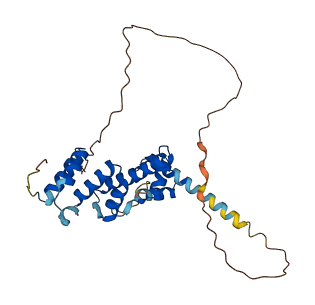
Descriptions
The autoinhibited protein was predicted that may have potential autoinhibitory elements via cis-regPred.
Autoinhibitory domains (AIDs)
Target domain |
|
Relief mechanism |
|
Assay |
cis-regPred |
Accessory elements
No accessory elements
Autoinhibited structure

Activated structure
2 structures for Q15475
| Entry ID | Method | Resolution | Chain | Position | Source |
|---|---|---|---|---|---|
| 4EGC | X-ray | 199 A | A | 1-189 | PDB |
| AF-Q15475-F1 | Predicted | AlphaFoldDB |
247 variants for Q15475
| Variant ID(s) | Position | Change | Description | Diseaes Association | Provenance |
|---|---|---|---|---|---|
|
RCV001262831 rs1895013419 |
1 | M>L | Branchiootic syndrome 3 [ClinVar] | Yes |
ClinVar dbSNP |
|
VAR_064948 rs397515562 CA345039 RCV002477184 |
17 | V>E | Branchiootic syndrome 3 BOS3; crucial for interaction with EYA1 and EYA2 and transcription factor activity [ClinVar, UniProt] | Yes |
ClinGen ClinVar UniProt Ensembl dbSNP |
|
rs1051653507 RCV000512900 RCV000706990 RCV001375398 CA261723226 RCV002524959 |
64 | R>H | Variant assessed as Somatic; 0.0 impact. Branchiootic syndrome 3 Inborn genetic diseases [NCI-TCGA, ClinVar] | Yes |
ClinGen ClinVar NCI-TCGA TOPMed dbSNP gnomAD |
| VAR_064949 | 73 | H>P | BOS3 [UniProt] | Yes | UniProt |
|
VAR_064950 RCV002477182 rs397515560 CA345037 |
106 | V>G | Branchiootic syndrome 3 BOS3; crucial for protein stability, DNA binding and transcription factor activity [ClinVar, UniProt] | Yes |
ClinGen ClinVar UniProt Ensembl dbSNP |
|
VAR_064951 rs1064794308 CA16619881 RCV000482613 RCV003223408 |
110 | R>Q | Branchiootic syndrome 3 BOS3 [ClinVar, UniProt] | Yes |
ClinGen ClinVar UniProt TOPMed dbSNP |
|
rs80356459 RCV002512919 VAR_031024 CA340772 RCV000008807 RCV002262561 |
110 | R>W | Variant assessed as Somatic; impact. Branchiootic syndrome 3 (bos3) Branchiootic syndrome 3 BOS3; crucial for interaction with EYA1, DNA binding and transcription factor activity [NCI-TCGA, Ensembl, ClinVar, UniProt] | Yes |
ClinGen ClinVar UniProt Ensembl NCI-TCGA dbSNP |
|
RCV002477183 VAR_064952 CA345038 rs397515561 |
112 | R>C | Branchiootic syndrome 3 BOS3; crucial for DNA binding and transcription factor activity [ClinVar, UniProt] | Yes |
ClinGen ClinVar UniProt Ensembl dbSNP |
|
rs121909770 CA254384 VAR_064953 RCV000008809 |
122 | W>R | Branchiootic syndrome 3 (bos3) Branchiootic syndrome 3 BOS3 [Ensembl, ClinVar, UniProt] | Yes |
ClinGen ClinVar UniProt Ensembl dbSNP |
|
RCV000190433 RCV002478668 RCV001852527 rs797044960 CA275962 |
125 | E>K | Autosomal dominant nonsyndromic hearing loss 23 Branchiootic syndrome 3 [ClinVar] | Yes |
ClinGen ClinVar Ensembl dbSNP |
|
RCV000763344 RCV002512918 VAR_031025 RCV000008806 rs104894478 RCV000413341 RCV000679883 CA254381 |
129 | Y>C | Autosomal dominant nonsyndromic hearing loss 23 Branchiootic syndrome 3 (bos3) Branchiootic syndrome 3 BOS3; crucial for interaction with EYA1, DNA binding and transcription factor activity [ClinVar, Ensembl, UniProt] | Yes |
ClinGen ClinVar UniProt TOPMed dbSNP gnomAD |
|
RCV001799516 rs104894478 CA389910423 RCV000825046 RCV000857227 |
129 | Y>S | Branchiootic syndrome 3 (bos3) Branchiootic syndrome 1 Branchiootic syndrome 3 [Ensembl, ClinVar] | Yes |
ClinGen ClinVar TOPMed dbSNP gnomAD |
|
rs80356460 RCV003162220 RCV002512920 VAR_031026 RCV000008808 RCV000020636 |
133 | E>missing | DFNA23; in addition to deafness the patient had renal anomalies suggesting a branchiootorenal syndrome; crucial for interaction with EYA1, DNA binding and transcription factor activity Autosomal dominant nonsyndromic hearing loss 23 Branchiootic syndrome 3 [UniProt, ClinVar] | Yes |
ClinVar UniProt dbSNP |
|
rs80356460 VAR_031026 |
133 | E>del | DFNA23; in addition to deafness the patient had renal anomalies suggesting a branchiootorenal syndrome; crucial for interaction with EYA1, DNA binding and transcription factor activity [UniProt] | Yes |
UniProt dbSNP |
|
RCV001250998 rs1895001312 |
139 | L>R | Branchiootic syndrome 3 [ClinVar] | Yes |
ClinVar dbSNP |
|
RCV000477918 rs1060499595 CA16616927 |
154 | K>* | Branchiootic syndrome 3 [ClinVar] | Yes |
ClinGen ClinVar Ensembl dbSNP |
|
RCV000313323 CA7212757 RCV001718645 RCV000276902 rs142301715 RCV002520905 |
193 | N>I | Autosomal dominant nonsyndromic hearing loss 23 Branchiootic syndrome 3 [ClinVar] | Yes |
ClinGen ClinVar 1000Genomes ESP ExAC TOPMed dbSNP gnomAD |
|
rs1894944353 RCV001331501 |
207 | E>A | Branchiootic syndrome 3 [ClinVar] | Yes |
ClinVar dbSNP |
|
CA389909850 RCV000528335 rs540778343 |
215 | S>I | Branchiootic syndrome 3 [ClinVar] | Yes |
ClinGen ClinVar 1000Genomes dbSNP |
|
CA261720668 rs149265761 RCV001114978 RCV001772329 RCV001114979 |
227 | D>E | Autosomal dominant nonsyndromic hearing loss 23 Branchiootic syndrome 3 [ClinVar] | Yes |
ClinGen ClinVar ESP ExAC TOPMed dbSNP gnomAD |
|
rs144481204 CA7212741 RCV000782257 RCV001109337 RCV001114980 |
227 | D>Y | Autosomal dominant nonsyndromic hearing loss 23 Branchiootic syndrome 3 (bos3) Branchiootic syndrome 3 [ClinVar, Ensembl] | Yes |
ClinGen ClinVar ESP ExAC TOPMed dbSNP gnomAD |
|
CA7212731 rs747474509 CA389909720 RCV001002755 |
235 | Q>H | Autosomal dominant nonsyndromic hearing loss 23 [ClinVar] | Yes |
ClinGen ExAC TOPMed gnomAD ClinVar dbSNP |
|
RCV001114976 RCV002556255 rs368974927 RCV001563359 RCV001114977 CA7212719 VAR_064954 |
249 | P>L | Autosomal dominant nonsyndromic hearing loss 23 Branchiootic syndrome 3 (bos3) Branchiootic syndrome 3 BOR; uncertain pathological significance [ClinVar, Ensembl, UniProt] | Yes |
ClinGen ClinVar UniProt 1000Genomes ExAC TOPMed dbSNP gnomAD |
|
rs368974927 RCV002066828 RCV000613496 RCV001591374 CA7212718 |
249 | P>Q | Branchiootic syndrome 3 (bos3) Branchiootic syndrome 3 [Ensembl, ClinVar] | Yes |
ClinGen ClinVar 1000Genomes ExAC TOPMed dbSNP gnomAD |
|
CA7212873 rs759906473 |
5 | P>A | No |
ClinGen ExAC gnomAD |
|
|
rs771057416 CA7212871 |
5 | P>L | No |
ClinGen ExAC TOPMed gnomAD |
|
|
rs771057416 CA7212872 |
5 | P>Q | No |
ClinGen ExAC TOPMed gnomAD |
|
|
rs749690789 CA7212870 |
6 | S>A | No |
ClinGen ExAC gnomAD |
|
|
rs778375446 CA7212869 |
8 | G>A | No |
ClinGen ExAC gnomAD |
|
|
CA389911212 rs778375446 |
8 | G>V | No |
ClinGen ExAC gnomAD |
|
|
rs1417956063 CA389911198 |
10 | T>M | No |
ClinGen gnomAD |
|
|
CA389911189 rs1167753630 |
12 | E>K | No |
ClinGen gnomAD |
|
|
rs1480942237 CA389911181 |
13 | Q>K | No |
ClinGen gnomAD |
|
|
rs1197458982 CA389911153 |
17 | V>M | No |
ClinGen gnomAD |
|
|
CA389911140 rs1490210309 |
19 | E>K | No |
ClinGen gnomAD |
|
|
rs1233578721 CA389911128 |
20 | V>A | No |
ClinGen gnomAD |
|
|
CA389911123 rs1206708089 |
21 | L>P | No |
ClinGen gnomAD |
|
|
rs1177617020 CA389911116 |
22 | Q>L | No |
ClinGen TOPMed |
|
|
CA7212866 rs781574148 |
23 | Q>P | No |
ClinGen ExAC gnomAD |
|
|
rs754869969 CA261723399 |
24 | G>S | No |
ClinGen Ensembl |
|
|
rs1009804624 CA261723395 |
25 | G>* | No |
ClinGen Ensembl |
|
|
CA261723394 rs867031506 |
25 | G>E | No |
ClinGen gnomAD |
|
|
CA389911090 rs1375481520 |
26 | N>K | No |
ClinGen TOPMed |
|
|
CA7212863 rs146357380 |
28 | E>D | No |
ClinGen ESP ExAC TOPMed gnomAD |
|
|
CA7212860 rs764103068 |
33 | F>L | No |
ClinGen ExAC gnomAD |
|
|
rs1297503138 CA389911052 |
33 | F>L | No |
ClinGen TOPMed |
|
|
CA261723350 rs1032525136 |
35 | W>* | No |
ClinGen Ensembl |
|
|
rs1001409064 CA389911026 |
37 | L>V | No |
ClinGen TOPMed gnomAD |
|
|
CA7212859 rs760736490 |
38 | P>A | No |
ClinGen ExAC gnomAD |
|
|
rs1431824329 CA389911015 |
39 | A>T | No |
ClinGen gnomAD |
|
|
CA7212857 rs767478646 |
40 | C>G | No |
ClinGen ExAC gnomAD |
|
| TCGA novel | 41 | D>N | Variant assessed as Somatic; impact. [NCI-TCGA] | No | NCI-TCGA |
|
rs1303484853 CA389910994 |
42 | H>Y | No |
ClinGen TOPMed |
|
| TCGA novel | 44 | H>A | Variant assessed as Somatic; impact. [NCI-TCGA] | No | NCI-TCGA |
|
rs149166341 CA7212856 |
44 | H>Q | No |
ClinGen ESP ExAC TOPMed gnomAD |
|
|
rs1480268855 CA389910979 |
44 | H>R | No |
ClinGen gnomAD |
|
|
CA389910960 rs1223102250 |
47 | E>K | No |
ClinGen TOPMed |
|
|
rs774637636 CA7212855 |
48 | S>N | No |
ClinGen ExAC gnomAD |
|
|
rs770875229 CA7212854 |
48 | S>R | No |
ClinGen ExAC gnomAD |
|
|
CA261723311 rs904273350 |
49 | V>I | No |
ClinGen Ensembl |
|
|
rs1232263034 CA389910939 |
50 | L>F | No |
ClinGen gnomAD |
|
|
rs1258971434 CA389910922 |
52 | A>V | No |
ClinGen TOPMed |
|
| TCGA novel | 53 | K>E | Variant assessed as Somatic; impact. [NCI-TCGA] | No | NCI-TCGA |
|
CA389910912 rs1261097341 |
54 | A>T | No |
ClinGen gnomAD |
|
|
CA389910904 rs1251187381 |
55 | V>A | No |
ClinGen TOPMed |
|
|
rs770253091 CA7212851 |
55 | V>M | No |
ClinGen ExAC gnomAD |
|
|
CA7212850 rs748718182 |
56 | V>L | No |
ClinGen ExAC gnomAD |
|
|
CA389910897 rs1221612141 |
57 | A>T | No |
ClinGen gnomAD |
|
| TCGA novel | 59 | H>Q | Variant assessed as Somatic; impact. [NCI-TCGA] | No | NCI-TCGA |
|
CA389910881 rs1371905806 |
59 | H>Y | No |
ClinGen gnomAD |
|
|
rs893019043 CA261723251 |
60 | R>H | No |
ClinGen TOPMed gnomAD |
|
|
CA389910856 rs1335186361 |
63 | F>L | No |
ClinGen gnomAD |
|
| TCGA novel | 64 | R>C | Variant assessed as Somatic; impact. [NCI-TCGA] | No | NCI-TCGA |
|
rs1051653507 CA389910845 |
64 | R>P | No |
ClinGen TOPMed gnomAD |
|
|
CA389910841 rs1463809728 |
65 | E>Q | No |
ClinGen TOPMed |
|
|
rs1161503372 CA389910831 |
66 | L>P | No |
ClinGen gnomAD |
|
|
rs1293880867 CA389910816 |
68 | K>M | No |
ClinGen gnomAD |
|
|
rs751225628 CA261723202 |
69 | I>S | No |
ClinGen Ensembl |
|
| TCGA novel | 70 | L>M | Variant assessed as Somatic; impact. [NCI-TCGA] | No | NCI-TCGA |
|
rs372978267 CA389910806 |
70 | L>V | No |
ClinGen ESP ExAC gnomAD |
|
|
CA7212846 rs778653697 |
72 | S>R | No |
ClinGen ExAC gnomAD |
|
|
CA7212845 rs756912951 |
76 | S>L | No |
ClinGen ExAC gnomAD |
|
|
rs752695594 CA7212841 |
79 | N>D | No |
ClinGen ExAC gnomAD |
|
|
CA7212840 rs767354178 |
79 | N>S | No |
ClinGen ExAC TOPMed gnomAD |
|
|
CA7212839 rs759405851 |
81 | P>S | No |
ClinGen ExAC TOPMed gnomAD |
|
|
rs766600023 CA7212837 |
82 | K>R | Variant assessed as Somatic; 0.0 impact. [NCI-TCGA] | No |
ClinGen ExAC NCI-TCGA gnomAD |
|
CA261723145 CA389910707 rs973266865 |
84 | Q>H | No |
ClinGen TOPMed gnomAD |
|
|
CA389910709 rs1247489566 |
84 | Q>R | No |
ClinGen gnomAD |
|
|
CA261723138 rs941857857 |
87 | W>* | No |
ClinGen Ensembl |
|
| TCGA novel | 89 | K>E | Variant assessed as Somatic; impact. [NCI-TCGA] | No | NCI-TCGA |
|
CA261723137 rs1045845044 |
93 | V>L | No |
ClinGen TOPMed |
|
|
TCGA novel CA389910641 rs1224396065 |
94 | E>G | Variant assessed as Somatic; impact. [NCI-TCGA] | No |
ClinGen TOPMed NCI-TCGA |
|
CA389910637 rs1264228301 |
95 | A>T | No |
ClinGen TOPMed |
|
|
rs200835641 CA7212834 |
95 | A>V | Variant assessed as Somatic; 0.0 impact. [NCI-TCGA] | No |
ClinGen ExAC NCI-TCGA TOPMed gnomAD |
| TCGA novel | 96 | E>D | Variant assessed as Somatic; impact. [NCI-TCGA] | No | NCI-TCGA |
|
CA389910632 rs1216716466 |
96 | E>K | No |
ClinGen TOPMed |
|
|
rs1451985437 CA389910616 |
98 | L>M | No |
ClinGen TOPMed gnomAD |
|
|
CA389910615 rs1451985437 |
98 | L>V | No |
ClinGen TOPMed gnomAD |
|
|
VAR_067446 CA261723126 rs17850414 |
99 | R>C | No |
ClinGen UniProt Ensembl dbSNP |
|
|
CA389910609 rs1185640236 |
99 | R>H | No |
ClinGen TOPMed |
|
| TCGA novel | 101 | R>Q | Variant assessed as Somatic; impact. [NCI-TCGA] | No | NCI-TCGA |
|
rs1426574416 CA389910593 |
102 | P>S | No |
ClinGen gnomAD |
|
|
rs1555366324 CA658798220 RCV000592334 |
109 | Y>* | No |
ClinGen ClinVar Ensembl dbSNP |
|
|
rs1268579529 CA389910530 |
113 | R>G | No |
ClinGen TOPMed gnomAD |
|
| TCGA novel | 114 | K>N | Variant assessed as Somatic; impact. [NCI-TCGA] | No | NCI-TCGA |
| TCGA novel | 114 | K>Q | Variant assessed as Somatic; impact. [NCI-TCGA] | No | NCI-TCGA |
| TCGA novel | 115 | F>C | Variant assessed as Somatic; impact. [NCI-TCGA] | No | NCI-TCGA |
|
rs748953823 CA7212827 |
116 | P>A | No |
ClinGen ExAC gnomAD |
|
|
rs777361656 CA7212826 |
116 | P>L | No |
ClinGen ExAC TOPMed gnomAD |
|
|
rs748057221 CA7212824 |
120 | T>S | No |
ClinGen ExAC gnomAD |
|
| TCGA novel | 121 | I>F | Variant assessed as Somatic; impact. [NCI-TCGA] | No | NCI-TCGA |
|
rs1230421981 CA389910483 |
121 | I>V | No |
ClinGen TOPMed |
|
|
CA7212822 rs754918861 |
128 | S>N | No |
ClinGen ExAC gnomAD |
|
|
CA261723014 rs371614639 |
129 | Y>* | No |
ClinGen ESP |
|
|
rs930853232 CA261722975 |
131 | F>L | No |
ClinGen TOPMed |
|
|
CA389910407 rs1212556544 |
131 | F>L | No |
ClinGen TOPMed gnomAD |
|
|
rs975058979 CA261722943 |
137 | G>V | No |
ClinGen TOPMed |
|
|
CA7212819 rs758631109 |
138 | V>L | No |
ClinGen ExAC gnomAD |
|
|
rs776744679 CA7212815 |
141 | E>G | No |
ClinGen ExAC TOPMed gnomAD |
|
|
CA7212816 rs761906849 |
141 | E>K | No |
ClinGen ExAC gnomAD |
|
|
rs1201052250 CA389910332 |
143 | Y>D | No |
ClinGen gnomAD |
|
|
rs988112453 CA389910322 |
144 | A>G | No |
ClinGen TOPMed gnomAD |
|
|
CA261722913 rs988112453 |
144 | A>V | No |
ClinGen TOPMed gnomAD |
|
|
rs764633083 CA7212814 |
145 | H>D | No |
ClinGen ExAC gnomAD |
|
|
rs1195840852 CA389910316 CA389910315 |
145 | H>Q | No |
ClinGen TOPMed gnomAD |
|
|
CA389910313 rs1566722147 |
146 | N>Y | No |
ClinGen Ensembl |
|
|
rs1253548277 CA389910293 |
148 | Y>* | No |
ClinGen gnomAD |
|
|
CA389910297 rs1594673234 |
148 | Y>S | No |
ClinGen Ensembl |
|
| TCGA novel | 151 | P>L | Variant assessed as Somatic; impact. [NCI-TCGA] | No | NCI-TCGA |
|
CA389910272 rs1331478259 |
152 | R>C | No |
ClinGen Ensembl |
|
|
rs1317609914 CA389910266 |
153 | E>K | No |
ClinGen gnomAD |
|
|
CA7212811 rs772338719 |
155 | R>Q | No |
ClinGen ExAC gnomAD |
|
|
CA7212812 rs775911579 |
155 | R>W | No |
ClinGen ExAC gnomAD |
|
|
rs769379475 CA389910244 |
156 | E>D | No |
ClinGen ExAC TOPMed |
|
|
CA7212809 rs773031458 |
156 | E>K | Variant assessed as Somatic; 0.0 impact. [NCI-TCGA] | No |
ClinGen ExAC NCI-TCGA TOPMed gnomAD |
|
RCV000761879 CA389910242 rs1566722096 |
157 | L>V | No |
ClinGen ClinVar Ensembl dbSNP |
|
|
CA7212807 rs747639845 |
158 | A>V | No |
ClinGen ExAC gnomAD |
|
|
rs1301781969 CA389910233 |
159 | E>K | No |
ClinGen TOPMed gnomAD |
|
|
rs1301781969 CA389910232 |
159 | E>Q | No |
ClinGen TOPMed gnomAD |
|
|
CA261722870 rs1010466700 |
160 | A>D | No |
ClinGen TOPMed |
|
|
rs1010466700 CA261722855 |
160 | A>V | No |
ClinGen TOPMed |
|
|
rs746973450 CA7212804 |
161 | T>A | No |
ClinGen ExAC gnomAD |
|
|
CA7212803 rs779837812 |
161 | T>S | No |
ClinGen ExAC TOPMed gnomAD |
|
|
RCV000215644 rs876658002 CA10576966 |
163 | L>V | No |
ClinGen ClinVar Ensembl dbSNP |
|
|
rs1479289739 CA389910202 |
164 | T>S | No |
ClinGen gnomAD |
|
|
rs143516729 CA261722833 |
165 | T>I | No |
ClinGen ESP gnomAD |
|
|
CA389910188 rs1201459073 |
167 | Q>E | No |
ClinGen TOPMed |
|
|
rs371998997 CA7212801 |
168 | V>I | No |
ClinGen ESP ExAC TOPMed gnomAD |
|
|
rs765427858 CA7212800 |
169 | S>G | No |
ClinGen ExAC gnomAD |
|
|
CA389910162 RCV000520421 rs1555366309 |
170 | N>K | No |
ClinGen ClinVar Ensembl dbSNP |
|
|
CA261722804 rs1033334195 |
172 | F>C | No |
ClinGen TOPMed |
|
|
CA389910106 rs1236315675 |
178 | R>K | No |
ClinGen TOPMed |
|
|
CA389910093 rs1264219816 |
180 | R>W | No |
ClinGen gnomAD |
|
|
CA16619880 RCV000483984 rs1064793268 |
183 | E>G | No |
ClinGen ClinVar Ensembl dbSNP |
|
|
CA389910070 rs1274431236 |
184 | A>T | No |
ClinGen TOPMed gnomAD |
|
|
rs1239894490 CA389910065 |
184 | A>V | No |
ClinGen TOPMed gnomAD |
|
|
rs1337543986 CA389910056 |
186 | E>K | No |
ClinGen gnomAD |
|
|
rs1594673095 CA389910048 |
187 | R>G | No |
ClinGen Ensembl |
|
|
rs760121808 CA7212762 |
188 | E>G | No |
ClinGen ExAC gnomAD |
|
|
rs775109837 CA7212761 |
189 | N>S | No |
ClinGen ExAC TOPMed gnomAD |
|
|
CA389910011 rs1440228225 |
190 | T>I | Variant assessed as Somatic; impact. [NCI-TCGA] | No |
ClinGen NCI-TCGA TOPMed |
|
CA7212760 rs771994916 |
191 | E>K | Variant assessed as Somatic; 0.0002225 impact. [NCI-TCGA] | No |
ClinGen ExAC NCI-TCGA gnomAD |
|
rs574181095 CA7212759 |
193 | N>D | No |
ClinGen ExAC TOPMed gnomAD |
|
|
rs142301715 CA7212758 |
193 | N>S | No |
ClinGen 1000Genomes ESP ExAC TOPMed gnomAD |
|
|
CA389909986 rs1594671817 |
194 | N>T | No |
ClinGen Ensembl |
|
|
CA7212756 rs749472807 |
196 | S>F | No |
ClinGen ExAC gnomAD |
|
|
CA389909970 rs1411016799 |
197 | S>P | No |
ClinGen TOPMed |
|
|
CA389909950 rs1168903423 |
199 | K>N | No |
ClinGen TOPMed gnomAD |
|
|
rs756406449 CA7212753 |
201 | N>K | No |
ClinGen ExAC gnomAD |
|
| TCGA novel | 201 | N>S | Variant assessed as Somatic; impact. [NCI-TCGA] | No | NCI-TCGA |
|
rs912522508 CA261720732 |
202 | Q>H | No |
ClinGen Ensembl |
|
|
CA389909925 rs1304541108 |
203 | L>F | No |
ClinGen TOPMed |
|
| TCGA novel | 203 | L>V | Variant assessed as Somatic; impact. [NCI-TCGA] | No | NCI-TCGA |
|
rs752687781 CA7212752 |
204 | S>C | No |
ClinGen ExAC TOPMed gnomAD |
|
|
rs752687781 CA389909918 |
204 | S>Y | No |
ClinGen ExAC TOPMed gnomAD |
|
|
CA389909912 rs781397777 |
205 | P>H | No |
ClinGen ExAC gnomAD |
|
|
rs781397777 CA7212751 |
205 | P>L | No |
ClinGen ExAC gnomAD |
|
|
CA389909908 rs1594671774 |
206 | L>R | No |
ClinGen Ensembl |
|
|
rs543609416 CA389909910 |
206 | L>V | No |
ClinGen 1000Genomes ExAC TOPMed gnomAD |
|
|
CA7212747 rs758861510 |
209 | G>A | No |
ClinGen ExAC gnomAD |
|
|
CA389909892 rs1286824463 |
209 | G>S | No |
ClinGen TOPMed |
|
|
CA7212745 rs374638294 |
211 | P>L | No |
ClinGen ESP ExAC TOPMed gnomAD |
|
|
rs1337123501 CA389909872 |
212 | L>F | No |
ClinGen gnomAD |
|
|
rs1481960266 CA389909861 |
213 | M>I | No |
ClinGen TOPMed |
|
|
CA389909868 rs1277192666 |
213 | M>L | No |
ClinGen gnomAD |
|
|
rs1223807292 CA389909865 |
213 | M>T | No |
ClinGen gnomAD |
|
|
rs560990241 CA7212744 |
215 | S>G | No |
ClinGen 1000Genomes ExAC gnomAD |
|
|
CA261720691 rs540778343 |
215 | S>N | Variant assessed as Somatic; 0.0 impact. [NCI-TCGA] | No |
ClinGen 1000Genomes NCI-TCGA |
| TCGA novel | 216 | S>L | Variant assessed as Somatic; impact. [NCI-TCGA] | No | NCI-TCGA |
|
rs146129487 CA261720686 |
217 | E>K | No |
ClinGen Ensembl |
|
|
CA389909819 rs1435096818 |
219 | E>D | No |
ClinGen gnomAD |
|
|
rs1349841820 CA389909806 |
221 | S>* | No |
ClinGen gnomAD |
|
|
rs767030543 CA7212742 |
222 | P>S | No |
ClinGen ExAC gnomAD |
|
|
CA389909789 rs1412013227 |
224 | Q>R | No |
ClinGen gnomAD |
|
|
CA7212739 rs770666125 |
228 | Q>E | No |
ClinGen ExAC gnomAD |
|
|
CA7212738 rs749015316 |
228 | Q>H | No |
ClinGen ExAC gnomAD |
|
|
CA261720658 rs918862160 |
230 | S>L | No |
ClinGen TOPMed |
|
|
CA7212736 rs769901336 |
231 | V>F | No |
ClinGen ExAC gnomAD |
|
|
rs1179637997 CA389909739 |
232 | L>F | No |
ClinGen TOPMed |
|
|
CA7212734 rs781362403 |
233 | L>M | No |
ClinGen ExAC gnomAD |
|
|
CA7212730 rs780726681 |
236 | G>R | No |
ClinGen ExAC gnomAD |
|
|
CA389909714 rs1204025083 |
237 | N>H | No |
ClinGen gnomAD |
|
|
CA389909703 rs915194188 |
238 | M>K | No |
ClinGen TOPMed |
|
|
rs915194188 CA261720615 |
238 | M>T | No |
ClinGen TOPMed |
|
|
CA261720608 rs759290962 |
240 | H>Q | No |
ClinGen ExAC TOPMed gnomAD |
|
|
rs750752374 CA7212728 |
241 | A>T | No |
ClinGen ExAC TOPMed gnomAD |
|
|
CA7212726 rs755668042 |
242 | R>G | No |
ClinGen ExAC gnomAD |
|
|
CA7212725 rs752399991 |
242 | R>K | No |
ClinGen ExAC gnomAD |
|
|
CA389909677 rs766975120 |
242 | R>S | No |
ClinGen ExAC TOPMed |
|
|
rs1445078561 CA389909662 |
244 | S>L | Variant assessed as Somatic; 4.619e-05 impact. [NCI-TCGA] | No |
ClinGen NCI-TCGA gnomAD |
|
CA7212722 rs773902181 |
245 | N>S | No |
ClinGen ExAC gnomAD |
|
| TCGA novel | 246 | Y>C | Variant assessed as Somatic; impact. [NCI-TCGA] | No | NCI-TCGA |
|
CA389909642 rs766271672 |
247 | S>F | No |
ClinGen ExAC TOPMed gnomAD |
|
|
rs1470481678 CA389909646 |
247 | S>P | No |
ClinGen gnomAD |
|
|
CA7212721 rs766271672 |
247 | S>Y | Variant assessed as Somatic; 0.0 impact. [NCI-TCGA] | No |
ClinGen ExAC NCI-TCGA TOPMed gnomAD |
|
rs763012848 CA7212720 |
249 | P>S | No |
ClinGen ExAC |
|
|
CA261720514 rs200205240 |
252 | T>A | No |
ClinGen ExAC TOPMed gnomAD |
|
|
rs200205240 CA7212715 |
252 | T>S | No |
ClinGen ExAC TOPMed gnomAD |
|
|
rs747061363 CA7212714 |
254 | S>L | No |
ClinGen ExAC gnomAD |
|
|
rs758821559 CA389909595 |
256 | P>A | No |
ClinGen ExAC TOPMed gnomAD |
|
|
rs758821559 CA7212712 |
256 | P>S | No |
ClinGen ExAC TOPMed gnomAD |
|
|
CA7212711 rs779084301 |
259 | G>C | No |
ClinGen ExAC TOPMed gnomAD |
|
|
rs779084301 CA7212710 |
259 | G>R | No |
ClinGen ExAC TOPMed gnomAD |
|
|
rs779084301 CA261720476 |
259 | G>S | Variant assessed as Somatic; impact. [NCI-TCGA] | No |
ClinGen ExAC NCI-TCGA TOPMed gnomAD |
|
CA7212708 rs370259896 |
260 | L>Q | No |
ClinGen ESP ExAC TOPMed gnomAD |
|
|
rs370259896 CA7212709 |
260 | L>R | No |
ClinGen ESP ExAC TOPMed gnomAD |
|
|
CA389909566 rs780802037 |
261 | Q>P | No |
ClinGen ExAC gnomAD |
|
|
CA7212707 rs780802037 |
261 | Q>R | No |
ClinGen ExAC gnomAD |
|
|
CA261720415 rs922456534 |
263 | H>Y | No |
ClinGen Ensembl |
|
|
rs751062848 CA7212705 |
264 | Q>E | No |
ClinGen ExAC gnomAD |
|
|
rs1375362861 CA389909537 |
265 | H>Q | No |
ClinGen gnomAD |
|
|
CA389909540 rs1475558927 |
265 | H>R | No |
ClinGen gnomAD |
|
|
rs997323109 CA261720409 |
265 | H>Y | No |
ClinGen TOPMed |
|
|
rs765929697 CA7212704 |
267 | L>F | No |
ClinGen ExAC gnomAD |
|
| TCGA novel | 268 | Q>H | Variant assessed as Somatic; impact. [NCI-TCGA] | No | NCI-TCGA |
|
rs1385361246 CA389909510 |
269 | D>G | No |
ClinGen gnomAD |
|
|
CA389909513 rs1453838313 |
269 | D>H | No |
ClinGen gnomAD |
|
|
CA261720400 rs901741650 |
270 | S>C | No |
ClinGen TOPMed |
|
|
CA389909506 rs1301445039 |
270 | S>T | No |
ClinGen gnomAD |
|
|
CA389909489 rs764896733 |
273 | G>C | No |
ClinGen ExAC TOPMed gnomAD |
|
| TCGA novel | 273 | G>D | Variant assessed as Somatic; impact. [NCI-TCGA] | No | NCI-TCGA |
|
CA7212700 rs764896733 |
273 | G>S | No |
ClinGen ExAC TOPMed gnomAD |
|
|
rs1446357667 CA389909458 |
278 | S>N | No |
ClinGen gnomAD |
|
|
rs577150755 CA7212697 |
281 | D>E | No |
ClinGen 1000Genomes ExAC gnomAD |
|
|
rs1043747885 CA261720370 |
283 | G>R | No |
ClinGen TOPMed |
|
|
rs775655341 CA7212695 |
284 | S>P | No |
ClinGen ExAC gnomAD |
|
| TCGA novel | 284 | S>V | Variant assessed as Somatic; impact. [NCI-TCGA] | No | NCI-TCGA |
3 associated diseases with Q15475
[MIM: 605192]: Deafness, autosomal dominant, 23 (DFNA23)
A form of non-syndromic deafness characterized by prelingual, bilateral, symmetric hearing loss with a conductive component present in some but not all patients. {ECO:0000269|PubMed:15141091, ECO:0000269|PubMed:19497856, ECO:0000269|PubMed:23435380}. Note=The disease is caused by variants affecting the gene represented in this entry.
[MIM: 608389]: Branchiootic syndrome 3 (BOS3)
A syndrome characterized by usually bilateral branchial cleft fistulas or cysts, sensorineural and/or conductive hearing loss, pre-auricular pits, and structural defects of the outer, middle or inner ear. Otic defects include malformed and hypoplastic pinnae, a narrowed external ear canal, bulbous internal auditory canal, stapes fixation, malformed and hypoplastic cochlea. Branchial and otic anomalies overlap with those seen in individuals with the branchiootorenal syndrome. However renal anomalies are absent in branchiootic syndrome patients. {ECO:0000269|PubMed:15141091, ECO:0000269|PubMed:17637804, ECO:0000269|PubMed:18330911, ECO:0000269|PubMed:19497856, ECO:0000269|PubMed:21280147, ECO:0000269|PubMed:23435380}. Note=The disease is caused by variants affecting the gene represented in this entry.
Without disease ID
- A form of non-syndromic deafness characterized by prelingual, bilateral, symmetric hearing loss with a conductive component present in some but not all patients. {ECO:0000269|PubMed:15141091, ECO:0000269|PubMed:19497856, ECO:0000269|PubMed:23435380}. Note=The disease is caused by variants affecting the gene represented in this entry.
- A syndrome characterized by usually bilateral branchial cleft fistulas or cysts, sensorineural and/or conductive hearing loss, pre-auricular pits, and structural defects of the outer, middle or inner ear. Otic defects include malformed and hypoplastic pinnae, a narrowed external ear canal, bulbous internal auditory canal, stapes fixation, malformed and hypoplastic cochlea. Branchial and otic anomalies overlap with those seen in individuals with the branchiootorenal syndrome. However renal anomalies are absent in branchiootic syndrome patients. {ECO:0000269|PubMed:15141091, ECO:0000269|PubMed:17637804, ECO:0000269|PubMed:18330911, ECO:0000269|PubMed:19497856, ECO:0000269|PubMed:21280147, ECO:0000269|PubMed:23435380}. Note=The disease is caused by variants affecting the gene represented in this entry.
6 GO annotations of cellular component
| Name | Definition |
|---|---|
| chromatin | The ordered and organized complex of DNA, protein, and sometimes RNA, that forms the chromosome. |
| cytoplasm | The contents of a cell excluding the plasma membrane and nucleus, but including other subcellular structures. |
| nucleolus | A small, dense body one or more of which are present in the nucleus of eukaryotic cells. It is rich in RNA and protein, is not bounded by a limiting membrane, and is not seen during mitosis. Its prime function is the transcription of the nucleolar DNA into 45S ribosomal-precursor RNA, the processing of this RNA into 5.8S, 18S, and 28S components of ribosomal RNA, and the association of these components with 5S RNA and proteins synthesized outside the nucleolus. This association results in the formation of ribonucleoprotein precursors; these pass into the cytoplasm and mature into the 40S and 60S subunits of the ribosome. |
| nucleoplasm | That part of the nuclear content other than the chromosomes or the nucleolus. |
| nucleus | A membrane-bounded organelle of eukaryotic cells in which chromosomes are housed and replicated. In most cells, the nucleus contains all of the cell's chromosomes except the organellar chromosomes, and is the site of RNA synthesis and processing. In some species, or in specialized cell types, RNA metabolism or DNA replication may be absent. |
| transcription regulator complex | A protein complex that is capable of associating with DNA by direct binding, or via other DNA-binding proteins or complexes, and regulating transcription. |
10 GO annotations of molecular function
| Name | Definition |
|---|---|
| chromatin binding | Binding to chromatin, the network of fibers of DNA, protein, and sometimes RNA, that make up the chromosomes of the eukaryotic nucleus during interphase. |
| DNA binding | Any molecular function by which a gene product interacts selectively and non-covalently with DNA (deoxyribonucleic acid). |
| DNA-binding transcription activator activity, RNA polymerase II-specific | A DNA-binding transcription factor activity that activates or increases transcription of specific gene sets transcribed by RNA polymerase II. |
| DNA-binding transcription factor activity | A transcription regulator activity that modulates transcription of gene sets via selective and non-covalent binding to a specific double-stranded genomic DNA sequence (sometimes referred to as a motif) within a cis-regulatory region. Regulatory regions include promoters (proximal and distal) and enhancers. Genes are transcriptional units, and include bacterial operons. |
| DNA-binding transcription factor activity, RNA polymerase II-specific | A DNA-binding transcription factor activity that modulates the transcription of specific gene sets transcribed by RNA polymerase II. |
| RNA polymerase II cis-regulatory region sequence-specific DNA binding | Binding to a specific upstream regulatory DNA sequence (transcription factor recognition sequence or binding site) located in cis relative to the transcription start site (i.e., on the same strand of DNA) of a gene transcribed by RNA polymerase II. |
| sequence-specific DNA binding | Binding to DNA of a specific nucleotide composition, e.g. GC-rich DNA binding, or with a specific sequence motif or type of DNA e.g. promotor binding or rDNA binding. |
| sequence-specific double-stranded DNA binding | Binding to double-stranded DNA of a specific nucleotide composition, e.g. GC-rich DNA binding, or with a specific sequence motif or type of DNA, e.g. promotor binding or rDNA binding. |
| transcription cis-regulatory region binding | Binding to a specific sequence of DNA that is part of a regulatory region that controls transcription of that section of the DNA. The transcribed region might be described as a gene, cistron, or operon. |
| transcription coactivator binding | Binding to a transcription coactivator, a protein involved in positive regulation of transcription via protein-protein interactions with transcription factors and other proteins that positively regulate transcription. Transcription coactivators do not bind DNA directly, but rather mediate protein-protein interactions between activating transcription factors and the basal transcription machinery. |
60 GO annotations of biological process
| Name | Definition |
|---|---|
| aorta morphogenesis | The process in which the anatomical structures of an aorta are generated and organized. An aorta is an artery that carries blood from the heart to other parts of the body. |
| apoptotic process | A programmed cell death process which begins when a cell receives an internal (e.g. DNA damage) or external signal (e.g. an extracellular death ligand), and proceeds through a series of biochemical events (signaling pathway phase) which trigger an execution phase. The execution phase is the last step of an apoptotic process, and is typically characterized by rounding-up of the cell, retraction of pseudopodes, reduction of cellular volume (pyknosis), chromatin condensation, nuclear fragmentation (karyorrhexis), plasma membrane blebbing and fragmentation of the cell into apoptotic bodies. When the execution phase is completed, the cell has died. |
| branching involved in ureteric bud morphogenesis | The process in which the branching structure of the ureteric bud is generated and organized. The ureteric bud is an epithelial tube that grows out from the metanephric duct. The bud elongates and branches to give rise to the ureter and kidney collecting tubules. |
| cellular response to 3,3',5-triiodo-L-thyronine | Any process that results in a change in state or activity of a cell (in terms of movement, secretion, enzyme production, gene expression, etc.) as a result of a 3,3',5-triiodo-L-thyronine stimulus. |
| cochlea morphogenesis | The process in which the cochlea is generated and organized. |
| embryonic cranial skeleton morphogenesis | The process in which the anatomical structures of the cranial skeleton are generated and organized during the embryonic phase. |
| embryonic skeletal system morphogenesis | The process in which the anatomical structures of the skeleton are generated and organized during the embryonic phase. |
| endothelin receptor signaling pathway | A G protein-coupled receptor signaling pathway initiated by endothelin binding to its receptor on the surface of a target cell, and ending with the regulation of a downstream cellular process, e.g. transcription. |
| epithelial cell differentiation | The process in which a relatively unspecialized cell acquires specialized features of an epithelial cell, any of the cells making up an epithelium. |
| facial nerve morphogenesis | The process in which the anatomical structure of the facial nerve is generated and organized. This sensory and motor nerve supplies the muscles of facial expression and the expression and taste at the anterior two-thirds of the tongue. The principal branches are the superficial opthalmic, buccal, palatine and hyomandibular. The main trunk synapses within pterygopalatine ganglion in the parotid gland and this ganglion then gives of nerve branches which supply the lacrimal gland and the mucous secreting glands of the nasal and oral cavities. |
| fungiform papilla morphogenesis | The process in which the anatomical structures of the fungiform papilla are generated and organized. The fungiform papilla is a mushroom-shaped papilla of the tongue. |
| generation of neurons | The process in which nerve cells are generated. This includes the production of neuroblasts and their differentiation into neurons. |
| inner ear development | The process whose specific outcome is the progression of the inner ear over time, from its formation to the mature structure. |
| inner ear morphogenesis | The process in which the anatomical structures of the inner ear are generated and organized. The inner ear is the structure in vertebrates that contains the organs of balance and hearing. It consists of soft hollow sensory structures (the membranous labyrinth) containing fluid (endolymph) surrounded by fluid (perilymph) and encased in a bony cavity (the bony labyrinth). It consists of two chambers, the sacculus and utriculus, from which arise the cochlea and semicircular canals respectively. |
| kidney development | The process whose specific outcome is the progression of the kidney over time, from its formation to the mature structure. The kidney is an organ that filters the blood and/or excretes the end products of body metabolism in the form of urine. |
| mesenchymal cell proliferation involved in ureter development | The multiplication or reproduction of cells, resulting in the expansion of a mesenchymal cell population of the ureter, that contributes to ureter development. |
| mesonephric tubule formation | The developmental process pertaining to the initial formation of a mesonephric tubule from unspecified parts. A mesonephric tubule is an epithelial tube that is part of the mesonephros. |
| metanephric mesenchyme development | The biological process whose specific outcome is the progression of a metanephric mesenchyme from an initial condition to its mature state. This process begins with the formation of metanephric mesenchyme and ends with the mature structure. Metanephric mesenchyme is the tissue made up of loosely connected mesenchymal cells in the metanephros. |
| middle ear morphogenesis | The process in which the anatomical structures of the middle ear are generated and organized. The middle ear is the air-filled cavity within the skull of vertebrates that lies between the outer ear and the inner ear. It is linked to the pharynx (and therefore to outside air) via the Eustachian tube and in mammals contains the three ear ossicles, which transmit auditory vibrations from the outer ear (via the tympanum) to the inner ear (via the oval window). |
| myoblast migration | The orderly movement of a myoblast from one site to another, often during the development of a multicellular organism. A myoblast is a cell type that, by fusion with other myoblasts, gives rise to the myotubes that eventually develop into skeletal muscle fibers. |
| myoblast proliferation | The multiplication or reproduction of myoblasts, resulting in the expansion of a myoblast cell population. A myoblast is a mononucleate cell type that, by fusion with other myoblasts, gives rise to the myotubes that eventually develop into skeletal muscle fibers. |
| myotome development | The progression of the myotome over time, from its formation to the mature structure. The myotome is the portion of the somite that will give rise to muscle. |
| negative regulation of neuron apoptotic process | Any process that stops, prevents, or reduces the frequency, rate or extent of cell death by apoptotic process in neurons. |
| negative regulation of transcription by RNA polymerase II | Any process that stops, prevents, or reduces the frequency, rate or extent of transcription mediated by RNA polymerase II. |
| neural crest cell differentiation | The process in which a relatively unspecialized cell acquires specialized features of a neural crest cell. |
| neuron fate specification | The process in which a cell becomes capable of differentiating autonomously into a neuron in an environment that is neutral with respect to the developmental pathway. Upon specification, the cell fate can be reversed. |
| Notch signaling pathway | The series of molecular signals initiated by an extracellular ligand binding to the receptor Notch on the surface of a target cell, and ending with the regulation of a downstream cellular process, e.g. transcription. |
| olfactory placode formation | The formation of a thickening of the neural ectoderm in the head region of the vertebrate embryo which develops into the olfactory region of the nasal cavity. |
| organ induction | The interaction of two or more cells or tissues that causes them to change their fates and specify the development of an organ. |
| otic vesicle development | The process whose specific outcome is the progression of the otic vesicle over time, from its formation to the mature structure. The otic vesicle is a transient embryonic structure formed during development of the vertebrate inner ear. |
| outflow tract morphogenesis | The process in which the anatomical structures of the outflow tract are generated and organized. The outflow tract is the portion of the heart through which blood flows into the arteries. |
| pattern specification process | Any developmental process that results in the creation of defined areas or spaces within an organism to which cells respond and eventually are instructed to differentiate. |
| pharyngeal system development | The process whose specific outcome is the progression of the pharyngeal system over time, from its formation to the mature structure. The pharyngeal system is a transient embryonic complex that is specific to vertebrates. It comprises the pharyngeal arches, bulges of tissues of mesoderm and neural crest derivation through which pass nerves and pharyngeal arch arteries. The arches are separated internally by pharyngeal pouches, evaginations of foregut endoderm, and externally by pharyngeal clefts, invaginations of surface ectoderm. The development of the system ends when the stucture it contributes to are forming: the thymus, thyroid, parathyroids, maxilla, mandible, aortic arch, cardiac outflow tract, external and middle ear. |
| positive regulation of branching involved in ureteric bud morphogenesis | Any process that increases the rate, frequency or extent of branching involved in ureteric bud morphogenesis, the process in which the branching structure of the ureteric bud is generated and organized. The ureteric bud is an epithelial tube that grows out from the metanephric duct. The bud elongates and branches to give rise to the ureter and kidney collecting tubules. |
| positive regulation of brown fat cell differentiation | Any process that increases the rate, frequency, or extent of brown fat cell differentiation. Brown fat cell differentiation is the process in which a relatively unspecialized cell acquires specialized features of a brown adipocyte, an animal connective tissue cell involved in adaptive thermogenesis. Brown adipocytes contain multiple small droplets of triglycerides and a high number of mitochondria. |
| positive regulation of DNA-templated transcription | Any process that activates or increases the frequency, rate or extent of cellular DNA-templated transcription. |
| positive regulation of mesenchymal cell proliferation involved in ureter development | Any process that activates or increases the frequency, rate or extent of mesenchymal cell proliferation involved in ureter development. |
| positive regulation of myoblast proliferation | Any process that activates or increases the frequency, rate or extent of myoblast proliferation. |
| positive regulation of secondary heart field cardioblast proliferation | Any process that activates or increases the frequency, rate or extent of cardioblast proliferation in the second heart field. A cardioblast is a cardiac precursor cell. It is a cell that has been committed to a cardiac fate, but will undergo more cell division rather than terminally differentiating. The secondary heart field is the region of the heart that will form the majority of the mesodermal component of the right ventricle, the arterial pole (outflow tract) and the venous pole (inflow tract). |
| positive regulation of transcription by RNA polymerase II | Any process that activates or increases the frequency, rate or extent of transcription from an RNA polymerase II promoter. |
| positive regulation of ureteric bud formation | Any process that increases the rate or extent of the developmental process pertaining to the initial formation of the ureteric bud from the Wolffian duct. |
| protein localization to nucleus | A process in which a protein transports or maintains the localization of another protein to the nucleus. |
| regulation of branch elongation involved in ureteric bud branching | Any process that modulates the frequency, rate or extent of branch elongation involved in ureteric bud branching, the growth of a branch of the ureteric bud along its axis. |
| regulation of DNA-templated transcription | Any process that modulates the frequency, rate or extent of cellular DNA-templated transcription. |
| regulation of epithelial cell proliferation | Any process that modulates the frequency, rate or extent of epithelial cell proliferation. |
| regulation of neuron differentiation | Any process that modulates the frequency, rate or extent of neuron differentiation. |
| regulation of protein localization | Any process that modulates the frequency, rate or extent of any process in which a protein is transported to, or maintained in, a specific location. |
| regulation of skeletal muscle cell differentiation | Any process that modulates the frequency, rate or extent of skeletal muscle cell differentiation. |
| regulation of skeletal muscle cell proliferation | Any process that modulates the frequency, rate or extent of skeletal muscle cell proliferation. |
| regulation of skeletal muscle satellite cell proliferation | Any process that modulates the frequency, rate or extent of skeletal muscle satellite cell proliferation. |
| regulation of synaptic assembly at neuromuscular junction | Any process that modulates the frequency, rate or extent of synaptic assembly at neuromuscular junctions. |
| regulation of transcription by RNA polymerase II | Any process that modulates the frequency, rate or extent of transcription mediated by RNA polymerase II. |
| sensory perception of sound | The series of events required for an organism to receive an auditory stimulus, convert it to a molecular signal, and recognize and characterize the signal. Sonic stimuli are detected in the form of vibrations and are processed to form a sound. |
| skeletal muscle fiber development | The process whose specific outcome is the progression of the skeletal muscle fiber over time, from its formation to the mature structure. Muscle fibers are formed by the maturation of myotubes. They can be classed as slow, intermediate/fast or fast. |
| skeletal muscle tissue development | The developmental sequence of events leading to the formation of adult skeletal muscle tissue. The main events are: the fusion of myoblasts to form myotubes that increase in size by further fusion to them of myoblasts, the formation of myofibrils within their cytoplasm and the establishment of functional neuromuscular junctions with motor neurons. At this stage they can be regarded as mature muscle fibers. |
| thymus development | The process whose specific outcome is the progression of the thymus over time, from its formation to the mature structure. The thymus is a symmetric bi-lobed organ involved primarily in the differentiation of immature to mature T cells, with unique vascular, nervous, epithelial, and lymphoid cell components. |
| thyroid gland development | The process whose specific outcome is the progression of the thyroid gland over time, from its formation to the mature structure. The thyroid gland is an endoderm-derived gland that produces thyroid hormone. |
| trigeminal ganglion development | The process whose specific outcome is the progression of a trigeminal ganglion over time, from its formation to the mature structure. |
| ureter smooth muscle cell differentiation | The process in which a relatively unspecialized cell acquires specialized features of a smooth muscle cell in the ureter. |
| ureteric bud development | The process whose specific outcome is the progression of the ureteric bud over time, from its formation to the mature structure. |
12 homologous proteins in AiPD
| UniProt AC | Gene Name | Protein Name | Species | Evidence Code |
|---|---|---|---|---|
| O93307 | SIX6 | Homeobox protein SIX6 | Gallus gallus (Chicken) | PR |
| Q95RW8 | Optix | Protein Optix | Drosophila melanogaster (Fruit fly) | PR |
| O95343 | SIX3 | Homeobox protein SIX3 | Homo sapiens (Human) | PR |
| O95475 | SIX6 | Homeobox protein SIX6 | Homo sapiens (Human) | PR |
| Q9NPC8 | SIX2 | Homeobox protein SIX2 | Homo sapiens (Human) | PR |
| Q9QZ28 | Six6 | Homeobox protein SIX6 | Mus musculus (Mouse) | PR |
| Q62232 | Six2 | Homeobox protein SIX2 | Mus musculus (Mouse) | PR |
| Q62233 | Six3 | Homeobox protein SIX3 | Mus musculus (Mouse) | PR |
| Q62231 | Six1 | Homeobox protein SIX1 | Mus musculus (Mouse) | PR |
| Q94165 | ceh-34 | Homeobox protein ceh-34 | Caenorhabditis elegans | PR |
| Q6DHF9 | six1a | Homeobox protein six1a | Danio rerio (Zebrafish) (Brachydanio rerio) | PR |
| Q6NZ04 | six1b | Homeobox protein six1b | Danio rerio (Zebrafish) (Brachydanio rerio) | PR |
| 10 | 20 | 30 | 40 | 50 | 60 |
| MSMLPSFGFT | QEQVACVCEV | LQQGGNLERL | GRFLWSLPAC | DHLHKNESVL | KAKAVVAFHR |
| 70 | 80 | 90 | 100 | 110 | 120 |
| GNFRELYKIL | ESHQFSPHNH | PKLQQLWLKA | HYVEAEKLRG | RPLGAVGKYR | VRRKFPLPRT |
| 130 | 140 | 150 | 160 | 170 | 180 |
| IWDGEETSYC | FKEKSRGVLR | EWYAHNPYPS | PREKRELAEA | TGLTTTQVSN | WFKNRRQRDR |
| 190 | 200 | 210 | 220 | 230 | 240 |
| AAEAKERENT | ENNNSSSNKQ | NQLSPLEGGK | PLMSSSEEEF | SPPQSPDQNS | VLLLQGNMGH |
| 250 | 260 | 270 | 280 | ||
| ARSSNYSLPG | LTASQPSHGL | QTHQHQLQDS | LLGPLTSSLV | DLGS |