Q15842
Gene name |
KCNJ8 |
Protein name |
ATP-sensitive inward rectifier potassium channel 8 |
Names |
Inward rectifier K(+) channel Kir6.1, Potassium channel, inwardly rectifying subfamily J member 8, uKATP-1 |
Species |
Homo sapiens (Human) |
KEGG Pathway |
hsa:3764 |
EC number |
|
Protein Class |
|
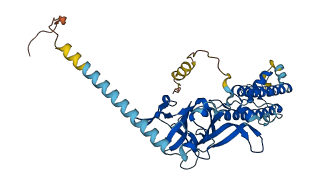
Descriptions
The autoinhibited protein was predicted that may have potential autoinhibitory elements via cis-regPred.
Autoinhibitory domains (AIDs)
Target domain |
|
Relief mechanism |
|
Assay |
cis-regPred |
Accessory elements
No accessory elements
Autoinhibited structure

Activated structure
1 structures for Q15842
| Entry ID | Method | Resolution | Chain | Position | Source |
|---|---|---|---|---|---|
| AF-Q15842-F1 | Predicted | AlphaFoldDB |
203 variants for Q15842
| Variant ID(s) | Position | Change | Description | Diseaes Association | Provenance |
|---|---|---|---|---|---|
|
RCV001853306 rs768851540 RCV002433916 CA070489 RCV000208382 |
28 | R>P | Brugada syndrome [ClinVar] | Yes |
ClinGen ClinVar ExAC TOPMed dbSNP gnomAD |
|
RCV001365713 rs749697322 RCV000620006 CA384132280 |
30 | R>S | Brugada syndrome [ClinVar] | Yes |
ClinGen ClinVar ExAC dbSNP gnomAD |
|
CA384132039 rs1555172510 RCV000638719 |
38 | A>S | Brugada syndrome [ClinVar] | Yes |
ClinGen ClinVar Ensembl dbSNP |
|
RCV000704814 COSM547620 rs1565662161 CA384131851 |
46 | A>V | lung Brugada syndrome Variant assessed as Somatic; impact. [Cosmic, ClinVar, NCI-TCGA] | Yes |
ClinGen cosmic curated ClinVar Ensembl NCI-TCGA dbSNP |
|
CA233263 RCV000144889 rs606231263 VAR_079518 |
65 | V>M | HTOCD; unknown pathological significance; displays gain of function; increased open state stability, reduced sensitivity to ATP inhibition and increased channel activity; almost completely abolishes high affinity sensitivity to glibenclamide, an inhibitor of ATP-sensitive potassium channels [UniProt] | Yes |
ClinGen ClinVar UniProt Ensembl dbSNP |
|
CA302102 RCV002272156 RCV002453585 rs117808169 RCV000171006 RCV000474015 |
88 | A>G | Syndromic disease Brugada syndrome [ClinVar] | Yes |
ClinGen ClinVar 1000Genomes ESP ExAC TOPMed dbSNP gnomAD |
|
CA6480702 RCV000496355 rs770087869 |
118 | T>I | Brugada syndrome 1 [ClinVar] | Yes |
ClinGen ClinVar ExAC TOPMed dbSNP gnomAD |
|
rs606231264 RCV000144890 VAR_075226 CA233265 |
176 | C>S | HTOCD; unknown pathological significance; displays gain of function; displays reduced ATP sensitivity [UniProt] | Yes |
ClinGen ClinVar UniProt Ensembl dbSNP |
|
CA6480667 RCV001327454 rs750317966 |
201 | V>I | Brugada syndrome Variant assessed as Somatic; 0.0 impact. [ClinVar, NCI-TCGA] | Yes |
ClinGen ClinVar ExAC NCI-TCGA TOPMed dbSNP gnomAD |
|
CA6480660 RCV001341106 rs369660507 |
234 | T>I | Brugada syndrome [ClinVar] | Yes |
ClinGen ClinVar ESP ExAC TOPMed dbSNP |
|
RCV002369882 RCV000695087 rs146747000 CA233613931 |
240 | V>A | Brugada syndrome [ClinVar] | Yes |
ClinGen ClinVar ESP dbSNP |
|
RCV001319694 rs1940616222 |
260 | F>L | Brugada syndrome [ClinVar] | Yes |
ClinVar dbSNP |
|
rs781083385 RCV000999614 RCV001858902 CA6480649 RCV002427451 |
274 | R>C | Brugada syndrome Variant assessed as Somatic; 0.0 impact. [ClinVar, NCI-TCGA] | Yes |
ClinGen ClinVar ExAC NCI-TCGA TOPMed dbSNP gnomAD |
|
rs149127157 RCV002408882 COSM547622 RCV000197643 CA337350 |
274 | R>H | lung Brugada syndrome [Cosmic, ClinVar] | Yes |
ClinGen cosmic curated ClinVar ESP ExAC TOPMed dbSNP gnomAD |
| VAR_065878 | 332 | E>del | SIDS; the mutant channel displays reduced potassium currents compared to wild type [UniProt] | Yes | UniProt |
|
RCV000625194 CA291766 RCV000126429 RCV000474235 VAR_049670 rs34811413 RCV000619924 |
334 | V>A | Brugada syndrome SUDDEN INFANT DEATH SYNDROME [ClinVar] | Yes |
ClinGen ClinVar UniProt 1000Genomes ESP ExAC TOPMed dbSNP gnomAD |
|
VAR_065879 RCV002395244 RCV001472777 RCV000522667 rs147316959 CA6480632 |
346 | V>I | Brugada syndrome SIDS; the mutant channel displays reduced potassium currents compared to wild type [ClinVar, UniProt] | Yes |
ClinGen ClinVar UniProt ESP ExAC TOPMed dbSNP gnomAD |
|
RCV000808286 rs1591883003 CA384122690 |
357 | E>G | Brugada syndrome [ClinVar] | Yes |
ClinGen ClinVar Ensembl dbSNP |
|
RCV001225347 CA6480623 rs752063865 |
382 | K>R | Brugada syndrome [ClinVar] | Yes |
ClinGen ClinVar ExAC dbSNP gnomAD |
|
RCV002332718 RCV000823161 rs368674776 CA233613550 |
389 | N>S | Brugada syndrome [ClinVar] | Yes |
ClinGen ClinVar ESP TOPMed dbSNP gnomAD |
|
RCV001340711 rs1940604697 |
392 | M>I | Brugada syndrome [ClinVar] | Yes |
ClinVar dbSNP |
|
CA346398 rs730880120 RCV001842498 RCV000692088 RCV002336343 |
394 | R>S | Cardiac arrhythmia Brugada syndrome [ClinVar] | Yes |
ClinGen ClinVar Ensembl dbSNP |
|
RCV000852668 rs765422464 CA6480619 |
398 | I>M | Hypertrophic cardiomyopathy [ClinVar] | Yes |
ClinGen ClinVar ExAC dbSNP gnomAD |
|
RCV000818310 rs1591882812 CA384121103 |
406 | M>I | Brugada syndrome [ClinVar] | Yes |
ClinGen ClinVar Ensembl dbSNP |
|
RCV001315931 rs1940602689 |
411 | Q>P | Brugada syndrome [ClinVar] | Yes |
ClinVar dbSNP |
|
rs72554071 RCV000621636 VAR_065225 RCV000144888 CA233261 RCV000852667 RCV001085300 |
422 | S>L | Brugada syndrome Hypertrophic cardiomyopathy found in Brugada syndrome and other J-wave syndromes; unknown pathological significance; the mutant channel displays an increase in glibenclamide-sensitive potassium currents compared to wild type [ClinVar, UniProt] | Yes |
ClinGen ClinVar UniProt 1000Genomes ESP ExAC TOPMed dbSNP gnomAD |
|
rs886038917 RCV000251528 COSM4146949 CA10587739 |
2 | L>F | thyroid [Cosmic] | No |
ClinGen cosmic curated ClinVar TOPMed dbSNP |
|
CA384132960 rs1202461548 |
6 | S>R | No |
ClinGen gnomAD |
|
| TCGA novel | 7 | I>N | Variant assessed as Somatic; impact. [NCI-TCGA] | No | NCI-TCGA |
|
CA384132886 rs1247168685 |
9 | P>A | No |
ClinGen TOPMed |
|
|
rs1006883763 CA233618023 |
9 | P>L | No |
ClinGen TOPMed |
|
|
rs1222706161 CA384132740 |
13 | V>L | No |
ClinGen TOPMed gnomAD |
|
|
CA384132706 rs1472440260 |
14 | L>R | No |
ClinGen TOPMed |
|
|
rs759595493 CA6480743 |
16 | R>C | No |
ClinGen ExAC gnomAD |
|
|
CA384132671 rs1319634603 |
16 | R>L | No |
ClinGen TOPMed gnomAD |
|
|
rs776266885 CA6480742 |
19 | A>T | No |
ClinGen ExAC gnomAD |
|
|
rs1591890640 CA384132504 |
21 | N>T | No |
ClinGen Ensembl |
|
|
rs1380928202 CA384132479 |
22 | L>P | No |
ClinGen TOPMed |
|
|
CA384132476 rs1380928202 |
22 | L>R | No |
ClinGen TOPMed |
|
|
CA6480740 rs746589384 |
23 | R>G | No |
ClinGen ExAC gnomAD |
|
|
CA384132360 rs1341531219 COSM1162998 |
26 | R>C | pancreas Variant assessed as Somatic; impact. [Cosmic, NCI-TCGA] | No |
ClinGen cosmic curated NCI-TCGA TOPMed |
| TCGA novel | 28 | R>* | Variant assessed as Somatic; impact. [NCI-TCGA] | No | NCI-TCGA |
|
rs768851540 CA6480738 |
28 | R>Q | No |
ClinGen ExAC TOPMed gnomAD |
|
|
CA6480737 rs749697322 |
30 | R>C | No |
ClinGen ExAC gnomAD |
|
|
CA6480736 rs553458206 |
35 | R>G | No |
ClinGen 1000Genomes ExAC gnomAD |
|
|
rs757336109 CA6480733 |
40 | S>C | No |
ClinGen ExAC TOPMed gnomAD |
|
|
CA6480732 rs757336109 |
40 | S>R | No |
ClinGen ExAC TOPMed gnomAD |
|
|
rs372068027 CA6480731 |
40 | S>T | No |
ClinGen ESP ExAC TOPMed gnomAD |
|
|
rs1565662171 CA384131952 |
42 | A>T | No |
ClinGen Ensembl |
|
|
CA6480725 rs776710700 |
51 | R>C | Variant assessed as Somatic; 0.0 impact. [NCI-TCGA] | No |
ClinGen ExAC NCI-TCGA gnomAD |
| TCGA novel | 51 | R>H | Variant assessed as Somatic; impact. [NCI-TCGA] | No | NCI-TCGA |
|
rs765927235 CA6480724 |
52 | E>D | No |
ClinGen ExAC gnomAD |
|
| TCGA novel | 55 | R>G | Variant assessed as Somatic; impact. [NCI-TCGA] | No | NCI-TCGA |
| TCGA novel | 55 | R>H | Variant assessed as Somatic; impact. [NCI-TCGA] | No | NCI-TCGA |
|
rs1214144938 CA384131600 |
57 | L>P | No |
ClinGen gnomAD |
|
|
rs1336701323 CA384131546 |
59 | D>E | No |
ClinGen gnomAD |
|
|
rs149972351 CA6480722 |
70 | R>H | No |
ClinGen 1000Genomes ExAC gnomAD |
|
|
rs1451909484 CA384131286 |
71 | H>D | No |
ClinGen TOPMed |
|
|
CA233617896 rs868702932 |
78 | M>I | No |
ClinGen Ensembl |
|
| TCGA novel | 78 | M>T | Variant assessed as Somatic; impact. [NCI-TCGA] | No | NCI-TCGA |
|
rs943483534 CA233617867 |
82 | C>Y | No |
ClinGen TOPMed |
|
|
rs1414385031 CA384131148 |
84 | W>* | No |
ClinGen TOPMed |
|
|
rs895911497 CA233617865 |
85 | L>M | No |
ClinGen Ensembl |
|
|
rs747808665 CA6480720 |
86 | L>H | No |
ClinGen ExAC gnomAD |
|
|
CA6480719 rs770212229 |
92 | W>* | No |
ClinGen ExAC gnomAD |
|
|
CA6480718 rs746308238 |
94 | V>G | No |
ClinGen ExAC gnomAD |
|
|
rs368920369 CA6480717 |
96 | F>V | No |
ClinGen ESP ExAC gnomAD |
|
|
CA6480715 rs777762871 |
99 | G>A | No |
ClinGen ExAC gnomAD |
|
|
COSM1705306 rs777762871 CA384131048 |
99 | G>E | skin [Cosmic] | No |
ClinGen cosmic curated ExAC gnomAD |
|
rs747079045 CA6480716 |
99 | G>R | No |
ClinGen ExAC gnomAD |
|
|
CA384131036 rs1409860355 |
101 | I>F | No |
ClinGen TOPMed |
|
|
rs1363865068 CA384131034 |
101 | I>T | No |
ClinGen gnomAD |
|
|
rs1287181965 CA384131021 |
102 | Y>C | No |
ClinGen TOPMed |
|
|
CA384130962 rs1194196721 |
106 | E>K | No |
ClinGen TOPMed gnomAD |
|
|
CA384130946 rs1565661985 |
107 | K>E | No |
ClinGen Ensembl |
|
|
rs1234969032 CA384130925 |
108 | S>N | No |
ClinGen TOPMed |
|
|
rs1565661972 CA384130913 |
109 | G>E | No |
ClinGen Ensembl |
|
|
CA384130918 rs1402515777 |
109 | G>R | No |
ClinGen TOPMed gnomAD |
|
|
CA6480710 COSM232589 rs753777222 |
110 | M>I | skin [Cosmic] | No |
ClinGen cosmic curated ExAC gnomAD |
|
rs1469592866 CA384130908 |
110 | M>L | No |
ClinGen gnomAD |
|
|
rs370562232 CA6480711 |
110 | M>T | No |
ClinGen ESP ExAC gnomAD |
|
|
CA6480708 rs138391404 |
111 | E>G | No |
ClinGen ESP ExAC TOPMed gnomAD |
|
|
CA6480709 rs766448263 |
111 | E>Q | No |
ClinGen ExAC gnomAD |
|
|
rs569478705 CA6480705 |
115 | L>M | No |
ClinGen 1000Genomes ExAC gnomAD |
|
|
CA6480703 rs761526890 |
118 | T>A | No |
ClinGen ExAC TOPMed gnomAD |
|
|
CA6480701 rs770087869 |
118 | T>S | No |
ClinGen ExAC TOPMed gnomAD |
|
|
RCV000585574 rs1555172010 |
128 | T>missing | No |
ClinVar dbSNP |
|
|
CA6480685 rs756068676 |
128 | T>I | No |
ClinGen ExAC gnomAD |
|
| TCGA novel | 138 | Q>E | Variant assessed as Somatic; impact. [NCI-TCGA] | No | NCI-TCGA |
|
rs761243443 CA6480682 |
142 | G>A | No |
ClinGen ExAC gnomAD |
|
|
rs1195595155 CA384127673 |
149 | T>I | No |
ClinGen gnomAD |
|
|
rs751175861 CA6480681 |
150 | E>V | No |
ClinGen ExAC gnomAD |
|
| TCGA novel | 153 | P>H | Variant assessed as Somatic; impact. [NCI-TCGA] | No | NCI-TCGA |
|
rs1486714606 CA384127512 |
154 | L>F | No |
ClinGen gnomAD |
|
| TCGA novel | 155 | A>T | Variant assessed as Somatic; impact. [NCI-TCGA] | No | NCI-TCGA |
|
rs761519173 CA6480680 |
157 | T>M | No |
ClinGen ExAC TOPMed gnomAD |
|
|
CA384127355 rs1239992863 |
161 | L>F | No |
ClinGen gnomAD |
|
| TCGA novel | 162 | Q>H | Variant assessed as Somatic; impact. [NCI-TCGA] | No | NCI-TCGA |
|
rs1340488325 CA384127259 |
165 | V>A | No |
ClinGen gnomAD |
|
|
rs376707958 CA6480676 |
166 | G>A | No |
ClinGen ESP ExAC TOPMed gnomAD |
|
|
CA6480677 rs771351034 |
166 | G>S | No |
ClinGen ExAC gnomAD |
|
|
CA384126915 rs1333492311 |
181 | T>I | No |
ClinGen gnomAD |
|
| TCGA novel | 182 | A>V | Variant assessed as Somatic; impact. [NCI-TCGA] | No | NCI-TCGA |
| TCGA novel | 184 | A>V | Variant assessed as Somatic; impact. [NCI-TCGA] | No | NCI-TCGA |
| TCGA novel | 190 | T>A | Variant assessed as Somatic; impact. [NCI-TCGA] | No | NCI-TCGA |
|
CA6480672 rs779171376 |
195 | R>L | No |
ClinGen ExAC gnomAD |
|
|
rs768980774 CA6480671 |
196 | H>R | No |
ClinGen ExAC gnomAD |
|
|
rs866860771 CA233614003 |
196 | H>Y | No |
ClinGen Ensembl |
|
|
rs531831416 CA6480666 |
202 | R>Q | Variant assessed as Somatic; 0.0 impact. [NCI-TCGA] | No |
ClinGen 1000Genomes ExAC NCI-TCGA gnomAD |
|
CA384125367 rs1277319689 |
211 | R>* | No |
ClinGen gnomAD |
|
|
COSM3954535 rs756752825 CA384125360 |
211 | R>L | lung [Cosmic] | No |
ClinGen cosmic curated ExAC TOPMed gnomAD |
|
rs756752825 CA6480665 |
211 | R>Q | No |
ClinGen ExAC TOPMed gnomAD |
|
| TCGA novel | 212 | V>M | Variant assessed as Somatic; impact. [NCI-TCGA] | No | NCI-TCGA |
|
CA6480663 rs751044561 |
221 | I>T | No |
ClinGen ExAC gnomAD |
|
|
CA6480662 rs763650307 |
226 | R>C | No |
ClinGen ExAC TOPMed gnomAD |
|
|
CA6480661 rs762588905 COSM430894 |
226 | R>H | Variant assessed as Somatic; 0.0 impact. breast [NCI-TCGA, Cosmic] | No |
ClinGen cosmic curated ExAC NCI-TCGA TOPMed gnomAD |
|
rs1321991067 CA384125151 |
227 | I>N | No |
ClinGen gnomAD |
|
|
CA384125154 rs1476423118 |
227 | I>V | No |
ClinGen TOPMed |
|
|
rs1428121862 CA384125055 |
233 | T>A | No |
ClinGen TOPMed |
|
|
CA384125039 rs1337510541 |
234 | T>A | No |
ClinGen gnomAD |
|
|
CA6480659 rs766668641 |
235 | T>I | No |
ClinGen ExAC gnomAD |
|
|
rs866245387 CA233613932 |
238 | G>E | No |
ClinGen Ensembl |
|
|
rs1366543712 CA384124982 |
238 | G>W | No |
ClinGen TOPMed |
|
| TCGA novel | 239 | E>D | Variant assessed as Somatic; impact. [NCI-TCGA] | No | NCI-TCGA |
|
rs1565659059 CA384124916 |
241 | V>I | No |
ClinGen Ensembl |
|
|
rs1394964897 CA384124874 |
243 | I>V | No |
ClinGen gnomAD |
|
|
rs1016356490 CA233613920 |
250 | V>I | No |
ClinGen TOPMed |
|
|
CA6480657 rs773726063 |
251 | D>E | No |
ClinGen ExAC TOPMed gnomAD |
|
|
CA384124651 rs1565659038 |
252 | N>Y | No |
ClinGen Ensembl |
|
| TCGA novel | 253 | P>T | Variant assessed as Somatic; impact. [NCI-TCGA] | No | NCI-TCGA |
|
CA384124578 rs1235054283 |
254 | I>V | No |
ClinGen gnomAD |
|
|
CA384124531 rs1468266637 |
255 | E>D | No |
ClinGen gnomAD |
|
| TCGA novel | 255 | E>K | Variant assessed as Somatic; impact. [NCI-TCGA] | No | NCI-TCGA |
|
CA6480655 rs762434135 |
256 | S>N | No |
ClinGen ExAC TOPMed gnomAD |
|
|
CA384124465 rs1314816734 |
257 | N>S | No |
ClinGen TOPMed gnomAD |
|
| TCGA novel | 262 | V>M | Variant assessed as Somatic; impact. [NCI-TCGA] | No | NCI-TCGA |
|
rs1233555862 CA384124221 |
266 | I>N | No |
ClinGen TOPMed gnomAD |
|
|
rs1233555862 CA384124218 |
266 | I>T | No |
ClinGen TOPMed gnomAD |
|
|
CA384124159 rs1327722457 |
268 | C>Y | No |
ClinGen TOPMed gnomAD |
|
|
rs933438680 CA233613821 COSM183068 |
270 | V>M | large_intestine Variant assessed as Somatic; impact. [Cosmic, NCI-TCGA] | No |
ClinGen cosmic curated NCI-TCGA TOPMed gnomAD |
|
rs145194613 CA233613801 |
283 | T>I | No |
ClinGen ESP TOPMed gnomAD |
|
|
rs777196966 CA6480647 |
284 | D>E | No |
ClinGen ExAC TOPMed gnomAD |
|
|
rs752294105 CA6480646 |
289 | D>E | No |
ClinGen ExAC gnomAD |
|
|
CA233613776 rs896322908 |
292 | V>I | No |
ClinGen TOPMed gnomAD |
|
|
rs1417136656 CA384123268 |
311 | T>I | No |
ClinGen gnomAD |
|
| TCGA novel | 313 | Y>* | Variant assessed as Somatic; impact. [NCI-TCGA] | No | NCI-TCGA |
|
rs1043556762 CA384123253 |
314 | I>L | Variant assessed as Somatic; impact. [NCI-TCGA] | No |
ClinGen NCI-TCGA TOPMed gnomAD |
|
CA233613757 rs1043556762 |
314 | I>V | No |
ClinGen TOPMed gnomAD |
|
|
rs1212537224 CA384123246 |
315 | A>T | No |
ClinGen gnomAD |
|
|
rs945173835 CA233613737 |
316 | E>K | No |
ClinGen TOPMed |
|
|
CA233613735 rs913765480 |
317 | E>Q | No |
ClinGen TOPMed |
|
|
COSM224423 rs1431835832 CA384123206 |
320 | W>* | Variant assessed as Somatic; 0.0 impact. skin [NCI-TCGA, Cosmic] | No |
ClinGen cosmic curated NCI-TCGA gnomAD |
|
rs764215606 COSM330866 CA6480639 |
323 | R>C | lung Variant assessed as Somatic; 0.0 impact. [Cosmic, NCI-TCGA] | No |
ClinGen cosmic curated ExAC NCI-TCGA gnomAD |
|
CA384123162 rs1434610051 |
325 | V>L | No |
ClinGen gnomAD |
|
|
CA6480637 rs775816433 |
329 | T>A | No |
ClinGen ExAC gnomAD |
|
|
CA6480635 rs746156853 |
333 | G>R | No |
ClinGen ExAC gnomAD |
|
| TCGA novel | 335 | Y>C | Variant assessed as Somatic; impact. [NCI-TCGA] | No | NCI-TCGA |
|
CA384123010 rs1181186825 |
336 | S>C | No |
ClinGen gnomAD |
|
|
CA233613614 rs930402902 COSM4166132 |
342 | F>L | kidney [Cosmic] | No |
ClinGen cosmic curated Ensembl |
| TCGA novel | 345 | T>N | Variant assessed as Somatic; impact. [NCI-TCGA] | No | NCI-TCGA |
|
CA384122873 rs1423501903 |
347 | K>E | No |
ClinGen TOPMed |
|
|
CA384122828 rs1209476623 |
349 | A>V | No |
ClinGen gnomAD |
|
|
rs747622709 CA6480629 |
352 | R>Q | No |
ClinGen ExAC TOPMed gnomAD |
|
|
rs556299317 CA6480630 |
352 | R>W | No |
ClinGen 1000Genomes ExAC TOPMed gnomAD |
|
| TCGA novel | 353 | C>Y | Variant assessed as Somatic; impact. [NCI-TCGA] | No | NCI-TCGA |
|
rs754575556 CA6480627 |
356 | R>Q | No |
ClinGen ExAC gnomAD |
|
|
rs188570294 CA6480626 |
357 | E>Q | No |
ClinGen 1000Genomes ExAC gnomAD |
|
| TCGA novel | 360 | E>* | Variant assessed as Somatic; impact. [NCI-TCGA] | No | NCI-TCGA |
|
CA233613597 rs867403064 |
368 | T>I | No |
ClinGen Ensembl |
|
|
CA384122318 rs1470665932 |
372 | S>G | No |
ClinGen TOPMed |
|
| TCGA novel | 374 | L>P | Variant assessed as Somatic; impact. [NCI-TCGA] | No | NCI-TCGA |
| TCGA novel | 376 | H>N | Variant assessed as Somatic; impact. [NCI-TCGA] | No | NCI-TCGA |
|
CA233613588 rs866713676 |
377 | Q>* | No |
ClinGen Ensembl |
|
|
CA384122026 rs1216506662 |
378 | N>S | No |
ClinGen gnomAD |
|
|
CA233613586 rs970311912 |
380 | L>Q | No |
ClinGen TOPMed |
|
|
CA6480622 COSM1211539 rs764730358 |
383 | R>H | Variant assessed as Somatic; 0.0 impact. large_intestine [NCI-TCGA, Cosmic] | No |
ClinGen cosmic curated ExAC NCI-TCGA gnomAD |
|
CA6480621 rs763595700 |
386 | M>I | No |
ClinGen ExAC gnomAD |
|
|
rs1460965494 CA384121665 |
386 | M>K | No |
ClinGen gnomAD |
|
|
CA233613573 rs912055698 |
386 | M>V | No |
ClinGen Ensembl |
|
| TCGA novel | 387 | R>K | Variant assessed as Somatic; impact. [NCI-TCGA] | No | NCI-TCGA |
| TCGA novel | 390 | N>D | Variant assessed as Somatic; impact. [NCI-TCGA] | No | NCI-TCGA |
|
rs1308741789 CA384121391 |
392 | M>V | No |
ClinGen TOPMed |
|
|
CA384121362 rs1336060963 |
393 | R>K | No |
ClinGen TOPMed |
|
|
CA233613546 rs989496170 |
394 | R>K | No |
ClinGen Ensembl |
|
|
RCV000621922 rs768365303 |
398 | I>missing | No |
ClinVar dbSNP |
|
| TCGA novel | 398 | I>missing | Variant assessed as Somatic; impact. [NCI-TCGA] | No | NCI-TCGA |
|
rs759608757 CA6480618 COSM170670 |
399 | R>* | Variant assessed as Somatic; 0.0 impact. oesophagus large_intestine [NCI-TCGA, Cosmic] | No |
ClinGen cosmic curated ExAC NCI-TCGA gnomAD |
|
rs142014286 CA6480617 |
399 | R>Q | Variant assessed as Somatic; 0.0 impact. [NCI-TCGA] | No |
ClinGen ESP ExAC NCI-TCGA TOPMed gnomAD |
|
CA384121193 rs1286367742 COSM2150967 |
402 | N>S | central_nervous_system [Cosmic] | No |
ClinGen cosmic curated TOPMed |
|
CA384121180 rs1565658632 |
403 | S>A | No |
ClinGen Ensembl |
|
|
rs770582892 CA6480615 |
403 | S>C | No |
ClinGen ExAC gnomAD |
|
| TCGA novel | 403 | S>T | Variant assessed as Somatic; impact. [NCI-TCGA] | No | NCI-TCGA |
|
CA384121155 rs1314690536 COSM937984 |
405 | L>F | Variant assessed as Somatic; impact. endometrium [NCI-TCGA, Cosmic] | No |
ClinGen cosmic curated NCI-TCGA TOPMed gnomAD |
|
rs746833721 CA6480613 |
405 | L>P | No |
ClinGen ExAC gnomAD |
|
|
CA6480611 rs771972337 |
406 | M>T | No |
ClinGen ExAC |
|
|
rs1206291531 CA384121122 |
406 | M>V | No |
ClinGen gnomAD |
|
|
rs748837563 CA6480607 |
413 | M>T | No |
ClinGen ExAC TOPMed gnomAD |
|
|
rs1198878252 CA384120975 |
413 | M>V | No |
ClinGen TOPMed |
|
|
CA233613474 rs111801922 |
418 | N>S | No |
ClinGen Ensembl |
|
|
CA6480606 rs757660202 |
419 | Q>* | No |
ClinGen ExAC TOPMed gnomAD |
|
|
CA6480605 rs757660202 |
419 | Q>E | No |
ClinGen ExAC TOPMed gnomAD |
|
|
CA384120778 rs1450527273 |
422 | S>A | No |
ClinGen TOPMed gnomAD |
|
|
rs72554071 CA384120773 |
422 | S>W | No |
ClinGen 1000Genomes ESP ExAC TOPMed gnomAD |
3 associated diseases with Q15842
[MIM: 272120]: Sudden infant death syndrome (SIDS)
SIDS is the sudden death of an infant younger than 1 year that remains unexplained after a thorough case investigation, including performance of a complete autopsy, examination of the death scene, and review of clinical history. Pathophysiologic mechanisms for SIDS may include respiratory dysfunction, cardiac dysrhythmias, cardiorespiratory instability, and inborn errors of metabolism, but definitive pathogenic mechanisms precipitating an infant sudden death remain elusive. {ECO:0000269|PubMed:21836131}. Note=Disease susceptibility is associated with variants affecting the gene represented in this entry.
[MIM: 239850]: Hypertrichotic osteochondrodysplasia (HTOCD)
A rare disorder characterized by congenital hypertrichosis, neonatal macrosomia, a distinct osteochondrodysplasia, and cardiomegaly. The hypertrichosis leads to thick scalp hair, which extends onto the forehead, and a general increase in body hair. In addition, macrocephaly and coarse facial features, including a broad nasal bridge, epicanthal folds, a wide mouth, and full lips, can be suggestive of a storage disorder. About half of affected individuals are macrosomic and edematous at birth, whereas in childhood they usually have a muscular appearance with little subcutaneous fat. Thickened calvarium, narrow thorax, wide ribs, flattened or ovoid vertebral bodies, coxa valga, osteopenia, enlarged medullary canals, and metaphyseal widening of long bones have been reported. Cardiac manifestations such as patent ductus arteriosus, ventricular hypertrophy, pulmonary hypertension, and pericardial effusions are present in approximately 80% of cases. Motor development is usually delayed due to hypotonia. Most patients have a mild speech delay, and a small percentage have learning difficulties or intellectual disability. {ECO:0000269|PubMed:24176758, ECO:0000269|PubMed:24700710, ECO:0000269|PubMed:28842488}. Note=The disease may be caused by variants affecting distinct genetic loci, including the gene represented in this entry.
Without disease ID
- SIDS is the sudden death of an infant younger than 1 year that remains unexplained after a thorough case investigation, including performance of a complete autopsy, examination of the death scene, and review of clinical history. Pathophysiologic mechanisms for SIDS may include respiratory dysfunction, cardiac dysrhythmias, cardiorespiratory instability, and inborn errors of metabolism, but definitive pathogenic mechanisms precipitating an infant sudden death remain elusive. {ECO:0000269|PubMed:21836131}. Note=Disease susceptibility is associated with variants affecting the gene represented in this entry.
- A rare disorder characterized by congenital hypertrichosis, neonatal macrosomia, a distinct osteochondrodysplasia, and cardiomegaly. The hypertrichosis leads to thick scalp hair, which extends onto the forehead, and a general increase in body hair. In addition, macrocephaly and coarse facial features, including a broad nasal bridge, epicanthal folds, a wide mouth, and full lips, can be suggestive of a storage disorder. About half of affected individuals are macrosomic and edematous at birth, whereas in childhood they usually have a muscular appearance with little subcutaneous fat. Thickened calvarium, narrow thorax, wide ribs, flattened or ovoid vertebral bodies, coxa valga, osteopenia, enlarged medullary canals, and metaphyseal widening of long bones have been reported. Cardiac manifestations such as patent ductus arteriosus, ventricular hypertrophy, pulmonary hypertension, and pericardial effusions are present in approximately 80% of cases. Motor development is usually delayed due to hypotonia. Most patients have a mild speech delay, and a small percentage have learning difficulties or intellectual disability. {ECO:0000269|PubMed:24176758, ECO:0000269|PubMed:24700710, ECO:0000269|PubMed:28842488}. Note=The disease may be caused by variants affecting distinct genetic loci, including the gene represented in this entry.
7 GO annotations of cellular component
| Name | Definition |
|---|---|
| inward rectifying potassium channel | A protein complex that comprises four pore-forming (Kir6.x) and four regulatory sulphonylurea receptor (SURx) subunits and forms a transmembrane channel through which ions may pass. The opening and closing of the channel is regulated by ATP: binding of ATP to the Kir6.x subunit inhibits channel activity, whereas binding of Mg2+-complexed ATP or ADP to the SURx subunit stimulates channel activity. |
| mitochondrion | A semiautonomous, self replicating organelle that occurs in varying numbers, shapes, and sizes in the cytoplasm of virtually all eukaryotic cells. It is notably the site of tissue respiration. |
| myofibril | The contractile element of skeletal and cardiac muscle; a long, highly organized bundle of actin, myosin, and other proteins that contracts by a sliding filament mechanism. |
| plasma membrane | The membrane surrounding a cell that separates the cell from its external environment. It consists of a phospholipid bilayer and associated proteins. |
| potassium ion-transporting ATPase complex | Protein complex that carries out the reaction: ATP + H2O + K+(out) = ADP + phosphate + K+(in). It is a high affinity potassium uptake system. The E. coli complex consists of 4 proteins: KdpA is the potassium ion translocase, KdpB is the ATPase, and KdpC and KdpF seem to be involved in assembly and stabilization of the complex. |
| sarcolemma | The outer membrane of a muscle cell, consisting of the plasma membrane, a covering basement membrane (about 100 nm thick and sometimes common to more than one fiber), and the associated loose network of collagen fibers. |
| voltage-gated potassium channel complex | A protein complex that forms a transmembrane channel through which potassium ions may cross a cell membrane in response to changes in membrane potential. |
6 GO annotations of molecular function
| Name | Definition |
|---|---|
| ATP binding | Binding to ATP, adenosine 5'-triphosphate, a universally important coenzyme and enzyme regulator. |
| ATP-activated inward rectifier potassium channel activity | Enables the transmembrane transfer of a potassium ion by an inwardly-rectifying voltage-gated channel, where the inward rectification is due to a voltage-dependent block of the channel pore by ATP. An inwardly rectifying current-voltage relation is one where at any given driving force the inward flow of K+ ions exceeds the outward flow for the opposite driving force. |
| ATPase-coupled cation transmembrane transporter activity | Enables the transfer of a solute or solutes from one side of a membrane to the other according to the reaction: ATP + H2O + cation(out) = ADP + phosphate + cation(in). |
| inward rectifier potassium channel activity | Enables the transmembrane transfer of a potassium ion by an inwardly-rectifying voltage-gated channel. An inwardly rectifying current-voltage relation is one where at any given driving force the inward flow of K+ ions exceeds the outward flow for the opposite driving force. The inward-rectification is due to a voltage-dependent block of the channel pore by a specific ligand or ligands, and as a result the macroscopic conductance depends on the difference between membrane voltage and the K+ equilibrium potential rather than on membrane voltage itself. |
| sulfonylurea receptor binding | Binding to a sulfonylurea receptor, a regulatory subunit of the ATP-sensitive potassium ion channel. |
| voltage-gated potassium channel activity involved in ventricular cardiac muscle cell action potential repolarization | Enables the transmembrane transfer of a potassium ion by a voltage-gated channel through the plasma membrane of a ventricular cardiomyocyte contributing to the repolarization phase of an action potential. A voltage-gated channel is a channel whose open state is dependent on the voltage across the membrane in which it is embedded. |
12 GO annotations of biological process
| Name | Definition |
|---|---|
| defense response to virus | Reactions triggered in response to the presence of a virus that act to protect the cell or organism. |
| heart development | The process whose specific outcome is the progression of the heart over time, from its formation to the mature structure. The heart is a hollow, muscular organ, which, by contracting rhythmically, keeps up the circulation of the blood. |
| inorganic cation transmembrane transport | A process in which an inorganic cation is transported from one side of a membrane to the other by means of some agent such as a transporter or pore. |
| kidney development | The process whose specific outcome is the progression of the kidney over time, from its formation to the mature structure. The kidney is an organ that filters the blood and/or excretes the end products of body metabolism in the form of urine. |
| membrane repolarization during ventricular cardiac muscle cell action potential | The process in which ions are transported across a membrane such that the ventricular cardiomyocyte membrane potential changes in the direction from the positive membrane potential at the peak of the action potential towards the negative resting potential. |
| potassium ion import across plasma membrane | The directed movement of potassium ions from outside of a cell, across the plasma membrane and into the cytosol. |
| potassium ion transmembrane transport | A process in which a potassium ion is transported from one side of a membrane to the other. |
| potassium ion transport | The directed movement of potassium ions (K+) into, out of or within a cell, or between cells, by means of some agent such as a transporter or pore. |
| regulation of ion transmembrane transport | Any process that modulates the frequency, rate or extent of the directed movement of ions from one side of a membrane to the other. |
| response to exogenous dsRNA | Any process that results in a change in state or activity of a cell or an organism (in terms of movement, secretion, enzyme production, gene expression, etc.) as a result of an exogenous double-stranded RNA stimulus. |
| response to lipopolysaccharide | Any process that results in a change in state or activity of an organism (in terms of movement, secretion, enzyme production, gene expression, etc.) as a result of a lipopolysaccharide stimulus; lipopolysaccharide is a major component of the cell wall of gram-negative bacteria. |
| transport across blood-brain barrier | The directed movement of substances (e.g. macromolecules, small molecules, ions) through the blood-brain barrier. |
15 homologous proteins in AiPD
| UniProt AC | Gene Name | Protein Name | Species | Evidence Code |
|---|---|---|---|---|
| Q4TZY1 | KCNJ12 | ATP-sensitive inward rectifier potassium channel 12 | Bos taurus (Bovine) | PR |
| F1NHE9 | KCNJ12 | ATP-sensitive inward rectifier potassium channel 12 | Gallus gallus (Chicken) | PR |
| B7U540 | KCNJ18 | Inward rectifier potassium channel 18 | Homo sapiens (Human) | PR |
| Q14500 | KCNJ12 | ATP-sensitive inward rectifier potassium channel 12 | Homo sapiens (Human) | PR |
| Q14654 | KCNJ11 | ATP-sensitive inward rectifier potassium channel 11 | Homo sapiens (Human) | PR |
| P48549 | KCNJ3 | G protein-activated inward rectifier potassium channel 1 | Homo sapiens (Human) | PR |
| Q8JZN3 | Kcnj14 | ATP-sensitive inward rectifier potassium channel 14 | Mus musculus (Mouse) | PR |
| P52187 | Kcnj12 | ATP-sensitive inward rectifier potassium channel 12 | Mus musculus (Mouse) | PR |
| P52189 | Kcnj4 | Inward rectifier potassium channel 4 | Mus musculus (Mouse) | PR |
| Q9Z307 | Kcnj16 | Inward rectifier potassium channel 16 | Mus musculus (Mouse) | PR |
| Q61743 | Kcnj11 | ATP-sensitive inward rectifier potassium channel 11 | Mus musculus (Mouse) | PR |
| P97794 | Kcnj8 | ATP-sensitive inward rectifier potassium channel 8 | Mus musculus (Mouse) | PR |
| P70673 | Kcnj11 | ATP-sensitive inward rectifier potassium channel 11 | Rattus norvegicus (Rat) | PR |
| P52188 | Kcnj12 | ATP-sensitive inward rectifier potassium channel 12 | Rattus norvegicus (Rat) | PR |
| Q63664 | Kcnj8 | ATP-sensitive inward rectifier potassium channel 8 | Rattus norvegicus (Rat) | PR |
| 10 | 20 | 30 | 40 | 50 | 60 |
| MLARKSIIPE | EYVLARIAAE | NLRKPRIRDR | LPKARFIAKS | GACNLAHKNI | REQGRFLQDI |
| 70 | 80 | 90 | 100 | 110 | 120 |
| FTTLVDLKWR | HTLVIFTMSF | LCSWLLFAIM | WWLVAFAHGD | IYAYMEKSGM | EKSGLESTVC |
| 130 | 140 | 150 | 160 | 170 | 180 |
| VTNVRSFTSA | FLFSIEVQVT | IGFGGRMMTE | ECPLAITVLI | LQNIVGLIIN | AVMLGCIFMK |
| 190 | 200 | 210 | 220 | 230 | 240 |
| TAQAHRRAET | LIFSRHAVIA | VRNGKLCFMF | RVGDLRKSMI | ISASVRIQVV | KKTTTPEGEV |
| 250 | 260 | 270 | 280 | 290 | 300 |
| VPIHQLDIPV | DNPIESNNIF | LVAPLIICHV | IDKRSPLYDI | SATDLANQDL | EVIVILEGVV |
| 310 | 320 | 330 | 340 | 350 | 360 |
| ETTGITTQAR | TSYIAEEIQW | GHRFVSIVTE | EEGVYSVDYS | KFGNTVKVAA | PRCSARELDE |
| 370 | 380 | 390 | 400 | 410 | 420 |
| KPSILIQTLQ | KSELSHQNSL | RKRNSMRRNN | SMRRNNSIRR | NNSSLMVPKV | QFMTPEGNQN |
| TSES |