P80201
Gene name |
Acvr1 (Acvrlk2) |
Protein name |
Activin receptor type-1 |
Names |
Activin receptor type I, ACTR-I, Serine/threonine-protein kinase receptor R1, SKR1, TGF-B superfamily receptor type I, TSR-I |
Species |
Rattus norvegicus (Rat) |
KEGG Pathway |
rno:79558 |
EC number |
2.7.11.30: Protein-serine/threonine kinases |
Protein Class |
|
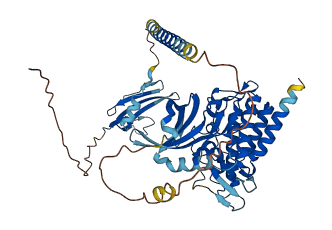
Descriptions
The autoinhibited protein was predicted that may have potential autoinhibitory elements via cis-regPred.
Autoinhibitory domains (AIDs)
Target domain |
|
Relief mechanism |
|
Assay |
cis-regPred |
Accessory elements
353-380 (Activation loop from InterPro)
Target domain |
208-502 (Protein kinase domain) |
Relief mechanism |
|
Assay |
|
Autoinhibited structure

Activated structure
1 structures for P80201
| Entry ID | Method | Resolution | Chain | Position | Source |
|---|---|---|---|---|---|
| AF-P80201-F1 | Predicted | AlphaFoldDB |
No variants for P80201
| Variant ID(s) | Position | Change | Description | Diseaes Association | Provenance |
|---|---|---|---|---|---|
| No variants for P80201 | |||||
No associated diseases with P80201
6 regional properties for P80201
| Type | Name | Position | InterPro Accession |
|---|---|---|---|
| domain | Activin types I and II receptor domain | 33 - 102 | IPR000472 |
| domain | Protein kinase domain | 208 - 502 | IPR000719 |
| domain | Serine-threonine/tyrosine-protein kinase, catalytic domain | 209 - 494 | IPR001245 |
| domain | GS domain | 178 - 208 | IPR003605 |
| active_site | Serine/threonine-protein kinase, active site | 332 - 344 | IPR008271 |
| binding_site | Protein kinase, ATP binding site | 214 - 235 | IPR017441 |
Functions
| Description | ||
|---|---|---|
| EC Number | 2.7.11.30 | Protein-serine/threonine kinases |
| Subcellular Localization |
|
|
| PANTHER Family | ||
| PANTHER Subfamily | ||
| PANTHER Protein Class | ||
| PANTHER Pathway Category | No pathway information available | |
6 GO annotations of cellular component
| Name | Definition |
|---|---|
| activin receptor complex | A protein complex that acts as an activin receptor. Heterodimeric activin receptors, comprising one Type I activin receptor and one Type II receptor polypeptide, and heterotrimeric receptors have been observed. |
| apical part of cell | The region of a polarized cell that forms a tip or is distal to a base. For example, in a polarized epithelial cell, the apical region has an exposed surface and lies opposite to the basal lamina that separates the epithelium from other tissue. |
| BMP receptor complex | A protein complex that acts as a receptor for bone morphogenetic proteins (BMPs); a homo- or heterodimer of type I and/or type II BMP receptor subunits. |
| integral component of plasma membrane | The component of the plasma membrane consisting of the gene products and protein complexes having at least some part of their peptide sequence embedded in the hydrophobic region of the membrane. |
| plasma membrane | The membrane surrounding a cell that separates the cell from its external environment. It consists of a phospholipid bilayer and associated proteins. |
| receptor complex | Any protein complex that undergoes combination with a hormone, neurotransmitter, drug or intracellular messenger to initiate a change in cell function. |
14 GO annotations of molecular function
| Name | Definition |
|---|---|
| activin binding | Binding to activin, a dimer of inhibin-beta subunits. |
| activin receptor activity, type I | Combining with activin-bound type II activin receptor to initiate a change in cell activity; upon binding, acts as a downstream transducer of activin signals. |
| ATP binding | Binding to ATP, adenosine 5'-triphosphate, a universally important coenzyme and enzyme regulator. |
| cadherin binding | Binding to cadherin, a type I membrane protein involved in cell adhesion. |
| growth factor binding | Binding to a growth factor, proteins or polypeptides that stimulate a cell or organism to grow or proliferate. |
| metal ion binding | Binding to a metal ion. |
| protein homodimerization activity | Binding to an identical protein to form a homodimer. |
| protein kinase activity | Catalysis of the phosphorylation of an amino acid residue in a protein, usually according to the reaction: a protein + ATP = a phosphoprotein + ADP. |
| protein serine/threonine kinase activity | Catalysis of the reactions: ATP + protein serine = ADP + protein serine phosphate, and ATP + protein threonine = ADP + protein threonine phosphate. |
| protein tyrosine kinase binding | Binding to protein tyrosine kinase. |
| SMAD binding | Binding to a SMAD signaling protein. |
| transforming growth factor beta binding | Binding to TGF-beta, transforming growth factor beta, a multifunctional peptide that controls proliferation, differentiation and other functions in many cell types. |
| transforming growth factor beta receptor activity, type I | Combining with a complex of transforming growth factor beta and a type II TGF-beta receptor to initiate a change in cell activity; upon binding, acts as a downstream transducer of TGF-beta signals. |
| transmembrane receptor protein serine/threonine kinase activity | Combining with a signal and transmitting the signal from one side of the membrane to the other to initiate a change in cell activity by catalysis of the reaction: ATP protein serine = ADP + protein serine phosphate, and ATP + protein threonine = ADP + protein threonine phosphate. |
49 GO annotations of biological process
| Name | Definition |
|---|---|
| activin receptor signaling pathway | The series of molecular signals initiated by an extracellular ligand binding to an activin receptor on the surface of a target cell, and ending with the regulation of a downstream cellular process, e.g. transcription. |
| acute inflammatory response | Inflammation which comprises a rapid, short-lived, relatively uniform response to acute injury or antigenic challenge and is characterized by accumulations of fluid, plasma proteins, and granulocytic leukocytes. An acute inflammatory response occurs within a matter of minutes or hours, and either resolves within a few days or becomes a chronic inflammatory response. |
| atrial septum primum morphogenesis | The process in which anatomical structure of an atrial septum primum is generated and organized. |
| atrioventricular valve morphogenesis | The process in which the structure of the atrioventricular valve is generated and organized. |
| BMP signaling pathway | The series of molecular signals initiated by the binding of a member of the BMP (bone morphogenetic protein) family to a receptor on the surface of a target cell, and ending with the regulation of a downstream cellular process, e.g. transcription. |
| BMP signaling pathway involved in heart development | The series of molecular signals initiated by the binding of a member of the BMP (bone morphogenetic protein) family to its receptor on the surface of a target cell, which contributes to the progression of the heart over time. |
| branching involved in blood vessel morphogenesis | The process of coordinated growth and sprouting of blood vessels giving rise to the organized vascular system. |
| cardiac muscle cell fate commitment | The commitment of cells to specific cardiac muscle cell fates and their capacity to differentiate into cardiac muscle cells. Cardiac muscle cells are striated muscle cells that are responsible for heart contraction. |
| cellular response to BMP stimulus | Any process that results in a change in state or activity of a cell (in terms of movement, secretion, enzyme production, gene expression, etc.) as a result of a bone morphogenetic protein (BMP) stimulus. |
| cellular response to glucocorticoid stimulus | Any process that results in a change in state or activity of a cell (in terms of movement, secretion, enzyme production, gene expression, etc.) as a result of a glucocorticoid stimulus. Glucocorticoids are hormonal C21 corticosteroids synthesized from cholesterol with the ability to bind with the cortisol receptor and trigger similar effects. Glucocorticoids act primarily on carbohydrate and protein metabolism, and have anti-inflammatory effects. |
| cellular response to growth factor stimulus | Any process that results in a change in state or activity of a cell (in terms of movement, secretion, enzyme production, gene expression, etc.) as a result of a growth factor stimulus. |
| determination of left/right symmetry | The establishment of an organism's body plan or part of an organism with respect to the left and right halves. The pattern can either be symmetric, such that the halves are mirror images, or asymmetric where the pattern deviates from this symmetry. |
| dorsal/ventral pattern formation | The regionalization process in which the areas along the dorsal/ventral axis are established that will lead to differences in cell differentiation. The dorsal/ventral axis is defined by a line that runs orthogonal to both the anterior/posterior and left/right axes. The dorsal end is defined by the upper or back side of an organism. The ventral end is defined by the lower or front side of an organism. |
| embryonic heart tube morphogenesis | The process in which the anatomical structures of the embryonic heart tube are generated and organized. The embryonic heart tube is an epithelial tube that will give rise to the mature heart. |
| endocardial cushion cell fate commitment | The commitment of a cell to an endocardial cushion cell fate and its capacity to differentiate into an endocardial cushion cell. |
| endocardial cushion fusion | The cell-cell adhesion process of mesenchymal cardiac cushion cells that contributes to the process of cushion shaping. |
| endocardial cushion morphogenesis | The process in which the anatomical structure of the endocardial cushion is generated and organized. The endocardial cushion is a specialized region of mesenchymal cells that will give rise to the heart septa and valves. |
| gastrulation | A complex and coordinated series of cellular movements that occurs at the end of cleavage during embryonic development of most animals. The details of gastrulation vary from species to species, but usually result in the formation of the three primary germ layers, ectoderm, mesoderm and endoderm. |
| gastrulation with mouth forming second | A gastrulation process in which the initial invagination becomes the anus and the mouth forms second. |
| germ cell development | The process whose specific outcome is the progression of an immature germ cell over time, from its formation to the mature structure (gamete). A germ cell is any reproductive cell in a multicellular organism. |
| heart development | The process whose specific outcome is the progression of the heart over time, from its formation to the mature structure. The heart is a hollow, muscular organ, which, by contracting rhythmically, keeps up the circulation of the blood. |
| in utero embryonic development | The process whose specific outcome is the progression of the embryo in the uterus over time, from formation of the zygote in the oviduct, to birth. An example of this process is found in Mus musculus. |
| mesoderm development | The process whose specific outcome is the progression of the mesoderm over time, from its formation to the mature structure. The mesoderm is the middle germ layer that develops into muscle, bone, cartilage, blood and connective tissue. |
| mesoderm formation | The process that gives rise to the mesoderm. This process pertains to the initial formation of the structure from unspecified parts. |
| mitral valve morphogenesis | The process in which the structure of the mitral valve is generated and organized. |
| negative regulation of activin receptor signaling pathway | Any process that stops, prevents, or reduces the frequency, rate or extent of the activity of any activin receptor signaling pathway. |
| negative regulation of extrinsic apoptotic signaling pathway | Any process that stops, prevents or reduces the frequency, rate or extent of extrinsic apoptotic signaling pathway. |
| negative regulation of G1/S transition of mitotic cell cycle | Any signalling pathway that decreases or inhibits the activity of a cell cycle cyclin-dependent protein kinase to modulate the switch from G1 phase to S phase of the mitotic cell cycle. |
| negative regulation of signal transduction | Any process that stops, prevents, or reduces the frequency, rate or extent of signal transduction. |
| neural crest cell migration | The characteristic movement of cells from the dorsal ridge of the neural tube to a variety of locations in a vertebrate embryo. |
| pathway-restricted SMAD protein phosphorylation | The process of introducing a phosphate group on to a pathway restricted SMAD protein. A pathway restricted SMAD protein is an effector protein that acts directly downstream of the transforming growth factor family receptor. |
| peptidyl-threonine phosphorylation | The phosphorylation of peptidyl-threonine to form peptidyl-O-phospho-L-threonine. |
| pharyngeal system development | The process whose specific outcome is the progression of the pharyngeal system over time, from its formation to the mature structure. The pharyngeal system is a transient embryonic complex that is specific to vertebrates. It comprises the pharyngeal arches, bulges of tissues of mesoderm and neural crest derivation through which pass nerves and pharyngeal arch arteries. The arches are separated internally by pharyngeal pouches, evaginations of foregut endoderm, and externally by pharyngeal clefts, invaginations of surface ectoderm. The development of the system ends when the stucture it contributes to are forming: the thymus, thyroid, parathyroids, maxilla, mandible, aortic arch, cardiac outflow tract, external and middle ear. |
| positive regulation of bone mineralization | Any process that activates or increases the frequency, rate or extent of bone mineralization. |
| positive regulation of cell migration | Any process that activates or increases the frequency, rate or extent of cell migration. |
| positive regulation of determination of dorsal identity | Any process that activates or increases the frequency, rate or extent of determination of dorsal identity. |
| positive regulation of DNA-templated transcription | Any process that activates or increases the frequency, rate or extent of cellular DNA-templated transcription. |
| positive regulation of epithelial to mesenchymal transition involved in endocardial cushion formation | Any process that activates or increases the frequency, rate or extent of epithelial to mesenchymal transition involved in endocardial cushion formation. |
| positive regulation of osteoblast differentiation | Any process that activates or increases the frequency, rate or extent of osteoblast differentiation. |
| positive regulation of pathway-restricted SMAD protein phosphorylation | Any process that increases the rate, frequency or extent of pathway-restricted SMAD protein phosphorylation. Pathway-restricted SMAD proteins and common-partner SMAD proteins are involved in the transforming growth factor beta receptor signaling pathways. |
| positive regulation of peptidyl-tyrosine phosphorylation | Any process that activates or increases the frequency, rate or extent of the phosphorylation of peptidyl-tyrosine. |
| positive regulation of transcription by RNA polymerase II | Any process that activates or increases the frequency, rate or extent of transcription from an RNA polymerase II promoter. |
| protein phosphorylation | The process of introducing a phosphate group on to a protein. |
| regulation of ossification | Any process that modulates the frequency, rate or extent of ossification, the formation of bone or of a bony substance or the conversion of fibrous tissue or of cartilage into bone or a bony substance. |
| regulation of skeletal muscle tissue development | Any process that modulates the frequency, rate or extent of skeletal muscle tissue development. |
| smooth muscle cell differentiation | The process in which a relatively unspecialized cell acquires specialized features of a smooth muscle cell; smooth muscle lacks transverse striations in its constituent fibers and are almost always involuntary. |
| transforming growth factor beta receptor signaling pathway | The series of molecular signals initiated by an extracellular ligand binding to a transforming growth factor beta receptor on the surface of a target cell, and ending with the regulation of a downstream cellular process, e.g. transcription. |
| urogenital system development | The process whose specific outcome is the progression of the urogenital system over time, from its formation to the mature structure. |
| ventricular septum morphogenesis | The developmental process in which a ventricular septum is generated and organized. A ventricular septum is an anatomical structure that separates the lower chambers (ventricles) of the heart from one another. |
11 homologous proteins in AiPD
| UniProt AC | Gene Name | Protein Name | Species | Evidence Code |
|---|---|---|---|---|
| Q8NER5 | ACVR1C | Activin receptor type-1C | Homo sapiens (Human) | PR |
| P36897 | TGFBR1 | TGF-beta receptor type-1 | Homo sapiens (Human) | PR |
| Q61288 | Acvrl1 | Serine/threonine-protein kinase receptor R3 | Mus musculus (Mouse) | PR |
| Q64729 | Tgfbr1 | TGF-beta receptor type-1 | Mus musculus (Mouse) | PR |
| Q8K348 | Acvr1c | Activin receptor type-1C | Mus musculus (Mouse) | PR |
| Q5CD18 | TGFBR1 | TGF-beta receptor type-1 | Sus scrofa (Pig) | PR |
| Q62893 | Amhr2 | Anti-Muellerian hormone type-2 receptor | Rattus norvegicus (Rat) | PR |
| P38438 | Tgfbr2 | TGF-beta receptor type-2 | Rattus norvegicus (Rat) | PR |
| P38445 | Acvr2b | Activin receptor type-2B | Rattus norvegicus (Rat) | PR |
| P70539 | Acvr1c | Activin receptor type-1C | Rattus norvegicus (Rat) | PR |
| P20792 | daf-1 | Cell surface receptor daf-1 | Caenorhabditis elegans | PR |
| 10 | 20 | 30 | 40 | 50 | 60 |
| MVDGAMILSV | LMMMALPSPS | MEDEEPKVNP | KLYMCVCEGL | SCGNEDHCEG | QQCFSSLSVN |
| 70 | 80 | 90 | 100 | 110 | 120 |
| DGFRVYQKGC | FQVYEQGKMT | CKTPPSPGQA | VECCQGDWCN | RNVTARLPTK | GKSFPGSQNF |
| 130 | 140 | 150 | 160 | 170 | 180 |
| HLEVGLIILS | VVFAVCLFAC | ILGVALRKFK | RRNQERLNPR | DVEYGTIEGL | ITTNVGDSTL |
| 190 | 200 | 210 | 220 | 230 | 240 |
| AELLDHSCTS | GSGSGLPFLV | QRTVARQITL | LECVGKGRYG | EVWRGSWQGE | NVAVKIFSSR |
| 250 | 260 | 270 | 280 | 290 | 300 |
| DEKSWFRETE | LYNTVMLRHE | NILGFIASDM | TSRHSSTQLW | LITHYHEMGS | LYDYLQLTTL |
| 310 | 320 | 330 | 340 | 350 | 360 |
| DTVSCLRIVL | SIASGLAHLH | IEIFGTQGKS | AIAHRDLKSK | NILVKKNGQC | CIADLGLAVM |
| 370 | 380 | 390 | 400 | 410 | 420 |
| HSQSTNQLDV | GNNPRVGTKR | YMAPEVLDET | IQVDCFDSYK | RVDIWAFGLV | LWEVARRMVS |
| 430 | 440 | 450 | 460 | 470 | 480 |
| NGIVEDYKPP | FYDVVPNDPS | FEDMRKVVCV | DQQRPNIPNR | WFSDPTLTSL | AKLMKECWYQ |
| 490 | 500 | ||||
| NPSARLTALR | IKKTLTKIDN | SLDKLKTDC |