P70615
Gene name |
Lmnb1 |
Protein name |
Lamin-B1 |
Names |
|
Species |
Rattus norvegicus (Rat) |
KEGG Pathway |
rno:116685 |
EC number |
|
Protein Class |
|
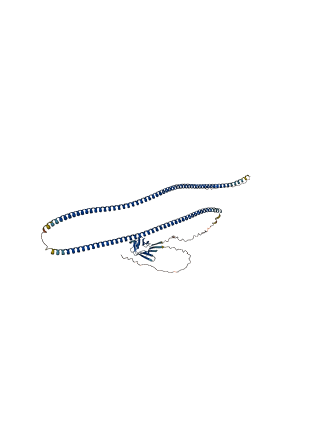
Descriptions
The autoinhibited protein was predicted that may have potential autoinhibitory elements via cis-regPred.
Autoinhibitory domains (AIDs)
Target domain |
|
Relief mechanism |
|
Assay |
cis-regPred |
Accessory elements
No accessory elements
Autoinhibited structure

Activated structure
1 structures for P70615
| Entry ID | Method | Resolution | Chain | Position | Source |
|---|---|---|---|---|---|
| AF-P70615-F1 | Predicted | AlphaFoldDB |
No variants for P70615
| Variant ID(s) | Position | Change | Description | Diseaes Association | Provenance |
|---|---|---|---|---|---|
| No variants for P70615 | |||||
No associated diseases with P70615
1 regional properties for P70615
| Type | Name | Position | InterPro Accession |
|---|---|---|---|
| domain | AP2/ERF domain | 53 - 117 | IPR001471 |
9 GO annotations of cellular component
| Name | Definition |
|---|---|
| cytoplasm | The contents of a cell excluding the plasma membrane and nucleus, but including other subcellular structures. |
| lamin filament | Any of a group of intermediate-filament proteins that form the fibrous matrix on the inner surface of the nuclear envelope. They are classified as lamins A, B and C. |
| nuclear envelope | The double lipid bilayer enclosing the nucleus and separating its contents from the rest of the cytoplasm; includes the intermembrane space, a gap of width 20-40 nm (also called the perinuclear space). |
| nuclear inner membrane | The inner, i.e. lumen-facing, lipid bilayer of the nuclear envelope. |
| nuclear lamina | The fibrous, electron-dense layer lying on the nucleoplasmic side of the inner membrane of a cell nucleus, composed of lamin filaments. The polypeptides of the lamina are thought to be concerned in the dissolution of the nuclear envelope and its re-formation during mitosis. The lamina is composed of lamin A and lamin C filaments cross-linked into an orthogonal lattice, which is attached via lamin B to the inner nuclear membrane through interactions with a lamin B receptor, an IFAP, in the membrane. |
| nuclear matrix | The dense fibrillar network lying on the inner side of the nuclear membrane. |
| nuclear membrane | Either of the lipid bilayers that surround the nucleus and form the nuclear envelope; excludes the intermembrane space. |
| nucleoplasm | That part of the nuclear content other than the chromosomes or the nucleolus. |
| nucleus | A membrane-bounded organelle of eukaryotic cells in which chromosomes are housed and replicated. In most cells, the nucleus contains all of the cell's chromosomes except the organellar chromosomes, and is the site of RNA synthesis and processing. In some species, or in specialized cell types, RNA metabolism or DNA replication may be absent. |
4 GO annotations of molecular function
| Name | Definition |
|---|---|
| double-stranded DNA binding | Binding to double-stranded DNA. |
| phospholipase binding | Binding to a phospholipase. |
| sequence-specific double-stranded DNA binding | Binding to double-stranded DNA of a specific nucleotide composition, e.g. GC-rich DNA binding, or with a specific sequence motif or type of DNA, e.g. promotor binding or rDNA binding. |
| structural constituent of cytoskeleton | The action of a molecule that contributes to the structural integrity of a cytoskeletal structure. |
12 GO annotations of biological process
| Name | Definition |
|---|---|
| apoptotic process | A programmed cell death process which begins when a cell receives an internal (e.g. DNA damage) or external signal (e.g. an extracellular death ligand), and proceeds through a series of biochemical events (signaling pathway phase) which trigger an execution phase. The execution phase is the last step of an apoptotic process, and is typically characterized by rounding-up of the cell, retraction of pseudopodes, reduction of cellular volume (pyknosis), chromatin condensation, nuclear fragmentation (karyorrhexis), plasma membrane blebbing and fragmentation of the cell into apoptotic bodies. When the execution phase is completed, the cell has died. |
| cellular response to corticosterone stimulus | Any process that results in a change in state or activity of a cell (in terms of movement, secretion, enzyme production, gene expression, etc.) as a result of a corticosterone stimulus. Corticosterone is a 21 carbon steroid hormone of the corticosteroid type, produced in the cortex of the adrenal glands. In many species, corticosterone is the principal glucocorticoid, involved in regulation of fuel metabolism, immune reactions, and stress responses. |
| cellular response to monosodium L-glutamate | Any process that results in a change in state or activity of a cell (in terms of movement, secretion, enzyme production, gene expression, etc.) as a result of a monosodium L-glutamate stimulus. |
| cellular response to organic cyclic compound | Any process that results in a change in state or activity of a cell (in terms of movement, secretion, enzyme production, gene expression, etc.) as a result of an organic cyclic compound stimulus. |
| heterochromatin assembly | An epigenetic gene silencing mechanism in which chromatin is compacted into heterochromatin, resulting in a chromatin conformation refractory to transcription. This process starts with heterochromatin nucleation, its spreading, and ends with heterochromatin boundary formation. |
| neurogenesis | Generation of cells within the nervous system. |
| nuclear envelope organization | A process that is carried out at the cellular level which results in the assembly, arrangement of constituent parts, or disassembly of the nuclear envelope. |
| nuclear migration | The directed movement of the nucleus to a specific location within a cell. |
| nuclear pore localization | Any process in which nuclear pores are transported to, or maintained in, a specific location. |
| protein localization to nuclear envelope | A process in which a protein is transported to, or maintained at, a location within a nuclear envelope. |
| response to antibiotic | Any process that results in a change in state or activity of a cell or an organism (in terms of movement, secretion, enzyme production, gene expression, etc.) as a result of an antibiotic stimulus. An antibiotic is a chemical substance produced by a microorganism which has the capacity to inhibit the growth of or to kill other microorganisms. |
| response to xenobiotic stimulus | Any process that results in a change in state or activity of a cell or an organism (in terms of movement, secretion, enzyme production, gene expression, etc.) as a result of a stimulus from a xenobiotic, a compound foreign to the organim exposed to it. It may be synthesized by another organism (like ampicilin) or it can be a synthetic chemical. |
10 homologous proteins in AiPD
| UniProt AC | Gene Name | Protein Name | Species | Evidence Code |
|---|---|---|---|---|
| P02545 | LMNA | Prelamin-A/C | Homo sapiens (Human) | PR |
| P17661 | DES | Desmin | Homo sapiens (Human) | PR |
| P08670 | VIM | Vimentin | Homo sapiens (Human) | PR |
| P31001 | Des | Desmin | Mus musculus (Mouse) | PR |
| P20152 | Vim | Vimentin | Mus musculus (Mouse) | PR |
| P48678 | Lmna | Prelamin-A/C | Mus musculus (Mouse) | PR |
| P21619 | Lmnb2 | Lamin-B2 | Mus musculus (Mouse) | PR |
| P14733 | Lmnb1 | Lamin-B1 | Mus musculus (Mouse) | PR |
| P48679 | Lmna | Prelamin-A/C | Rattus norvegicus (Rat) | PR |
| Q21065 | ifa-3 | Intermediate filament protein ifa-3 | Caenorhabditis elegans | PR |
| 10 | 20 | 30 | 40 | 50 | 60 |
| MATATPVQQR | AGSRASAPAT | PFSPTRLSRL | QEKEELRELN | DRLAVYIDKV | RSLETENSAL |
| 70 | 80 | 90 | 100 | 110 | 120 |
| QLQVTEREEV | RGRELTGLKA | LYETELADAR | RALDDTARER | AKLQIELGKF | KAEHDQLLLN |
| 130 | 140 | 150 | 160 | 170 | 180 |
| YAKKESDLSG | AQIKLREYEA | ALNSKDAALA | TALGDKKSLE | GDLEDLKDQI | AQLEASLSAA |
| 190 | 200 | 210 | 220 | 230 | 240 |
| KKQLADETLL | KVDLENRCQS | LTEDLEFRKN | MYEEEINETR | RKHETRLVEV | DSGRQIEYEY |
| 250 | 260 | 270 | 280 | 290 | 300 |
| KLAQALHEMR | EQHDAQVRLY | KEELEQTYHA | KLENARLSSE | MNTSTVNSAR | GGMMESRMRI |
| 310 | 320 | 330 | 340 | 350 | 360 |
| ESLSSQLSNL | QKDSRACLER | IQELEDMLAK | ERDNSRRMLS | DKEREMAEIR | DQMQQQLNDY |
| 370 | 380 | 390 | 400 | 410 | 420 |
| EQLLDVKLAL | DMEISAYRKL | LEGEEERLKL | SPSPSSRVTV | SRASSSRSVR | TTRGKRKRVD |
| 430 | 440 | 450 | 460 | 470 | 480 |
| VEESEASSSV | SISHSASATG | NVCIEEIDVD | GKFIRLKNTS | EQDQPMGGWE | MIRKIGDTSV |
| 490 | 500 | 510 | 520 | 530 | 540 |
| SYKYTSRYVL | KAGQTVTVWA | ANAGVTASPP | TDLIWKNQNS | WGTGEDVKVV | LKNSQGEEVA |
| 550 | 560 | 570 | 580 | ||
| QRSTVFKTTI | PEEEEEEEEE | PIGVPLEEER | FHQQGTPRAS | NKSCAIM |