P62908
Gene name |
Rps3 |
Protein name |
40S ribosomal protein S3 |
Names |
|
Species |
Mus musculus (Mouse) |
KEGG Pathway |
mmu:27050 |
EC number |
4.2.99.18: Other carbon-oxygen lyases |
Protein Class |
|
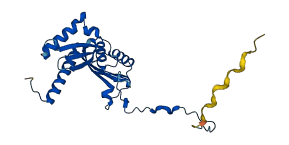
Descriptions
The autoinhibited protein was predicted that may have potential autoinhibitory elements via cis-regPred.
Autoinhibitory domains (AIDs)
Target domain |
|
Relief mechanism |
|
Assay |
cis-regPred |
Accessory elements
No accessory elements
Autoinhibited structure

Activated structure
5 structures for P62908
| Entry ID | Method | Resolution | Chain | Position | Source |
|---|---|---|---|---|---|
| 7CPU | EM | 282 A | SD | 1-243 | PDB |
| 7CPV | EM | 303 A | SD | 1-243 | PDB |
| 7LS1 | EM | 330 A | q2 | 1-243 | PDB |
| 7LS2 | EM | 310 A | q2 | 1-243 | PDB |
| AF-P62908-F1 | Predicted | AlphaFoldDB |
10 variants for P62908
| Variant ID(s) | Position | Change | Description | Diseaes Association | Provenance |
|---|---|---|---|---|---|
| rs13469754 | 63 | G>S | No | EVA | |
| rs3388886147 | 67 | R>G | No | EVA | |
| rs3388930961 | 83 | S>G | No | EVA | |
| rs13469750 | 86 | L>P | No | EVA | |
| rs13469755 | 87 | Y>H | No | EVA | |
| rs13469743 | 93 | T>A | No | EVA | |
| rs3388915429 | 110 | L>I | No | EVA | |
| rs3388933674 | 155 | G>D | No | EVA | |
| rs3388886171 | 167 | Y>F | No | EVA | |
| rs3388921592 | 185 | K>R | No | EVA |
No associated diseases with P62908
Functions
| Description | ||
|---|---|---|
| EC Number | 4.2.99.18 | Other carbon-oxygen lyases |
| Subcellular Localization |
|
|
| PANTHER Family | ||
| PANTHER Subfamily | ||
| PANTHER Protein Class | ||
| PANTHER Pathway Category | No pathway information available | |
20 GO annotations of cellular component
| Name | Definition |
|---|---|
| cytoplasm | The contents of a cell excluding the plasma membrane and nucleus, but including other subcellular structures. |
| cytosol | The part of the cytoplasm that does not contain organelles but which does contain other particulate matter, such as protein complexes. |
| cytosolic ribosome | A ribosome located in the cytosol. |
| cytosolic small ribosomal subunit | The small subunit of a ribosome located in the cytosol. |
| dendrite | A neuron projection that has a short, tapering, morphology. Dendrites receive and integrate signals from other neurons or from sensory stimuli, and conduct nerve impulses towards the axon or the cell body. In most neurons, the impulse is conveyed from dendrites to axon via the cell body, but in some types of unipolar neuron, the impulse does not travel via the cell body. |
| endomembrane system | A collection of membranous structures involved in transport within the cell. The main components of the endomembrane system are endoplasmic reticulum, Golgi bodies, vesicles, cell membrane and nuclear envelope. Members of the endomembrane system pass materials through each other or though the use of vesicles. |
| endoplasmic reticulum | The irregular network of unit membranes, visible only by electron microscopy, that occurs in the cytoplasm of many eukaryotic cells. The membranes form a complex meshwork of tubular channels, which are often expanded into slitlike cavities called cisternae. The ER takes two forms, rough (or granular), with ribosomes adhering to the outer surface, and smooth (with no ribosomes attached). |
| mitochondrial inner membrane | The inner, i.e. lumen-facing, lipid bilayer of the mitochondrial envelope. It is highly folded to form cristae. |
| mitochondrial matrix | The gel-like material, with considerable fine structure, that lies in the matrix space, or lumen, of a mitochondrion. It contains the enzymes of the tricarboxylic acid cycle and, in some organisms, the enzymes concerned with fatty acid oxidation. |
| mitotic spindle | A spindle that forms as part of mitosis. Mitotic and meiotic spindles contain distinctive complements of proteins associated with microtubules. |
| NF-kappaB complex | A protein complex that consists of a homo- or heterodimer of members of a family of structurally related proteins that contain a conserved N-terminal region called the Rel homology domain (RHD). In the nucleus, NF-kappaB complexes act as transcription factors. In unstimulated cells, NF-kappaB dimers are sequestered in the cytoplasm by IkappaB monomers; signals that induce NF-kappaB activity cause degradation of IkappaB, allowing NF-kappaB dimers to translocate to the nucleus and induce gene expression. |
| nucleolus | A small, dense body one or more of which are present in the nucleus of eukaryotic cells. It is rich in RNA and protein, is not bounded by a limiting membrane, and is not seen during mitosis. Its prime function is the transcription of the nucleolar DNA into 45S ribosomal-precursor RNA, the processing of this RNA into 5.8S, 18S, and 28S components of ribosomal RNA, and the association of these components with 5S RNA and proteins synthesized outside the nucleolus. This association results in the formation of ribonucleoprotein precursors; these pass into the cytoplasm and mature into the 40S and 60S subunits of the ribosome. |
| nucleus | A membrane-bounded organelle of eukaryotic cells in which chromosomes are housed and replicated. In most cells, the nucleus contains all of the cell's chromosomes except the organellar chromosomes, and is the site of RNA synthesis and processing. In some species, or in specialized cell types, RNA metabolism or DNA replication may be absent. |
| plasma membrane | The membrane surrounding a cell that separates the cell from its external environment. It consists of a phospholipid bilayer and associated proteins. |
| polysome | A multiribosomal structure representing a linear array of ribosomes held together by messenger RNA. They represent the active complexes in cellular protein synthesis and are able to incorporate amino acids into polypeptides both in vivo and in vitro. |
| postsynaptic density | An electron dense network of proteins within and adjacent to the postsynaptic membrane of an asymmetric, neuron-neuron synapse. Its major components include neurotransmitter receptors and the proteins that spatially and functionally organize them such as anchoring and scaffolding molecules, signaling enzymes and cytoskeletal components. |
| ribonucleoprotein complex | A macromolecular complex that contains both RNA and protein molecules. |
| ribosome | An intracellular organelle, about 200 A in diameter, consisting of RNA and protein. It is the site of protein biosynthesis resulting from translation of messenger RNA (mRNA). It consists of two subunits, one large and one small, each containing only protein and RNA. Both the ribosome and its subunits are characterized by their sedimentation coefficients, expressed in Svedberg units (symbol: S). Hence, the prokaryotic ribosome (70S) comprises a large (50S) subunit and a small (30S) subunit, while the eukaryotic ribosome (80S) comprises a large (60S) subunit and a small (40S) subunit. Two sites on the ribosomal large subunit are involved in translation, namely the aminoacyl site (A site) and peptidyl site (P site). Ribosomes from prokaryotes, eukaryotes, mitochondria, and chloroplasts have characteristically distinct ribosomal proteins. |
| ruffle membrane | The portion of the plasma membrane surrounding a ruffle. |
| synapse | The junction between an axon of one neuron and a dendrite of another neuron, a muscle fiber or a glial cell. As the axon approaches the synapse it enlarges into a specialized structure, the presynaptic terminal bouton, which contains mitochondria and synaptic vesicles. At the tip of the terminal bouton is the presynaptic membrane; facing it, and separated from it by a minute cleft (the synaptic cleft) is a specialized area of membrane on the receiving cell, known as the postsynaptic membrane. In response to the arrival of nerve impulses, the presynaptic terminal bouton secretes molecules of neurotransmitters into the synaptic cleft. These diffuse across the cleft and transmit the signal to the postsynaptic membrane. |
24 GO annotations of molecular function
| Name | Definition |
|---|---|
| class I DNA-(apurinic or apyrimidinic site) endonuclease activity | Catalysis of the cleavage of an AP site 3' of the baseless site by a beta-lyase mechanism, leaving an unsaturated aldehyde, termed a 3'-(4-hydroxy-5-phospho-2-pentenal) residue, and a 5'-phosphate. |
| damaged DNA binding | Binding to damaged DNA. |
| DNA binding | Any molecular function by which a gene product interacts selectively and non-covalently with DNA (deoxyribonucleic acid). |
| DNA-(apurinic or apyrimidinic site) endonuclease activity | Catalysis of the cleavage of the C-O-P bond in the AP site created when DNA glycosylase removes a damaged base, involved in the DNA base excision repair pathway (BER). |
| DNA-binding transcription factor binding | Binding to a DNA-binding transcription factor, a protein that interacts with a specific DNA sequence (sometimes referred to as a motif) within the regulatory region of a gene to modulate transcription. |
| endodeoxyribonuclease activity | Catalysis of the hydrolysis of ester linkages within deoxyribonucleic acid by creating internal breaks. |
| enzyme binding | Binding to an enzyme, a protein with catalytic activity. |
| Hsp70 protein binding | Binding to a Hsp70 protein, heat shock proteins around 70kDa in size. |
| Hsp90 protein binding | Binding to Hsp90 proteins, any of a group of heat shock proteins around 90kDa in size. |
| kinase binding | Binding to a kinase, any enzyme that catalyzes the transfer of a phosphate group. |
| microtubule binding | Binding to a microtubule, a filament composed of tubulin monomers. |
| mRNA binding | Binding to messenger RNA (mRNA), an intermediate molecule between DNA and protein. mRNA includes UTR and coding sequences, but does not contain introns. |
| oxidized purine DNA binding | Binding to a DNA region containing an oxidized purine residue. |
| oxidized pyrimidine DNA binding | Binding to a DNA region containing an oxidized pyrimidine residue. |
| protein kinase A binding | Binding to a protein kinase A. |
| protein kinase binding | Binding to a protein kinase, any enzyme that catalyzes the transfer of a phosphate group, usually from ATP, to a protein substrate. |
| protein-containing complex binding | Binding to a macromolecular complex. |
| RNA binding | Binding to an RNA molecule or a portion thereof. |
| RNA polymerase II transcription regulatory region sequence-specific DNA binding | Binding to a specific sequence of DNA that is part of a regulatory region that controls the transcription of a gene or cistron by RNA polymerase II. |
| small ribosomal subunit rRNA binding | Binding to small ribosomal subunit RNA (SSU rRNA), a constituent of the small ribosomal subunit. In S. cerevisiae, this is the 18S rRNA. |
| structural constituent of ribosome | The action of a molecule that contributes to the structural integrity of the ribosome. |
| supercoiled DNA binding | Binding to supercoiled DNA. For example, during replication and transcription, template DNA is negatively supercoiled in the receding downstream DNA and positively supercoiled in the approaching downstream DNA. |
| tubulin binding | Binding to monomeric or multimeric forms of tubulin, including microtubules. |
| ubiquitin-like protein conjugating enzyme binding | Binding to a ubiquitin-like protein conjugating enzyme such as ubiquitin conjugating enzyme. |
32 GO annotations of biological process
| Name | Definition |
|---|---|
| apoptotic process | A programmed cell death process which begins when a cell receives an internal (e.g. DNA damage) or external signal (e.g. an extracellular death ligand), and proceeds through a series of biochemical events (signaling pathway phase) which trigger an execution phase. The execution phase is the last step of an apoptotic process, and is typically characterized by rounding-up of the cell, retraction of pseudopodes, reduction of cellular volume (pyknosis), chromatin condensation, nuclear fragmentation (karyorrhexis), plasma membrane blebbing and fragmentation of the cell into apoptotic bodies. When the execution phase is completed, the cell has died. |
| cell division | The process resulting in division and partitioning of components of a cell to form more cells; may or may not be accompanied by the physical separation of a cell into distinct, individually membrane-bounded daughter cells. |
| cellular response to DNA damage stimulus | Any process that results in a change in state or activity of a cell (in terms of movement, secretion, enzyme production, gene expression, etc.) as a result of a stimulus indicating damage to its DNA from environmental insults or errors during metabolism. |
| cellular response to hydrogen peroxide | Any process that results in a change in state or activity of a cell (in terms of movement, secretion, enzyme production, gene expression, etc.) as a result of a hydrogen peroxide (H2O2) stimulus. |
| cellular response to nerve growth factor stimulus | A process that results in a change in state or activity of a cell (in terms of movement, secretion, enzyme production, gene expression, etc.) as a result of a nerve growth factor stimulus. |
| cellular response to reactive oxygen species | Any process that results in a change in state or activity of a cell (in terms of movement, secretion, enzyme production, gene expression, etc.) as a result of a reactive oxygen species stimulus. Reactive oxygen species include singlet oxygen, superoxide, and oxygen free radicals. |
| cellular response to tumor necrosis factor | Any process that results in a change in state or activity of a cell (in terms of movement, secretion, enzyme production, gene expression, etc.) as a result of a tumor necrosis factor stimulus. |
| chromosome segregation | The process in which genetic material, in the form of chromosomes, is organized into specific structures and then physically separated and apportioned to two or more sets. In eukaryotes, chromosome segregation begins with the condensation of chromosomes, includes chromosome separation, and ends when chromosomes have completed movement to the spindle poles. |
| cytoplasmic translation | The chemical reactions and pathways resulting in the formation of a protein in the cytoplasm. This is a ribosome-mediated process in which the information in messenger RNA (mRNA) is used to specify the sequence of amino acids in the protein. |
| DNA repair | The process of restoring DNA after damage. Genomes are subject to damage by chemical and physical agents in the environment (e.g. UV and ionizing radiations, chemical mutagens, fungal and bacterial toxins, etc.) and by free radicals or alkylating agents endogenously generated in metabolism. DNA is also damaged because of errors during its replication. A variety of different DNA repair pathways have been reported that include direct reversal, base excision repair, nucleotide excision repair, photoreactivation, bypass, double-strand break repair pathway, and mismatch repair pathway. |
| negative regulation of DNA repair | Any process that stops, prevents, or reduces the frequency, rate or extent of DNA repair. |
| negative regulation of protein ubiquitination | Any process that stops, prevents, or reduces the frequency, rate or extent of the addition of ubiquitin groups to a protein. |
| negative regulation of translation | Any process that stops, prevents, or reduces the frequency, rate or extent of the chemical reactions and pathways resulting in the formation of proteins by the translation of mRNA or circRNA. |
| positive regulation of activated T cell proliferation | Any process that activates or increases the rate or extent of activated T cell proliferation. |
| positive regulation of apoptotic signaling pathway | Any process that activates or increases the frequency, rate or extent of apoptotic signaling pathway. |
| positive regulation of base-excision repair | Any process that activates or increases the frequency, rate or extent of base-excision repair. |
| positive regulation of cysteine-type endopeptidase activity involved in execution phase of apoptosis | Any process that activates or increases the frequency, rate or extent of cysteine-type endopeptidase activity involved in execution phase of apoptosis. |
| positive regulation of DNA N-glycosylase activity | Any process that activates or increases the frequency, rate or extent of DNA N-glycosylase activity. |
| positive regulation of DNA repair | Any process that activates or increases the frequency, rate or extent of DNA repair. |
| positive regulation of endodeoxyribonuclease activity | Any process that activates or increases the frequency, rate or extent of endodeoxyribonuclease activity, the hydrolysis of ester linkages within deoxyribonucleic acid by creating internal breaks. |
| positive regulation of gene expression | Any process that increases the frequency, rate or extent of gene expression. Gene expression is the process in which a gene's coding sequence is converted into a mature gene product (protein or RNA). |
| positive regulation of interleukin-2 production | Any process that activates or increases the frequency, rate, or extent of interleukin-2 production. |
| positive regulation of intrinsic apoptotic signaling pathway in response to DNA damage | Any process that activates or increases the frequency, rate or extent of intrinsic apoptotic signaling pathway in response to DNA damage. |
| positive regulation of JUN kinase activity | Any process that activates or increases the frequency, rate or extent of JUN kinase activity. |
| positive regulation of microtubule polymerization | Any process that activates or increases the frequency, rate or extent of microtubule polymerization. |
| positive regulation of NF-kappaB transcription factor activity | Any process that activates or increases the frequency, rate or extent of activity of the transcription factor NF-kappaB. |
| positive regulation of NIK/NF-kappaB signaling | Any process that activates or increases the frequency, rate or extent of NIK/NF-kappaB signaling. |
| positive regulation of protein-containing complex assembly | Any process that activates or increases the frequency, rate or extent of protein complex assembly. |
| positive regulation of T cell receptor signaling pathway | Any process that activates or increases the frequency, rate or extent of signaling pathways initiated by the cross-linking of an antigen receptor on a T cell. |
| regulation of apoptotic process | Any process that modulates the occurrence or rate of cell death by apoptotic process. |
| response to TNF agonist | Any process that results in a change in state or activity of a cell or an organism (in terms of movement, secretion, enzyme production, gene expression, etc.) as a result of a TNF agonist stimulus. |
| spindle assembly | The aggregation, arrangement and bonding together of a set of components to form the spindle, the array of microtubules and associated molecules that serves to move duplicated chromosomes apart. |
7 homologous proteins in AiPD
| UniProt AC | Gene Name | Protein Name | Species | Evidence Code |
|---|---|---|---|---|
| P05750 | RPS3 | 40S ribosomal protein S3 | Saccharomyces cerevisiae (strain ATCC 204508 / S288c) (Baker's yeast) | PR |
| Q06559 | RpS3 | 40S ribosomal protein S3 | Drosophila melanogaster (Fruit fly) | PR |
| P23396 | RPS3 | 40S ribosomal protein S3 | Homo sapiens (Human) | PR |
| P48152 | rps-3 | 40S ribosomal protein S3 | Caenorhabditis elegans | PR |
| Q9FJA6 | RPS3C | 40S ribosomal protein S3-3 | Arabidopsis thaliana (Mouse-ear cress) | PR |
| Q9M339 | RPS3B | 40S ribosomal protein S3-2 | Arabidopsis thaliana (Mouse-ear cress) | PR |
| Q9SIP7 | RPS3A | 40S ribosomal protein S3-1 | Arabidopsis thaliana (Mouse-ear cress) | PR |
| 10 | 20 | 30 | 40 | 50 | 60 |
| MAVQISKKRK | FVADGIFKAE | LNEFLTRELA | EDGYSGVEVR | VTPTRTEIII | LATRTQNVLG |
| 70 | 80 | 90 | 100 | 110 | 120 |
| EKGRRIRELT | AVVQKRFGFP | EGSVELYAEK | VATRGLCAIA | QAESLRYKLL | GGLAVRRACY |
| 130 | 140 | 150 | 160 | 170 | 180 |
| GVLRFIMESG | AKGCEVVVSG | KLRGQRAKSM | KFVDGLMIHS | GDPVNYYVDT | AVRHVLLRQG |
| 190 | 200 | 210 | 220 | 230 | 240 |
| VLGIKVKIML | PWDPSGKIGP | KKPLPDHVSI | VEPKDEILPT | TPISEQKGGK | PEPPAMPQPV |
| PTA |