P14753
Gene name |
Epor |
Protein name |
Erythropoietin receptor |
Names |
EPO-R |
Species |
Mus musculus (Mouse) |
KEGG Pathway |
mmu:13857 |
EC number |
|
Protein Class |
|
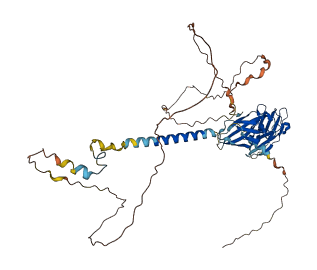
Descriptions
The autoinhibited protein was predicted that may have potential autoinhibitory elements via cis-regPred.
Autoinhibitory domains (AIDs)
Target domain |
|
Relief mechanism |
|
Assay |
cis-regPred |
Accessory elements
No accessory elements
Autoinhibited structure

Activated structure
2 structures for P14753
| Entry ID | Method | Resolution | Chain | Position | Source |
|---|---|---|---|---|---|
| 2MXB | NMR | - | A | 236-283 | PDB |
| AF-P14753-F1 | Predicted | AlphaFoldDB |
19 variants for P14753
| Variant ID(s) | Position | Change | Description | Diseaes Association | Provenance |
|---|---|---|---|---|---|
| rs3411016211 | 9 | W>* | No | EVA | |
| rs3389026655 | 22 | A>E | No | EVA | |
| rs3389017283 | 89 | S>A | No | EVA | |
| rs217943295 | 91 | S>R | No | EVA | |
| rs3389026178 | 100 | G>C | No | EVA | |
| rs3389009708 | 102 | V>A | No | EVA | |
| rs3389026654 | 112 | D>H | No | EVA | |
| rs3389024050 | 181 | V>M | No | EVA | |
| rs3389004366 | 269 | A>S | No | EVA | |
| rs3389036629 | 300 | K>N | No | EVA | |
| rs3389036694 | 327 | P>H | No | EVA | |
| rs225384451 | 337 | R>H | No | EVA | |
| rs3389026144 | 422 | S>N | No | EVA | |
| rs3389026157 | 429 | D>N | No | EVA | |
| rs3389031430 | 440 | L>M | No | EVA | |
| rs3389034243 | 446 | P>A | No | EVA | |
| rs3389017225 | 447 | T>I | No | EVA | |
| rs3389026650 | 463 | I>N | No | EVA | |
| rs217386217 | 502 | G>S | No | EVA |
No associated diseases with P14753
7 GO annotations of cellular component
| Name | Definition |
|---|---|
| cell surface | The external part of the cell wall and/or plasma membrane. |
| cytoplasm | The contents of a cell excluding the plasma membrane and nucleus, but including other subcellular structures. |
| external side of plasma membrane | The leaflet of the plasma membrane that faces away from the cytoplasm and any proteins embedded or anchored in it or attached to its surface. |
| extracellular region | The space external to the outermost structure of a cell. For cells without external protective or external encapsulating structures this refers to space outside of the plasma membrane. This term covers the host cell environment outside an intracellular parasite. |
| integral component of membrane | The component of a membrane consisting of the gene products and protein complexes having at least some part of their peptide sequence embedded in the hydrophobic region of the membrane. |
| nuclear speck | A discrete extra-nucleolar subnuclear domain, 20-50 in number, in which splicing factors are seen to be localized by immunofluorescence microscopy. |
| plasma membrane | The membrane surrounding a cell that separates the cell from its external environment. It consists of a phospholipid bilayer and associated proteins. |
3 GO annotations of molecular function
| Name | Definition |
|---|---|
| cytokine receptor activity | Combining with a cytokine and transmitting the signal from one side of the membrane to the other to initiate a change in cell activity. |
| erythropoietin receptor activity | Combining with erythropoietin and transmitting the signal from one side of the membrane to the other to initiate a change in cell activity. |
| identical protein binding | Binding to an identical protein or proteins. |
18 GO annotations of biological process
| Name | Definition |
|---|---|
| brain development | The process whose specific outcome is the progression of the brain over time, from its formation to the mature structure. Brain development begins with patterning events in the neural tube and ends with the mature structure that is the center of thought and emotion. The brain is responsible for the coordination and control of bodily activities and the interpretation of information from the senses (sight, hearing, smell, etc.). |
| cardiac muscle tissue morphogenesis | The process in which the anatomical structures of cardiac muscle tissue are generated and organized. |
| cytokine-mediated signaling pathway | The series of molecular signals initiated by the binding of a cytokine to a receptor on the surface of a cell, and ending with the regulation of a downstream cellular process, e.g. transcription. |
| decidualization | The cellular and vascular changes occurring in the endometrium of the pregnant uterus just after the onset of blastocyst implantation. This process involves the proliferation and differentiation of the fibroblast-like endometrial stromal cells into large, polyploid decidual cells that eventually form the maternal component of the placenta. |
| heart development | The process whose specific outcome is the progression of the heart over time, from its formation to the mature structure. The heart is a hollow, muscular organ, which, by contracting rhythmically, keeps up the circulation of the blood. |
| heart morphogenesis | The developmental process in which the heart is generated and organized. The heart is a hollow, muscular organ, which, by contracting rhythmically, keeps up the circulation of the blood. |
| hemopoiesis | The process whose specific outcome is the progression of the myeloid and lymphoid derived organ/tissue systems of the blood and other parts of the body over time, from formation to the mature structure. The site of hemopoiesis is variable during development, but occurs primarily in bone marrow or kidney in many adult vertebrates. |
| negative regulation of hydrogen peroxide-induced cell death | Any process that stops, prevents or reduces the frequency, rate or extent of hydrogen peroxide-induced cell death. |
| negative regulation of neuron apoptotic process | Any process that stops, prevents, or reduces the frequency, rate or extent of cell death by apoptotic process in neurons. |
| negative regulation of nitric oxide biosynthetic process | Any process that stops, prevents, or reduces the frequency, rate or extent of the chemical reactions and pathways resulting in the formation of nitric oxide. |
| positive regulation of cell population proliferation | Any process that activates or increases the rate or extent of cell proliferation. |
| positive regulation of cytosolic calcium ion concentration | Any process that increases the concentration of calcium ions in the cytosol. |
| positive regulation of ERK1 and ERK2 cascade | Any process that activates or increases the frequency, rate or extent of signal transduction mediated by the ERK1 and ERK2 cascade. |
| positive regulation of neuron projection development | Any process that increases the rate, frequency or extent of neuron projection development. Neuron projection development is the process whose specific outcome is the progression of a neuron projection over time, from its formation to the mature structure. A neuron projection is any process extending from a neural cell, such as axons or dendrites (collectively called neurites). |
| signal transduction | The cellular process in which a signal is conveyed to trigger a change in the activity or state of a cell. Signal transduction begins with reception of a signal (e.g. a ligand binding to a receptor or receptor activation by a stimulus such as light), or for signal transduction in the absence of ligand, signal-withdrawal or the activity of a constitutively active receptor. Signal transduction ends with regulation of a downstream cellular process, e.g. regulation of transcription or regulation of a metabolic process. Signal transduction covers signaling from receptors located on the surface of the cell and signaling via molecules located within the cell. For signaling between cells, signal transduction is restricted to events at and within the receiving cell. |
| vasculogenesis involved in coronary vascular morphogenesis | The differentiation of endothelial cells from progenitor cells that contributes to blood vessel development in the heart, and the de novo formation of blood vessels and tubes. |
| ventricular cardiac muscle tissue morphogenesis | The process in which the anatomical structures of cardiac ventricle muscle is generated and organized. |
| visceral serous pericardium development | The progression of the visceral serous pericardium from its formation to the mature structure. The visceral serous pericardium is the inner layer of the pericardium. |
6 homologous proteins in AiPD
| UniProt AC | Gene Name | Protein Name | Species | Evidence Code |
|---|---|---|---|---|
| P19235 | EPOR | Erythropoietin receptor | Homo sapiens (Human) | PR |
| Q08351 | Mpl | Thrombopoietin receptor | Mus musculus (Mouse) | PR |
| P26954 | Csf2rb2 | Interleukin-3 receptor class 2 subunit beta | Mus musculus (Mouse) | PR |
| P26955 | Csf2rb | Cytokine receptor common subunit beta | Mus musculus (Mouse) | PR |
| Q01114 | Il9r | Interleukin-9 receptor | Mus musculus (Mouse) | PR |
| Q9MYZ9 | EPOR | Erythropoietin receptor | Sus scrofa (Pig) | PR |
| 10 | 20 | 30 | 40 | 50 | 60 |
| MDKLRVPLWP | RVGPLCLLLA | GAAWAPSPSL | PDPKFESKAA | LLASRGSEEL | LCFTQRLEDL |
| 70 | 80 | 90 | 100 | 110 | 120 |
| VCFWEEAASS | GMDFNYSFSY | QLEGESRKSC | SLHQAPTVRG | SVRFWCSLPT | ADTSSFVPLE |
| 130 | 140 | 150 | 160 | 170 | 180 |
| LQVTEASGSP | RYHRIIHINE | VVLLDAPAGL | LARRAEEGSH | VVLRWLPPPG | APMTTHIRYE |
| 190 | 200 | 210 | 220 | 230 | 240 |
| VDVSAGNRAG | GTQRVEVLEG | RTECVLSNLR | GGTRYTFAVR | ARMAEPSFSG | FWSAWSEPAS |
| 250 | 260 | 270 | 280 | 290 | 300 |
| LLTASDLDPL | ILTLSLILVL | ISLLLTVLAL | LSHRRTLQQK | IWPGIPSPES | EFEGLFTTHK |
| 310 | 320 | 330 | 340 | 350 | 360 |
| GNFQLWLLQR | DGCLWWSPGS | SFPEDPPAHL | EVLSEPRWAV | TQAGDPGADD | EGPLLEPVGS |
| 370 | 380 | 390 | 400 | 410 | 420 |
| EHAQDTYLVL | DKWLLPRTPC | SENLSGPGGS | VDPVTMDEAS | ETSSCPSDLA | SKPRPEGTSP |
| 430 | 440 | 450 | 460 | 470 | 480 |
| SSFEYTILDP | SSQLLCPRAL | PPELPPTPPH | LKYLYLVVSD | SGISTDYSSG | GSQGVHGDSS |
| 490 | 500 | ||||
| DGPYSHPYEN | SLVPDSEPLH | PGYVACS |