Q2HJ10
Gene name |
Slc30a2 (Znt2) |
Protein name |
Zinc transporter 2 |
Names |
ZnT-2, Solute carrier family 30 member 2 |
Species |
Mus musculus (Mouse) |
KEGG Pathway |
mmu:230810 |
EC number |
|
Protein Class |
|
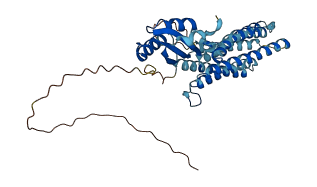
Descriptions
The autoinhibited protein was predicted that may have potential autoinhibitory elements via cis-regPred.
Autoinhibitory domains (AIDs)
Target domain |
|
Relief mechanism |
|
Assay |
cis-regPred |
Accessory elements
No accessory elements
Autoinhibited structure

Activated structure
1 structures for Q2HJ10
| Entry ID | Method | Resolution | Chain | Position | Source |
|---|---|---|---|---|---|
| AF-Q2HJ10-F1 | Predicted | AlphaFoldDB |
19 variants for Q2HJ10
| Variant ID(s) | Position | Change | Description | Diseaes Association | Provenance |
|---|---|---|---|---|---|
| rs3388706118 | 13 | T>M | No | EVA | |
| rs3388714681 | 16 | A>V | No | EVA | |
| rs3388708097 | 17 | R>G | No | EVA | |
| rs3388706106 | 28 | A>V | No | EVA | |
| rs3388717527 | 71 | Y>F | No | EVA | |
| rs3394956182 | 92 | Q>P | No | EVA | |
| rs387132154 | 155 | V>M | No | EVA | |
| rs3388717549 | 159 | V>M | No | EVA | |
| rs3388724217 | 185 | N>Y | No | EVA | |
| rs3388726329 | 186 | L>F | No | EVA | |
| rs27577980 | 205 | R>H | No | EVA | |
| rs3388717647 | 233 | V>A | No | EVA | |
| rs3388721481 | 262 | L>S | No | EVA | |
| rs3388721248 | 322 | A>V | No | EVA | |
| rs3394637762 | 352 | Q>L | No | EVA | |
| rs3388708137 | 361 | K>M | No | EVA | |
| rs3388720555 | 367 | Q>L | No | EVA | |
| rs3388726293 | 369 | P>L | No | EVA | |
| rs46159707 | 370 | L>S | No | EVA |
No associated diseases with Q2HJ10
No regional properties for Q2HJ10
| Type | Name | Position | InterPro Accession |
|---|---|---|---|
| No domain, repeats, and functional sites for Q2HJ10 | |||
Functions
7 GO annotations of cellular component
| Name | Definition |
|---|---|
| cytoplasm | The contents of a cell excluding the plasma membrane and nucleus, but including other subcellular structures. |
| cytoplasmic vesicle | A vesicle found in the cytoplasm of a cell. |
| integral component of membrane | The component of a membrane consisting of the gene products and protein complexes having at least some part of their peptide sequence embedded in the hydrophobic region of the membrane. |
| intracellular membrane-bounded organelle | Organized structure of distinctive morphology and function, bounded by a single or double lipid bilayer membrane and occurring within the cell. Includes the nucleus, mitochondria, plastids, vacuoles, and vesicles. Excludes the plasma membrane. |
| late endosome | A prelysosomal endocytic organelle differentiated from early endosomes by lower lumenal pH and different protein composition. Late endosomes are more spherical than early endosomes and are mostly juxtanuclear, being concentrated near the microtubule organizing center. |
| plasma membrane | The membrane surrounding a cell that separates the cell from its external environment. It consists of a phospholipid bilayer and associated proteins. |
| vacuolar membrane | The lipid bilayer surrounding the vacuole and separating its contents from the cytoplasm of the cell. |
2 GO annotations of molecular function
| Name | Definition |
|---|---|
| identical protein binding | Binding to an identical protein or proteins. |
| zinc ion transmembrane transporter activity | Enables the transfer of zinc (Zn) ions from one side of a membrane to the other. |
5 GO annotations of biological process
| Name | Definition |
|---|---|
| positive regulation of sequestering of zinc ion | Any process that increases the rate, frequency, or extent of sequestering of zinc ion. Sequestering of zinc ion is the process of binding or confining zinc ions such that they are separated from other components of a biological system. |
| regulation of sequestering of zinc ion | Any process that modulates the rate, frequency, or extent of sequestering of zinc ion. Sequestering of zinc ion is the process of binding or confining zinc ions such that they are separated from other components of a biological system. |
| response to zinc ion | Any process that results in a change in state or activity of a cell or an organism (in terms of movement, secretion, enzyme production, gene expression, etc.) as a result of a zinc ion stimulus. |
| zinc ion transmembrane transport | A process in which a zinc II ion is transported from one side of a membrane to the other by means of some agent such as a transporter or pore. |
| zinc ion transport | The directed movement of zinc (Zn II) ions into, out of or within a cell, or between cells, by means of some agent such as a transporter or pore. |
5 homologous proteins in AiPD
| UniProt AC | Gene Name | Protein Name | Species | Evidence Code |
|---|---|---|---|---|
| P97441 | Slc30a3 | Zinc transporter 3 | Mus musculus (Mouse) | PR |
| P0CE46 | Slc30a8 | Zinc transporter 8 | Rattus norvegicus (Rat) | PR |
| Q9MAP1 | At1g33020 | Putative F-box protein At1g33020 | Arabidopsis thaliana (Mouse-ear cress) | PR |
| Q6DBM8 | MTPB | Metal tolerance protein B | Arabidopsis thaliana (Mouse-ear cress) | PR |
| Q9M271 | MTPA1 | Metal tolerance protein A1 | Arabidopsis thaliana (Mouse-ear cress) | PR |
| 10 | 20 | 30 | 40 | 50 | 60 |
| MQTMDKQNLL | ESTRGARSFL | GSLWKSEASR | IPPVDLPAVE | LAVQSNHYCH | AQKDSGSHPD |
| 70 | 80 | 90 | 100 | 110 | 120 |
| PEKQRARRKL | YVASAICLVF | MIGEIIGGYL | AQSLAIMTDA | AHLLTDFASM | LISLFALWVS |
| 130 | 140 | 150 | 160 | 170 | 180 |
| SRPATKTMNF | GWHRAEILGA | LLSVLSIWVV | TGVLVYLAVQ | RLISGDYEIK | GDTMLITSGC |
| 190 | 200 | 210 | 220 | 230 | 240 |
| AVAVNLIMGL | ALHQSGHGHS | HGNSRDDSSQ | QQNPSVRAAF | IHVIGDLLQS | VGVLVAAYII |
| 250 | 260 | 270 | 280 | 290 | 300 |
| YFKPEYKYVD | PICTFLFSIL | VLGTTLTILR | DVILVLMEGT | PKGVDFTTVK | NLLLSVDGVE |
| 310 | 320 | 330 | 340 | 350 | 360 |
| ALHSLHIWAL | TVAQPVLSVH | IAIAQNADAQ | AVLKVARDRL | QGKFNFHTMT | IQIEKYSEDM |
| 370 | |||||
| KNCQACQGPL | E |