Q28165
Gene name |
PABPN1 (PAB2, PABP2) |
Protein name |
Polyadenylate-binding protein 2 |
Names |
PABP-2, Poly(A)-binding protein 2, Nuclear poly(A)-binding protein 1, Poly(A)-binding protein II, PABII, Polyadenylate-binding nuclear protein 1 |
Species |
Bos taurus (Bovine) |
KEGG Pathway |
bta:282298 |
EC number |
|
Protein Class |
|
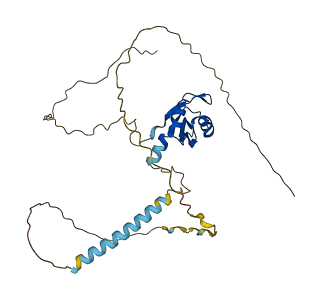
Descriptions
The autoinhibited protein was predicted that may have potential autoinhibitory elements via cis-regPred.
Autoinhibitory domains (AIDs)
Target domain |
|
Relief mechanism |
|
Assay |
cis-regPred |
Accessory elements
No accessory elements
Autoinhibited structure

Activated structure
1 structures for Q28165
| Entry ID | Method | Resolution | Chain | Position | Source |
|---|---|---|---|---|---|
| AF-Q28165-F1 | Predicted | AlphaFoldDB |
20 variants for Q28165
| Variant ID(s) | Position | Change | Description | Diseaes Association | Provenance |
|---|---|---|---|---|---|
| rs135332733 | 2 | A>G | No | EVA | |
| rs136962288 | 4 | A>G | No | EVA | |
| rs480644452 | 24 | R>W | No | EVA | |
| rs470292891 | 72 | E>K | No | EVA | |
| rs477998442 | 92 | A>V | No | EVA | |
| rs798982861 | 111 | D>N | No | EVA | |
| rs441131702 | 115 | E>* | No | EVA | |
| rs478938532 | 152 | P>L | No | EVA | |
| rs434967747 | 180 | D>E | No | EVA | |
| rs435108526 | 188 | L>I | No | EVA | |
| rs464895450 | 191 | H>P | No | EVA | |
| rs446279219 | 191 | H>Q | No | EVA | |
| rs432762379 | 194 | G>R | No | EVA | |
| rs135154461 | 195 | C>W | No | EVA | |
| rs468932349 | 258 | D>G | No | EVA | |
| rs462066478 | 259 | R>Q | No | EVA | |
| rs448238765 | 279 | R>* | No | EVA | |
| rs480360789 | 288 | P>L | No | EVA | |
| rs461831736 | 292 | V>L | No | EVA | |
| rs136139693 | 297 | A>P | No | EVA |
No associated diseases with Q28165
1 regional properties for Q28165
| Type | Name | Position | InterPro Accession |
|---|---|---|---|
| domain | RNA recognition motif domain | 172 - 249 | IPR000504 |
Functions
5 GO annotations of cellular component
| Name | Definition |
|---|---|
| cytoplasm | The contents of a cell excluding the plasma membrane and nucleus, but including other subcellular structures. |
| nuclear inclusion body | An intranuclear focus at which aggregated proteins have been sequestered. |
| nuclear speck | A discrete extra-nucleolar subnuclear domain, 20-50 in number, in which splicing factors are seen to be localized by immunofluorescence microscopy. |
| nucleus | A membrane-bounded organelle of eukaryotic cells in which chromosomes are housed and replicated. In most cells, the nucleus contains all of the cell's chromosomes except the organellar chromosomes, and is the site of RNA synthesis and processing. In some species, or in specialized cell types, RNA metabolism or DNA replication may be absent. |
| ribonucleoprotein complex | A macromolecular complex that contains both RNA and protein molecules. |
3 GO annotations of molecular function
| Name | Definition |
|---|---|
| protein self-association | Binding to a domain within the same polypeptide. |
| RNA binding | Binding to an RNA molecule or a portion thereof. |
| RNA polymerase binding | Binding to an RNA polymerase molecule or complex. |
4 GO annotations of biological process
| Name | Definition |
|---|---|
| cellular response to lipopolysaccharide | Any process that results in a change in state or activity of a cell (in terms of movement, secretion, enzyme production, gene expression, etc.) as a result of a lipopolysaccharide stimulus; lipopolysaccharide is a major component of the cell wall of gram-negative bacteria. |
| MAPK cascade | An intracellular protein kinase cascade containing at least a MAPK, a MAPKK and a MAP3K. The cascade can also contain an additional tiers: the upstream MAP4K. The kinases in each tier phosphorylate and activate the kinase in the downstream tier to transmit a signal within a cell. |
| mRNA processing | Any process involved in the conversion of a primary mRNA transcript into one or more mature mRNA(s) prior to translation into polypeptide. |
| positive regulation of polynucleotide adenylyltransferase activity | Any process that activates or increases the frequency, rate or extent of polynucleotide adenylyltransferase activity. |
4 homologous proteins in AiPD
| UniProt AC | Gene Name | Protein Name | Species | Evidence Code |
|---|---|---|---|---|
| Q86U42 | PABPN1 | Polyadenylate-binding protein 2 | Homo sapiens (Human) | PR |
| Q5XFR0 | Pabpn1l | Embryonic polyadenylate-binding protein 2 | Mus musculus (Mouse) | PR |
| Q8CCS6 | Pabpn1 | Polyadenylate-binding protein 2 | Mus musculus (Mouse) | PR |
| B0BNE4 | Pabpn1l | Embryonic polyadenylate-binding protein 2 | Rattus norvegicus (Rat) | PR |
| 10 | 20 | 30 | 40 | 50 | 60 |
| MAAAAAAAAA | AGAAGGRGSG | PGRRRHLVPG | AGGEAGEGAP | GGAGDYGNGL | ESEELEPEEL |
| 70 | 80 | 90 | 100 | 110 | 120 |
| LLEPEPEPEP | EEEPPRPRAP | PGAPGPGPGS | GAPGNQEEEE | ESGLVEGDPG | DGAIEDPELE |
| 130 | 140 | 150 | 160 | 170 | 180 |
| AIKARVREME | EEAEKLKELQ | NEVEKQMNMS | PPPGNAGPVI | MSIEEKMEAD | ARSIYVGNVD |
| 190 | 200 | 210 | 220 | 230 | 240 |
| YGATAEELEA | HFHGCGSVNR | VTILCDKFSG | HPKGFAYIEF | SDKESVRTSL | ALDESLFRGR |
| 250 | 260 | 270 | 280 | 290 | 300 |
| QIKVIPKRTN | RPGISTTDRG | FPRARYRART | TNYNSSRSRF | YSGFNSRPRG | RVYRGRARAT |
| SWYSPY |