P93014
Gene name |
PCMP-H6 (At2g33760, T1B8.7) |
Protein name |
30S ribosomal protein S5, chloroplastic |
Names |
|
Species |
Arabidopsis thaliana (Mouse-ear cress) |
KEGG Pathway |
ath:AT2G33800 |
EC number |
|
Protein Class |
|
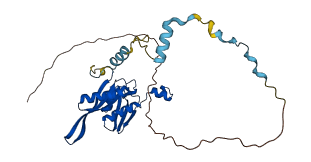
Descriptions
The autoinhibited protein was predicted that may have potential autoinhibitory elements via cis-regPred.
Autoinhibitory domains (AIDs)
Target domain |
|
Relief mechanism |
|
Assay |
cis-regPred |
Accessory elements
No accessory elements
Autoinhibited structure

Activated structure
1 structures for P93014
| Entry ID | Method | Resolution | Chain | Position | Source |
|---|---|---|---|---|---|
| AF-P93014-F1 | Predicted | AlphaFoldDB |
4 variants for P93014
| Variant ID(s) | Position | Change | Description | Diseaes Association | Provenance |
|---|---|---|---|---|---|
| ENSVATH00259110 | 30 | S>P | No | 1000Genomes | |
| tmp_2_14302173_G_C | 60 | F>L | No | 1000Genomes | |
| tmp_2_14302082_C_G | 91 | G>R | No | 1000Genomes | |
| tmp_2_14301911_C_T | 148 | E>K | No | 1000Genomes |
No associated diseases with P93014
8 GO annotations of cellular component
| Name | Definition |
|---|---|
| chloroplast | A chlorophyll-containing plastid with thylakoids organized into grana and frets, or stroma thylakoids, and embedded in a stroma. |
| chloroplast stroma | The space enclosed by the double membrane of a chloroplast but excluding the thylakoid space. It contains DNA, ribosomes and some temporary products of photosynthesis. |
| chloroplast thylakoid | Sac-like membranous structures (cisternae) in a chloroplast combined into stacks (grana) and present singly in the stroma (stroma thylakoids or frets) as interconnections between grana. An example of this component is found in Arabidopsis thaliana. |
| chloroplast thylakoid membrane | The pigmented membrane of a chloroplast thylakoid. An example of this component is found in Arabidopsis thaliana. |
| endoplasmic reticulum | The irregular network of unit membranes, visible only by electron microscopy, that occurs in the cytoplasm of many eukaryotic cells. The membranes form a complex meshwork of tubular channels, which are often expanded into slitlike cavities called cisternae. The ER takes two forms, rough (or granular), with ribosomes adhering to the outer surface, and smooth (with no ribosomes attached). |
| mitochondrial small ribosomal subunit | The smaller of the two subunits of a mitochondrial ribosome. |
| nucleus | A membrane-bounded organelle of eukaryotic cells in which chromosomes are housed and replicated. In most cells, the nucleus contains all of the cell's chromosomes except the organellar chromosomes, and is the site of RNA synthesis and processing. In some species, or in specialized cell types, RNA metabolism or DNA replication may be absent. |
| thylakoid | A membranous cellular structure that bears the photosynthetic pigments in plants, algae, and cyanobacteria. In cyanobacteria thylakoids are of various shapes and are attached to, or continuous with, the plasma membrane. In eukaryotes they are flattened, membrane-bounded disk-like structures located in the chloroplasts; in the chloroplasts of higher plants the thylakoids form dense stacks called grana. Isolated thylakoid preparations can carry out photosynthetic electron transport and the associated phosphorylation. |
3 GO annotations of molecular function
| Name | Definition |
|---|---|
| mRNA binding | Binding to messenger RNA (mRNA), an intermediate molecule between DNA and protein. mRNA includes UTR and coding sequences, but does not contain introns. |
| rRNA binding | Binding to a ribosomal RNA. |
| structural constituent of ribosome | The action of a molecule that contributes to the structural integrity of the ribosome. |
5 GO annotations of biological process
| Name | Definition |
|---|---|
| adaxial/abaxial pattern specification | The regionalization process in which differences in cell differentiation along the adaxial/abaxial are generated. Adaxial refers to being situated toward an axis of an anatomical structure. Abaxial refers to being situated away from an axis of an anatomical structure. |
| chloroplast rRNA processing | Any rRNA processing that takes place in chloroplast. |
| plastid translation | The chemical reactions and pathways resulting in the formation of a protein in a plastid. This is a ribosome-mediated process in which the information in messenger RNA (mRNA) is used to specify the sequence of amino acids in the protein; the plastid has its own ribosomes and transfer RNAs, and uses a genetic code that differs from the nuclear code. |
| response to cold | Any process that results in a change in state or activity of a cell or an organism (in terms of movement, secretion, enzyme production, gene expression, etc.) as a result of a cold stimulus, a temperature stimulus below the optimal temperature for that organism. |
| translation | The cellular metabolic process in which a protein is formed, using the sequence of a mature mRNA or circRNA molecule to specify the sequence of amino acids in a polypeptide chain. Translation is mediated by the ribosome, and begins with the formation of a ternary complex between aminoacylated initiator methionine tRNA, GTP, and initiation factor 2, which subsequently associates with the small subunit of the ribosome and an mRNA or circRNA. Translation ends with the release of a polypeptide chain from the ribosome. |
4 homologous proteins in AiPD
| UniProt AC | Gene Name | Protein Name | Species | Evidence Code |
|---|---|---|---|---|
| O18789 | RPS2 | 40S ribosomal protein S2 | Bos taurus (Bovine) | PR |
| P15880 | RPS2 | 40S ribosomal protein S2 | Homo sapiens (Human) | PR |
| P25444 | Rps2 | 40S ribosomal protein S2 | Mus musculus (Mouse) | PR |
| P27952 | Rps2 | 40S ribosomal protein S2 | Rattus norvegicus (Rat) | PR |
| 10 | 20 | 30 | 40 | 50 | 60 |
| MATASALSSL | SSLSLHTRTS | SLISSSSTKS | IVSFSSFLNR | RFSSLTLVKA | SSTDTETIFF |
| 70 | 80 | 90 | 100 | 110 | 120 |
| EDETPEITAN | VVFDPPIAPE | GFVSPPYFDE | GSDETEEEIA | TAFEELYGPA | YSGESMLGKD |
| 130 | 140 | 150 | 160 | 170 | 180 |
| IYVMDSKHKK | SSGIGGKPKK | DKIRDGFEER | VVQVRRVTKV | VKGGKQLKFR | AIVVVGDKQG |
| 190 | 200 | 210 | 220 | 230 | 240 |
| NVGVGCAKAK | EVVAAVQKSA | IDARRNIVQV | PMTKYSTFPH | RSEGDYGAAK | VMLRPASPGT |
| 250 | 260 | 270 | 280 | 290 | 300 |
| GVIAGGAVRI | VLEMAGVENA | LGKQLGSNNA | LNNARATLAA | VQQMRQFRDV | AQERGIPMEE |
| LWK |