P52298
Gene name |
NCBP2 (CBP20, PIG55) |
Protein name |
Nuclear cap-binding protein subunit 2 |
Names |
20 kDa nuclear cap-binding protein, Cell proliferation-inducing gene 55 protein, NCBP 20 kDa subunit, CBP20, NCBP-interacting protein 1, NIP1 |
Species |
Homo sapiens (Human) |
KEGG Pathway |
hsa:22916 |
EC number |
|
Protein Class |
|
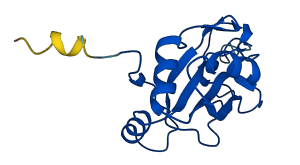
Descriptions
The autoinhibited protein was predicted that may have potential autoinhibitory elements via cis-regPred.
Autoinhibitory domains (AIDs)
Target domain |
|
Relief mechanism |
|
Assay |
cis-regPred |
Accessory elements
No accessory elements
Autoinhibited structure

Activated structure
16 structures for P52298
| Entry ID | Method | Resolution | Chain | Position | Source |
|---|---|---|---|---|---|
| 1H2T | X-ray | 215 A | Z | 1-156 | PDB |
| 1H2U | X-ray | 240 A | X/Y | 1-156 | PDB |
| 1H2V | X-ray | 200 A | Z | 1-156 | PDB |
| 1H6K | X-ray | 200 A | X/Y/Z | 22-120 | PDB |
| 1N52 | X-ray | 211 A | B | 1-156 | PDB |
| 1N54 | X-ray | 272 A | B | 1-156 | PDB |
| 3FEX | X-ray | 355 A | B | 1-156 | PDB |
| 3FEY | X-ray | 220 A | B | 1-156 | PDB |
| 5OO6 | X-ray | 280 A | B/E/H/K/N/Q/T/W | 1-156 | PDB |
| 5OOB | X-ray | 279 A | B/D/G/J | 1-156 | PDB |
| 6D0Y | X-ray | 268 A | A | 1-156 | PDB |
| 7ABG | EM | 780 A | A1 | 1-156 | PDB |
| 8BY6 | EM | 319 A | B | 1-156 | PDB |
| 8PMP | EM | 343 A | B | 1-156 | PDB |
| 8PNT | EM | 346 A | B | 1-156 | PDB |
| AF-P52298-F1 | Predicted | AlphaFoldDB |
73 variants for P52298
| Variant ID(s) | Position | Change | Description | Diseaes Association | Provenance |
|---|---|---|---|---|---|
|
rs1186248524 CA355647946 |
2 | S>W | No |
ClinGen gnomAD |
|
|
CA2783517 rs774052722 |
3 | G>V | No |
ClinGen ExAC gnomAD |
|
|
CA2783515 rs763153091 |
4 | G>S | No |
ClinGen ExAC gnomAD |
|
|
rs770008541 CA2783513 |
5 | L>F | No |
ClinGen ExAC gnomAD |
|
|
CA2783512 rs574066503 |
8 | A>V | No |
ClinGen 1000Genomes ExAC gnomAD |
|
|
rs777314085 CA90931236 |
9 | L>M | No |
ClinGen ExAC TOPMed gnomAD |
|
|
rs1157400152 CA355647903 |
10 | R>H | No |
ClinGen TOPMed |
|
|
rs148063563 CA355647894 |
11 | S>R | No |
ClinGen ESP TOPMed |
|
| TCGA novel | 12 | D>N | Variant assessed as Somatic; impact. [NCI-TCGA] | No | NCI-TCGA |
|
CA355647883 rs1446928197 |
13 | S>P | No |
ClinGen gnomAD |
|
|
rs1330749831 CA355647868 |
15 | V>L | No |
ClinGen gnomAD |
|
|
CA2783457 rs757041577 |
29 | N>S | No |
ClinGen ExAC TOPMed gnomAD |
|
|
rs1257370613 CA355647409 |
33 | E>K | No |
ClinGen TOPMed |
|
|
rs1267352112 CA355647400 |
34 | K>E | No |
ClinGen gnomAD |
|
|
CA2783455 rs764326037 |
35 | L>* | No |
ClinGen ExAC TOPMed gnomAD |
|
|
CA355647357 rs1560169934 |
40 | C>R | No |
ClinGen Ensembl |
|
|
CA2783453 rs760696628 |
41 | T>M | Variant assessed as Somatic; 4.63e-05 impact. [NCI-TCGA] | No |
ClinGen ExAC NCI-TCGA gnomAD |
|
CA355647329 rs1412208746 |
44 | V>I | No |
ClinGen gnomAD |
|
|
CA2783449 rs766744099 |
52 | T>A | Variant assessed as Somatic; 0.0 impact. [NCI-TCGA] | No |
ClinGen ExAC NCI-TCGA gnomAD |
|
CA355647271 rs1367552866 |
52 | T>I | No |
ClinGen gnomAD |
|
|
CA355647258 rs1577863833 |
54 | E>G | No |
ClinGen Ensembl |
|
| TCGA novel | 54 | E>K | Variant assessed as Somatic; impact. [NCI-TCGA] | No | NCI-TCGA |
| TCGA novel | 57 | Y>C | Variant assessed as Somatic; impact. [NCI-TCGA] | No | NCI-TCGA |
|
rs1457627776 CA355647229 |
58 | E>K | No |
ClinGen gnomAD |
|
|
CA2783447 rs776180044 |
60 | F>L | No |
ClinGen ExAC gnomAD |
|
|
CA355647207 rs1401681235 |
61 | S>N | No |
ClinGen TOPMed |
|
| TCGA novel | 63 | S>R | Variant assessed as Somatic; impact. [NCI-TCGA] | No | NCI-TCGA |
|
rs768397521 CA2783446 |
64 | G>D | No |
ClinGen ExAC gnomAD |
|
|
CA355647079 rs1219415377 |
78 | K>R | No |
ClinGen TOPMed |
|
|
CA355647070 rs1210059459 |
79 | T>I | No |
ClinGen gnomAD |
|
|
rs1208737397 CA355647021 |
86 | V>A | No |
ClinGen TOPMed |
|
|
CA2783441 rs771482269 |
87 | E>A | No |
ClinGen ExAC gnomAD |
|
|
CA2783401 rs765642228 |
87 | E>D | No |
ClinGen ExAC TOPMed |
|
|
rs1480644212 CA2783397 |
91 | R>H | No |
ClinGen TOPMed |
|
|
rs538938257 CA2783395 |
92 | A>T | No |
ClinGen ExAC TOPMed gnomAD |
|
|
CA355646967 rs1170003941 |
93 | D>H | Variant assessed as Somatic; 0.0 impact. [NCI-TCGA] | No |
ClinGen NCI-TCGA gnomAD |
|
CA2783393 rs759229687 |
94 | A>V | No |
ClinGen ExAC TOPMed gnomAD |
|
|
CA355646951 rs1311835609 |
95 | E>G | No |
ClinGen gnomAD |
|
|
rs763014780 CA2783390 |
97 | A>T | No |
ClinGen ExAC gnomAD |
|
|
rs1187455890 CA355646930 |
98 | M>T | No |
ClinGen gnomAD |
|
|
CA2783388 rs769652626 COSM209419 |
99 | R>Q | large_intestine [Cosmic] | No |
ClinGen cosmic curated ExAC gnomAD |
|
COSM583015 CA355646924 rs772956368 |
99 | R>W | lung Variant assessed as Somatic; impact. [Cosmic, NCI-TCGA] | No |
ClinGen cosmic curated ExAC NCI-TCGA TOPMed gnomAD |
|
CA355646912 rs1205882210 |
101 | I>V | No |
ClinGen gnomAD |
|
|
rs1393864695 CA355646896 |
103 | G>W | No |
ClinGen TOPMed |
|
|
CA2783386 rs780934944 |
104 | T>M | Variant assessed as Somatic; 0.0 impact. [NCI-TCGA] | No |
ClinGen ExAC NCI-TCGA gnomAD |
|
rs1299820445 CA355646884 |
105 | R>H | No |
ClinGen TOPMed |
|
|
CA355646863 rs1284630736 |
108 | D>V | No |
ClinGen gnomAD |
|
|
CA355646858 rs1447181833 |
109 | R>* | No |
ClinGen gnomAD |
|
|
CA355646815 rs1309778781 |
112 | R>H | No |
ClinGen gnomAD |
|
|
rs1560168884 CA355646801 |
113 | T>I | No |
ClinGen Ensembl |
|
|
rs779236116 CA2783380 |
117 | A>T | No |
ClinGen ExAC gnomAD |
|
|
CA2783379 rs757669361 |
117 | A>V | No |
ClinGen ExAC TOPMed gnomAD |
|
| TCGA novel | 118 | G>V | Variant assessed as Somatic; impact. [NCI-TCGA] | No | NCI-TCGA |
|
CA2783378 rs754192964 |
119 | F>V | No |
ClinGen ExAC gnomAD |
|
|
rs1436504113 CA355646686 |
121 | E>D | No |
ClinGen TOPMed gnomAD |
|
| TCGA novel | 122 | G>A | Variant assessed as Somatic; impact. [NCI-TCGA] | No | NCI-TCGA |
|
rs754735060 CA2783376 |
123 | R>G | No |
ClinGen ExAC gnomAD |
|
|
CA355646639 rs1387715066 |
125 | Y>H | No |
ClinGen gnomAD |
|
|
rs762320814 CA2783373 |
127 | R>C | Variant assessed as Somatic; 0.0 impact. [NCI-TCGA] | No |
ClinGen ExAC NCI-TCGA gnomAD |
|
rs1003820610 CA90926833 |
129 | R>* | No |
ClinGen Ensembl |
|
|
rs1465796391 CA355646589 |
129 | R>Q | No |
ClinGen gnomAD |
|
|
CA90926825 rs140528319 |
131 | G>W | No |
ClinGen ESP gnomAD |
|
|
rs1433793609 CA355646419 |
139 | R>Q | No |
ClinGen gnomAD |
|
|
rs761725822 CA2783348 |
141 | D>E | No |
ClinGen ExAC gnomAD |
|
|
rs764792682 CA2783349 |
141 | D>G | No |
ClinGen ExAC gnomAD |
|
|
rs776488343 CA2783347 |
142 | Y>D | No |
ClinGen ExAC gnomAD |
|
|
CA355646401 rs776488343 |
142 | Y>H | No |
ClinGen ExAC gnomAD |
|
|
CA355646375 rs1577860476 |
146 | R>G | No |
ClinGen Ensembl |
|
|
CA2783344 rs775717046 COSM3847166 |
147 | G>A | Variant assessed as Somatic; 0.0 impact. breast [NCI-TCGA, Cosmic] | No |
ClinGen cosmic curated ExAC NCI-TCGA gnomAD |
|
rs1302140345 CA355646339 |
151 | K>R | No |
ClinGen gnomAD |
|
|
rs746078417 CA2783342 |
154 | Q>* | No |
ClinGen ExAC TOPMed gnomAD |
|
|
rs774350997 CA2783341 |
156 | Q>R | No |
ClinGen ExAC gnomAD |
|
|
rs1234160227 CA355646301 |
157 | Q>R | No |
ClinGen TOPMed |
No associated diseases with P52298
7 GO annotations of cellular component
| Name | Definition |
|---|---|
| cytoplasm | The contents of a cell excluding the plasma membrane and nucleus, but including other subcellular structures. |
| cytosol | The part of the cytoplasm that does not contain organelles but which does contain other particulate matter, such as protein complexes. |
| mRNA cap binding complex | Any protein complex that binds to an mRNA cap at any time in the lifetime of the mRNA. |
| nuclear cap binding complex | A conserved heterodimeric protein complex that binds to the 5' terminal cap structure m7G(5')ppp(5')N of nascent eukaryotic RNA polymerase II transcripts such as pre-mRNA and U snRNA. The consists of proteins known as CBP20 and CBP80, binds to cap structures in the nucleus, and is involved in pre-mRNA splicing, 3'-end formation, and RNA nuclear export. |
| nucleoplasm | That part of the nuclear content other than the chromosomes or the nucleolus. |
| nucleus | A membrane-bounded organelle of eukaryotic cells in which chromosomes are housed and replicated. In most cells, the nucleus contains all of the cell's chromosomes except the organellar chromosomes, and is the site of RNA synthesis and processing. In some species, or in specialized cell types, RNA metabolism or DNA replication may be absent. |
| RNA cap binding complex | Any protein complex that binds to a specialized RNA cap structure at any time in the lifetime of the RNA. |
6 GO annotations of molecular function
| Name | Definition |
|---|---|
| DNA binding | Any molecular function by which a gene product interacts selectively and non-covalently with DNA (deoxyribonucleic acid). |
| mRNA binding | Binding to messenger RNA (mRNA), an intermediate molecule between DNA and protein. mRNA includes UTR and coding sequences, but does not contain introns. |
| RNA 7-methylguanosine cap binding | Binding to a 7-methylguanosine group added cotranscriptionally to the 5' end of RNA molecules transcribed by polymerase II. |
| RNA binding | Binding to an RNA molecule or a portion thereof. |
| RNA cap binding | Binding to a 7-methylguanosine (m7G) group or derivative located at the 5' end of an RNA molecule. |
| snRNA binding | Binding to a small nuclear RNA (snRNA). |
19 GO annotations of biological process
| Name | Definition |
|---|---|
| alternative mRNA splicing, via spliceosome | The process of generating multiple mRNA molecules from a given set of exons by differential use of exons from the primary transcript(s) to form multiple mature mRNAs that vary in their exon composition. |
| cap-dependent translational initiation | The process where the cap structure, composed of a 7- methylguanosine (m7G) group and associated cap-binding proteins, located at the 5' end of an mRNA molecule, which serves as a molecular tag that marks the spot where the 40S ribosomal subunit, is recruited and will then scan in a 5' to 3' direction until an AUG codon is encountered in an appropriate sequence context to initiate mRNA translation. |
| histone mRNA metabolic process | The chemical reactions and pathways involving an mRNA encoding a histone. |
| miRNA-mediated gene silencing | A post-transcriptional gene silencing pathway in which regulatory microRNAs (miRNAs) elicit silencing of specific target genes. miRNAs are endogenous 21-24 nucleotide small RNAs processed from stem-loop RNA precursors (pre-miRNAs). Once incorporated into a RNA-induced silencing complex (RISC), miRNAs can downregulate gene expression by either of two posttranscriptional mechanisms: endonucleolytic cleavage of the RNA (often mRNA) or mRNA translational repression, usually accompanied by poly-A tail shortening and subsequent degradation of the mRNA. miRNAs are present in all the animals and in plants, whereas siRNAs are present in lower animals and in plants. |
| mRNA 3'-end processing | Any process involved in forming the mature 3' end of an mRNA molecule. |
| mRNA cis splicing, via spliceosome | The joining together, after removal of an intervening sequence composed of one or more introns, of two segments of the same RNA molecule via spliceosomal catalysis to produce an mRNA composed only of exon sequences that all came from the same primary transcript. |
| mRNA export from nucleus | The directed movement of mRNA from the nucleus to the cytoplasm. |
| mRNA splicing, via spliceosome | The joining together of exons from one or more primary transcripts of messenger RNA (mRNA) and the excision of intron sequences, via a spliceosomal mechanism, so that mRNA consisting only of the joined exons is produced. |
| mRNA transcription by RNA polymerase II | The cellular synthesis of messenger RNA (mRNA) from a DNA template by RNA polymerase II, originating at an RNA polymerase II promoter. |
| nuclear-transcribed mRNA catabolic process, nonsense-mediated decay | The nonsense-mediated decay pathway for nuclear-transcribed mRNAs degrades mRNAs in which an amino-acid codon has changed to a nonsense codon; this prevents the translation of such mRNAs into truncated, and potentially harmful, proteins. |
| positive regulation of mRNA 3'-end processing | Any process that activates or increases the frequency, rate or extent of mRNA 3'-end processing. |
| positive regulation of phosphorylation of RNA polymerase II C-terminal domain | Any process that activates or increases the frequency, rate or extent of phosphorylation of RNA polymerase II C-terminal domain. |
| positive regulation of RNA export from nucleus | Any process that activates or increases the frequency, rate or extent of directed movement of RNA from the nucleus into the cytoplasm. |
| positive regulation of transcription elongation by RNA polymerase II | Any process that activates or increases the frequency, rate or extent of transcription elongation, the extension of an RNA molecule after transcription initiation and promoter clearance by the addition of ribonucleotides, catalyzed by RNA polymerase II. |
| pre-mRNA cleavage required for polyadenylation | The targeted, endonucleolytic cleavage of a pre-mRNA, required for polyadenylation of the 3' end. This cleavage is directed by binding sites near the 3' end of the mRNA and leaves a 3' hydoxyl end which then becomes a target for adenylation. |
| primary miRNA processing | A process involved in the conversion of a primary microRNA transcript into a pre-microRNA molecule. |
| regulation of translational initiation | Any process that modulates the frequency, rate or extent of translational initiation. |
| RNA splicing | The process of removing sections of the primary RNA transcript to remove sequences not present in the mature form of the RNA and joining the remaining sections to form the mature form of the RNA. |
| snRNA export from nucleus | The directed movement of snRNA from the nucleus to the cytoplasm. |
8 homologous proteins in AiPD
| UniProt AC | Gene Name | Protein Name | Species | Evidence Code |
|---|---|---|---|---|
| Q08920 | CBC2 | Nuclear cap-binding protein subunit 2 | Saccharomyces cerevisiae (strain ATCC 204508 / S288c) (Baker's yeast) | PR |
| Q5ZKR5 | NCBP2 | Nuclear cap-binding protein subunit 2 | Gallus gallus (Chicken) | PR |
| Q9CQ49 | Ncbp2 | Nuclear cap-binding protein subunit 2 | Mus musculus (Mouse) | PR |
| B1WC40 | Ncbp2 | Nuclear cap-binding protein subunit 2 | Rattus norvegicus (Rat) | PR |
| Q93594 | ncbp-2 | Nuclear cap-binding protein subunit 2 | Caenorhabditis elegans | PR |
| Q1HE01 | Nuclear cap-binding protein subunit 2 | Bombyx mori (Silk moth) | PR | |
| Q6DES0 | ncbp2 | Nuclear cap-binding protein subunit 2 | Xenopus tropicalis (Western clawed frog) (Silurana tropicalis) | PR |
| Q8JGR6 | ncbp2 | Nuclear cap-binding protein subunit 2 | Danio rerio (Zebrafish) (Brachydanio rerio) | PR |
| 10 | 20 | 30 | 40 | 50 | 60 |
| MSGGLLKALR | SDSYVELSQY | RDQHFRGDNE | EQEKLLKKSC | TLYVGNLSFY | TTEEQIYELF |
| 70 | 80 | 90 | 100 | 110 | 120 |
| SKSGDIKKII | MGLDKMKKTA | CGFCFVEYYS | RADAENAMRY | INGTRLDDRI | IRTDWDAGFK |
| 130 | 140 | 150 | |||
| EGRQYGRGRS | GGQVRDEYRQ | DYDAGRGGYG | KLAQNQ |