P97490
Gene name |
Adcy8 |
Protein name |
Adenylate cyclase type 8 |
Names |
ATP pyrophosphate-lyase 8, Adenylate cyclase type VIII, Adenylyl cyclase 8, Ca(2+)/calmodulin-activated adenylyl cyclase |
Species |
Mus musculus (Mouse) |
KEGG Pathway |
mmu:11514 |
EC number |
4.6.1.1: Phosphorus-oxygen lyases |
Protein Class |
|
Descriptions
The autoinhibited protein was predicted that may have potential autoinhibitory elements via cis-regPred.
Autoinhibitory domains (AIDs)
Target domain |
|
Relief mechanism |
|
Assay |
cis-regPred |
Accessory elements
No accessory elements
Autoinhibited structure

Activated structure
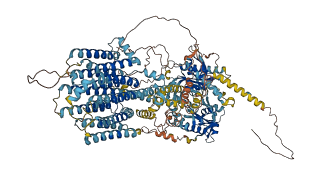
1 structures for P97490
| Entry ID | Method | Resolution | Chain | Position | Source |
|---|---|---|---|---|---|
| AF-P97490-F1 | Predicted | AlphaFoldDB |
52 variants for P97490
| Variant ID(s) | Position | Change | Description | Diseaes Association | Provenance |
|---|---|---|---|---|---|
| rs3389353286 | 32 | R>L | No | EVA | |
| rs3389353301 | 34 | Q>* | No | EVA | |
| rs3389353244 | 121 | G>* | No | EVA | |
| rs3389370036 | 152 | F>L | No | EVA | |
| rs3389371994 | 154 | T>N | No | EVA | |
| rs3389365202 | 171 | Y>F | No | EVA | |
| rs3389326130 | 212 | I>F | No | EVA | |
| rs3389369998 | 215 | G>C | No | EVA | |
| rs3389372069 | 218 | T>A | No | EVA | |
| rs3389378667 | 218 | T>I | No | EVA | |
| rs3389370049 | 229 | V>E | No | EVA | |
| rs3389315436 | 233 | D>V | No | EVA | |
| rs3389372055 | 251 | M>T | No | EVA | |
| rs3405667716 | 258 | A>V | No | EVA | |
| rs3389361868 | 270 | G>A | No | EVA | |
| rs3389333072 | 298 | S>F | No | EVA | |
| rs3406163573 | 305 | Q>E | No | EVA | |
| rs3406176477 | 311 | L>P | No | EVA | |
| rs16791446 | 312 | A>S | No | EVA | |
| rs3389378719 | 322 | Q>* | No | EVA | |
| rs3389361445 | 388 | M>I | No | EVA | |
| rs3389315441 | 403 | I>F | No | EVA | |
| rs3389284600 | 410 | N>I | No | EVA | |
| rs3389361355 | 422 | T>I | No | EVA | |
| rs3389315471 | 435 | R>G | No | EVA | |
| rs3406073469 | 449 | H>* | No | EVA | |
| rs3389332885 | 509 | H>L | No | EVA | |
| rs3389378675 | 549 | I>T | No | EVA | |
| rs232808560 | 594 | C>S | No | EVA | |
| rs16791530 | 614 | A>T | No | EVA | |
| rs3389315411 | 675 | L>* | No | EVA | |
| rs3389315393 | 687 | K>* | No | EVA | |
| rs3389284652 | 730 | L>S | No | EVA | |
| rs3389357779 | 733 | S>A | No | EVA | |
| rs3389365175 | 781 | L>P | No | EVA | |
| rs3389326213 | 788 | F>I | No | EVA | |
| rs3389365353 | 796 | L>Q | No | EVA | |
| rs3389359328 | 797 | G>E | No | EVA | |
| rs3389343315 | 811 | I>T | No | EVA | |
| rs3389369984 | 813 | L>F | No | EVA | |
| rs3389284588 | 842 | M>T | No | EVA | |
| rs3389353245 | 844 | T>S | No | EVA | |
| rs3389371998 | 875 | Y>H | No | EVA | |
| rs3389359310 | 876 | A>T | No | EVA | |
| rs3389365130 | 888 | S>I | No | EVA | |
| rs3406215083 | 946 | E>D | No | EVA | |
| rs3406299674 | 946 | E>G | No | EVA | |
| rs3405666630 | 947 | N>K | No | EVA | |
| rs3406299684 | 948 | M>I | No | EVA | |
| rs3389343292 | 981 | V>E | No | EVA | |
| rs3406377112 | 1169 | L>M | No | EVA | |
| rs3406215045 | 1231 | P>TWR* | No | EVA |
No associated diseases with P97490
Functions
| Description | ||
|---|---|---|
| EC Number | 4.6.1.1 | Phosphorus-oxygen lyases |
| Subcellular Localization |
|
|
| PANTHER Family | ||
| PANTHER Subfamily | ||
| PANTHER Protein Class | ||
| PANTHER Pathway Category | No pathway information available | |
22 GO annotations of cellular component
| Name | Definition |
|---|---|
| actin cytoskeleton | The part of the cytoskeleton (the internal framework of a cell) composed of actin and associated proteins. Includes actin cytoskeleton-associated complexes. |
| anchoring junction | A cell junction that mechanically attaches a cell (and its cytoskeleton) to neighboring cells or to the extracellular matrix. |
| apical plasma membrane | The region of the plasma membrane located at the apical end of the cell. |
| axon | The long process of a neuron that conducts nerve impulses, usually away from the cell body to the terminals and varicosities, which are sites of storage and release of neurotransmitter. |
| basolateral plasma membrane | The region of the plasma membrane that includes the basal end and sides of the cell. Often used in reference to animal polarized epithelial membranes, where the basal membrane is the part attached to the extracellular matrix, or in plant cells, where the basal membrane is defined with respect to the zygotic axis. |
| caveola | A membrane raft that forms small pit, depression, or invagination that communicates with the outside of a cell and extends inward, indenting the cytoplasm and the cell membrane. Examples include flask-shaped invaginations of the plasma membrane in adipocytes associated with caveolin proteins, and minute pits or incuppings of the cell membrane formed during pinocytosis. Caveolae may be pinched off to form free vesicles within the cytoplasm. |
| clathrin-coated pit | A part of the endomembrane system in the form of an invagination of a membrane upon which a clathrin coat forms, and that can be converted by vesicle budding into a clathrin-coated vesicle. Coated pits form on the plasma membrane, where they are involved in receptor-mediated selective transport of many proteins and other macromolecules across the cell membrane, in the trans-Golgi network, and on some endosomes. |
| clathrin-coated vesicle membrane | The lipid bilayer surrounding a clathrin-coated vesicle. |
| dendrite | A neuron projection that has a short, tapering, morphology. Dendrites receive and integrate signals from other neurons or from sensory stimuli, and conduct nerve impulses towards the axon or the cell body. In most neurons, the impulse is conveyed from dendrites to axon via the cell body, but in some types of unipolar neuron, the impulse does not travel via the cell body. |
| excitatory synapse | A synapse in which an action potential in the presynaptic cell increases the probability of an action potential occurring in the postsynaptic cell. |
| glutamatergic synapse | A synapse that uses glutamate as a neurotransmitter. |
| hippocampal mossy fiber to CA3 synapse | One of the giant synapses that form between the mossy fiber axons of dentate gyrus granule cells and the large complex spines of CA3 pyramidal cells. It consists of a giant bouton known as the mossy fiber expansion, synapsed to the complex, multiheaded spine (thorny excresence) of a CA3 pyramidal cell. |
| integral component of plasma membrane | The component of the plasma membrane consisting of the gene products and protein complexes having at least some part of their peptide sequence embedded in the hydrophobic region of the membrane. |
| integral component of presynaptic membrane | The component of the presynaptic membrane consisting of the gene products and protein complexes having at least some part of their peptide sequence embedded in the hydrophobic region of the membrane. |
| membrane | A lipid bilayer along with all the proteins and protein complexes embedded in it an attached to it. |
| membrane raft | Any of the small (10-200 nm), heterogeneous, highly dynamic, sterol- and sphingolipid-enriched membrane domains that compartmentalize cellular processes. Small rafts can sometimes be stabilized to form larger platforms through protein-protein and protein-lipid interactions. |
| neuronal cell body membrane | The plasma membrane of a neuron cell body - excludes the plasma membrane of cell projections such as axons and dendrites. |
| plasma membrane | The membrane surrounding a cell that separates the cell from its external environment. It consists of a phospholipid bilayer and associated proteins. |
| plasma membrane raft | A membrane raft that is part of the plasma membrane. |
| postsynaptic density | An electron dense network of proteins within and adjacent to the postsynaptic membrane of an asymmetric, neuron-neuron synapse. Its major components include neurotransmitter receptors and the proteins that spatially and functionally organize them such as anchoring and scaffolding molecules, signaling enzymes and cytoskeletal components. |
| presynaptic active zone | A specialized region of the plasma membrane and cell cortex of a presynaptic neuron; encompasses a region of the plasma membrane where synaptic vesicles dock and fuse, and a specialized cortical cytoskeletal matrix. |
| Schaffer collateral - CA1 synapse | A synapse between the Schaffer collateral axon of a CA3 pyramidal cell and a CA1 pyramidal cell. |
13 GO annotations of molecular function
| Name | Definition |
|---|---|
| actin binding | Binding to monomeric or multimeric forms of actin, including actin filaments. |
| adenylate cyclase activity | Catalysis of the reaction: ATP = 3',5'-cyclic AMP + diphosphate. |
| ATP binding | Binding to ATP, adenosine 5'-triphosphate, a universally important coenzyme and enzyme regulator. |
| calcium- and calmodulin-responsive adenylate cyclase activity | Catalysis of the reaction: ATP = 3',5'-cyclic AMP + diphosphate, stimulated by calcium-bound calmodulin. |
| calmodulin binding | Binding to calmodulin, a calcium-binding protein with many roles, both in the calcium-bound and calcium-free states. |
| metal ion binding | Binding to a metal ion. |
| phosphatase binding | Binding to a phosphatase. |
| protein C-terminus binding | Binding to a protein C-terminus, the end of a peptide chain at which the 1-carboxyl function of a constituent amino acid is not attached in peptide linkage to another amino-acid residue. |
| protein dimerization activity | The formation of a protein dimer, a macromolecular structure consists of two noncovalently associated identical or nonidentical subunits. |
| protein heterodimerization activity | Binding to a nonidentical protein to form a heterodimer. |
| protein homodimerization activity | Binding to an identical protein to form a homodimer. |
| protein N-terminus binding | Binding to a protein N-terminus, the end of any peptide chain at which the 2-amino (or 2-imino) function of a constituent amino acid is not attached in peptide linkage to another amino-acid residue. |
| protein phosphatase 2A binding | Binding to protein phosphatase 2A. |
27 GO annotations of biological process
| Name | Definition |
|---|---|
| activation of protein kinase A activity | Any process that initiates the activity of the inactive enzyme protein kinase A. |
| adenylate cyclase-activating G protein-coupled receptor signaling pathway | A G protein-coupled receptor signaling pathway in which the signal is transmitted via the activation of adenylyl cyclase activity and a subsequent increase in the intracellular concentration of cyclic AMP (cAMP). |
| cAMP biosynthetic process | The chemical reactions and pathways resulting in the formation of the nucleotide cAMP (cyclic AMP, adenosine 3',5'-cyclophosphate). |
| cAMP-mediated signaling | Any intracellular signal transduction in which the signal is passed on within the cell via cyclic AMP (cAMP). Includes production of cAMP, and downstream effectors that further transmit the signal within the cell. |
| cellular response to calcium ion | Any process that results in a change in state or activity of a cell (in terms of movement, secretion, enzyme production, gene expression, etc.) as a result of a calcium ion stimulus. |
| cellular response to forskolin | Any process that results in a change in state or activity of a cell (in terms of movement, secretion, enzyme production, gene expression, etc.) as a result of a forskolin stimulus. |
| cellular response to glucagon stimulus | Any process that results in a change in state or activity of a cell (in terms of movement, secretion, enzyme production, gene expression, etc.) as a result of a glucagon stimulus. |
| cellular response to glucose stimulus | Any process that results in a change in state or activity of a cell (in terms of movement, secretion, enzyme production, gene expression, etc.) as a result of a glucose stimulus. |
| cellular response to morphine | Any process that results in a change in state or activity of a cell (in terms of movement, secretion, enzyme production, gene expression, etc.) as a result of a morphine stimulus. Morphine is an opioid alkaloid, isolated from opium, with a complex ring structure. |
| G protein-coupled opioid receptor signaling pathway | A G protein-coupled receptor signaling pathway initiated by an opioid binding to its receptor on the surface of a target cell, and ending with the regulation of a downstream cellular process. |
| glucose homeostasis | Any process involved in the maintenance of an internal steady state of glucose within an organism or cell. |
| glucose mediated signaling pathway | The process in which a change in the level of mono- and disaccharide glucose trigger the expression of genes controlling metabolic and developmental processes. |
| locomotory behavior | The specific movement from place to place of an organism in response to external or internal stimuli. Locomotion of a whole organism in a manner dependent upon some combination of that organism's internal state and external conditions. |
| long-term memory | The memory process that deals with the storage, retrieval and modification of information a long time (typically weeks, months or years) after receiving that information. This type of memory is typically dependent on gene transcription regulated by second messenger activation. |
| memory | The activities involved in the mental information processing system that receives (registers), modifies, stores, and retrieves informational stimuli. The main stages involved in the formation and retrieval of memory are encoding (processing of received information by acquisition), storage (building a permanent record of received information as a result of consolidation) and retrieval (calling back the stored information and use it in a suitable way to execute a given task). |
| modulation of chemical synaptic transmission | Any process that modulates the frequency or amplitude of synaptic transmission, the process of communication from a neuron to a target (neuron, muscle, or secretory cell) across a synapse. Amplitude, in this case, refers to the change in postsynaptic membrane potential due to a single instance of synaptic transmission. |
| neuroinflammatory response | The immediate defensive reaction by neural vertebrate tissue to infection or injury caused by chemical or physical agents. |
| positive regulation of CREB transcription factor activity | Any process that activates or increases the frequency, rate or extent of activity of the transcription factor CREB. |
| positive regulation of cytosolic calcium ion concentration | Any process that increases the concentration of calcium ions in the cytosol. |
| positive regulation of insulin secretion involved in cellular response to glucose stimulus | Any process that increases the frequency, rate or extent of the regulated release of insulin that contributes to the response of a cell to glucose. |
| positive regulation of long-term synaptic depression | Any process that activates or increases the frequency, rate or extent of long term synaptic depression. |
| positive regulation of long-term synaptic potentiation | Any process that activates or increases the frequency, rate or extent of long-term synaptic potentiation. |
| positive regulation of synaptic plasticity | A process that increases synaptic plasticity, the ability of synapses to change as circumstances require. They may alter function, such as increasing or decreasing their sensitivity, or they may increase or decrease in actual numbers. |
| protein complex oligomerization | The process of creating protein oligomers, compounds composed of a small number, usually between three and ten, of component monomers; protein oligomers may be composed of different or identical monomers. Oligomers may be formed by the polymerization of a number of monomers or the depolymerization of a large protein polymer. |
| protein homooligomerization | The process of creating protein oligomers, compounds composed of a small number, usually between three and ten, of identical component monomers. Oligomers may be formed by the polymerization of a number of monomers or the depolymerization of a large protein polymer. |
| regulation of cellular response to stress | Any process that modulates the frequency, rate or extent of a cellular response to stress. Cellular response to stress is a change in state or activity of a cell (in terms of movement, secretion, enzyme production, gene expression, etc.) as a result of a stimulus indicating the organism is under stress. The stress is usually, but not necessarily, exogenous (e.g. temperature, humidity, ionizing radiation). |
| regulation of cytosolic calcium ion concentration | Any process involved in the maintenance of an internal steady state of calcium ions within the cytosol of a cell or between the cytosol and its surroundings. |
6 homologous proteins in AiPD
| UniProt AC | Gene Name | Protein Name | Species | Evidence Code |
|---|---|---|---|---|
| P40145 | ADCY8 | Adenylate cyclase type 8 | Homo sapiens (Human) | PR |
| O88444 | Adcy1 | Adenylate cyclase type 1 | Mus musculus (Mouse) | PR |
| Q8VHH7 | Adcy3 | Adenylate cyclase type 3 | Mus musculus (Mouse) | PR |
| P51830 | Adcy9 | Adenylate cyclase type 9 | Mus musculus (Mouse) | PR |
| P21932 | Adcy3 | Adenylate cyclase type 3 | Rattus norvegicus (Rat) | PR |
| P40146 | Adcy8 | Adenylate cyclase type 8 | Rattus norvegicus (Rat) | PR |
| 10 | 20 | 30 | 40 | 50 | 60 |
| MELSDVHCLS | GSEELYTIQP | TPPAGDDGSG | SRPQRLLWQT | AVRHITEQRF | IHGHRGGGGG |
| 70 | 80 | 90 | 100 | 110 | 120 |
| GVSRKASNPA | GSGPNHHAPQ | LSSDSVLPLY | SLGPGERAHN | TGGTKVFPER | SGSGSASGSG |
| 130 | 140 | 150 | 160 | 170 | 180 |
| GGGDLGFLHL | DCAPSNSDFF | LNGGYSYRGV | IFPTLRNSFK | SRDLERLYQR | YFLGQRRKSE |
| 190 | 200 | 210 | 220 | 230 | 240 |
| VVMNVLDVLT | KLTLLVLHLS | LASAPMDPLK | GILLGFFTGI | EVVICALVVV | RKDNTSHTYL |
| 250 | 260 | 270 | 280 | 290 | 300 |
| QYSGVVTWVA | MTTQILAAGL | GYGLLGDGIG | YVLFTLFATY | SMLPLPLTWA | ILAGLGTSLL |
| 310 | 320 | 330 | 340 | 350 | 360 |
| QVTLQVLIPR | LAVFSINQVL | AQVVLFMCMN | TAGIFISYLS | DRAQRQAFLE | TRRCVEARLR |
| 370 | 380 | 390 | 400 | 410 | 420 |
| LETENQRQER | LVLSVLPRFV | VLEMINDMTN | VEDEHLQHQF | HRIYIHRYEN | VSILFADVKG |
| 430 | 440 | 450 | 460 | 470 | 480 |
| FTNLSTTLSA | QELVRMLNEL | FARFDRLAHE | HHCLRIKILG | DCYYCVSGLP | EPRRDHAHCC |
| 490 | 500 | 510 | 520 | 530 | 540 |
| VEMGLSMIKT | IRFVRSRTKH | DVDMRIGIHS | GSVLCGVLGL | RKWQFDVWSW | DVDIANKLES |
| 550 | 560 | 570 | 580 | 590 | 600 |
| GGIPGRIHIS | KATLDCLNGD | YNVEEGHGKE | RNEFLRKHNI | ETYLIKQPEE | SLLCLPEDIV |
| 610 | 620 | 630 | 640 | 650 | 660 |
| KESVSCSDRR | NSGATFTEGS | WSPELPFDNI | VGKQNTLAAL | TRNSINLLPN | HLAQALHVQS |
| 670 | 680 | 690 | 700 | 710 | 720 |
| GPEEINKRIE | HTIDLRSGDK | LRREHIKPFS | LMFKDSSLEH | KYSQMRDEVF | KSNLVCAFIV |
| 730 | 740 | 750 | 760 | 770 | 780 |
| LLFITAIQSL | LPSSRLMPMT | IQFSILIMLH | SALVLITTAE | DYKCLPLILR | KTCCWINETY |
| 790 | 800 | 810 | 820 | 830 | 840 |
| LARNVIIFAS | ILINFLGAVL | NILWCDFDKS | IPLKNLTFNS | SAVFTDICSY | PEYFVFTGVL |
| 850 | 860 | 870 | 880 | 890 | 900 |
| AMVTCAVFLR | LNSVLKLAVL | LIMIAIYALL | TETIYAGLFL | SYDNLNHSGE | DFLGTKEASL |
| 910 | 920 | 930 | 940 | 950 | 960 |
| LLMAMFLLAV | FYHGQQLEYT | ARLDFLWRVQ | AKEEINEMKE | LREHNENMLR | NILPSHVARH |
| 970 | 980 | 990 | 1000 | 1010 | 1020 |
| FLEKDRDNEE | LYSQSYDAVG | VMFASIPGFA | DFYSQTEMNN | QGVECLRLLN | EIIADFDELL |
| 1030 | 1040 | 1050 | 1060 | 1070 | 1080 |
| GEDRFQDIEK | IKTIGSTYMA | VSGLSPEKQQ | CEDKWGHLCA | LADFSLALTE | SIQEINKHSF |
| 1090 | 1100 | 1110 | 1120 | 1130 | 1140 |
| NNFELRIGIS | HGSVVAGVIG | AKKPQYDIWG | KTVNLASRMD | STGVSGRIQV | PEETYLILKD |
| 1150 | 1160 | 1170 | 1180 | 1190 | 1200 |
| QGFAFDYRGE | IYVKGISEQE | GKIKTYFLLG | RVQPNPFILP | PRRLPGQYSL | AAVVLGLVQS |
| 1210 | 1220 | 1230 | 1240 | ||
| LNRQRQKQLL | NENSNSGIIK | SHYNRRTLLT | PSGPEPGAQA | EGTDKSDLP |