Descriptions
The autoinhibited protein was predicted that may have potential autoinhibitory elements via cis-regPred.
Autoinhibitory domains (AIDs)
Target domain |
|
Relief mechanism |
|
Assay |
cis-regPred |
Accessory elements
No accessory elements
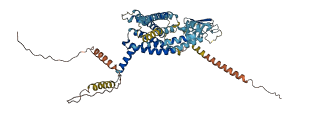
Autoinhibited structure

Activated structure
1 structures for Q09460
| Entry ID | Method | Resolution | Chain | Position | Source |
|---|---|---|---|---|---|
| AF-Q09460-F1 | Predicted | AlphaFoldDB |
No variants for Q09460
| Variant ID(s) | Position | Change | Description | Diseaes Association | Provenance |
|---|---|---|---|---|---|
| No variants for Q09460 | |||||
No associated diseases with Q09460
4 regional properties for Q09460
| Type | Name | Position | InterPro Accession |
|---|---|---|---|
| domain | GPCR, family 2, extracellular hormone receptor domain | 51 - 149 | IPR001879 |
| domain | GPCR, family 2-like, transmembrane domain | 167 - 433 | IPR017981 |
| conserved_site | GPCR, family 2, secretin-like, conserved site | 74 - 98 | IPR017983-1 |
| conserved_site | GPCR, family 2, secretin-like, conserved site | 421 - 436 | IPR017983-2 |
2 GO annotations of cellular component
| Name | Definition |
|---|---|
| integral component of membrane | The component of a membrane consisting of the gene products and protein complexes having at least some part of their peptide sequence embedded in the hydrophobic region of the membrane. |
| plasma membrane | The membrane surrounding a cell that separates the cell from its external environment. It consists of a phospholipid bilayer and associated proteins. |
3 GO annotations of molecular function
| Name | Definition |
|---|---|
| calcitonin family receptor activity | Combining with any member of the calcitonin family (e.g. adrenomedullin, adrenomedullin 2 (intermedin), amylin, calcitonin and calcitonin gene-related peptides (CGRPs)) to initiate a change in cell activity. |
| calcitonin receptor activity | Combining with calcitonin and transmitting the signal across the membrane by activating an associated G-protein; promotes the exchange of GDP for GTP on the alpha subunit of a heterotrimeric G-protein complex. |
| G protein-coupled peptide receptor activity | Combining with a peptide and transmitting the signal across the membrane by activating an associated G-protein; promotes the exchange of GDP for GTP on the alpha subunit of a heterotrimeric G-protein complex. |
11 GO annotations of biological process
| Name | Definition |
|---|---|
| adenylate cyclase-activating G protein-coupled receptor signaling pathway | A G protein-coupled receptor signaling pathway in which the signal is transmitted via the activation of adenylyl cyclase activity and a subsequent increase in the intracellular concentration of cyclic AMP (cAMP). |
| adenylate cyclase-modulating G protein-coupled receptor signaling pathway | A G protein-coupled receptor signaling pathway in which the signal is transmitted via the activation or inhibition of adenylyl cyclase activity and a subsequent change in the intracellular concentration of cyclic AMP (cAMP). |
| cell surface receptor signaling pathway | The series of molecular signals initiated by activation of a receptor on the surface of a cell. The pathway begins with binding of an extracellular ligand to a cell surface receptor, or for receptors that signal in the absence of a ligand, by ligand-withdrawal or the activity of a constitutively active receptor. The pathway ends with regulation of a downstream cellular process, e.g. transcription. |
| cellular calcium ion homeostasis | Any process involved in the maintenance of an internal steady state of calcium ions at the level of a cell. |
| locomotion | Self-propelled movement of a cell or organism from one location to another. |
| locomotion involved in locomotory behavior | Self-propelled movement of a cell or organism from one location to another in a behavioral context; the aspect of locomotory behavior having to do with movement. |
| locomotory exploration behavior | The specific movement from place to place of an organism in response to a novel environment. |
| male mating behavior | The specific behavior of a male organism that is associated with reproduction. |
| positive regulation of adenylate cyclase activity | Any process that activates or increases the frequency, rate or extent of adenylate cyclase activity. |
| positive regulation of gene expression | Any process that increases the frequency, rate or extent of gene expression. Gene expression is the process in which a gene's coding sequence is converted into a mature gene product (protein or RNA). |
| sleep | Any process in which an organism enters and maintains a periodic, readily reversible state of reduced awareness and metabolic activity. Usually accompanied by physical relaxation, the onset of sleep in humans and other mammals is marked by a change in the electrical activity of the brain. |
| 10 | 20 | 30 | 40 | 50 | 60 |
| MADATSPFNV | SILDNSTKLS | EMVESGWNVL | ASTSVQAFNE | AMDVLEESYP | LCKKMLDHNN |
| 70 | 80 | 90 | 100 | 110 | 120 |
| LFPERDPNDT | RIWCNATYDT | VLCWPPTPAN | SSVTLQCPHM | KGLDPNKNIT | KDCHVSGVWS |
| 130 | 140 | 150 | 160 | 170 | 180 |
| GRNAGEMGPT | LPGWTNFTMC | YTDEVIYIMQ | NLNNESLTIA | QEVARNARKL | EFVGLGLSLV |
| 190 | 200 | 210 | 220 | 230 | 240 |
| SLILAISIFS | YFRRLRVFRN | LLHLHLMIAM | LMVVILRLVL | YIDLIFTGEN | GPHTNSAEGK |
| 250 | 260 | 270 | 280 | 290 | 300 |
| TINTMPIVCE | GMFFFLEYFK | TVTFCWMFLE | GIYLNNQIVF | GFFNSEPKLL | PYFIAGYGIP |
| 310 | 320 | 330 | 340 | 350 | 360 |
| LVHTMLWLLV | VLIKKDFKVE | RCLGSYYLEP | EFWILDGPRM | AELVINLFFI | CNVIRVLYSK |
| 370 | 380 | 390 | 400 | 410 | 420 |
| VRESNNTSEA | GLKKSVKAAM | MLLPLLGVPN | IMQTIPFAPT | RDNIMVFAVW | TYTASFTYMY |
| 430 | 440 | 450 | 460 | 470 | 480 |
| QGLMVASIYC | FTNKEVNHVL | KTFYARYRLL | HKSQNELRRG | SRSVASHYAA | KNGTANASAP |
| 490 | 500 | 510 | 520 | 530 | 540 |
| QTNNADEFGK | LSPFPSRSKK | GSDDSTTKLM | KDAVMEEEKN | ANNNGYGSAG | EMTPLREGSN |
| RSTKSP |