Q01853
Gene name |
Vcp |
Protein name |
Transitional endoplasmic reticulum ATPase |
Names |
TER ATPase, 15S Mg(2+)-ATPase p97 subunit, Valosin-containing protein, VCP |
Species |
Mus musculus (Mouse) |
KEGG Pathway |
mmu:269523 |
EC number |
3.6.4.6: Acting on ATP; involved in cellular and subcellular movement |
Protein Class |
|
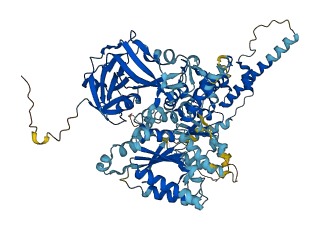
Descriptions
The autoinhibited protein was predicted that may have potential autoinhibitory elements via cis-regPred.
Autoinhibitory domains (AIDs)
Target domain |
|
Relief mechanism |
|
Assay |
cis-regPred |
Accessory elements
No accessory elements
Autoinhibited structure

Activated structure
9 structures for Q01853
| Entry ID | Method | Resolution | Chain | Position | Source |
|---|---|---|---|---|---|
| 1E32 | X-ray | 290 A | A | 1-458 | PDB |
| 1R7R | X-ray | 360 A | A | 1-806 | PDB |
| 1S3S | X-ray | 290 A | A/B/C/D/E/F | 1-458 | PDB |
| 2PJH | NMR | - | B | 21-213 | PDB |
| 3CF0 | X-ray | 300 A | A/B/C/D/E/F/G/H/I/J/K/L/M/N | 463-763 | PDB |
| 3CF1 | X-ray | 440 A | A/B/C | 1-806 | PDB |
| 3CF2 | X-ray | 350 A | A/B/C/D | 1-806 | PDB |
| 3CF3 | X-ray | 425 A | A/B/C | 1-806 | PDB |
| AF-Q01853-F1 | Predicted | AlphaFoldDB |
44 variants for Q01853
| Variant ID(s) | Position | Change | Description | Diseaes Association | Provenance |
|---|---|---|---|---|---|
| rs3388679595 | 37 | S>C | No | EVA | |
| rs3388680217 | 37 | S>N | No | EVA | |
| rs3388673081 | 54 | G>V | No | EVA | |
| rs3388679015 | 152 | F>S | No | EVA | |
| rs3388676484 | 173 | Y>* | No | EVA | |
| rs3388682468 | 174 | C>* | No | EVA | |
| rs3388673149 | 213 | L>Q | No | EVA | |
| rs3388671584 | 245 | G>R | No | EVA | |
| rs3388676520 | 252 | T>I | No | EVA | |
| rs3388679609 | 272 | P>L | No | EVA | |
| rs3388671560 | 284 | S>R | No | EVA | |
| rs3388667488 | 299 | A>T | No | EVA | |
| rs3388680169 | 304 | D>E | No | EVA | |
| rs3388676965 | 313 | R>G | No | EVA | |
| rs3388676958 | 314 | E>A | No | EVA | |
| rs3388680237 | 319 | E>D | No | EVA | |
| rs3388667510 | 324 | I>L | No | EVA | |
| rs3388682423 | 325 | V>M | No | EVA | |
| rs3388682988 | 326 | S>P | No | EVA | |
| rs3388676923 | 336 | K>* | No | EVA | |
| rs3388679616 | 337 | Q>L | No | EVA | |
| rs3388683033 | 370 | G>E | No | EVA | |
| rs3388667499 | 401 | N>K | No | EVA | |
| rs3388673153 | 404 | H>N | No | EVA | |
| rs3388682388 | 423 | I>T | No | EVA | |
| rs3388679050 | 427 | M>K | No | EVA | |
| rs3388679256 | 463 | A>T | No | EVA | |
| rs3388679200 | 488 | E>K | No | EVA | |
| rs3388673535 | 566 | A>G | No | EVA | |
| rs3388679194 | 572 | C>F | No | EVA | |
| rs3388673116 | 599 | R>* | No | EVA | |
| rs3388680247 | 628 | I>N | No | EVA | |
| rs3388679219 | 636 | P>L | No | EVA | |
| rs3388673063 | 652 | S>F | No | EVA | |
| rs3388679057 | 658 | K>T | No | EVA | |
| rs3394125920 | 668 | K>* | No | EVA | |
| rs3394215641 | 668 | K>M | No | EVA | |
| rs3388676496 | 695 | C>R | No | EVA | |
| rs3388673158 | 710 | E>G | No | EVA | |
| rs3388658854 | 718 | S>P | No | EVA | |
| rs3388676481 | 746 | S>F | No | EVA | |
| rs3388667513 | 763 | Q>R | No | EVA | |
| rs3388673096 | 791 | T>I | No | EVA | |
| rs3388679653 | 796 | Y>N | No | EVA |
No associated diseases with Q01853
11 regional properties for Q01853
| Type | Name | Position | InterPro Accession |
|---|---|---|---|
| domain | CDC48, N-terminal subdomain | 25 - 108 | IPR003338 |
| domain | AAA+ ATPase domain | 237 - 373 | IPR003593-1 |
| domain | AAA+ ATPase domain | 510 - 649 | IPR003593-2 |
| domain | ATPase, AAA-type, core | 241 - 370 | IPR003959-1 |
| domain | ATPase, AAA-type, core | 514 - 647 | IPR003959-2 |
| conserved_site | ATPase, AAA-type, conserved site | 341 - 359 | IPR003960-1 |
| conserved_site | ATPase, AAA-type, conserved site | 617 - 635 | IPR003960-2 |
| domain | CDC48, domain 2 | 125 - 191 | IPR004201 |
| domain | Spastin/Vps4, C-terminal | 720 - 760 | IPR015415 |
| domain | AAA ATPase, AAA+ lid domain | 393 - 435 | IPR041569-1 |
| domain | AAA ATPase, AAA+ lid domain | 669 - 710 | IPR041569-2 |
Functions
| Description | ||
|---|---|---|
| EC Number | 3.6.4.6 | Acting on ATP; involved in cellular and subcellular movement |
| Subcellular Localization |
|
|
| PANTHER Family | ||
| PANTHER Subfamily | ||
| PANTHER Protein Class | ||
| PANTHER Pathway Category | No pathway information available | |
20 GO annotations of cellular component
| Name | Definition |
|---|---|
| ATPase complex | A protein complex which is capable of ATPase activity. |
| cytoplasm | The contents of a cell excluding the plasma membrane and nucleus, but including other subcellular structures. |
| cytoplasmic stress granule | A dense aggregation in the cytosol composed of proteins and RNAs that appear when the cell is under stress. |
| cytosol | The part of the cytoplasm that does not contain organelles but which does contain other particulate matter, such as protein complexes. |
| Derlin-1 retrotranslocation complex | A protein complex that functions in the retrotranslocation step of ERAD (ER-associated protein degradation), and includes at its core Derlin-1 oligomers forming a retrotranslocation channel. |
| endoplasmic reticulum | The irregular network of unit membranes, visible only by electron microscopy, that occurs in the cytoplasm of many eukaryotic cells. The membranes form a complex meshwork of tubular channels, which are often expanded into slitlike cavities called cisternae. The ER takes two forms, rough (or granular), with ribosomes adhering to the outer surface, and smooth (with no ribosomes attached). |
| endoplasmic reticulum membrane | The lipid bilayer surrounding the endoplasmic reticulum. |
| glutamatergic synapse | A synapse that uses glutamate as a neurotransmitter. |
| intracellular membrane-bounded organelle | Organized structure of distinctive morphology and function, bounded by a single or double lipid bilayer membrane and occurring within the cell. Includes the nucleus, mitochondria, plastids, vacuoles, and vesicles. Excludes the plasma membrane. |
| lipid droplet | An intracellular non-membrane-bounded organelle comprising a matrix of coalesced lipids surrounded by a phospholipid monolayer. May include associated proteins. |
| myelin sheath | An electrically insulating fatty layer that surrounds the axons of many neurons. It is an outgrowth of glial cells: Schwann cells supply the myelin for peripheral neurons while oligodendrocytes supply it to those of the central nervous system. |
| nucleoplasm | That part of the nuclear content other than the chromosomes or the nucleolus. |
| nucleus | A membrane-bounded organelle of eukaryotic cells in which chromosomes are housed and replicated. In most cells, the nucleus contains all of the cell's chromosomes except the organellar chromosomes, and is the site of RNA synthesis and processing. In some species, or in specialized cell types, RNA metabolism or DNA replication may be absent. |
| perinuclear region of cytoplasm | Cytoplasm situated near, or occurring around, the nucleus. |
| proteasome complex | A large multisubunit complex which catalyzes protein degradation, found in eukaryotes, archaea and some bacteria. In eukaryotes, this complex consists of the barrel shaped proteasome core complex and one or two associated proteins or complexes that act in regulating entry into or exit from the core. |
| protein-containing complex | A stable assembly of two or more macromolecules, i.e. proteins, nucleic acids, carbohydrates or lipids, in which at least one component is a protein and the constituent parts function together. |
| site of double-strand break | A region of a chromosome at which a DNA double-strand break has occurred. DNA damage signaling and repair proteins accumulate at the lesion to respond to the damage and repair the DNA to form a continuous DNA helix. |
| synapse | The junction between an axon of one neuron and a dendrite of another neuron, a muscle fiber or a glial cell. As the axon approaches the synapse it enlarges into a specialized structure, the presynaptic terminal bouton, which contains mitochondria and synaptic vesicles. At the tip of the terminal bouton is the presynaptic membrane; facing it, and separated from it by a minute cleft (the synaptic cleft) is a specialized area of membrane on the receiving cell, known as the postsynaptic membrane. In response to the arrival of nerve impulses, the presynaptic terminal bouton secretes molecules of neurotransmitters into the synaptic cleft. These diffuse across the cleft and transmit the signal to the postsynaptic membrane. |
| VCP-NPL4-UFD1 AAA ATPase complex | A multiprotein ATPase complex required for the efficient dislocation of ER-lumenal degradation substrates, and their subsequent proteolysis by the proteasome. In budding yeast, this complex includes Cdc48p, Npl4p and Ufd1p proteins. In mammals, this complex includes a hexamer of VCP/p97 (a cytosolic ATPase) and trimers of each of its cofactors UFD1L and NPL4 (NPLOC4) (e.g. a 6:3:3 stoichiometry). |
| VCP-NSFL1C complex | A protein complex between the ATPase VCP (p97) and its cofactor p47 (NSFL1C). In human, the protein complex consists of one homotrimer of NSFL1C/p47 per homohexamer of VCP/p97. |
18 GO annotations of molecular function
| Name | Definition |
|---|---|
| ADP binding | Binding to ADP, adenosine 5'-diphosphate. |
| ATP binding | Binding to ATP, adenosine 5'-triphosphate, a universally important coenzyme and enzyme regulator. |
| ATP hydrolysis activity | Catalysis of the reaction: ATP + H2O = ADP + H+ phosphate. ATP hydrolysis is used in some reactions as an energy source, for example to catalyze a reaction or drive transport against a concentration gradient. |
| BAT3 complex binding | Binding to a BAT3 complex. |
| deubiquitinase activator activity | Binds to and increases the activity of deubiquitinase, an enzyme that catalyzes the hydrolysis of various forms of polymeric ubiquitin sequences. |
| identical protein binding | Binding to an identical protein or proteins. |
| K48-linked polyubiquitin modification-dependent protein binding | Binding to a protein upon poly-ubiquitination formed by linkages between lysine residues at position 48 in the target protein. |
| lipid binding | Binding to a lipid. |
| MHC class I protein binding | Binding to a major histocompatibility complex class I molecule; a set of molecules displayed on cell surfaces that are responsible for lymphocyte recognition and antigen presentation. |
| nucleic acid binding | Binding to a nucleic acid. |
| polyubiquitin modification-dependent protein binding | Binding to a protein upon poly-ubiquitination of the target protein. |
| protein domain specific binding | Binding to a specific domain of a protein. |
| protein phosphatase binding | Binding to a protein phosphatase. |
| protein-containing complex binding | Binding to a macromolecular complex. |
| ubiquitin protein ligase binding | Binding to a ubiquitin protein ligase enzyme, any of the E3 proteins. |
| ubiquitin-dependent protein binding | Binding to a protein upon ubiquitination of the target protein. |
| ubiquitin-like protein ligase binding | Binding to a ubiquitin-like protein ligase, such as ubiquitin-ligase. |
| ubiquitin-specific protease binding | Binding to a ubiquitin-specific protease. |
44 GO annotations of biological process
| Name | Definition |
|---|---|
| activation of cysteine-type endopeptidase activity involved in apoptotic process | Any process that initiates the activity of the inactive enzyme cysteine-type endopeptidase in the context of an apoptotic process. |
| aggresome assembly | The aggregation, arrangement and bonding together of a set of components to form an aggresome; requires the microtubule cytoskeleton and dynein. |
| ATP metabolic process | The chemical reactions and pathways involving ATP, adenosine triphosphate, a universally important coenzyme and enzyme regulator. |
| autophagosome maturation | Removal of PI3P and Atg8/LC3 after the closure of the phagophore and before the fusion with the endosome/lysosome (e.g. mammals and insects) or vacuole (yeast), and that very likely destabilizes other Atg proteins and thus enables their efficient dissociation and recycling. |
| autophagy | The cellular catabolic process in which cells digest parts of their own cytoplasm; allows for both recycling of macromolecular constituents under conditions of cellular stress and remodeling the intracellular structure for cell differentiation. |
| cellular response to arsenite ion | Any process that results in a change in state or activity of a cell (in terms of movement, secretion, enzyme production, gene expression, etc.) as a result of an arsenite ion stimulus. |
| cellular response to DNA damage stimulus | Any process that results in a change in state or activity of a cell (in terms of movement, secretion, enzyme production, gene expression, etc.) as a result of a stimulus indicating damage to its DNA from environmental insults or errors during metabolism. |
| cellular response to heat | Any process that results in a change in state or activity of a cell (in terms of movement, secretion, enzyme production, gene expression, etc.) as a result of a heat stimulus, a temperature stimulus above the optimal temperature for that organism. |
| DNA repair | The process of restoring DNA after damage. Genomes are subject to damage by chemical and physical agents in the environment (e.g. UV and ionizing radiations, chemical mutagens, fungal and bacterial toxins, etc.) and by free radicals or alkylating agents endogenously generated in metabolism. DNA is also damaged because of errors during its replication. A variety of different DNA repair pathways have been reported that include direct reversal, base excision repair, nucleotide excision repair, photoreactivation, bypass, double-strand break repair pathway, and mismatch repair pathway. |
| double-strand break repair | The repair of double-strand breaks in DNA via homologous and nonhomologous mechanisms to reform a continuous DNA helix. |
| endoplasmic reticulum stress-induced pre-emptive quality control | The response to endoplasimic reticulum stress in which nascent proteins are degraded by attenuation of their translocation into the ER followed by rerouting to the cytosol without cleavage of the signal peptide, and subsequent degradation by the proteasome. |
| endoplasmic reticulum to Golgi vesicle-mediated transport | The directed movement of substances from the endoplasmic reticulum (ER) to the Golgi, mediated by COP II vesicles. Small COP II coated vesicles form from the ER and then fuse directly with the cis-Golgi. Larger structures are transported along microtubules to the cis-Golgi. |
| endosome to lysosome transport via multivesicular body sorting pathway | The directed movement of substances from endosomes to lysosomes by a pathway in which molecules are sorted into multivesicular bodies, which then fuse with the lysosome. |
| ER-associated misfolded protein catabolic process | The chemical reactions and pathways resulting in the breakdown of misfolded proteins transported from the endoplasmic reticulum and targeted to cytoplasmic proteasomes for degradation. |
| ERAD pathway | The protein catabolic pathway which targets endoplasmic reticulum (ER)-resident proteins for degradation by the cytoplasmic proteasome. It begins with recognition of the ER-resident protein, includes retrotranslocation (dislocation) of the protein from the ER to the cytosol, protein modifications necessary for correct substrate transfer (e.g. ubiquitination), transport of the protein to the proteasome, and ends with degradation of the protein by the cytoplasmic proteasome. |
| flavin adenine dinucleotide catabolic process | The chemical reactions and pathways resulting in the breakdown of flavin adenine dinucleotide, which acts as a coenzyme or prosthetic group of various flavoprotein oxidoreductase enzymes. |
| interstrand cross-link repair | Removal of a DNA interstrand crosslink (a covalent attachment of DNA bases on opposite strands of the DNA) and restoration of the DNA. DNA interstrand crosslinks occur when both strands of duplex DNA are covalently tethered together (e.g. by an exogenous or endogenous agent), thus preventing the strand unwinding necessary for essential DNA functions such as transcription and replication. |
| macroautophagy | The major inducible pathway for the general turnover of cytoplasmic constituents in eukaryotic cells, it is also responsible for the degradation of active cytoplasmic enzymes and organelles during nutrient starvation. Macroautophagy involves the formation of double-membrane-bounded autophagosomes which enclose the cytoplasmic constituent targeted for degradation in a membrane-bounded structure. Autophagosomes then fuse with a lysosome (or vacuole) releasing single-membrane-bounded autophagic bodies that are then degraded within the lysosome (or vacuole). Some types of macroautophagy, e.g. pexophagy, mitophagy, involve selective targeting of the targets to be degraded. |
| mitotic spindle disassembly | The controlled breakdown of the spindle during a mitotic cell cycle. |
| NADH metabolic process | The chemical reactions and pathways involving reduced nicotinamide adenine dinucleotide (NADH), a coenzyme present in most living cells and derived from the B vitamin nicotinic acid. |
| negative regulation of smoothened signaling pathway | Any process that stops, prevents, or reduces the frequency, rate or extent of smoothened signaling. |
| positive regulation of ATP biosynthetic process | Any process that activates or increases the frequency, rate or extent of ATP biosynthetic process. |
| positive regulation of canonical Wnt signaling pathway | Any process that increases the rate, frequency, or extent of the Wnt signaling pathway through beta-catenin, the series of molecular signals initiated by binding of a Wnt protein to a frizzled family receptor on the surface of the target cell, followed by propagation of the signal via beta-catenin, and ending with a change in transcription of target genes. |
| positive regulation of Lys63-specific deubiquitinase activity | Any process that activates or increases the frequency, rate or extent of Lys63-specific deubiquitinase activity. |
| positive regulation of mitochondrial membrane potential | Any process that activates or increases the frequency, rate or extent of establishment or extent of a mitochondrial membrane potential, the electric potential existing across any mitochondrial membrane arising from charges in the membrane itself and from the charges present in the media on either side of the membrane. |
| positive regulation of oxidative phosphorylation | Any process that activates or increases the frequency, rate or extent of oxidative phosphorylation. |
| positive regulation of proteasomal ubiquitin-dependent protein catabolic process | Any process that activates or increases the frequency, rate or extent of the breakdown of a protein or peptide by hydrolysis of its peptide bonds, initiated by the covalent attachment of ubiquitin, and mediated by the proteasome. |
| positive regulation of protein catabolic process | Any process that activates or increases the frequency, rate or extent of the chemical reactions and pathways resulting in the breakdown of a protein by the destruction of the native, active configuration, with or without the hydrolysis of peptide bonds. |
| positive regulation of protein K63-linked deubiquitination | Any process that activates or increases the frequency, rate or extent of protein K63-linked deubiquitination. |
| positive regulation of protein-containing complex assembly | Any process that activates or increases the frequency, rate or extent of protein complex assembly. |
| positive regulation of ubiquitin-dependent protein catabolic process | Any process that activates or increases the frequency, rate or extent of ubiquitin-dependent protein catabolic process. |
| proteasomal protein catabolic process | The chemical reactions and pathways resulting in the breakdown of a protein or peptide by hydrolysis of its peptide bonds that is mediated by the proteasome. |
| proteasome-mediated ubiquitin-dependent protein catabolic process | The chemical reactions and pathways resulting in the breakdown of a protein or peptide by hydrolysis of its peptide bonds, initiated by the covalent attachment of ubiquitin, and mediated by the proteasome. |
| protein ubiquitination | The process in which one or more ubiquitin groups are added to a protein. |
| protein-DNA covalent cross-linking repair | The removal of covalent cross-link between DNA and a protein. |
| regulation of aerobic respiration | Any process that modulates the frequency, rate or extent of aerobic respiration. |
| regulation of protein localization to chromatin | Any process that modulates the frequency, rate or extent of protein localization to chromatin. |
| regulation of synapse organization | Any process that modulates the physical form of a synapse, the junction between a neuron and a target (neuron, muscle, or secretory cell). |
| retrograde protein transport, ER to cytosol | The directed movement of unfolded or misfolded proteins from the endoplasmic reticulum to the cytosol through the translocon. |
| stress granule disassembly | The disaggregation of a stress granule into its constituent protein and RNA parts. |
| translesion synthesis | The replication of damaged DNA by synthesis across a lesion in the template strand; a specialized DNA polymerase or replication complex inserts a defined nucleotide across from the lesion which allows DNA synthesis to continue beyond the lesion. This process can be mutagenic depending on the damaged nucleotide and the inserted nucleotide. |
| ubiquitin-dependent ERAD pathway | The series of steps necessary to target endoplasmic reticulum (ER)-resident proteins for degradation by the cytoplasmic proteasome. Begins with recognition of the ER-resident protein, includes retrotranslocation (dislocation) of the protein from the ER to the cytosol, protein ubiquitination necessary for correct substrate transfer, transport of the protein to the proteasome, and ends with degradation of the protein by the cytoplasmic proteasome. |
| ubiquitin-dependent protein catabolic process | The chemical reactions and pathways resulting in the breakdown of a protein or peptide by hydrolysis of its peptide bonds, initiated by the covalent attachment of a ubiquitin group, or multiple ubiquitin groups, to the protein. |
| viral genome replication | Any process involved directly in viral genome replication, including viral nucleotide metabolism. |
4 homologous proteins in AiPD
| UniProt AC | Gene Name | Protein Name | Species | Evidence Code |
|---|---|---|---|---|
| Q8NB90 | SPATA5 | Ribosome biogenesis protein SPATA5 | Homo sapiens (Human) | PR |
| P55072 | VCP | Transitional endoplasmic reticulum ATPase | Homo sapiens (Human) | PR |
| P54811 | cdc-48.1 | Transitional endoplasmic reticulum ATPase homolog 1 | Caenorhabditis elegans | PR |
| P54812 | cdc-48.2 | Transitional endoplasmic reticulum ATPase homolog 2 | Caenorhabditis elegans | PR |
| 10 | 20 | 30 | 40 | 50 | 60 |
| MASGADSKGD | DLSTAILKQK | NRPNRLIVDE | AINEDNSVVS | LSQPKMDELQ | LFRGDTVLLK |
| 70 | 80 | 90 | 100 | 110 | 120 |
| GKKRREAVCI | VLSDDTCSDE | KIRMNRVVRN | NLRVRLGDVI | SIQPCPDVKY | GKRIHVLPID |
| 130 | 140 | 150 | 160 | 170 | 180 |
| DTVEGITGNL | FEVYLKPYFL | EAYRPIRKGD | IFLVRGGMRA | VEFKVVETDP | SPYCIVAPDT |
| 190 | 200 | 210 | 220 | 230 | 240 |
| VIHCEGEPIK | REDEEESLNE | VGYDDIGGCR | KQLAQIKEMV | ELPLRHPALF | KAIGVKPPRG |
| 250 | 260 | 270 | 280 | 290 | 300 |
| ILLYGPPGTG | KTLIARAVAN | ETGAFFFLIN | GPEIMSKLAG | ESESNLRKAF | EEAEKNAPAI |
| 310 | 320 | 330 | 340 | 350 | 360 |
| IFIDELDAIA | PKREKTHGEV | ERRIVSQLLT | LMDGLKQRAH | VIVMAATNRP | NSIDPALRRF |
| 370 | 380 | 390 | 400 | 410 | 420 |
| GRFDREVDIG | IPDATGRLEI | LQIHTKNMKL | ADDVDLEQVA | NETHGHVGAD | LAALCSEAAL |
| 430 | 440 | 450 | 460 | 470 | 480 |
| QAIRKKMDLI | DLEDETIDAE | VMNSLAVTMD | DFRWALSQSN | PSALRETVVE | VPQVTWEDIG |
| 490 | 500 | 510 | 520 | 530 | 540 |
| GLEDVKRELQ | ELVQYPVEHP | DKFLKFGMTP | SKGVLFYGPP | GCGKTLLAKA | IANECQANFI |
| 550 | 560 | 570 | 580 | 590 | 600 |
| SIKGPELLTM | WFGESEANVR | EIFDKARQAA | PCVLFFDELD | SIAKARGGNI | GDGGGAADRV |
| 610 | 620 | 630 | 640 | 650 | 660 |
| INQILTEMDG | MSTKKNVFII | GATNRPDIID | PAILRPGRLD | QLIYIPLPDE | KSRVAILKAN |
| 670 | 680 | 690 | 700 | 710 | 720 |
| LRKSPVAKDV | DLEFLAKMTN | GFSGADLTEI | CQRACKLAIR | ESIESEIRRE | RERQTNPSAM |
| 730 | 740 | 750 | 760 | 770 | 780 |
| EVEEDDPVPE | IRRDHFEEAM | RFARRSVSDN | DIRKYEMFAQ | TLQQSRGFGS | FRFPSGNQGG |
| 790 | 800 | ||||
| AGPSQGSGGG | TGGSVYTEDN | DDDLYG |