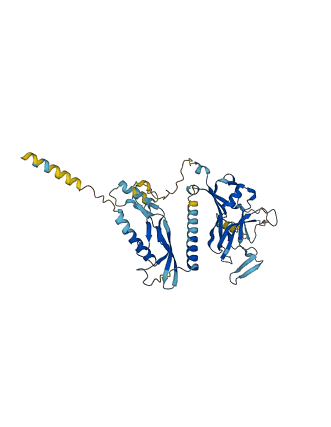
| activation of protein kinase activity |
Any process that initiates the activity of an inactive protein kinase. |
| animal organ development |
Development of a tissue or tissues that work together to perform a specific function or functions. Development pertains to the process whose specific outcome is the progression of a structure over time, from its formation to the mature structure. Organs are commonly observed as visibly distinct structures, but may also exist as loosely associated clusters of cells that work together to perform a specific function or functions. |
| cardiac epithelial to mesenchymal transition |
A transition where a cardiac epithelial cell loses apical/basolateral polarity, severs intercellular adhesive junctions, degrades basement membrane components and becomes a migratory mesenchymal cell. |
| cardiac muscle cell proliferation |
The expansion of a cardiac muscle cell population by cell division. |
| cardioblast differentiation |
The process in which a relatively unspecialized mesodermal cell acquires the specialized structural and/or functional features of a cardioblast. A cardioblast is a cardiac precursor cell. It is a cell that has been committed to a cardiac fate, but will undergo more cell division rather than terminally differentiating. |
| cartilage development |
The process whose specific outcome is the progression of a cartilage element over time, from its formation to the mature structure. Cartilage elements are skeletal elements that consist of connective tissue dominated by extracellular matrix containing collagen type II and large amounts of proteoglycan, particularly chondroitin sulfate. |
| cell death |
Any biological process that results in permanent cessation of all vital functions of a cell. A cell should be considered dead when any one of the following molecular or morphological criteria is met: (1) the cell has lost the integrity of its plasma membrane; (2) the cell, including its nucleus, has undergone complete fragmentation into discrete bodies (frequently referred to as apoptotic bodies). The cell corpse (or its fragments) may be engulfed by an adjacent cell in vivo, but engulfment of whole cells should not be considered a strict criteria to define cell death as, under some circumstances, live engulfed cells can be released from phagosomes (see PMID:18045538). |
| cell migration |
The controlled self-propelled movement of a cell from one site to a destination guided by molecular cues. Cell migration is a central process in the development and maintenance of multicellular organisms. |
| cell morphogenesis |
The developmental process in which the size or shape of a cell is generated and organized. |
| cell-cell junction organization |
A process that is carried out at the cellular level which results in the assembly, arrangement of constituent parts, or disassembly of a cell-cell junction. A cell-cell junction is a specialized region of connection between two cells. |
| collagen fibril organization |
Any process that determines the size and arrangement of collagen fibrils within an extracellular matrix. |
| dopamine biosynthetic process |
The chemical reactions and pathways resulting in the formation of dopamine, a catecholamine neurotransmitter and a metabolic precursor of noradrenaline and adrenaline. |
| embryo development ending in birth or egg hatching |
The process whose specific outcome is the progression of an embryo over time, from zygote formation until the end of the embryonic life stage. The end of the embryonic life stage is organism-specific and may be somewhat arbitrary; for mammals it is usually considered to be birth, for insects the hatching of the first instar larva from the eggshell. |
| embryonic digestive tract development |
The process whose specific outcome is the progression of the gut over time, from its formation to the mature structure during embryonic development. The gut is the region of the digestive tract extending from the beginning of the intestines to the anus. |
| embryonic organ development |
Development, taking place during the embryonic phase, of a tissue or tissues that work together to perform a specific function or functions. Development pertains to the process whose specific outcome is the progression of a structure over time, from its formation to the mature structure. Organs are commonly observed as visibly distinct structures, but may also exist as loosely associated clusters of cells that work together to perform a specific function or functions. |
| endothelial cell activation |
The change in morphology and behavior of an endothelial cell resulting from exposure to a cytokine, chemokine, cellular ligand, or soluble factor. |
| epithelial to mesenchymal transition |
A transition where an epithelial cell loses apical/basolateral polarity, severs intercellular adhesive junctions, degrades basement membrane components and becomes a migratory mesenchymal cell. |
| epithelial to mesenchymal transition involved in endocardial cushion formation |
A transition where a cardiac epithelial cell loses apical/basolateral polarity, severs intercellular adhesive junctions, degrades basement membrane components and becomes a migratory mesenchymal cell that will contribute to the formation of the endocardial cushion. |
| extrinsic apoptotic signaling pathway |
The series of molecular signals in which a signal is conveyed from the cell surface to trigger the apoptotic death of a cell. The pathway starts with either a ligand binding to a cell surface receptor, or a ligand being withdrawn from a cell surface receptor (e.g. in the case of signaling by dependence receptors), and ends when the execution phase of apoptosis is triggered. |
| eye development |
The process whose specific outcome is the progression of the eye over time, from its formation to the mature structure. The eye is the organ of sight. |
| female gonad development |
The process whose specific outcome is the progression of the female gonad over time, from its formation to the mature structure. |
| glial cell migration |
The orderly movement of a glial cell, non-neuronal cells that provide support and nutrition, maintain homeostasis, form myelin, and participate in signal transmission in the nervous system. |
| gonad development |
The process whose specific outcome is the progression of the gonad over time, from its formation to the mature structure. The gonad is an animal organ that produces gametes; in some species it also produces hormones. |
| heart development |
The process whose specific outcome is the progression of the heart over time, from its formation to the mature structure. The heart is a hollow, muscular organ, which, by contracting rhythmically, keeps up the circulation of the blood. |
| heart morphogenesis |
The developmental process in which the heart is generated and organized. The heart is a hollow, muscular organ, which, by contracting rhythmically, keeps up the circulation of the blood. |
| hemopoiesis |
The process whose specific outcome is the progression of the myeloid and lymphoid derived organ/tissue systems of the blood and other parts of the body over time, from formation to the mature structure. The site of hemopoiesis is variable during development, but occurs primarily in bone marrow or kidney in many adult vertebrates. |
| lung development |
The process whose specific outcome is the progression of the lung over time, from its formation to the mature structure. In all air-breathing vertebrates the lungs are developed from the ventral wall of the oesophagus as a pouch which divides into two sacs. In amphibians and many reptiles the lungs retain very nearly this primitive sac-like character, but in the higher forms the connection with the esophagus becomes elongated into the windpipe and the inner walls of the sacs become more and more divided, until, in the mammals, the air spaces become minutely divided into tubes ending in small air cells, in the walls of which the blood circulates in a fine network of capillaries. In mammals the lungs are more or less divided into lobes, and each lung occupies a separate cavity in the thorax. |
| male gonad development |
The process whose specific outcome is the progression of the male gonad over time, from its formation to the mature structure. |
| negative regulation of alkaline phosphatase activity |
Any process that decreases the frequency, rate or extent of alkaline phosphatase activity, the catalysis of the reaction: an orthophosphoric monoester + H2O = an alcohol + phosphate, with an alkaline pH optimum. |
| negative regulation of cell adhesion |
Any process that stops, prevents, or reduces the frequency, rate or extent of cell adhesion. |
| negative regulation of cell growth |
Any process that stops, prevents, or reduces the frequency, rate, extent or direction of cell growth. |
| negative regulation of cell population proliferation |
Any process that stops, prevents or reduces the rate or extent of cell proliferation. |
| negative regulation of epithelial cell proliferation |
Any process that stops, prevents or reduces the rate or extent of epithelial cell proliferation. |
| negative regulation of macrophage cytokine production |
Any process that decreases the rate, frequency or extent of macrophage cytokine production. Macrophage cytokine production is the appearance of a chemokine due to biosynthesis or secretion following a cellular stimulus, resulting in an increase in its intracellular or extracellular levels. |
| nervous system development |
The process whose specific outcome is the progression of nervous tissue over time, from its formation to its mature state. |
| neural tube development |
The process whose specific outcome is the progression of the neural tube over time, from its formation to the mature structure. The mature structure of the neural tube exists when the tube has been segmented into the forebrain, midbrain, hindbrain and spinal cord regions. In addition neural crest has budded away from the epithelium. |
| neuron development |
The process whose specific outcome is the progression of a neuron over time, from initial commitment of the cell to a specific fate, to the fully functional differentiated cell. |
| neutrophil chemotaxis |
The directed movement of a neutrophil cell, the most numerous polymorphonuclear leukocyte found in the blood, in response to an external stimulus, usually an infection or wounding. |
| pathway-restricted SMAD protein phosphorylation |
The process of introducing a phosphate group on to a pathway restricted SMAD protein. A pathway restricted SMAD protein is an effector protein that acts directly downstream of the transforming growth factor family receptor. |
| positive regulation of cardioblast differentiation |
Any process that activates or increases the frequency, rate or extent of cardioblast differentiation, the process in which a relatively unspecialized mesodermal cell acquires the specialized structural and/or functional features of a cardioblast. A cardioblast is a cardiac precursor cell. It is a cell that has been committed to a cardiac fate, but will undergo more cell division rather than terminally differentiating. |
| positive regulation of cell adhesion mediated by integrin |
Any process that activates or increases the frequency, rate, or extent of cell adhesion mediated by integrin. |
| positive regulation of cell cycle |
Any process that activates or increases the rate or extent of progression through the cell cycle. |
| positive regulation of cell division |
Any process that activates or increases the frequency, rate or extent of cell division. |
| positive regulation of cell growth |
Any process that activates or increases the frequency, rate, extent or direction of cell growth. |
| positive regulation of cell population proliferation |
Any process that activates or increases the rate or extent of cell proliferation. |
| positive regulation of epithelial cell migration |
Any process that activates or increases the frequency, rate or extent of epithelial cell migration. |
| positive regulation of epithelial to mesenchymal transition |
Any process that increases the rate, frequency, or extent of epithelial to mesenchymal transition. Epithelial to mesenchymal transition is where an epithelial cell loses apical/basolateral polarity, severs intercellular adhesive junctions, degrades basement membrane components and becomes a migratory mesenchymal cell. |
| positive regulation of heart contraction |
Any process that activates or increases the frequency, rate or extent of heart contraction. |
| positive regulation of immune response |
Any process that activates or increases the frequency, rate or extent of the immune response, the immunological reaction of an organism to an immunogenic stimulus. |
| positive regulation of integrin biosynthetic process |
Any process that activates or increases the frequency, rate or extent of the chemical reactions and pathways resulting in the formation of integrins. |
| positive regulation of neuron apoptotic process |
Any process that activates or increases the frequency, rate or extent of cell death of neurons by apoptotic process. |
| positive regulation of ossification |
Any process that activates or increases the frequency, rate or extent of ossification, the formation of bone or of a bony substance or the conversion of fibrous tissue or of cartilage into bone or a bony substance. |
| positive regulation of phosphatidylinositol 3-kinase signaling |
Any process that activates or increases the frequency, rate or extent of signal transduction mediated by the phosphatidylinositol 3-kinase cascade. |
| positive regulation of protein secretion |
Any process that activates or increases the frequency, rate or extent of the controlled release of a protein from a cell. |
| positive regulation of stress-activated MAPK cascade |
Any process that activates or increases the frequency, rate or extent of signal transduction mediated by the stress-activated MAPK cascade. |
| positive regulation of timing of catagen |
Any process that activates or increases the frequency, rate or extent of timing of catagen, the regression phase of the hair cycle. |
| protein phosphorylation |
The process of introducing a phosphate group on to a protein. |
| regulation of cell cycle |
Any process that modulates the rate or extent of progression through the cell cycle. |
| regulation of cell differentiation |
Any process that modulates the frequency, rate or extent of cell differentiation, the process in which relatively unspecialized cells acquire specialized structural and functional features. |
| regulation of cell population proliferation |
Any process that modulates the frequency, rate or extent of cell proliferation. |
| regulation of complement-dependent cytotoxicity |
Any process that modulates the frequency, rate or extent of complement-dependent cytotoxicity. |
| regulation of growth |
Any process that modulates the frequency, rate or extent of the growth of all or part of an organism so that it occurs at its proper speed, either globally or in a specific part of the organism's development. |
| regulation of SMAD protein signal transduction |
Any process that modulates the rate, frequency or extent of SMAD protein signal transduction. Pathway-restricted SMAD proteins and common-partner SMAD proteins are involved in the transforming growth factor beta receptor signaling pathways. |
| regulation of transforming growth factor beta2 production |
Any process that modulates the frequency, rate, or extent of production of transforming growth factor-beta2. |
| response to growth hormone |
Any process that results in a change in state or activity of a cell or an organism (in terms of movement, secretion, enzyme production, gene expression, etc.) as a result of a growth hormone stimulus. Growth hormone is a peptide hormone that binds to the growth hormone receptor and stimulates growth. |
| response to hypoxia |
Any process that results in a change in state or activity of a cell or an organism (in terms of movement, secretion, enzyme production, gene expression, etc.) as a result of a stimulus indicating lowered oxygen tension. Hypoxia, defined as a decline in O2 levels below normoxic levels of 20.8 - 20.95%, results in metabolic adaptation at both the cellular and organismal level. |
| response to progesterone |
Any process that results in a change in state or activity of a cell or an organism (in terms of movement, secretion, enzyme production, gene expression, etc.) as a result of a progesterone stimulus. |
| response to virus |
Any process that results in a change in state or activity of a cell or an organism (in terms of movement, secretion, enzyme production, gene expression, etc.) as a result of a stimulus from a virus. |
| response to wounding |
Any process that results in a change in state or activity of a cell or an organism (in terms of movement, secretion, enzyme production, gene expression, etc.) as a result of a stimulus indicating damage to the organism. |
| response to xenobiotic stimulus |
Any process that results in a change in state or activity of a cell or an organism (in terms of movement, secretion, enzyme production, gene expression, etc.) as a result of a stimulus from a xenobiotic, a compound foreign to the organim exposed to it. It may be synthesized by another organism (like ampicilin) or it can be a synthetic chemical. |
| salivary gland morphogenesis |
The process in which the anatomical structures of the salivary gland are generated and organized. |
| signal transduction |
The cellular process in which a signal is conveyed to trigger a change in the activity or state of a cell. Signal transduction begins with reception of a signal (e.g. a ligand binding to a receptor or receptor activation by a stimulus such as light), or for signal transduction in the absence of ligand, signal-withdrawal or the activity of a constitutively active receptor. Signal transduction ends with regulation of a downstream cellular process, e.g. regulation of transcription or regulation of a metabolic process. Signal transduction covers signaling from receptors located on the surface of the cell and signaling via molecules located within the cell. For signaling between cells, signal transduction is restricted to events at and within the receiving cell. |
| skeletal muscle tissue development |
The developmental sequence of events leading to the formation of adult skeletal muscle tissue. The main events are: the fusion of myoblasts to form myotubes that increase in size by further fusion to them of myoblasts, the formation of myofibrils within their cytoplasm and the establishment of functional neuromuscular junctions with motor neurons. At this stage they can be regarded as mature muscle fibers. |
| SMAD protein signal transduction |
The cascade of processes by which a signal interacts with a receptor, causing a change in the activity of a SMAD protein, and ultimately effecting a change in the functioning of the cell. |
| somatic stem cell division |
The self-renewing division of a somatic stem cell, a stem cell that can give rise to cell types of the body other than those of the germ-line. |
| somitogenesis |
The formation of mesodermal clusters that are arranged segmentally along the anterior posterior axis of an embryo. |
| spleen development |
The process whose specific outcome is the progression of the spleen over time, from its formation to the mature structure. The spleen is a large vascular lymphatic organ composed of white and red pulp, involved both in hemopoietic and immune system functions. |
| transforming growth factor beta receptor signaling pathway |
The series of molecular signals initiated by an extracellular ligand binding to a transforming growth factor beta receptor on the surface of a target cell, and ending with the regulation of a downstream cellular process, e.g. transcription. |
| wound healing |
The series of events that restore integrity to a damaged tissue, following an injury. |