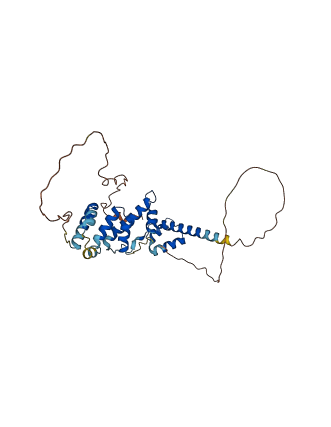
| apoptotic process involved in development |
Any apoptotic process that is involved in anatomical structure development. |
| brain development |
The process whose specific outcome is the progression of the brain over time, from its formation to the mature structure. Brain development begins with patterning events in the neural tube and ends with the mature structure that is the center of thought and emotion. The brain is responsible for the coordination and control of bodily activities and the interpretation of information from the senses (sight, hearing, smell, etc.). |
| cell proliferation in forebrain |
The creation of greater cell numbers in the forebrain due to cell division of progenitor cells. |
| epithelial cell maturation |
The developmental process, independent of morphogenetic (shape) change, that is required for an epithelial cell to attain its fully functional state. An epithelial cell is a cell usually found in a two-dimensional sheet with a free surface. |
| eye development |
The process whose specific outcome is the progression of the eye over time, from its formation to the mature structure. The eye is the organ of sight. |
| forebrain dorsal/ventral pattern formation |
The formation of specific regional progenitor domains along the dorsal-ventral axis in the developing forebrain. |
| lens development in camera-type eye |
The process whose specific outcome is the progression of the lens over time, from its formation to the mature structure. The lens is a transparent structure in the eye through which light is focused onto the retina. An example of this process is found in Mus musculus. |
| lens fiber cell apoptotic process |
Any apoptotic process in a lens fiber cell. Lens fiber cells are elongated, tightly packed cells that make up the bulk of the mature lens in a camera-type eye. |
| lens fiber cell differentiation |
The process in which a relatively unspecialized cell acquires specialized features of a lens fiber cell, any of the elongated, tightly packed cells that make up the bulk of the mature lens in the camera-type eye. The cytoplasm of a lens fiber cell is devoid of most intracellular organelles including the cell nucleus, and contains primarily crystallins, a group of water-soluble proteins expressed in vary large quantities. |
| negative regulation of DNA-templated transcription |
Any process that stops, prevents, or reduces the frequency, rate or extent of cellular DNA-templated transcription. |
| negative regulation of neuron differentiation |
Any process that stops, prevents, or reduces the frequency, rate or extent of neuron differentiation. |
| negative regulation of Wnt signaling pathway |
Any process that stops, prevents, or reduces the frequency, rate or extent of the Wnt signaling pathway. |
| neuroblast differentiation |
The process in which a relatively unspecialized cell acquires specialized features of a neuroblast. There are at least four stages through which the pluripotent cells of epiblast or blastula become neuroblasts. |
| neuroblast migration |
The orderly movement of a neuroblast from one site to another, often during the development of a multicellular organism or multicellular structure. A neuroblast is any cell that will divide and give rise to a neuron. |
| optic vesicle morphogenesis |
The developmental process pertaining to the formation and shaping of the optic vesicle. This process begins with the specific processes that contribute to the appearance of the vesicle and ends when the vesicle has evaginated. The optic vesicle is the evagination of neurectoderm that precedes formation of the optic cup. |
| pituitary gland development |
The progression of the pituitary gland over time from its initial formation until its mature state. The pituitary gland is an endocrine gland that secretes hormones that regulate many other glands. |
| proximal/distal axis specification |
The establishment, maintenance and elaboration of the proximal/distal axis. The proximal/distal axis is defined by a line that runs from main body (proximal end) of an organism outward (distal end). |
| regulation of cell cycle phase transition |
Any process that modulates the frequency, rate or extent of cell cycle phase transition. |
| regulation of cell population proliferation |
Any process that modulates the frequency, rate or extent of cell proliferation. |
| regulation of neural precursor cell proliferation |
Any process that modulates the frequency, rate or extent of neural precursor cell proliferation. |
| regulation of neural retina development |
Any process that modulates the rate, frequency, or extent of neural retina development, the progression of the neural retina over time from its initial formation to the mature structure. The neural retina is the part of the retina that contains neurons and photoreceptor cells. |
| regulation of neuroblast proliferation |
Any process that modulates the frequency, rate or extent of neuroblast proliferation. |
| regulation of transcription by RNA polymerase II |
Any process that modulates the frequency, rate or extent of transcription mediated by RNA polymerase II. |
| telencephalon development |
The process whose specific outcome is the progression of the telencephalon over time, from its formation to the mature structure. The telencephalon is the paired anteriolateral division of the prosencephalon plus the lamina terminalis from which the olfactory lobes, cerebral cortex, and subcortical nuclei are derived. |
| telencephalon regionalization |
The regionalization process that creates areas within the forebrain that will direct the behavior of cell migration in differentiation as the telencephalon develops. |