Q8LFH5
Gene name |
SWEET8 |
Protein name |
Bidirectional sugar transporter SWEET8 |
Names |
AtSWEET8, Protein RUPTURED POLLEN GRAIN 1, Protein SUGARS WILL EVENTUALLY BE EXPORTED TRANSPORTERS 8 |
Species |
Arabidopsis thaliana (Mouse-ear cress) |
KEGG Pathway |
ath:AT5G40260 |
EC number |
|
Protein Class |
|
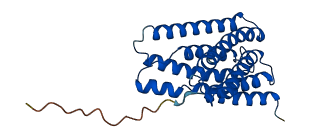
Descriptions
The autoinhibited protein was predicted that may have potential autoinhibitory elements via cis-regPred.
Autoinhibitory domains (AIDs)
Target domain |
|
Relief mechanism |
|
Assay |
cis-regPred |
Accessory elements
No accessory elements
Autoinhibited structure

Activated structure
1 structures for Q8LFH5
| Entry ID | Method | Resolution | Chain | Position | Source |
|---|---|---|---|---|---|
| AF-Q8LFH5-F1 | Predicted | AlphaFoldDB |
15 variants for Q8LFH5
| Variant ID(s) | Position | Change | Description | Diseaes Association | Provenance |
|---|---|---|---|---|---|
| tmp_5_16090268_G_T | 17 | V>F | No | 1000Genomes | |
| ENSVATH07276831 | 21 | G>A | No | 1000Genomes | |
| ENSVATH07276838 | 49 | A>T | No | 1000Genomes | |
| ENSVATH07276842 | 99 | N>K | No | 1000Genomes | |
| tmp_5_16090944_G_C,T | 114 | L>F | No | 1000Genomes | |
| ENSVATH12268770 | 116 | V>M | No | 1000Genomes | |
| tmp_5_16090976_C_T | 125 | A>V | No | 1000Genomes | |
| ENSVATH03299013 | 127 | K>E | No | 1000Genomes | |
| tmp_5_16090999_C_G | 133 | Q>E | No | 1000Genomes | |
| tmp_5_16091062_G_A | 154 | A>T | No | 1000Genomes | |
| tmp_5_16091456_T_A | 217 | Y>N | No | 1000Genomes | |
| ENSVATH12268800 | 229 | S>A | No | 1000Genomes | |
| ENSVATH07276858 | 232 | E>Q | No | 1000Genomes | |
| tmp_5_16091504_A_G | 233 | I>V | No | 1000Genomes | |
| ENSVATH12268801 | 235 | A>S | No | 1000Genomes |
No associated diseases with Q8LFH5
2 regional properties for Q8LFH5
| Type | Name | Position | InterPro Accession |
|---|---|---|---|
| repeat | Sugar transporter SWEET repeat | 10 - 97 | IPR004316-1 |
| repeat | Sugar transporter SWEET repeat | 135 - 219 | IPR004316-2 |
3 GO annotations of cellular component
| Name | Definition |
|---|---|
| integral component of membrane | The component of a membrane consisting of the gene products and protein complexes having at least some part of their peptide sequence embedded in the hydrophobic region of the membrane. |
| integral component of plasma membrane | The component of the plasma membrane consisting of the gene products and protein complexes having at least some part of their peptide sequence embedded in the hydrophobic region of the membrane. |
| plasma membrane | The membrane surrounding a cell that separates the cell from its external environment. It consists of a phospholipid bilayer and associated proteins. |
1 GO annotations of molecular function
| Name | Definition |
|---|---|
| sugar transmembrane transporter activity | Enables the transfer of a sugar from one side of a membrane to the other. A sugar is any member of a class of sweet, water-soluble, crystallizable carbohydrates, which are the monosaccharides and smaller oligosaccharides. |
6 GO annotations of biological process
| Name | Definition |
|---|---|
| callose deposition in cell wall | Any process in which callose is transported to, and/or maintained in, the cell wall. Callose is a linear 1,3-beta-d-glucan formed from UDP-glucose and is found in certain plant cell walls. |
| carbohydrate transport | The directed movement of carbohydrate into, out of or within a cell, or between cells, by means of some agent such as a transporter or pore. Carbohydrates are a group of organic compounds based of the general formula Cx(H2O)y. |
| pollen development | The process whose specific outcome is the progression of the pollen grain over time, from its formation to the mature structure. The process begins with the meiosis of the microsporocyte to form four haploid microspores. The nucleus of each microspore then divides by mitosis to form a two-celled organism, the pollen grain, that contains a tube cell as well as a smaller generative cell. The pollen grain is surrounded by an elaborate cell wall. In some species, the generative cell immediately divides again to give a pair of sperm cells. In most flowering plants, however this division takes place later, in the tube that develops when a pollen grain germinates. |
| pollen exine formation | The formation of the pollen exine. The reticulate pollen wall pattern consists of two layers, exine and intine. |
| pollen wall assembly | The formation of reticulate pollen wall pattern consisting of two layers, exine and intine. |
| protein homooligomerization | The process of creating protein oligomers, compounds composed of a small number, usually between three and ten, of identical component monomers. Oligomers may be formed by the polymerization of a number of monomers or the depolymerization of a large protein polymer. |
3 homologous proteins in AiPD
| UniProt AC | Gene Name | Protein Name | Species | Evidence Code |
|---|---|---|---|---|
| Q8W0K2 | SWEET6B | Bidirectional sugar transporter SWEET6b | Oryza sativa subsp japonica (Rice) | PR |
| A3BWJ9 | SWEET7E | Putative bidirectional sugar transporter SWEET7e | Oryza sativa subsp japonica (Rice) | PR |
| B9G2E6 | SWEET7D | Putative bidirectional sugar transporter SWEET7d | Oryza sativa subsp japonica (Rice) | PR |
| 10 | 20 | 30 | 40 | 50 | 60 |
| MVDAKQVRFI | IGVIGNVISF | GLFAAPAKTF | WRIFKKKSVE | EFSYVPYVAT | VMNCMLWVFY |
| 70 | 80 | 90 | 100 | 110 | 120 |
| GLPVVHKDSI | LVSTINGVGL | VIELFYVGVY | LMYCGHKKNH | RRNILGFLAL | EVILVVAIIL |
| 130 | 140 | 150 | 160 | 170 | 180 |
| ITLFALKGDF | VKQTFVGVIC | DVFNIAMYGA | PSLAIIKVVK | TKSVEYMPFL | LSLVCFVNAG |
| 190 | 200 | 210 | 220 | 230 | |
| IWTTYSLIFK | IDYYVLASNG | IGTFLALSQL | IVYFMYYKST | PKEKTVKPSE | VEISATERV |