Q5FVM3
Gene name |
Retreg1 |
Protein name |
Reticulophagy regulator 1 |
Names |
Reticulophagy receptor 1 |
Species |
Rattus norvegicus (Rat) |
KEGG Pathway |
rno:619558 |
EC number |
|
Protein Class |
|
Descriptions
The autoinhibited protein was predicted that may have potential autoinhibitory elements via cis-regPred.
Autoinhibitory domains (AIDs)
Target domain |
|
Relief mechanism |
|
Assay |
cis-regPred |
Accessory elements
No accessory elements
Autoinhibited structure

Activated structure
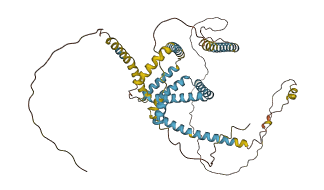
1 structures for Q5FVM3
| Entry ID | Method | Resolution | Chain | Position | Source |
|---|---|---|---|---|---|
| AF-Q5FVM3-F1 | Predicted | AlphaFoldDB |
No variants for Q5FVM3
| Variant ID(s) | Position | Change | Description | Diseaes Association | Provenance |
|---|---|---|---|---|---|
| No variants for Q5FVM3 | |||||
No associated diseases with Q5FVM3
No regional properties for Q5FVM3
| Type | Name | Position | InterPro Accession |
|---|---|---|---|
| No domain, repeats, and functional sites for Q5FVM3 | |||
Functions
3 GO annotations of cellular component
| Name | Definition |
|---|---|
| cis-Golgi network | The network of interconnected tubular and cisternal structures located at the convex side of the Golgi apparatus, which abuts the endoplasmic reticulum. |
| endoplasmic reticulum | The irregular network of unit membranes, visible only by electron microscopy, that occurs in the cytoplasm of many eukaryotic cells. The membranes form a complex meshwork of tubular channels, which are often expanded into slitlike cavities called cisternae. The ER takes two forms, rough (or granular), with ribosomes adhering to the outer surface, and smooth (with no ribosomes attached). |
| integral component of endoplasmic reticulum membrane | The component of the endoplasmic reticulum membrane consisting of the gene products and protein complexes having at least some part of their peptide sequence embedded in the hydrophobic region of the membrane. |
1 GO annotations of molecular function
| Name | Definition |
|---|---|
| endoplasmic reticulum-autophagosome adaptor activity | The binding activity of a molecule that brings together an ER membrane and an autophagosome during reticulophagy. |
8 GO annotations of biological process
| Name | Definition |
|---|---|
| autophagy | The cellular catabolic process in which cells digest parts of their own cytoplasm; allows for both recycling of macromolecular constituents under conditions of cellular stress and remodeling the intracellular structure for cell differentiation. |
| collagen catabolic process | The proteolytic chemical reactions and pathways resulting in the breakdown of collagen in the extracellular matrix, usually carried out by proteases secreted by nearby cells. |
| endoplasmic reticulum organization | A process that is carried out at the cellular level which results in the assembly, arrangement of constituent parts, or disassembly of the endoplasmic reticulum. |
| mitophagy | The selective autophagy process in which a mitochondrion is degraded by macroautophagy. |
| negative regulation of neuron apoptotic process | Any process that stops, prevents, or reduces the frequency, rate or extent of cell death by apoptotic process in neurons. |
| reticulophagy | The selective autohagy process in which parts of the endoplasmic reticulum are loaded into autophagosomes, delivered to the vacuole, and degraded in response to changing cellular conditions. |
| sensory perception of pain | The series of events required for an organism to receive a painful stimulus, convert it to a molecular signal, and recognize and characterize the signal. Pain is medically defined as the physical sensation of discomfort or distress caused by injury or illness, so can hence be described as a harmful stimulus which signals current (or impending) tissue damage. Pain may come from extremes of temperature, mechanical damage, electricity or from noxious chemical substances. This is a neurological process. |
| white fat cell differentiation | The process in which a relatively unspecialized cell acquires specialized features of a white adipocyte, an animal connective tissue cell involved in energy storage. White adipocytes have cytoplasmic lipids arranged in a unique vacuole. |
| 10 | 20 | 30 | 40 | 50 | 60 |
| MASPAPEEHA | TQGCPATEEQ | EPRPGVPGEE | AGPEGAGPQV | EEAAGRVAAA | LTWLLGEPVL |
| 70 | 80 | 90 | 100 | 110 | 120 |
| WLGWRADELL | SWKRPLRSLL | AFLGANLLFW | FLALTPWRVY | HLISVMILGR | VIMQIIKDMV |
| 130 | 140 | 150 | 160 | 170 | 180 |
| LSRARGAQLW | RSLSESWEVI | NSKPDERPRL | SHCIAESWMN | FSIFLQEMSL | FKQQSPGKFC |
| 190 | 200 | 210 | 220 | 230 | 240 |
| LLVCSVCTFF | TILGSYIPGV | ILSYLLLLFA | FLCPLFKCND | IGQKIYSKVK | SILLKLDFGI |
| 250 | 260 | 270 | 280 | 290 | 300 |
| GEYINQKKRE | RSEADKEKSH | KDDSEIDFSA | LCPKISLTVA | AKELSVSDTD | VSEVSWTDNG |
| 310 | 320 | 330 | 340 | 350 | 360 |
| TFNLSEGYTP | QTDTSDDLDR | PSEEVFSRDL | SDFPSLENGA | GTNDEDELSL | GLPTELKTKK |
| 370 | 380 | 390 | 400 | 410 | 420 |
| QQLNSAHRPS | KDRQSAAGLS | LPLKSDQALH | LMSNLAGDVI | TAAMTAAIKD | QLEGARQALA |
| 430 | 440 | 450 | 460 | 470 | |
| QAAPTPGDDT | DTEEGDDFEL | LDQAELDQIE | SELGLTQDQG | AEAQQSKKSS | GFLSNLLGGH |