Q2HY40
Gene name |
TXNIP |
Protein name |
Thioredoxin-interacting protein |
Names |
|
Species |
Sus scrofa (Pig) |
KEGG Pathway |
ssc:733688 |
EC number |
|
Protein Class |
|
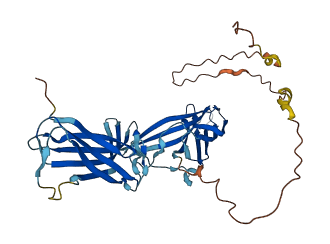
Descriptions
The autoinhibited protein was predicted that may have potential autoinhibitory elements via cis-regPred.
Autoinhibitory domains (AIDs)
Target domain |
|
Relief mechanism |
|
Assay |
cis-regPred |
Accessory elements
No accessory elements
Autoinhibited structure

Activated structure
1 structures for Q2HY40
| Entry ID | Method | Resolution | Chain | Position | Source |
|---|---|---|---|---|---|
| AF-Q2HY40-F1 | Predicted | AlphaFoldDB |
8 variants for Q2HY40
| Variant ID(s) | Position | Change | Description | Diseaes Association | Provenance |
|---|---|---|---|---|---|
| rs1107642570 | 41 | I>V | No | EVA | |
| rs80846629 | 57 | M>I | No | EVA | |
| rs709190838 | 83 | T>K | No | EVA | |
| rs1113067864 | 158 | A>V | No | EVA | |
| rs711061956 | 254 | S>I | No | EVA | |
| rs80910183 | 316 | E>* | No | EVA | |
| rs698889971 | 337 | I>V | No | EVA | |
| rs80787892 | 348 | T>N | No | EVA |
No associated diseases with Q2HY40
1 GO annotations of cellular component
| Name | Definition |
|---|---|
| cytoplasm | The contents of a cell excluding the plasma membrane and nucleus, but including other subcellular structures. |
2 GO annotations of molecular function
| Name | Definition |
|---|---|
| enzyme inhibitor activity | Binds to and stops, prevents or reduces the activity of an enzyme. |
| ubiquitin protein ligase binding | Binding to a ubiquitin protein ligase enzyme, any of the E3 proteins. |
9 GO annotations of biological process
| Name | Definition |
|---|---|
| cell cycle | The progression of biochemical and morphological phases and events that occur in a cell during successive cell replication or nuclear replication events. Canonically, the cell cycle comprises the replication and segregation of genetic material followed by the division of the cell, but in endocycles or syncytial cells nuclear replication or nuclear division may not be followed by cell division. |
| cellular response to tumor cell | Any process that results in a change in state or activity of a cell (in terms of movement, secretion, enzyme production, gene expression, etc.) as a result of a stimulus from a tumor cell. |
| keratinocyte differentiation | The process in which a relatively unspecialized cell acquires specialized features of a keratinocyte. |
| negative regulation of cell division | Any process that stops, prevents, or reduces the frequency, rate or extent of cell division. |
| negative regulation of transcription by RNA polymerase II | Any process that stops, prevents, or reduces the frequency, rate or extent of transcription mediated by RNA polymerase II. |
| platelet-derived growth factor receptor signaling pathway | The series of molecular signals initiated by a ligand binding to a platelet-derived growth factor receptor on the surface of a target cell, and ending with the regulation of a downstream cellular process, e.g. transcription. |
| protein import into nucleus | The directed movement of a protein from the cytoplasm to the nucleus. |
| protein transport | The directed movement of proteins into, out of or within a cell, or between cells, by means of some agent such as a transporter or pore. |
| response to oxidative stress | Any process that results in a change in state or activity of a cell or an organism (in terms of movement, secretion, enzyme production, gene expression, etc.) as a result of oxidative stress, a state often resulting from exposure to high levels of reactive oxygen species, e.g. superoxide anions, hydrogen peroxide (H2O2), and hydroxyl radicals. |
| 10 | 20 | 30 | 40 | 50 | 60 |
| MVMFKKIKSF | EVVFNDPEKV | YGCGEKVAGR | VIVEVCEVTR | IKAVRILACG | VAKVLWMQGS |
| 70 | 80 | 90 | 100 | 110 | 120 |
| QQCKQTLDYL | RYEDTLLLDD | HPTGENEMVI | MRPGNKYEYK | FGFELPQGPL | GTSFKGKYGC |
| 130 | 140 | 150 | 160 | 170 | 180 |
| VDYWVKAFLD | RPSQPTQETK | KHFEVMDLVD | VNTPDLMAPV | SAKKEKKVSC | MFIPDGRVSV |
| 190 | 200 | 210 | 220 | 230 | 240 |
| SARIDRKGFC | EGDEINIHAD | FENTCSRIVV | PKAAIVARHT | YLANGQTKVL | TQKLSSVRGN |
| 250 | 260 | 270 | 280 | 290 | 300 |
| HIISGTCASW | RGKSLRVQKI | RPSILGCNIL | RVEYFLLIYV | SVPGSKKVIL | DLPLVIGSRS |
| 310 | 320 | 330 | 340 | 350 | 360 |
| GLSSRTSSMA | SRTSSEMSWV | DLNIPDTPEA | PPCYMDIIPE | DHRLESPTTP | LLDDTDGSQD |
| 370 | 380 | 390 | |||
| SPIFMYAPEF | KFMPPPTYSE | VDPCILNNNV | Q |