O45405
Gene name |
exl-1 (F26H11.5) |
Protein name |
Chloride intracellular channel exl-1 |
Names |
Exc-4-like protein |
Species |
Caenorhabditis elegans |
KEGG Pathway |
cel:CELE_F26H11.5 |
EC number |
|
Protein Class |
|
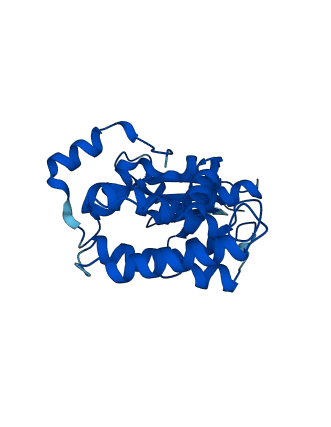
Descriptions
The autoinhibited protein was predicted that may have potential autoinhibitory elements via cis-regPred.
Autoinhibitory domains (AIDs)
Target domain |
|
Relief mechanism |
|
Assay |
cis-regPred |
Accessory elements
No accessory elements
Autoinhibited structure

Activated structure
1 structures for O45405
| Entry ID | Method | Resolution | Chain | Position | Source |
|---|---|---|---|---|---|
| AF-O45405-F1 | Predicted | AlphaFoldDB |
No variants for O45405
| Variant ID(s) | Position | Change | Description | Diseaes Association | Provenance |
|---|---|---|---|---|---|
| No variants for O45405 | |||||
No associated diseases with O45405
No regional properties for O45405
| Type | Name | Position | InterPro Accession |
|---|---|---|---|
| No domain, repeats, and functional sites for O45405 | |||
Functions
11 GO annotations of cellular component
| Name | Definition |
|---|---|
| apical plasma membrane | The region of the plasma membrane located at the apical end of the cell. |
| chloride channel complex | An ion channel complex through which chloride ions pass. |
| cytoplasm | The contents of a cell excluding the plasma membrane and nucleus, but including other subcellular structures. |
| endoplasmic reticulum | The irregular network of unit membranes, visible only by electron microscopy, that occurs in the cytoplasm of many eukaryotic cells. The membranes form a complex meshwork of tubular channels, which are often expanded into slitlike cavities called cisternae. The ER takes two forms, rough (or granular), with ribosomes adhering to the outer surface, and smooth (with no ribosomes attached). |
| Golgi apparatus | A membrane-bound cytoplasmic organelle of the endomembrane system that further processes the core oligosaccharides (e.g. N-glycans) added to proteins in the endoplasmic reticulum and packages them into membrane-bound vesicles. The Golgi apparatus operates at the intersection of the secretory, lysosomal, and endocytic pathways. |
| Golgi membrane | The lipid bilayer surrounding any of the compartments of the Golgi apparatus. |
| lysosomal membrane | The lipid bilayer surrounding the lysosome and separating its contents from the cell cytoplasm. |
| lysosome | A small lytic vacuole that has cell cycle-independent morphology found in most animal cells and that contains a variety of hydrolases, most of which have their maximal activities in the pH range 5-6. The contained enzymes display latency if properly isolated. About 40 different lysosomal hydrolases are known and lysosomes have a great variety of morphologies and functions. |
| membrane | A lipid bilayer along with all the proteins and protein complexes embedded in it an attached to it. |
| muscle cell projection membrane | The portion of the plasma membrane surrounding a muscle cell projection. |
| striated muscle dense body | A vinculin-containing myofibril attachment structure of striated muscle that connects sarcomeres to the extracellular matrix. In nematode body wall muscle, the dense body performs the dual role of Z-disk and costamere. |
2 GO annotations of molecular function
| Name | Definition |
|---|---|
| chloride channel activity | Enables the facilitated diffusion of a chloride (by an energy-independent process) involving passage through a transmembrane aqueous pore or channel without evidence for a carrier-mediated mechanism. |
| voltage-gated ion channel activity | Enables the transmembrane transfer of an ion by a voltage-gated channel. An ion is an atom or group of atoms carrying an electric charge by virtue of having gained or lost one or more electrons. A voltage-gated channel is a channel whose open state is dependent on the voltage across the membrane in which it is embedded. |
2 GO annotations of biological process
| Name | Definition |
|---|---|
| chloride transport | The directed movement of chloride into, out of or within a cell, or between cells, by means of some agent such as a transporter or pore. |
| regulation of ion transmembrane transport | Any process that modulates the frequency, rate or extent of the directed movement of ions from one side of a membrane to the other. |
| 10 | 20 | 30 | 40 | 50 | 60 |
| MPTFSLWLPA | GSNNVHPCGD | PYAHHLFMRC | LYHAKHDPTM | KFDVKTTNVN | KTSQEFKNTG |
| 70 | 80 | 90 | 100 | 110 | 120 |
| LRRMPGISAE | ESGETQTFET | EDDILDFLEY | LKPERGDDEE | AENATCDLFR | QFARFVKDVE |
| 130 | 140 | 150 | 160 | 170 | 180 |
| HRDTAFNTEL | LRLDKYLSEQ | ETKFLISDDV | THIDCLVLTR | LHSIRVAAKM | LKNYEIPADL |
| 190 | 200 | 210 | 220 | 230 | |
| SHVLDYLKAG | YATEMFRVSC | PSDQEIVLHW | TELKDTPRLS | AKDRAKLVRE | EPVFSFSV |