Q9VGP6
Gene name |
mgr (CG6719) |
Protein name |
Prefoldin subunit 3 |
Names |
Protein merry-go-round, von Hippel-Lindau-binding protein 1 |
Species |
Drosophila melanogaster (Fruit fly) |
KEGG Pathway |
dme:Dmel_CG6719 |
EC number |
|
Protein Class |
|
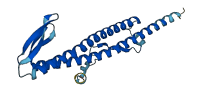
Descriptions
The autoinhibited protein was predicted that may have potential autoinhibitory elements via cis-regPred.
Autoinhibitory domains (AIDs)
Target domain |
|
Relief mechanism |
|
Assay |
cis-regPred |
Accessory elements
No accessory elements
Autoinhibited structure

Activated structure
1 structures for Q9VGP6
| Entry ID | Method | Resolution | Chain | Position | Source |
|---|---|---|---|---|---|
| AF-Q9VGP6-F1 | Predicted | AlphaFoldDB |
No variants for Q9VGP6
| Variant ID(s) | Position | Change | Description | Diseaes Association | Provenance |
|---|---|---|---|---|---|
| No variants for Q9VGP6 | |||||
No associated diseases with Q9VGP6
No regional properties for Q9VGP6
| Type | Name | Position | InterPro Accession |
|---|---|---|---|
| No domain, repeats, and functional sites for Q9VGP6 | |||
3 GO annotations of cellular component
| Name | Definition |
|---|---|
| cytoplasm | The contents of a cell excluding the plasma membrane and nucleus, but including other subcellular structures. |
| polysome | A multiribosomal structure representing a linear array of ribosomes held together by messenger RNA. They represent the active complexes in cellular protein synthesis and are able to incorporate amino acids into polypeptides both in vivo and in vitro. |
| prefoldin complex | A multisubunit chaperone that is capable of delivering unfolded proteins to cytosolic chaperonin, which it acts as a cofactor for. In humans, the complex is a heterohexamer of two PFD-alpha and four PFD-beta type subunits. In Saccharomyces cerevisiae, it also acts in the nucleus to regulate the rate of elongation by RNA polymerase II via a direct effect on histone dynamics. |
2 GO annotations of molecular function
| Name | Definition |
|---|---|
| beta-tubulin binding | Binding to the microtubule constituent protein beta-tubulin. |
| tubulin binding | Binding to monomeric or multimeric forms of tubulin, including microtubules. |
7 GO annotations of biological process
| Name | Definition |
|---|---|
| centrosome cycle | The cell cycle process in which centrosome duplication and separation takes place. The centrosome cycle can operate with a considerable degree of independence from other processes of the cell cycle. |
| establishment or maintenance of neuroblast polarity | Any cellular process that results in the specification, formation or maintenance of the apicobasal polarity of a neuroblast cell, a progenitor of the central nervous system. |
| meiotic spindle assembly | The aggregation, arrangement and bonding together of a set of components to form the spindle that contributes to the process of meiosis. |
| microtubule-based process | Any cellular process that depends upon or alters the microtubule cytoskeleton, that part of the cytoskeleton comprising microtubules and their associated proteins. |
| mitotic spindle assembly | Mitotic bipolar spindle assembly begins with spindle microtubule nucleation from the separated spindle pole body, includes spindle elongation during prometaphase, and is complete when all kinetochores are stably attached the spindle, and the spindle assembly checkpoint is satisfied. |
| protein folding | The process of assisting in the covalent and noncovalent assembly of single chain polypeptides or multisubunit complexes into the correct tertiary structure. |
| tubulin complex assembly | The aggregation and bonding together of alpha- and beta-tubulin to form a tubulin heterodimer. |
No homologous proteins in AiPD
| UniProt AC | Gene Name | Protein Name | Species | Evidence Code |
|---|---|---|---|---|
| No homologous proteins | ||||
| 10 | 20 | 30 | 40 | 50 | 60 |
| MTGIMDSVEM | PKLPENQKTF | AGIPEAVFLE | EIDTFMSQPE | NENCEKVLQR | LDEQHGKYRF |
| 70 | 80 | 90 | 100 | 110 | 120 |
| MACNLEARRR | KLKSQIPDLE | RSLEMVNVLR | KEDEERETQF | LLSDQVFIKT | LVPPTKTVYL |
| 130 | 140 | 150 | 160 | 170 | 180 |
| WLGASVMLEY | PLDEAEALLN | QNITSAVGNL | KSVEHDQDFL | RDQITTTEVN | MARVYNWGVK |
| 190 | |||||
| KRQAATKTTA | TTPS |