Q9CIX2
Gene name |
ung (LL0234, L32653) |
Protein name |
Uracil-DNA glycosylase |
Names |
UDG |
Species |
Lactococcus lactis subsp lactis (strain IL1403) (Streptococcus lactis) |
KEGG Pathway |
lla:L32653 |
EC number |
3.2.2.27: Hydrolyzing N-glycosyl compounds |
Protein Class |
|
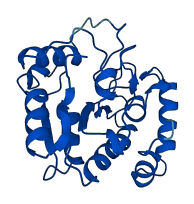
Descriptions
The autoinhibited protein was predicted that may have potential autoinhibitory elements via cis-regPred.
Autoinhibitory domains (AIDs)
Target domain |
|
Relief mechanism |
|
Assay |
cis-regPred |
Accessory elements
No accessory elements
Autoinhibited structure

Activated structure
1 structures for Q9CIX2
| Entry ID | Method | Resolution | Chain | Position | Source |
|---|---|---|---|---|---|
| AF-Q9CIX2-F1 | Predicted | AlphaFoldDB |
No variants for Q9CIX2
| Variant ID(s) | Position | Change | Description | Diseaes Association | Provenance |
|---|---|---|---|---|---|
| No variants for Q9CIX2 | |||||
No associated diseases with Q9CIX2
Functions
| Description | ||
|---|---|---|
| EC Number | 3.2.2.27 | Hydrolyzing N-glycosyl compounds |
| Subcellular Localization |
|
|
| PANTHER Family | ||
| PANTHER Subfamily | ||
| PANTHER Protein Class | ||
| PANTHER Pathway Category | No pathway information available | |
1 GO annotations of cellular component
| Name | Definition |
|---|---|
| cytoplasm | The contents of a cell excluding the plasma membrane and nucleus, but including other subcellular structures. |
1 GO annotations of molecular function
| Name | Definition |
|---|---|
| uracil DNA N-glycosylase activity | Catalysis of the cleavage of the N-C1' glycosidic bond between the damaged DNA base and the deoxyribose sugar, releasing a free base and leaving an apyrimidinic (AP) site. Enzymes with this activity recognize and remove uracil bases in DNA that result from the deamination of cytosine or the misincorporation of dUTP opposite an adenine. |
1 GO annotations of biological process
| Name | Definition |
|---|---|
| base-excision repair | In base excision repair, an altered base is removed by a DNA glycosylase enzyme, followed by excision of the resulting sugar phosphate. The small gap left in the DNA helix is filled in by the sequential action of DNA polymerase and DNA ligase. |
No homologous proteins in AiPD
| UniProt AC | Gene Name | Protein Name | Species | Evidence Code |
|---|---|---|---|---|
| No homologous proteins | ||||
| 10 | 20 | 30 | 40 | 50 | 60 |
| MKKTDWSQPL | RNRLAEDYFP | KMIEFINQTY | QEGKVYPPEN | QIFRAIELTP | LAQTKVIIVG |
| 70 | 80 | 90 | 100 | 110 | 120 |
| QDPYPQPGKA | QGLAFSYPAT | FKVNRPDSIV | NIQKELREEG | FSKDDSDLTA | WAEQGVLLLN |
| 130 | 140 | 150 | 160 | 170 | 180 |
| AVLTVPEFAS | NAHAGKIWEP | LTDEIIKIAS | DDERPKVFIL | WGGFARKKAK | LIDGSKHLIL |
| 190 | 200 | 210 | |||
| EAAHPSPLSA | SRGFFGSHPF | SKTNEFLVES | GQSPIDWSK |