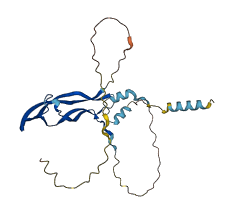
| activation of protein kinase activity |
Any process that initiates the activity of an inactive protein kinase. |
| activation of protein kinase B activity |
Any process that initiates the activity of the inactive enzyme protein kinase B. |
| cell chemotaxis |
The directed movement of a motile cell guided by a specific chemical concentration gradient. Movement may be towards a higher concentration (positive chemotaxis) or towards a lower concentration (negative chemotaxis). |
| cellular response to mycophenolic acid |
Any process that results in a change in state or activity of a cell (in terms of movement, secretion, enzyme production, gene expression, etc.) as a result of a mycophenolic acid stimulus. |
| embryonic placenta development |
The embryonically driven process whose specific outcome is the progression of the placenta over time, from its formation to the mature structure. The placenta is an organ of metabolic interchange between fetus and mother, partly of embryonic origin and partly of maternal origin. |
| heart development |
The process whose specific outcome is the progression of the heart over time, from its formation to the mature structure. The heart is a hollow, muscular organ, which, by contracting rhythmically, keeps up the circulation of the blood. |
| metanephric glomerular mesangial cell development |
The process whose specific outcome is the progression of a glomerular mesangial cell in the metanephros over time, from its formation to the mature structure. |
| monocyte chemotaxis |
The movement of a monocyte in response to an external stimulus. |
| negative regulation of DNA-templated transcription |
Any process that stops, prevents, or reduces the frequency, rate or extent of cellular DNA-templated transcription. |
| negative regulation of phosphatidylinositol biosynthetic process |
Any process that decreases the frequency, rate or extent of the chemical reactions and pathways resulting in the formation of phosphatidylinositol. |
| negative regulation of platelet activation |
Any process that decreases the rate or frequency of platelet activation. Platelet activation is a series of progressive, overlapping events triggered by exposure of the platelets to subendothelial tissue. |
| paracrine signaling |
The transfer of information from one cell to another, where the signal travels from the signal-producing cell to the receiving cell by passive diffusion or bulk flow in intercellular fluid. The signaling cell and the receiving cell are usually in the vicinity of each other. |
| peptidyl-serine phosphorylation |
The phosphorylation of peptidyl-serine to form peptidyl-O-phospho-L-serine. |
| peptidyl-tyrosine phosphorylation |
The phosphorylation of peptidyl-tyrosine to form peptidyl-O4'-phospho-L-tyrosine. |
| platelet-derived growth factor receptor signaling pathway |
The series of molecular signals initiated by a ligand binding to a platelet-derived growth factor receptor on the surface of a target cell, and ending with the regulation of a downstream cellular process, e.g. transcription. |
| positive regulation of blood vessel endothelial cell migration |
Any process that activates or increases the frequency, rate or extent of the migration of the endothelial cells of blood vessels. |
| positive regulation of calcium ion import |
Any process that increases the rate, frequency, or extent of the directed movement of calcium ions into a cell or organelle. |
| positive regulation of cell division |
Any process that activates or increases the frequency, rate or extent of cell division. |
| positive regulation of cell population proliferation |
Any process that activates or increases the rate or extent of cell proliferation. |
| positive regulation of chemotaxis |
Any process that activates or increases the frequency, rate or extent of the directed movement of a motile cell or organism in response to a specific chemical concentration gradient. |
| positive regulation of cyclin-dependent protein serine/threonine kinase activity |
Any process that activates or increases the frequency, rate or extent of CDK activity. |
| positive regulation of DNA biosynthetic process |
Any process that activates or increases the frequency, rate or extent of DNA biosynthetic process. |
| positive regulation of DNA-templated transcription |
Any process that activates or increases the frequency, rate or extent of cellular DNA-templated transcription. |
| positive regulation of endothelial cell proliferation |
Any process that activates or increases the rate or extent of endothelial cell proliferation. |
| positive regulation of ERK1 and ERK2 cascade |
Any process that activates or increases the frequency, rate or extent of signal transduction mediated by the ERK1 and ERK2 cascade. |
| positive regulation of fibroblast proliferation |
Any process that activates or increases the frequency, rate or extent of multiplication or reproduction of fibroblast cells. |
| positive regulation of glomerular filtration |
Any process that activates or increases the frequency, rate or extent of glomerular filtration. Glomerular filtration is the processs whereby blood is filtered by the glomerulus into the renal tubule. |
| positive regulation of glomerular mesangial cell proliferation |
Any process that increases the frequency, rate or extent of glomerular mesangial cell proliferation. |
| positive regulation of hyaluronan biosynthetic process |
Any process that activates or increases the frequency, rate or extent of hyaluronan biosynthetic process. |
| positive regulation of MAP kinase activity |
Any process that activates or increases the frequency, rate or extent of MAP kinase activity. |
| positive regulation of MAPK cascade |
Any process that activates or increases the frequency, rate or extent of signal transduction mediated by the MAPK cascade. |
| positive regulation of metanephric mesenchymal cell migration |
Any process that activates or increases the frequency, rate or extent of metanephric mesenchymal cell migration. |
| positive regulation of metanephric mesenchymal cell migration by platelet-derived growth factor receptor-beta signaling pathway |
Any process that increases the frequency, rate or extent of metanephric mesenchymal cell migration resulting from the platelet-derived growth factor receptor-beta signaling pathway. |
| positive regulation of mitotic nuclear division |
Any process that activates or increases the frequency, rate or extent of mitosis. |
| positive regulation of phosphatidylinositol 3-kinase activity |
Any process that activates or increases the frequency, rate or extent of phosphatidylinositol 3-kinase activity. |
| positive regulation of phosphatidylinositol 3-kinase signaling |
Any process that activates or increases the frequency, rate or extent of signal transduction mediated by the phosphatidylinositol 3-kinase cascade. |
| positive regulation of protein autophosphorylation |
Any process that activates or increases the frequency, rate or extent of the phosphorylation by a protein of one or more of its own residues. |
| positive regulation of protein tyrosine kinase activity |
Any process that increases the rate, frequency, or extent of protein tyrosine kinase activity. |
| positive regulation of reactive oxygen species metabolic process |
Any process that activates or increases the frequency, rate or extent of reactive oxygen species metabolic process. |
| positive regulation of smooth muscle cell migration |
Any process that activates, maintains or increases the frequency, rate or extent of smooth muscle cell migration. |
| positive regulation of smooth muscle cell proliferation |
Any process that activates or increases the rate or extent of smooth muscle cell proliferation. |
| positive regulation of vascular associated smooth muscle cell proliferation |
Any process that activates or increases the frequency, rate or extent of vascular smooth muscle cell proliferation. |
| protein phosphorylation |
The process of introducing a phosphate group on to a protein. |
| reactive oxygen species metabolic process |
The chemical reactions and pathways involving a reactive oxygen species, any molecules or ions formed by the incomplete one-electron reduction of oxygen. They contribute to the microbicidal activity of phagocytes, regulation of signal transduction and gene expression, and the oxidative damage to biopolymers. |
| response to wounding |
Any process that results in a change in state or activity of a cell or an organism (in terms of movement, secretion, enzyme production, gene expression, etc.) as a result of a stimulus indicating damage to the organism. |