Q7SEY9
Gene name |
ero-1 (NCU02074) |
Protein name |
Endoplasmic reticulum oxidoreductin-1 |
Names |
|
Species |
Neurospora crassa (strain ATCC 24698 / 74-OR23-1A / CBS 708.71 / DSM 1257 / FGSC 987) |
KEGG Pathway |
ncr:NCU02074 |
EC number |
|
Protein Class |
|
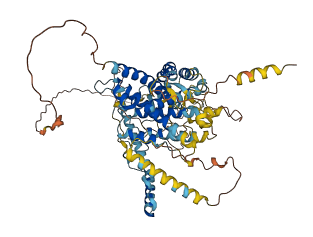
Descriptions
The autoinhibited protein was predicted that may have potential autoinhibitory elements via cis-regPred.
Autoinhibitory domains (AIDs)
Target domain |
|
Relief mechanism |
|
Assay |
cis-regPred |
Accessory elements
No accessory elements
Autoinhibited structure

Activated structure
1 structures for Q7SEY9
| Entry ID | Method | Resolution | Chain | Position | Source |
|---|---|---|---|---|---|
| AF-Q7SEY9-F1 | Predicted | AlphaFoldDB |
No variants for Q7SEY9
| Variant ID(s) | Position | Change | Description | Diseaes Association | Provenance |
|---|---|---|---|---|---|
| No variants for Q7SEY9 | |||||
No associated diseases with Q7SEY9
No regional properties for Q7SEY9
| Type | Name | Position | InterPro Accession |
|---|---|---|---|
| No domain, repeats, and functional sites for Q7SEY9 | |||
1 GO annotations of cellular component
| Name | Definition |
|---|---|
| endoplasmic reticulum membrane | The lipid bilayer surrounding the endoplasmic reticulum. |
3 GO annotations of molecular function
| Name | Definition |
|---|---|
| FAD binding | Binding to the oxidized form, FAD, of flavin-adenine dinucleotide, the coenzyme or the prosthetic group of various flavoprotein oxidoreductase enzymes. |
| protein-disulfide reductase activity | Catalysis of the reaction: a protein with reduced sulfide groups = a protein with oxidized disulfide bonds. |
| thiol oxidase activity | Catalysis of the reaction: 4 R'C(R)SH + O2 = 2 R'C(R)S-S(R)CR' + 2 H2O2. |
1 GO annotations of biological process
| Name | Definition |
|---|---|
| protein folding in endoplasmic reticulum | A protein folding process that takes place in the endoplasmic reticulum (ER). Secreted, plasma membrane and organelle proteins are folded in the ER, assisted by chaperones and foldases (protein disulphide isomerases), and additional factors required for optimal folding (ATP, Ca2+ and an oxidizing environment to allow disulfide bond formation). |
No homologous proteins in AiPD
| UniProt AC | Gene Name | Protein Name | Species | Evidence Code |
|---|---|---|---|---|
| No homologous proteins | ||||
| 10 | 20 | 30 | 40 | 50 | 60 |
| MKPASRLFYL | SLFALWSPEA | QCKSDESCAI | SPKAIVSDAC | ASYSTLEQLN | RDIKPALEDL |
| 70 | 80 | 90 | 100 | 110 | 120 |
| TRTTDFFSHY | RLNLFNKECP | FWNDENGMCG | NIACAVETLD | NEEDIPEVWR | AKELGKLEGP |
| 130 | 140 | 150 | 160 | 170 | 180 |
| RAKHPGKSVQ | KEEPKRPLQG | KLGEDVGESC | VVEYDDECDD | RDYCVPDDEG | ASSKGDYVSL |
| 190 | 200 | 210 | 220 | 230 | 240 |
| LRNPERFTGY | AGDGAKQVWD | AIYRENCFQK | SSFPKSASLG | DTYSVPKNPA | AQDFRAVMQA |
| 250 | 260 | 270 | 280 | 290 | 300 |
| AGRQHMLEQQ | REQNPLVPFV | TKTGLESEDE | CLEKRVFYKI | VSGMHASIST | HLCWDFLNQT |
| 310 | 320 | 330 | 340 | 350 | 360 |
| TGQWQPNLSC | YINRLHKFPE | RISNLYFNYA | LLTRAVAKLG | PYLSSHEEYT | FCTGDPAQDA |
| 370 | 380 | 390 | 400 | 410 | 420 |
| DTRAKVLAVT | SKAANTVPGP | VFDESIMFKN | GEGPSLKEDF | RNRFRNISRL | MDCVGCDKCR |
| 430 | 440 | 450 | 460 | 470 | 480 |
| LWGKLQTAGY | GTALKVLFEF | ANNDTSATSS | ETDEIPFKLK | RTELVALFNT | YARLSSSLDA |
| 490 | 500 | 510 | 520 | 530 | 540 |
| IQKFRAMVEE | SEEGQQPQSH | EQIEGSENSG | AHHIPDRAKK | PRHVIVPTPD | AADHAEASDT |
| 550 | 560 | 570 | 580 | 590 | 600 |
| NTATTAVDEA | KAAGVTPAPK | VEHQQQVEVD | NNDDDDDDDE | FHEFQRQPQQ | PDTDPNFVYK |
| 610 | 620 | 630 | 640 | 650 | 660 |
| KRTLKDDFEN | EFRAVFAAFK | LVIRSYLNLP | ALIYEITITE | LKRFWQFYVG | LPVMPRTWEF |
| RRPSLDEL |