Q7N227
Gene name |
hscB |
Protein name |
Co-chaperone protein HscB |
Names |
Hsc20 |
Species |
Photorhabdus laumondii subsp. laumondii (strain DSM 15139 / CIP 105565 / TT01) |
KEGG Pathway |
plu:plu3280 |
EC number |
|
Protein Class |
|
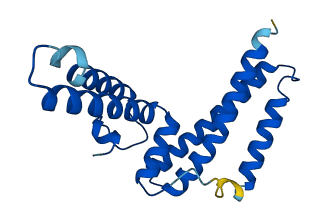
Descriptions
The autoinhibited protein was predicted that may have potential autoinhibitory elements via cis-regPred.
Autoinhibitory domains (AIDs)
Target domain |
|
Relief mechanism |
|
Assay |
cis-regPred |
Accessory elements
No accessory elements
Autoinhibited structure

Activated structure
1 structures for Q7N227
| Entry ID | Method | Resolution | Chain | Position | Source |
|---|---|---|---|---|---|
| AF-Q7N227-F1 | Predicted | AlphaFoldDB |
No variants for Q7N227
| Variant ID(s) | Position | Change | Description | Diseaes Association | Provenance |
|---|---|---|---|---|---|
| No variants for Q7N227 | |||||
No associated diseases with Q7N227
No GO annotations of cellular component
| Name | Definition |
|---|---|
| No GO annotations for cellular component |
2 GO annotations of molecular function
| Name | Definition |
|---|---|
| ATPase activator activity | Binds to and increases the activity of an ATP hydrolysis activity. |
| chaperone binding | Binding to a chaperone protein, a class of proteins that bind to nascent or unfolded polypeptides and ensure correct folding or transport. |
3 GO annotations of biological process
| Name | Definition |
|---|---|
| [2Fe-2S] cluster assembly | The incorporation of two iron atoms and two sulfur atoms into an iron-sulfur cluster. |
| protein complex oligomerization | The process of creating protein oligomers, compounds composed of a small number, usually between three and ten, of component monomers; protein oligomers may be composed of different or identical monomers. Oligomers may be formed by the polymerization of a number of monomers or the depolymerization of a large protein polymer. |
| protein folding | The process of assisting in the covalent and noncovalent assembly of single chain polypeptides or multisubunit complexes into the correct tertiary structure. |
No homologous proteins in AiPD
| UniProt AC | Gene Name | Protein Name | Species | Evidence Code |
|---|---|---|---|---|
| No homologous proteins | ||||
| 10 | 20 | 30 | 40 | 50 | 60 |
| MDYFTLFGLP | ARYTVDREQL | ASCYQELQRQ | FHPDRFASQP | EREKTLALQQ | AVTINDGYQT |
| 70 | 80 | 90 | 100 | 110 | 120 |
| LKHPLKRAEY | MLSLHGFDLA | NEQHTMNDNA | FLMEQLMLRE | ELECIADKAN | PEVALADFAA |
| 130 | 140 | 150 | 160 | 170 | |
| RLNGMIKTRS | QLMVQQLDEQ | QWEQAADTVR | KLRFLDKLQQ | QVEQLEERLL | DDF |