Q6FXR8
Gene name |
ATG8 (AUT7, CAGL0A04675g) |
Protein name |
Autophagy-related protein 8 |
Names |
Autophagy-related ubiquitin-like modifier ATG8 |
Species |
Candida glabrata (strain ATCC 2001 / CBS 138 / JCM 3761 / NBRC 0622 / NRRL Y-65) (Yeast) (Torulopsis glabrata) |
KEGG Pathway |
cgr:CAGL0A04675g |
EC number |
|
Protein Class |
|
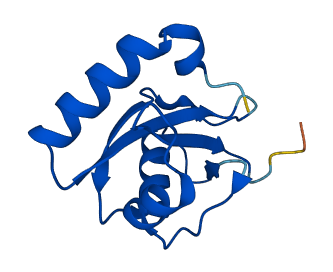
Descriptions
The autoinhibited protein was predicted that may have potential autoinhibitory elements via cis-regPred.
Autoinhibitory domains (AIDs)
Target domain |
|
Relief mechanism |
|
Assay |
cis-regPred |
Accessory elements
No accessory elements
Autoinhibited structure

Activated structure
1 structures for Q6FXR8
| Entry ID | Method | Resolution | Chain | Position | Source |
|---|---|---|---|---|---|
| AF-Q6FXR8-F1 | Predicted | AlphaFoldDB |
No variants for Q6FXR8
| Variant ID(s) | Position | Change | Description | Diseaes Association | Provenance |
|---|---|---|---|---|---|
| No variants for Q6FXR8 | |||||
No associated diseases with Q6FXR8
No regional properties for Q6FXR8
| Type | Name | Position | InterPro Accession |
|---|---|---|---|
| No domain, repeats, and functional sites for Q6FXR8 | |||
8 GO annotations of cellular component
| Name | Definition |
|---|---|
| autophagosome membrane | The lipid bilayer surrounding an autophagosome, a double-membrane-bounded vesicle in which endogenous cellular material is sequestered. |
| cytoplasmic vesicle | A vesicle found in the cytoplasm of a cell. |
| cytosol | The part of the cytoplasm that does not contain organelles but which does contain other particulate matter, such as protein complexes. |
| extrinsic component of membrane | The component of a membrane consisting of gene products and protein complexes that are loosely bound to one of its surfaces, but not integrated into the hydrophobic region. |
| fungal-type vacuole membrane | The lipid bilayer surrounding a vacuole, the shape of which correlates with cell cycle phase. The membrane separates its contents from the cytoplasm of the cell. An example of this structure is found in Saccharomyces cerevisiae. |
| mitochondrial membrane | Either of the lipid bilayers that surround the mitochondrion and form the mitochondrial envelope. |
| phagophore assembly site | Punctate structures proximal to the endoplasmic reticulum which are the sites where the Atg machinery assembles upon autophagy induction. |
| vacuole-isolation membrane contact site | An organelle membrane contact site formed at the junction of the vacuolar membrane and the isolation membrane or phagophore in response to starvation or other stresses, leading to the formation of the autophagosome. |
2 GO annotations of molecular function
| Name | Definition |
|---|---|
| phosphatidylethanolamine binding | Binding to a phosphatidylethanolamine, a class of glycerophospholipids in which a phosphatidyl group is esterified to the hydroxyl group of ethanolamine. |
| protein tag | A molecular function exhibited by a protein that is covalently attached (AKA tagged or conjugated) to another protein where it acts as a marker, recognized by the cellular apparatus to target the tagged protein for some cellular process such as modification, sequestration, transport or degradation. |
12 GO annotations of biological process
| Name | Definition |
|---|---|
| autophagy of mitochondrion | The autophagic process in which mitochondria are delivered to a type of vacuole and degraded in response to changing cellular conditions. |
| cytoplasm to vacuole transport by the Cvt pathway | A cytoplasm to vacuole targeting pathway that uses machinery common with autophagy. The Cvt vesicle is formed when the receptor protein, Atg19, binds to the complexes of the target protein (aminopeptidase or alpha-mannosidase homododecamers), forming the Cvt complex. Atg11 binds to Atg9 and transports the Cvt complex to the pre-autophagosome (PAS). The phagophore membrane expands around the Cvt complex (excluding bulk cytoplasm) forming the Cvt vesicle. This pathway is mostly observed in yeast. |
| endoplasmic reticulum to Golgi vesicle-mediated transport | The directed movement of substances from the endoplasmic reticulum (ER) to the Golgi, mediated by COP II vesicles. Small COP II coated vesicles form from the ER and then fuse directly with the cis-Golgi. Larger structures are transported along microtubules to the cis-Golgi. |
| late nucleophagy | A type of nucleophagy, distinct from piecemeal microautophagy of the nucleus (PNM) where the nuclear material is delivered to the vacuole/lysosome for breakdown and recycling later than observed for PNM. |
| membrane fusion | The membrane organization process that joins two lipid bilayers to form a single membrane. |
| piecemeal microautophagy of the nucleus | Degradation of a cell nucleus by lysosomal microautophagy. |
| protein localization to phagophore assembly site | Any process in which a protein is transported to, or maintained at, the phagophore assembly site (PAS). |
| protein targeting to vacuole involved in autophagy | The process of directing proteins towards the vacuole using signals contained within the protein, occurring as part of autophagy, the process in which cells digest parts of their own cytoplasm. |
| protein-containing complex localization | A localization process that acts on a protein complex; the complex is transported to, or maintained in, a specific location. |
| regulation of macroautophagy | Any process that modulates the frequency, rate or extent of macroautophagy. |
| regulation of membrane invagination | Any process that modulates the frequency, rate or extent of membrane invagination. |
| reticulophagy | The selective autohagy process in which parts of the endoplasmic reticulum are loaded into autophagosomes, delivered to the vacuole, and degraded in response to changing cellular conditions. |
No homologous proteins in AiPD
| UniProt AC | Gene Name | Protein Name | Species | Evidence Code |
|---|---|---|---|---|
| No homologous proteins | ||||
| 10 | 20 | 30 | 40 | 50 | 60 |
| MKSSFKSEYP | FEKRKAESER | ISEKFQNRIP | VICEKAEKSD | IPEVDKRKYL | VPADLTVGQF |
| 70 | 80 | 90 | 100 | 110 | |
| VYVIRKRIML | PPEKAIFIFV | NDTLPPTASL | MSQVYQEHKD | KDGFLYVTYS | GENTFGYQ |