Q6FXD0
Gene name |
DPB4 (CAGL0B01903g) |
Protein name |
DNA polymerase epsilon subunit D |
Names |
DNA polymerase II subunit D |
Species |
Candida glabrata (strain ATCC 2001 / CBS 138 / JCM 3761 / NBRC 0622 / NRRL Y-65) (Yeast) (Torulopsis glabrata) |
KEGG Pathway |
cgr:CAGL0B01903g |
EC number |
|
Protein Class |
|
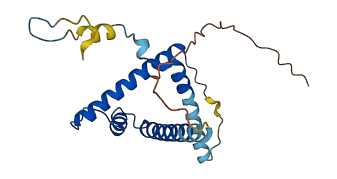
Descriptions
The autoinhibited protein was predicted that may have potential autoinhibitory elements via cis-regPred.
Autoinhibitory domains (AIDs)
Target domain |
|
Relief mechanism |
|
Assay |
cis-regPred |
Accessory elements
No accessory elements
Autoinhibited structure

Activated structure
1 structures for Q6FXD0
| Entry ID | Method | Resolution | Chain | Position | Source |
|---|---|---|---|---|---|
| AF-Q6FXD0-F1 | Predicted | AlphaFoldDB |
No variants for Q6FXD0
| Variant ID(s) | Position | Change | Description | Diseaes Association | Provenance |
|---|---|---|---|---|---|
| No variants for Q6FXD0 | |||||
No associated diseases with Q6FXD0
No regional properties for Q6FXD0
| Type | Name | Position | InterPro Accession |
|---|---|---|---|
| No domain, repeats, and functional sites for Q6FXD0 | |||
3 GO annotations of cellular component
| Name | Definition |
|---|---|
| CHRAC | An ISWI complex that contains an ATPase subunit of the ISWI family (SNF2H in mammals, Isw2 in S. cerevisiae), an ACF1 homolog, and additional small histone fold subunits (generally two of these, but Xenopus has only one and some additional non-conserved subunits). CHRAC plays roles in the regulation of RNA polymerase II transcription and in DNA replication and repair. |
| epsilon DNA polymerase complex | A heterotetrameric DNA polymerase complex that catalyzes processive DNA synthesis in the absence of PCNA, but is further stimulated in the presence of PCNA. The complex contains a large catalytic subunit and three small subunits, and is best characterized in Saccharomyces, in which the subunits are named Pol2p, Dpb2p, Dpb3p, and Dpb4p. Some evidence suggests that DNA polymerase epsilon is the leading strand polymerase; it is also involved in nucleotide-excision repair and mismatch repair. |
| nuclear replication fork | The Y-shaped region of a nuclear replicating DNA molecule, resulting from the separation of the DNA strands and in which the synthesis of new strands takes place. Also includes associated protein complexes. |
6 GO annotations of molecular function
| Name | Definition |
|---|---|
| DNA polymerase processivity factor activity | An enzyme regulator activity that increases the processivity of polymerization by DNA polymerase, by allowing the polymerase to move rapidly along DNA while remaining topologically bound to it. |
| double-stranded DNA binding | Binding to double-stranded DNA. |
| nucleosomal DNA binding | Binding to the DNA portion of a nucleosome. |
| protein heterodimerization activity | Binding to a nonidentical protein to form a heterodimer. |
| single-stranded DNA 3'-5' exodeoxyribonuclease activity | Catalysis of the sequential cleavage of mononucleotides from a free 3' terminus of a single-stranded DNA molecule. |
| single-stranded DNA binding | Binding to single-stranded DNA. |
3 GO annotations of biological process
| Name | Definition |
|---|---|
| chromatin remodeling | A dynamic process of chromatin reorganization resulting in changes to chromatin structure. These changes allow DNA metabolic processes such as transcriptional regulation, DNA recombination, DNA repair, and DNA replication. |
| error-prone translesion synthesis | The conversion of DNA-damage induced single-stranded gaps into large molecular weight DNA after replication by using a specialized DNA polymerase or replication complex to insert a defined nucleotide across the lesion. This process does not remove the replication-blocking lesions and causes an increase in the endogenous mutation level. For example, in E. coli, a low fidelity DNA polymerase, pol V, copies lesions that block replication fork progress. This produces mutations specifically targeted to DNA template damage sites, but it can also produce mutations at undamaged sites. |
| leading strand elongation | The process in which an existing DNA strand is extended continuously in a 5' to 3' direction by activities including the addition of nucleotides to the 3' end of the strand, complementary to an existing template, as part of DNA replication. Leading strand elongation proceeds in the same direction as the replication fork. |
No homologous proteins in AiPD
| UniProt AC | Gene Name | Protein Name | Species | Evidence Code |
|---|---|---|---|---|
| No homologous proteins | ||||
| 10 | 20 | 30 | 40 | 50 | 60 |
| MPPKGWRKDA | QGNYPTTSYM | KEQENVTMQD | LLFPRSVIMA | LAKEVPEMQQ | QQVQVQAAEK |
| 70 | 80 | 90 | 100 | 110 | 120 |
| GEPVEKTPAK | KLVVTKDASM | ALQHSATVFV | NHLLMYAREL | AKEQDRRSCN | VDDILNALEH |
| 130 | 140 | 150 | 160 | 170 | 180 |
| MGHPGLKPLV | ANRLDDYQEA | LEWKKQLKAQ | LQILNGEAEE | EPNELGTYDH | DNETDDEEIR |
| 190 | |||||
| DEPEKKLKVE | P |