Q6CUD2
Gene name |
SOH1 (MED31, KLLA0C05786g) |
Protein name |
Mediator of RNA polymerase II transcription subunit 31 |
Names |
Mediator complex subunit 31 |
Species |
Kluyveromyces lactis (strain ATCC 8585 / CBS 2359 / DSM 70799 / NBRC 1267 / NRRL Y-1140 / WM37) (Yeast) (Candida sphaerica) |
KEGG Pathway |
kla:KLLA0_C05786g |
EC number |
|
Protein Class |
|
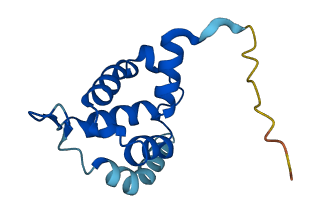
Descriptions
The autoinhibited protein was predicted that may have potential autoinhibitory elements via cis-regPred.
Autoinhibitory domains (AIDs)
Target domain |
|
Relief mechanism |
|
Assay |
cis-regPred |
Accessory elements
No accessory elements
Autoinhibited structure

Activated structure
1 structures for Q6CUD2
| Entry ID | Method | Resolution | Chain | Position | Source |
|---|---|---|---|---|---|
| AF-Q6CUD2-F1 | Predicted | AlphaFoldDB |
No variants for Q6CUD2
| Variant ID(s) | Position | Change | Description | Diseaes Association | Provenance |
|---|---|---|---|---|---|
| No variants for Q6CUD2 | |||||
No associated diseases with Q6CUD2
No regional properties for Q6CUD2
| Type | Name | Position | InterPro Accession |
|---|---|---|---|
| No domain, repeats, and functional sites for Q6CUD2 | |||
2 GO annotations of cellular component
| Name | Definition |
|---|---|
| core mediator complex | A protein complex that interacts with the carboxy-terminal domain of the largest subunit of RNA polymerase II and plays an active role in transducing the signal from a transcription factor to the transcriptional machinery. The core mediator complex has a stimulatory effect on basal transcription, and contains most of the same subdomains as the larger form of mediator complex -- a head domain comprising proteins known in Saccharomyces as Srb2, -4, and -5, Med6, -8, and -11, and Rox3 proteins; a middle domain comprising Med1, -4, and -7, Nut1 and -2, Cse2, Rgr1, Soh1, and Srb7 proteins; and a tail consisting of Gal11p, Med2p, Pgd1p, and Sin4p -- but lacks the regulatory subcomplex comprising Ssn2, -3, and -8, and Srb8 proteins. Metazoan core mediator complexes have similar modular structures and include homologs of yeast Srb and Med proteins. |
| mediator complex | A protein complex that interacts with the carboxy-terminal domain of the largest subunit of RNA polymerase II and plays an active role in transducing the signal from a transcription factor to the transcriptional machinery. The mediator complex is required for activation of transcription of most protein-coding genes, but can also act as a transcriptional corepressor. The Saccharomyces complex contains several identifiable subcomplexes: a head domain comprising Srb2, -4, and -5, Med6, -8, and -11, and Rox3 proteins; a middle domain comprising Med1, -4, and -7, Nut1 and -2, Cse2, Rgr1, Soh1, and Srb7 proteins; a tail consisting of Gal11p, Med2p, Pgd1p, and Sin4p; and a regulatory subcomplex comprising Ssn2, -3, and -8, and Srb8 proteins. Metazoan mediator complexes have similar modular structures and include homologs of yeast Srb and Med proteins. |
1 GO annotations of molecular function
| Name | Definition |
|---|---|
| transcription coregulator activity | A transcription regulator activity that modulates the transcription of specific gene sets via binding to a DNA-bound DNA-binding transcription factor, either on its own or as part of a complex. Coregulators often act by altering chromatin structure and modifications. For example, one class of transcription coregulators modifies chromatin structure through covalent modification of histones. A second class remodels the conformation of chromatin in an ATP-dependent fashion. A third class modulates interactions of DNA-bound DNA-binding transcription factors with other transcription coregulators. |
5 GO annotations of biological process
| Name | Definition |
|---|---|
| DNA repair | The process of restoring DNA after damage. Genomes are subject to damage by chemical and physical agents in the environment (e.g. UV and ionizing radiations, chemical mutagens, fungal and bacterial toxins, etc.) and by free radicals or alkylating agents endogenously generated in metabolism. DNA is also damaged because of errors during its replication. A variety of different DNA repair pathways have been reported that include direct reversal, base excision repair, nucleotide excision repair, photoreactivation, bypass, double-strand break repair pathway, and mismatch repair pathway. |
| meiotic gene conversion | The cell cycle process in which genetic information is transferred from one helix to another. It often occurs in association with general genetic recombination events, and is believed to be a straightforward consequence of the mechanisms of general recombination and DNA repair. For example, meiosis might yield three copies of the maternal version of an allele and only one copy of the paternal allele, indicating that one of the two copies of the paternal allele has been changed to a copy of the maternal allele. |
| positive regulation of transcription elongation by RNA polymerase II | Any process that activates or increases the frequency, rate or extent of transcription elongation, the extension of an RNA molecule after transcription initiation and promoter clearance by the addition of ribonucleotides, catalyzed by RNA polymerase II. |
| positive regulation of transcription initiation by RNA polymerase II | Any process that increases the rate, frequency or extent of a process involved in starting transcription from an RNA polymerase II promoter. |
| RNA polymerase II preinitiation complex assembly | The aggregation, arrangement and bonding together of proteins on an RNA polymerase II promoter DNA to form the transcriptional preinitiation complex (PIC), the formation of which is a prerequisite for transcription by RNA polymerase. |
No homologous proteins in AiPD
| UniProt AC | Gene Name | Protein Name | Species | Evidence Code |
|---|---|---|---|---|
| No homologous proteins | ||||
| 10 | 20 | 30 | 40 | 50 | 60 |
| MSQQASTELT | IEEGELPTRF | EIELEFVQSL | ANIPYVTYLL | TQLQLWQDPK | FKRYLKYLEY |
| 70 | 80 | 90 | 100 | 110 | 120 |
| WHEPEYAQCI | VYPNSLFVLK | LLNTLFEGST | VNENGVLEGC | EHVPRILQTQ | GTQWMNEMVE |
| RWRE |