Q63644
Gene name |
Rock1 (Ac2-154) |
Protein name |
Rho-associated protein kinase 1 |
Names |
Liver regeneration-related protein LRRG199, Rho-associated, coiled-coil-containing protein kinase 1, Rho-associated, coiled-coil-containing protein kinase I, ROCK-I, p150 RhoA-binding kinase ROK beta, p160 ROCK-1, p160ROCK |
Species |
Homo sapiens (Human) |
KEGG Pathway |
|
EC number |
2.7.10.1: Protein-tyrosine kinases |
Protein Class |
TYROSINE-PROTEIN KINASE RECEPTOR (PTHR24416) |
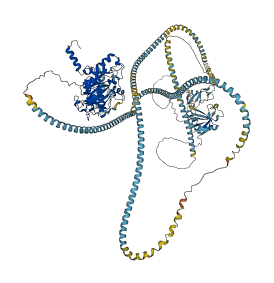
Descriptions
NTRK1 is a high-affinity nerve growth factor receptor and its ligand is nerve growth factor (NGF), which is involved in the survival, differentiation, development, and maturation of the central and peripheral nervous systems, particularly the sensory and sympathetic neurons. Studies have shown that deletion of the second Ig-like domain of NTRK1 results in spontaneous activation, so the second Ig-like domain is an autoinhibitory domain required to prevent spontaneous activation by receptor dimerization.
Autoinhibitory domains (AIDs)
Target domain |
76-338 (Catalytic kinase domain) |
Relief mechanism |
Partner binding |
Assay |
|
Target domain |
76-338 (Catalytic kinase domain) |
Relief mechanism |
Partner binding |
Assay |
|
Accessory elements
215-239 (Activation loop from InterPro)
Target domain |
76-338 (Protein kinase domain) |
Relief mechanism |
|
Assay |
|
References
- Riento K et al. (2003) "Rocks: multifunctional kinases in cell behaviour", Nature reviews. Molecular cell biology, 4, 446-56
- Amano M et al. (1999) "The COOH terminus of Rho-kinase negatively regulates rho-kinase activity", The Journal of biological chemistry, 274, 32418-24
- Chen XQ et al. (2002) "Characterization of RhoA-binding kinase ROKalpha implication of the pleckstrin homology domain in ROKalpha function using region-specific antibodies", The Journal of biological chemistry, 277, 12680-8
- Leung T et al. (1996) "The p160 RhoA-binding kinase ROK alpha is a member of a kinase family and is involved in the reorganization of the cytoskeleton", Molecular and cellular biology, 16, 5313-27
- Tan I et al. (2001) "Intermolecular and intramolecular interactions regulate catalytic activity of myotonic dystrophy kinase-related Cdc42-binding kinase alpha", Molecular and cellular biology, 21, 2767-78
Autoinhibited structure

Activated structure
1 structures for Q63644
| Entry ID | Method | Resolution | Chain | Position | Source |
|---|---|---|---|---|---|
| AF-Q63644-F1 | Predicted | AlphaFoldDB |
No variants for Q63644
| Variant ID(s) | Position | Change | Description | Diseaes Association | Provenance |
|---|---|---|---|---|---|
| No variants for Q63644 | |||||
No associated diseases with Q63644
9 regional properties for Q63644
| Type | Name | Position | InterPro Accession |
|---|---|---|---|
| domain | Protein kinase domain | 548 - 807 | IPR000719 |
| domain | AGC-kinase, C-terminal | 808 - 878 | IPR000961 |
| active_site | Serine/threonine-protein kinase, active site | 669 - 681 | IPR008271 |
| domain | HR1 rho-binding domain | 2 - 78 | IPR011072-1 |
| domain | HR1 rho-binding domain | 86 - 166 | IPR011072-2 |
| domain | HR1 rho-binding domain | 169 - 239 | IPR011072-3 |
| binding_site | Protein kinase, ATP binding site | 554 - 577 | IPR017441 |
| domain | Protein kinase, C-terminal | 830 - 870 | IPR017892 |
| domain | Serine/threonine-protein kinase N, first HR1 domain | 10 - 75 | IPR037313 |
Functions
| Description | ||
|---|---|---|
| EC Number | 2.7.10.1 | Protein-tyrosine kinases |
| Subcellular Localization |
|
|
| PANTHER Family | PTHR24416 | TYROSINE-PROTEIN KINASE RECEPTOR |
| PANTHER Subfamily | PTHR24416:SF370 | HIGH AFFINITY NERVE GROWTH FACTOR RECEPTOR |
| PANTHER Protein Class | transmembrane signal receptor | |
| PANTHER Pathway Category | No pathway information available | |
9 GO annotations of cellular component
| Name | Definition |
|---|---|
| bleb | A cell extension caused by localized decoupling of the cytoskeleton from the plasma membrane and characterized by rapid formation, rounded shape, and scarcity of organelles within the protrusion. Blebs are formed during apoptosis and other cellular processes, including cell locomotion, cell division, and as a result of physical or chemical stresses. [GOC:mtg_apoptosis, PMID:12083798, PMID:16624291, Wikipedia:Bleb_(cell_biology)] |
| centriole | A cellular organelle, found close to the nucleus in many eukaryotic cells, consisting of a small cylinder with microtubular walls, 300-500 nm long and 150-250 nm in diameter. It contains nine short, parallel, peripheral microtubular fibrils, each fibril consisting of one complete microtubule fused to two incomplete microtubules. Cells usually have two centrioles, lying at right angles to each other. At division, each pair of centrioles generates another pair and the twin pairs form the pole of the mitotic spindle. |
| cytoplasm | The contents of a cell excluding the plasma membrane and nucleus, but including other subcellular structures. |
| cytoplasmic stress granule | A dense aggregation in the cytosol composed of proteins and RNAs that appear when the cell is under stress. |
| cytoskeleton | A cellular structure that forms the internal framework of eukaryotic and prokaryotic cells. The cytoskeleton includes intermediate filaments, microfilaments, microtubules, the microtrabecular lattice, and other structures characterized by a polymeric filamentous nature and long-range order within the cell. The various elements of the cytoskeleton not only serve in the maintenance of cellular shape but also have roles in other cellular functions, including cellular movement, cell division, endocytosis, and movement of organelles. |
| Golgi membrane | The lipid bilayer surrounding any of the compartments of the Golgi apparatus. |
| lamellipodium | A thin sheetlike process extended by the leading edge of a migrating cell or extending cell process; contains a dense meshwork of actin filaments. |
| plasma membrane | The membrane surrounding a cell that separates the cell from its external environment. It consists of a phospholipid bilayer and associated proteins. |
| ruffle | Projection at the leading edge of a crawling cell; the protrusions are supported by a microfilament meshwork. |
8 GO annotations of molecular function
| Name | Definition |
|---|---|
| aspartic-type endopeptidase inhibitor activity | Binds to and stops, prevents or reduces the activity of aspartic-type endopeptidases, enzymes that catalyze the hydrolysis of nonterminal peptide bonds in a polypeptide chain; the optimum reaction pH is below 5 due to an aspartic residue involved in the catalytic process. |
| ATP binding | Binding to ATP, adenosine 5'-triphosphate, a universally important coenzyme and enzyme regulator. |
| metal ion binding | Binding to a metal ion. |
| protein serine kinase activity | Catalysis of the reactions: ATP + protein serine = ADP + protein serine phosphate. |
| protein serine/threonine kinase activity | Catalysis of the reactions: ATP + protein serine = ADP + protein serine phosphate, and ATP + protein threonine = ADP + protein threonine phosphate. |
| protein serine/threonine/tyrosine kinase activity | Catalysis of the reactions: ATP + a protein serine = ADP + protein serine phosphate; ATP + a protein threonine = ADP + protein threonine phosphate; and ATP + a protein tyrosine = ADP + protein tyrosine phosphate. |
| Rho-dependent protein serine/threonine kinase activity | Rho GTPase-dependent catalysis of the reaction: ATP + a protein = ADP + a phosphoprotein. |
| small GTPase binding | Binding to a small monomeric GTPase. |
53 GO annotations of biological process
| Name | Definition |
|---|---|
| actin cytoskeleton organization | A process that is carried out at the cellular level which results in the assembly, arrangement of constituent parts, or disassembly of cytoskeletal structures comprising actin filaments and their associated proteins. |
| actomyosin structure organization | A process that is carried out at the cellular level which results in the assembly, arrangement of constituent parts, or disassembly of cytoskeletal structures containing both actin and myosin or paramyosin. The myosin may be organized into filaments. |
| apical constriction | The actin-mediated process that results in the contraction of the apical end of a polarized columnar epithelial cell. |
| apoptotic process | A programmed cell death process which begins when a cell receives an internal (e.g. DNA damage) or external signal (e.g. an extracellular death ligand), and proceeds through a series of biochemical events (signaling pathway phase) which trigger an execution phase. The execution phase is the last step of an apoptotic process, and is typically characterized by rounding-up of the cell, retraction of pseudopodes, reduction of cellular volume (pyknosis), chromatin condensation, nuclear fragmentation (karyorrhexis), plasma membrane blebbing and fragmentation of the cell into apoptotic bodies. When the execution phase is completed, the cell has died. |
| bleb assembly | The assembly of a bleb, a cell extension caused by localized decoupling of the cytoskeleton from the plasma membrane and characterized by rapid formation, rounded shape, and scarcity of organelles within the protrusion. Plasma membrane blebbing occurs during apoptosis and other cellular processes, including cell locomotion, cell division, and as a result of physical or chemical stresses. [GOC:mah, GOC:mtg_apoptosis, PMID:12083798, PMID:16624291, Wikipedia:Bleb_(cell_biology)] |
| blood vessel diameter maintenance | Any process that modulates the diameter of blood vessels. |
| cortical actin cytoskeleton organization | A process that is carried out at the cellular level which results in the assembly, arrangement of constituent parts, or disassembly of actin-based cytoskeletal structures in the cell cortex, i.e. just beneath the plasma membrane. |
| cytoskeleton organization | A process that is carried out at the cellular level which results in the assembly, arrangement of constituent parts, or disassembly of cytoskeletal structures. |
| embryonic morphogenesis | The process in which anatomical structures are generated and organized during the embryonic phase. The embryonic phase begins with zygote formation. The end of the embryonic phase is organism-specific. For example, it would be at birth for mammals, larval hatching for insects and seed dormancy in plants. |
| epithelial to mesenchymal transition | A transition where an epithelial cell loses apical/basolateral polarity, severs intercellular adhesive junctions, degrades basement membrane components and becomes a migratory mesenchymal cell. |
| glomerular visceral epithelial cell migration | The orderly movement of a podocyte from one site to another, often during the development of a multicellular organism or multicellular structure. A podocyte is a specialized kidney epithelial cell. |
| I-kappaB kinase/NF-kappaB signaling | The process in which a signal is passed on to downstream components within the cell through the I-kappaB-kinase (IKK)-dependent activation of NF-kappaB. The cascade begins with activation of a trimeric IKK complex (consisting of catalytic kinase subunits IKKalpha and/or IKKbeta, and the regulatory scaffold protein NEMO) and ends with the regulation of transcription of target genes by NF-kappaB. In a resting state, NF-kappaB dimers are bound to I-kappaB proteins, sequestering NF-kappaB in the cytoplasm. Phosphorylation of I-kappaB targets I-kappaB for ubiquitination and proteasomal degradation, thus releasing the NF-kappaB dimers, which can translocate to the nucleus to bind DNA and regulate transcription. |
| leukocyte cell-cell adhesion | The attachment of a leukocyte to another cell via adhesion molecules. |
| leukocyte migration | The movement of a leukocyte within or between different tissues and organs of the body. |
| leukocyte tethering or rolling | Transient adhesive interactions between leukocytes and endothelial cells lining blood vessels. Carbohydrates on circulating leukocytes bind selectins on the vessel wall causing the leukocytes to slow down and roll along the inner surface of the vessel wall. During this rolling motion, transitory bonds are formed and broken between selectins and their ligands. Typically the first step in cellular extravasation (the movement of leukocytes out of the circulatory system, towards the site of tissue damage or infection). |
| membrane to membrane docking | The initial attachment of a membrane to a target membrane, mediated by proteins protruding from the two membranes. Docking requires only that the membranes come close enough for the proteins to interact and adhere. |
| mitotic cytokinesis | A cell cycle process that results in the division of the cytoplasm of a cell after mitosis, resulting in the separation of the original cell into two daughter cells. |
| mRNA destabilization | Any process that decreases the stability of an mRNA molecule, making it more vulnerable to degradative processes. Messenger RNA is the intermediate molecule between DNA and protein. It includes UTR and coding sequences. It does not contain introns. |
| myoblast migration | The orderly movement of a myoblast from one site to another, often during the development of a multicellular organism. A myoblast is a cell type that, by fusion with other myoblasts, gives rise to the myotubes that eventually develop into skeletal muscle fibers. |
| negative regulation of amyloid precursor protein catabolic process | Any process that stops, prevents or reduces the frequency, rate or extent of amyloid precursor protein catabolic process. |
| negative regulation of amyloid-beta formation | Any process that stops, prevents or reduces the frequency, rate or extent of amyloid-beta formation. |
| negative regulation of angiogenesis | Any process that stops, prevents, or reduces the frequency, rate or extent of angiogenesis. |
| negative regulation of bicellular tight junction assembly | Any process that stops, prevents or reduces the frequency, rate or extent of tight junction assembly. |
| negative regulation of myosin-light-chain-phosphatase activity | Any process that stops, prevents, or reduces the frequency, rate or extent of myosin-light-chain-phosphatase activity. |
| negative regulation of neuron apoptotic process | Any process that stops, prevents, or reduces the frequency, rate or extent of cell death by apoptotic process in neurons. |
| negative regulation of phosphorylation | Any process that stops, prevents or decreases the rate of addition of phosphate groups to a molecule. |
| negative regulation of protein binding | Any process that stops, prevents, or reduces the frequency, rate or extent of protein binding. |
| neuron projection arborization | The process in which the anatomical structures of a neuron projection are generated and organized into branches. A neuron projection is any process extending from a neural cell, such as axons or dendrites. |
| neuron projection development | The process whose specific outcome is the progression of a neuron projection over time, from its formation to the mature structure. A neuron projection is any process extending from a neural cell, such as axons or dendrites (collectively called neurites). |
| peptidyl-serine phosphorylation | The phosphorylation of peptidyl-serine to form peptidyl-O-phospho-L-serine. |
| peptidyl-threonine phosphorylation | The phosphorylation of peptidyl-threonine to form peptidyl-O-phospho-L-threonine. |
| positive regulation of amyloid-beta clearance | Any process that activates or increases the frequency, rate or extent of amyloid-beta clearance. |
| positive regulation of autophagy | Any process that activates, maintains or increases the rate of autophagy. Autophagy is the process in which cells digest parts of their own cytoplasm. |
| positive regulation of cardiac muscle hypertrophy | Any process that increases the rate, frequency or extent of the enlargement or overgrowth of all or part of the heart due to an increase in size (not length) of individual cardiac muscle fibers, without cell division. |
| positive regulation of connective tissue replacement | Any process that activates or increases the frequency, rate or extent of connective tissue replacement. |
| positive regulation of focal adhesion assembly | Any process that activates or increases the frequency, rate or extent of focal adhesion assembly, the establishment and maturation of focal adhesions. |
| positive regulation of gene expression | Any process that increases the frequency, rate or extent of gene expression. Gene expression is the process in which a gene's coding sequence is converted into a mature gene product (protein or RNA). |
| positive regulation of MAPK cascade | Any process that activates or increases the frequency, rate or extent of signal transduction mediated by the MAPK cascade. |
| protein localization to plasma membrane | A process in which a protein is transported to, or maintained in, a specific location in the plasma membrane. |
| protein phosphorylation | The process of introducing a phosphate group on to a protein. |
| regulation of actin cytoskeleton organization | Any process that modulates the frequency, rate or extent of the formation, arrangement of constituent parts, or disassembly of cytoskeletal structures comprising actin filaments and their associated proteins. |
| regulation of actin filament-based process | Any process that modulates the frequency, rate or extent of any cellular process that depends upon or alters the actin cytoskeleton. |
| regulation of angiotensin-activated signaling pathway | Any process that modulates the frequency, rate or extent of the angiotensin-activated signaling pathway. |
| regulation of cell junction assembly | Any process that modulates the frequency, rate or extent of cell junction assembly. |
| regulation of cell migration | Any process that modulates the frequency, rate or extent of cell migration. |
| regulation of establishment of endothelial barrier | Any process that modulates the frequency, rate or extent of establishment of endothelial barrier. |
| regulation of keratinocyte differentiation | Any process that modulates the frequency, rate or extent of keratinocyte differentiation. |
| regulation of microtubule cytoskeleton organization | Any process that modulates the frequency, rate or extent of the formation, arrangement of constituent parts, or disassembly of cytoskeletal structures comprising microtubules and their associated proteins. |
| regulation of neuron differentiation | Any process that modulates the frequency, rate or extent of neuron differentiation. |
| regulation of synaptic vesicle endocytosis | Any process that modulates the frequency, rate or extent of synaptic vesicle endocytosis. |
| response to angiotensin | Any process that results in a change in state or activity of a cell or an organism (in terms of movement, secretion, enzyme production, gene expression, etc.) as a result of an angiotensin stimulus. Angiotensin is any of three physiologically active peptides (angiotensin II, III, or IV) processed from angiotensinogen. |
| response to transforming growth factor beta | Any process that results in a change in state or activity of a cell or an organism (in terms of movement, secretion, enzyme production, gene expression, etc.) as a result of a transforming growth factor beta stimulus. |
| Rho protein signal transduction | The series of molecular signals within the cell that are mediated by a member of the Rho family of proteins switching to a GTP-bound active state. |
15 homologous proteins in AiPD
| UniProt AC | Gene Name | Protein Name | Species | Evidence Code |
|---|---|---|---|---|
| Q28021 | ROCK2 | Rho-associated protein kinase 2 | Bos taurus (Bovine) | SS |
| Q9W1B0 | gek | Serine/threonine-protein kinase Genghis Khan | Drosophila melanogaster (Fruit fly) | SS |
| O75116 | ROCK2 | Rho-associated protein kinase 2 | Homo sapiens (Human) | SS |
| Q9Y5S2 | CDC42BPB | Serine/threonine-protein kinase MRCK beta | Homo sapiens (Human) | SS |
| Q5VT25 | CDC42BPA | Serine/threonine-protein kinase MRCK alpha | Homo sapiens (Human) | EV |
| Q13464 | ROCK1 | Rho-associated protein kinase 1 | Homo sapiens (Human) | SS |
| P70336 | Rock2 | Rho-associated protein kinase 2 | Mus musculus (Mouse) | SS |
| Q80UW5 | Cdc42bpg | Serine/threonine-protein kinase MRCK gamma | Mus musculus (Mouse) | PR |
| Q7TT50 | Cdc42bpb | Serine/threonine-protein kinase MRCK beta | Mus musculus (Mouse) | SS |
| Q3UU96 | Cdc42bpa | Serine/threonine-protein kinase MRCK alpha | Mus musculus (Mouse) | SS |
| P70335 | Rock1 | Rho-associated protein kinase 1 | Mus musculus (Mouse) | SS |
| M3TYT0 | ROCK2 | Rho-associated protein kinase 2 | Sus scrofa (Pig) | SS |
| O54874 | Cdc42bpa | Serine/threonine-protein kinase MRCK alpha | Rattus norvegicus (Rat) | SS |
| Q62868 | Rock2 | Rho-associated protein kinase 2 | Rattus norvegicus (Rat) | EV |
| Q7TT49 | Cdc42bpb | Serine/threonine-protein kinase MRCK beta | Rattus norvegicus (Rat) | SS |
| 10 | 20 | 30 | 40 | 50 | 60 |
| MLRGGRRGQL | GWHSWAAGPG | SLLAWLILAS | AGAAPCPDAC | CPHGSSGLRC | TRDGALDSLH |
| 70 | 80 | 90 | 100 | 110 | 120 |
| HLPGAENLTE | LYIENQQHLQ | HLELRDLRGL | GELRNLTIVK | SGLRFVAPDA | FHFTPRLSRL |
| 130 | 140 | 150 | 160 | 170 | 180 |
| NLSFNALESL | SWKTVQGLSL | QELVLSGNPL | HCSCALRWLQ | RWEEEGLGGV | PEQKLQCHGQ |
| 190 | 200 | 210 | 220 | 230 | 240 |
| GPLAHMPNAS | CGVPTLKVQV | PNASVDVGDD | VLLRCQVEGR | GLEQAGWILT | ELEQSATVMK |
| 250 | 260 | 270 | 280 | 290 | 300 |
| SGGLPSLGLT | LANVTSDLNR | KNVTCWAEND | VGRAEVSVQV | NVSFPASVQL | HTAVEMHHWC |
| 310 | 320 | 330 | 340 | 350 | 360 |
| IPFSVDGQPA | PSLRWLFNGS | VLNETSFIFT | EFLEPAANET | VRHGCLRLNQ | PTHVNNGNYT |
| 370 | 380 | 390 | 400 | 410 | 420 |
| LLAANPFGQA | SASIMAAFMD | NPFEFNPEDP | IPVSFSPVDT | NSTSGDPVEK | KDETPFGVSV |
| 430 | 440 | 450 | 460 | 470 | 480 |
| AVGLAVFACL | FLSTLLLVLN | KCGRRNKFGI | NRPAVLAPED | GLAMSLHFMT | LGGSSLSPTE |
| 490 | 500 | 510 | 520 | 530 | 540 |
| GKGSGLQGHI | IENPQYFSDA | CVHHIKRRDI | VLKWELGEGA | FGKVFLAECH | NLLPEQDKML |
| 550 | 560 | 570 | 580 | 590 | 600 |
| VAVKALKEAS | ESARQDFQRE | AELLTMLQHQ | HIVRFFGVCT | EGRPLLMVFE | YMRHGDLNRF |
| 610 | 620 | 630 | 640 | 650 | 660 |
| LRSHGPDAKL | LAGGEDVAPG | PLGLGQLLAV | ASQVAAGMVY | LAGLHFVHRD | LATRNCLVGQ |
| 670 | 680 | 690 | 700 | 710 | 720 |
| GLVVKIGDFG | MSRDIYSTDY | YRVGGRTMLP | IRWMPPESIL | YRKFTTESDV | WSFGVVLWEI |
| 730 | 740 | 750 | 760 | 770 | 780 |
| FTYGKQPWYQ | LSNTEAIDCI | TQGRELERPR | ACPPEVYAIM | RGCWQREPQQ | RHSIKDVHAR |
| 790 | |||||
| LQALAQAPPV | YLDVLG |