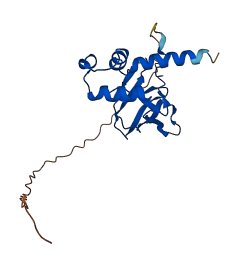
| amyloid fibril formation |
The generation of amyloid fibrils, insoluble fibrous protein aggregates exhibiting beta sheet structure, from proteins. |
| angiogenesis |
Blood vessel formation when new vessels emerge from the proliferation of pre-existing blood vessels. |
| blood vessel endothelial cell migration |
The orderly movement of an endothelial cell into the extracellular matrix in order to form new blood vessels during angiogenesis. |
| ciliary body morphogenesis |
The process in which the ciliary body generated and organized. The ciliary body is the circumferential tissue inside the eye composed of the ciliary muscle and ciliary processes. |
| endothelial cell differentiation |
The process in which a mesodermal, bone marrow or neural crest cell acquires specialized features of an endothelial cell, a thin flattened cell. A layer of such cells lines the inside surfaces of body cavities, blood vessels, and lymph vessels, making up the endothelium. |
| extracellular matrix organization |
A process that is carried out at the cellular level which results in the assembly, arrangement of constituent parts, or disassembly of an extracellular matrix. |
| eye pigmentation |
Establishment of a pattern of pigment in the eye of an organism. |
| homeostasis of number of retina cells |
Any biological process involved in the maintenance of the steady-state number of cells within a population of cells in the retina. |
| hypoxia-inducible factor-1alpha signaling pathway |
The series of molecular signals mediated by hypoxia-inducible factor (HIF1) in response to lowered oxygen levels (hypoxia). Under hypoxic conditions, the oxygen-sensitive alpha-subunit of hypoxia-inducible factor (HIF)-1 dimerizes with a HIF1-beta subunit (also called ARNT or aryl-hydrocarbon-receptor nuclear translocator), translocates to the nucleus and activates transcription of genes whose products participate in responding to hypoxia. |
| iris morphogenesis |
The process in which the iris is generated and organized. The iris is an anatomical structure in the eye whose opening forms the pupil. The iris is responsible for controlling the diameter and size of the pupil and the amount of light reaching the retina. |
| melanin metabolic process |
The chemical reactions and pathways involving melanins, pigments largely of animal origin. High molecular weight polymers of indole quinone, they are irregular polymeric structures and are divided into three groups |
| negative regulation of autophagy |
Any process that stops, prevents, or reduces the frequency, rate or extent of autophagy. Autophagy is the process in which cells digest parts of their own cytoplasm. |
| negative regulation of cell population proliferation |
Any process that stops, prevents or reduces the rate or extent of cell proliferation. |
| negative regulation of endothelial cell differentiation |
Any process that stops, prevents, or reduces the frequency, rate or extent of endothelial cell differentiation. |
| negative regulation of gene expression |
Any process that decreases the frequency, rate or extent of gene expression. Gene expression is the process in which a gene's coding sequence is converted into a mature gene product (protein or RNA). |
| negative regulation of hypoxia-inducible factor-1alpha signaling pathway |
Any process that stops, prevents or reduces the frequency, rate or extent of hypoxia-inducible factor-1alpha signaling pathway. |
| negative regulation of receptor signaling pathway via JAK-STAT |
Any process that stops, prevents, or reduces the frequency, rate or extent of a receptor signaling pathway via JAK-STAT. |
| negative regulation of thymocyte apoptotic process |
Any process that stops, prevents, or reduces the frequency, rate or extent of thymocyte death by apoptotic process. |
| negative regulation of transcription elongation by RNA polymerase II |
Any process that stops, prevents, or reduces the frequency, rate or extent of transcription elongation, the extension of an RNA molecule after transcription initiation and promoter clearance by the addition of ribonucleotides, catalyzed by RNA polymerase II. |
| negative regulation of transcription from RNA polymerase II promoter in response to hypoxia |
Any process that decreases the frequency, rate or extent of transcription from an RNA polymerase II promoter as a result of a hypoxia stimulus. |
| pancreatic A cell differentiation |
The process in which relatively unspecialized cells acquire specialized structural and functional features of a pancreatic A cell. A pancreatic A cell is a cell in the pancreas that secretes glucagon. |
| positive regulation of DNA-templated transcription |
Any process that activates or increases the frequency, rate or extent of cellular DNA-templated transcription. |
| positive regulation of epithelial cell proliferation |
Any process that activates or increases the rate or extent of epithelial cell proliferation. |
| proteasomal protein catabolic process |
The chemical reactions and pathways resulting in the breakdown of a protein or peptide by hydrolysis of its peptide bonds that is mediated by the proteasome. |
| protein transport |
The directed movement of proteins into, out of or within a cell, or between cells, by means of some agent such as a transporter or pore. |
| protein ubiquitination |
The process in which one or more ubiquitin groups are added to a protein. |
| regulation of apoptotic signaling pathway |
Any process that modulates the frequency, rate or extent of apoptotic signaling pathway. |
| regulation of postsynapse organization |
Any process that modulates the physical form of a postsynapse. |
| regulation of protein localization |
Any process that modulates the frequency, rate or extent of any process in which a protein is transported to, or maintained in, a specific location. |
| regulation protein catabolic process at postsynapse |
Any process that modulates the frequency, rate or extent of the chemical reactions and pathways resulting in the breakdown of a protein at the postsynapse. |
| selective autophagy |
The macroautophagy process in which specific structures are targeted by the autophagy process. |
| type B pancreatic cell differentiation |
The process in which relatively unspecialized cells acquire specialized structural and/or functional features of a type B pancreatic cell. A type B pancreatic cell is a cell located towards center of the islets of Langerhans that secretes insulin. |