Q5R4Q3
Gene name |
SEC62 (TLOC1) |
Protein name |
Translocation protein SEC62 |
Names |
Translocation protein 1, TP-1 |
Species |
Pongo abelii (Sumatran orangutan) (Pongo pygmaeus abelii) |
KEGG Pathway |
pon:100174729 |
EC number |
|
Protein Class |
|
Descriptions
The autoinhibited protein was predicted that may have potential autoinhibitory elements via cis-regPred.
Autoinhibitory domains (AIDs)
Target domain |
|
Relief mechanism |
|
Assay |
cis-regPred |
Accessory elements
No accessory elements
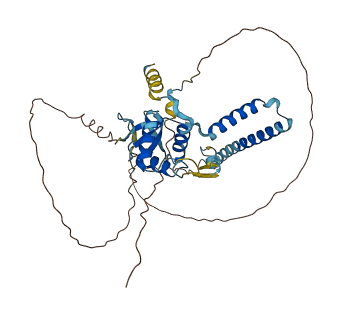
Autoinhibited structure

Activated structure
1 structures for Q5R4Q3
| Entry ID | Method | Resolution | Chain | Position | Source |
|---|---|---|---|---|---|
| AF-Q5R4Q3-F1 | Predicted | AlphaFoldDB |
1 variants for Q5R4Q3
| Variant ID(s) | Position | Change | Description | Diseaes Association | Provenance |
|---|---|---|---|---|---|
| rs176079071 | 335 | L>F | No | Ensembl |
No associated diseases with Q5R4Q3
1 regional properties for Q5R4Q3
| Type | Name | Position | InterPro Accession |
|---|---|---|---|
| domain | Ribosomal RNA methyltransferase, FtsJ domain | 53 - 236 | IPR002877 |
2 GO annotations of cellular component
| Name | Definition |
|---|---|
| integral component of endoplasmic reticulum membrane | The component of the endoplasmic reticulum membrane consisting of the gene products and protein complexes having at least some part of their peptide sequence embedded in the hydrophobic region of the membrane. |
| rough endoplasmic reticulum | The rough (or granular) endoplasmic reticulum (ER) has ribosomes adhering to the outer surface; the ribosomes are the site of translation of the mRNA for those proteins which are either to be retained within the cisternae (ER-resident proteins), the proteins of the lysosomes, or the proteins destined for export from the cell. Glycoproteins undergo their initial glycosylation within the cisternae. |
No GO annotations of molecular function
| Name | Definition |
|---|---|
| No GO annotations for molecular function |
1 GO annotations of biological process
| Name | Definition |
|---|---|
| post-translational protein targeting to membrane, translocation | The process in which a protein translocates through the ER membrane posttranslationally. |
No homologous proteins in AiPD
| UniProt AC | Gene Name | Protein Name | Species | Evidence Code |
|---|---|---|---|---|
| No homologous proteins | ||||
| 10 | 20 | 30 | 40 | 50 | 60 |
| MAERRRHKKR | IQEVGEPSKE | EKAVAKYLRF | NCPTKSTNMM | GHRVDYFIAS | KAVDCLLDSK |
| 70 | 80 | 90 | 100 | 110 | 120 |
| WAKAKKGEEA | LFTTRESVVD | YCNRLLKKQF | FHRALKVMKM | KYDKDIKKEK | DKGKAESGKE |
| 130 | 140 | 150 | 160 | 170 | 180 |
| EDKKSKKENI | KDEKTKKEKE | KKKDGEKEDS | KKEETPGTPK | KKETKKKFKL | EPHDDQVFLD |
| 190 | 200 | 210 | 220 | 230 | 240 |
| GNEVYVWIYD | PVHFKTFVMG | LILVIAVIAA | TLFPLWPAEM | RVGVYYLSVG | AGCFVASILL |
| 250 | 260 | 270 | 280 | 290 | 300 |
| LAVARCILFL | IIWLITGGRH | HFWFLPNLTA | DVGFIDSFRP | LYTHEYKGPK | ADLKKDEKSE |
| 310 | 320 | 330 | 340 | 350 | 360 |
| TKKQQKSDSE | EKSDSEKKED | EEGKVGPGNH | GTEGLGGERH | SDTDSDRRED | DRSQHSSGNG |
| 370 | 380 | 390 | |||
| NDFEMITKEE | LEQQTDGDCE | EEEEEENDGE | TPKSSHEKS |