Q54HG2
Gene name |
ctxA (DDB_G0289483) |
Protein name |
Cortexillin-1 |
Names |
Cortexillin I |
Species |
Dictyostelium discoideum (Slime mold) |
KEGG Pathway |
ddi:DDB_G0289483 |
EC number |
|
Protein Class |
|
Descriptions
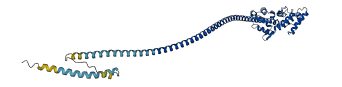
The autoinhibited protein was predicted that may have potential autoinhibitory elements via cis-regPred.
Autoinhibitory domains (AIDs)
Target domain |
|
Relief mechanism |
|
Assay |
cis-regPred |
Accessory elements
No accessory elements
Autoinhibited structure

Activated structure
3 structures for Q54HG2
| Entry ID | Method | Resolution | Chain | Position | Source |
|---|---|---|---|---|---|
| 1D7M | X-ray | 270 A | A/B | 243-343 | PDB |
| 4J4A | X-ray | 165 A | A/B/C/D/E/F/G/H/I/J/K/L | 304-328 | PDB |
| AF-Q54HG2-F1 | Predicted | AlphaFoldDB |
No variants for Q54HG2
| Variant ID(s) | Position | Change | Description | Diseaes Association | Provenance |
|---|---|---|---|---|---|
| No variants for Q54HG2 | |||||
No associated diseases with Q54HG2
4 regional properties for Q54HG2
| Type | Name | Position | InterPro Accession |
|---|---|---|---|
| conserved_site | Actinin-type actin-binding domain, conserved site | 10 - 19 | IPR001589 |
| domain | Calponin homology domain | 8 - 115 | IPR001715-1 |
| domain | Calponin homology domain | 124 - 229 | IPR001715-2 |
| domain | Cortexillin, coiled coil | 231 - 337 | IPR015383 |
16 GO annotations of cellular component
| Name | Definition |
|---|---|
| actin cytoskeleton | The part of the cytoskeleton (the internal framework of a cell) composed of actin and associated proteins. Includes actin cytoskeleton-associated complexes. |
| actin filament | A filamentous structure formed of a two-stranded helical polymer of the protein actin and associated proteins. Actin filaments are a major component of the contractile apparatus of skeletal muscle and the microfilaments of the cytoskeleton of eukaryotic cells. The filaments, comprising polymerized globular actin molecules, appear as flexible structures with a diameter of 5-9 nm. They are organized into a variety of linear bundles, two-dimensional networks, and three dimensional gels. In the cytoskeleton they are most highly concentrated in the cortex of the cell just beneath the plasma membrane. |
| actin filament bundle | An assembly of actin filaments that are on the same axis but may be oriented with the same or opposite polarities and may be packed with different levels of tightness. |
| actomyosin contractile ring | A cytoskeletal structure composed of actin filaments and myosin that forms beneath the plasma membrane of many cells, including animal cells and yeast cells, in a plane perpendicular to the axis of the spindle, i.e. the cell division plane. In animal cells, the contractile ring is located at the cleavage furrow. In budding fungal cells, e.g. mitotic S. cerevisiae cells, the contractile ring forms at the mother-bud neck before mitosis. |
| basal cortex | The region that lies just beneath the plasma membrane on the basal edge of a cell. |
| cell cortex | The region of a cell that lies just beneath the plasma membrane and often, but not always, contains a network of actin filaments and associated proteins. |
| cell leading edge | The area of a motile cell closest to the direction of movement. |
| cell trailing edge | The area of a motile cell opposite to the direction of movement. |
| cleavage furrow | The cleavage furrow is a plasma membrane invagination at the cell division site. The cleavage furrow begins as a shallow groove and eventually deepens to divide the cytoplasm. |
| cytoplasm | The contents of a cell excluding the plasma membrane and nucleus, but including other subcellular structures. |
| cytosol | The part of the cytoplasm that does not contain organelles but which does contain other particulate matter, such as protein complexes. |
| lateral part of motile cell | The area of a motile cell perpendicular to the direction of movement. |
| mitotic spindle midzone | The area in the center of the anaphase spindle consisting of microtubules, microtubule bundling factors and kinesin motors where the spindle microtubules from opposite poles overlap in an antiparallel manner. |
| phagocytic vesicle | A membrane-bounded intracellular vesicle that arises from the ingestion of particulate material by phagocytosis. |
| plasma membrane | The membrane surrounding a cell that separates the cell from its external environment. It consists of a phospholipid bilayer and associated proteins. |
| vesicle | Any small, fluid-filled, spherical organelle enclosed by membrane. |
5 GO annotations of molecular function
| Name | Definition |
|---|---|
| actin filament binding | Binding to an actin filament, also known as F-actin, a helical filamentous polymer of globular G-actin subunits. |
| alpha-catenin binding | Binding to catenin complex alpha subunit. |
| identical protein binding | Binding to an identical protein or proteins. |
| phosphatidylinositol-4,5-bisphosphate binding | Binding to phosphatidylinositol-4,5-bisphosphate, a derivative of phosphatidylinositol in which the inositol ring is phosphorylated at the 4' and 5' positions. |
| protein kinase regulator activity | Modulates the activity of a protein kinase, an enzyme which phosphorylates a protein. |
23 GO annotations of biological process
| Name | Definition |
|---|---|
| actin crosslink formation | The process in which two or more actin filaments are connected together by proteins that act as crosslinks between the filaments. The crosslinked filaments may be on the same or differing axes. |
| actin filament bundle assembly | The assembly of actin filament bundles; actin filaments are on the same axis but may be oriented with the same or opposite polarities and may be packed with different levels of tightness. |
| actin filament network formation | The assembly of a network of actin filaments; actin filaments on different axes and with differing orientations are crosslinked together to form a mesh of filaments. |
| actomyosin contractile ring contraction | The process of an actomyosin ring getting smaller in diameter, in the context of cytokinesis that takes place as part of a cell cycle. |
| adenylate cyclase-activating G protein-coupled cAMP receptor signaling pathway | An adenylate cyclase-activating G protein-coupled receptor signaling pathway initiated by extracellular cAMP binding to its receptor on the surface of the target cell, and ending with the regulation of a downstream cellular process. |
| aggregation involved in sorocarp development | The process whose specific outcome is the progression of the aggregate over time, from its formation to the point when a slug is formed. Aggregate development begins in response to starvation and continues by the chemoattractant-mediated movement of cells toward each other. The aggregate is a multicellular structure that gives rise to the slug. |
| bleb assembly | The assembly of a bleb, a cell extension caused by localized decoupling of the cytoskeleton from the plasma membrane and characterized by rapid formation, rounded shape, and scarcity of organelles within the protrusion. Plasma membrane blebbing occurs during apoptosis and other cellular processes, including cell locomotion, cell division, and as a result of physical or chemical stresses. [GOC:mah, GOC:mtg_apoptosis, PMID:12083798, PMID:16624291, Wikipedia:Bleb_(cell_biology)] |
| cell morphogenesis | The developmental process in which the size or shape of a cell is generated and organized. |
| chemotaxis to cAMP | The directed movement of a motile cell or organism in response to the presence of 3',5'-cAMP. |
| cleavage furrow formation | Generation of the cleavage furrow, a shallow groove in the cell surface near the old metaphase plate that marks the site of cytokinesis. This process includes the recruitment and localized activation of signals such as RhoA at the site of the future furrow to ensure that furrowing initiates at the correct site in the cell. |
| cortical actin cytoskeleton organization | A process that is carried out at the cellular level which results in the assembly, arrangement of constituent parts, or disassembly of actin-based cytoskeletal structures in the cell cortex, i.e. just beneath the plasma membrane. |
| detection of mechanical stimulus | The series of events by which a mechanical stimulus is received and converted into a molecular signal. |
| establishment of protein localization | The directed movement of a protein to a specific location. |
| mitotic cytokinesis | A cell cycle process that results in the division of the cytoplasm of a cell after mitosis, resulting in the separation of the original cell into two daughter cells. |
| positive regulation of cytoskeleton organization | Any process that activates or increases the frequency, rate or extent of the formation, arrangement of constituent parts, or disassembly of cytoskeletal structures. |
| positive regulation of gene expression | Any process that increases the frequency, rate or extent of gene expression. Gene expression is the process in which a gene's coding sequence is converted into a mature gene product (protein or RNA). |
| protein localization | Any process in which a protein is transported to, or maintained in, a specific location. |
| protein localization to cleavage furrow | A process in which a protein is transported to, or maintained in, a location within a cleavage furrow. |
| regulation of GTPase activity | Any process that modulates the rate of GTP hydrolysis by a GTPase. |
| regulation of myosin II filament assembly | Any process that modulates the frequency, rate or extent of the formation of a bipolar filament composed of myosin II molecules. |
| response to bacterium | Any process that results in a change in state or activity of a cell or an organism (in terms of movement, secretion, enzyme production, gene expression, etc.) as a result of a stimulus from a bacterium. |
| sexual reproduction | A type of reproduction that combines the genetic material of two gametes (such as a sperm or egg cell or fungal spores). The gametes have an haploid genome (with a single set of chromosomes, the product of a meiotic division) and combines with one another to produce a zygote (diploid). |
| sorocarp stalk morphogenesis | The process in which the sorocarp stalk is generated and organized. The sorocarp stalk is a tubular structure that consists of cellulose-covered cells stacked on top of each other and surrounded by an acellular stalk tube composed of cellulose and glycoprotein. An example of this process is found in Dictyostelium discoideum. |
No homologous proteins in AiPD
| UniProt AC | Gene Name | Protein Name | Species | Evidence Code |
|---|---|---|---|---|
| No homologous proteins | ||||
| 10 | 20 | 30 | 40 | 50 | 60 |
| MAGKDWEIVQ | EKAFTAWVNS | VLDKRGEKIS | DVGKDLSDGV | KLIFFLELIS | SKKFNKKYDF |
| 70 | 80 | 90 | 100 | 110 | 120 |
| EPKARINMIQ | NVALALKFLD | EELKIKVQGI | GSEDFVDNNK | KMILGFLWTL | YRKYRIAVIS |
| 130 | 140 | 150 | 160 | 170 | 180 |
| EGDKSSEEGL | LLWCKNTTTG | YDGVNITSFT | KSFRDGLAFL | ALSHKFEPES | FKFQEFEAMD |
| 190 | 200 | 210 | 220 | 230 | 240 |
| PIARLNAAFD | FAEKGLGVPK | LLEAEEVMRG | TTDERSLVLY | TSLFFHAYRA | KEEKARLESS |
| 250 | 260 | 270 | 280 | 290 | 300 |
| KNEMANRLAG | LENSLESEKV | SREQLIKQKD | QLNSLLASLE | SEGAEREKRL | RELEAKLDET |
| 310 | 320 | 330 | 340 | 350 | 360 |
| LKNLELEKLA | RMELEARLAK | TEKDRAILEL | KLAEAIDEKS | KLEQQIEATR | IRGAAEAQGL |
| 370 | 380 | 390 | 400 | 410 | 420 |
| GLLRKNLDTH | VHDLLKWQKL | TMENSSSSSI | DDQIIVEVSG | LPFGEQVKHL | ATKLEAENLA |
| 430 | 440 | ||||
| IMKLLNQKED | DLKAQKLKSS | KSKK |