Q505D7
Gene name |
Opa3 |
Protein name |
Optic atrophy 3 protein homolog |
Names |
|
Species |
Mus musculus (Mouse) |
KEGG Pathway |
mmu:403187 |
EC number |
|
Protein Class |
|
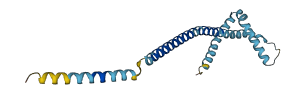
Descriptions
The autoinhibited protein was predicted that may have potential autoinhibitory elements via cis-regPred.
Autoinhibitory domains (AIDs)
Target domain |
|
Relief mechanism |
|
Assay |
cis-regPred |
Accessory elements
No accessory elements
Autoinhibited structure

Activated structure
1 structures for Q505D7
| Entry ID | Method | Resolution | Chain | Position | Source |
|---|---|---|---|---|---|
| AF-Q505D7-F1 | Predicted | AlphaFoldDB |
9 variants for Q505D7
| Variant ID(s) | Position | Change | Description | Diseaes Association | Provenance |
|---|---|---|---|---|---|
| rs3388873606 | 52 | V>M | No | EVA | |
| rs3388890144 | 67 | T>N | No | EVA | |
| rs3388873692 | 95 | G>D | No | EVA | |
| rs3388886524 | 109 | R>H | No | EVA | |
| rs235106102 | 113 | E>D | No | EVA | |
| rs3388878414 | 136 | L>P | No | EVA | |
| rs3388886542 | 155 | E>* | No | EVA | |
| rs3388867731 | 159 | V>A | No | EVA | |
| rs3388886573 | 172 | C>F | No | EVA |
No associated diseases with Q505D7
No regional properties for Q505D7
| Type | Name | Position | InterPro Accession |
|---|---|---|---|
| No domain, repeats, and functional sites for Q505D7 | |||
1 GO annotations of cellular component
| Name | Definition |
|---|---|
| mitochondrion | A semiautonomous, self replicating organelle that occurs in varying numbers, shapes, and sizes in the cytoplasm of virtually all eukaryotic cells. It is notably the site of tissue respiration. |
No GO annotations of molecular function
| Name | Definition |
|---|---|
| No GO annotations for molecular function |
7 GO annotations of biological process
| Name | Definition |
|---|---|
| bone development | The process whose specific outcome is the progression of bone over time, from its formation to the mature structure. Bone is the hard skeletal connective tissue consisting of both mineral and cellular components. |
| fat cell differentiation | The process in which a relatively unspecialized cell acquires specialized features of an adipocyte, an animal connective tissue cell specialized for the synthesis and storage of fat. |
| mitochondrion morphogenesis | The process in which the anatomical structures of a mitochondrion are generated and organized. |
| neuromuscular process | Any process pertaining to the functions of the nervous and muscular systems of an organism. |
| regulation of growth | Any process that modulates the frequency, rate or extent of the growth of all or part of an organism so that it occurs at its proper speed, either globally or in a specific part of the organism's development. |
| regulation of lipid metabolic process | Any process that modulates the frequency, rate or extent of the chemical reactions and pathways involving lipids. |
| visual perception | The series of events required for an organism to receive a visual stimulus, convert it to a molecular signal, and recognize and characterize the signal. Visual stimuli are detected in the form of photons and are processed to form an image. |
1 homologous proteins in AiPD
| UniProt AC | Gene Name | Protein Name | Species | Evidence Code |
|---|---|---|---|---|
| Q9H6K4 | OPA3 | Optic atrophy 3 protein | Homo sapiens (Human) | PR |
| 10 | 20 | 30 | 40 | 50 | 60 |
| MVVGAFPMAK | LFYLGIRQVS | KPLANRIKDA | ARRSEFFKTY | ICLPPAQLYH | WVEMRTKMRI |
| 70 | 80 | 90 | 100 | 110 | 120 |
| MGFRGTTIKP | LNEEAAAELG | AELLGEATIF | IVGGGCLVLE | YWRHQTQQRN | KEEEQRAAWN |
| 130 | 140 | 150 | 160 | 170 | |
| ALQDEVGRLA | LALEALQAQA | QAMPSLSALE | ELREELQEVR | GQVCNAHCTS | KCQAASSKK |