Q0J3L4
Gene name |
GRXS10 (Os08g0565800, LOC_Os08g45140, OsJ_28319, OSJNBa0044E16.18-1, OSJNBa0044E16.18-2, P0705A05.134-1, P0705A05.134-2) |
Protein name |
Monothiol glutaredoxin-S10 |
Names |
|
Species |
Oryza sativa subsp japonica (Rice) |
KEGG Pathway |
osa:9269420 |
EC number |
|
Protein Class |
|
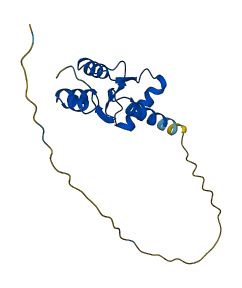
Descriptions
The autoinhibited protein was predicted that may have potential autoinhibitory elements via cis-regPred.
Autoinhibitory domains (AIDs)
Target domain |
|
Relief mechanism |
|
Assay |
cis-regPred |
Accessory elements
No accessory elements
Autoinhibited structure

Activated structure
1 structures for Q0J3L4
| Entry ID | Method | Resolution | Chain | Position | Source |
|---|---|---|---|---|---|
| AF-Q0J3L4-F1 | Predicted | AlphaFoldDB |
No variants for Q0J3L4
| Variant ID(s) | Position | Change | Description | Diseaes Association | Provenance |
|---|---|---|---|---|---|
| No variants for Q0J3L4 | |||||
No associated diseases with Q0J3L4
5 regional properties for Q0J3L4
| Type | Name | Position | InterPro Accession |
|---|---|---|---|
| domain | Glutaredoxin | 72 - 135 | IPR002109 |
| domain | Glutaredoxin, eukaryotic/virial | 72 - 153 | IPR011899 |
| domain | Glutaredoxin subgroup | 72 - 90 | IPR014025-1 |
| domain | Glutaredoxin subgroup | 118 - 131 | IPR014025-2 |
| domain | Glutaredoxin subgroup | 132 - 145 | IPR014025-3 |
1 GO annotations of cellular component
| Name | Definition |
|---|---|
| cytoplasm | The contents of a cell excluding the plasma membrane and nucleus, but including other subcellular structures. |
4 GO annotations of molecular function
| Name | Definition |
|---|---|
| 2 iron, 2 sulfur cluster binding | Binding to a 2 iron, 2 sulfur (2Fe-2S) cluster; this cluster consists of two iron atoms, with two inorganic sulfur atoms found between the irons and acting as bridging ligands. |
| glutathione disulfide oxidoreductase activity | Catalysis of the reaction: 2 glutathione + electron acceptor = glutathione disulfide + electron donor. |
| glutathione oxidoreductase activity | Catalysis of the reaction: protein-S-S-glutathione + glutathione-SH = protein-SH + glutathione-S-S-glutathione. |
| metal ion binding | Binding to a metal ion. |
1 GO annotations of biological process
| Name | Definition |
|---|---|
| cellular response to oxidative stress | Any process that results in a change in state or activity of a cell (in terms of movement, secretion, enzyme production, gene expression, etc.) as a result of oxidative stress, a state often resulting from exposure to high levels of reactive oxygen species, e.g. superoxide anions, hydrogen peroxide (H2O2), and hydroxyl radicals. |
No homologous proteins in AiPD
| UniProt AC | Gene Name | Protein Name | Species | Evidence Code |
|---|---|---|---|---|
| No homologous proteins | ||||
| 10 | 20 | 30 | 40 | 50 | 60 |
| MPPRSLTLSR | LPVAALGLPF | SSCSPPPPRL | RFPFAARRAR | SLATRASSSS | PDSSFGSRME |
| 70 | 80 | 90 | 100 | 110 | 120 |
| DSVKRTLADN | PVVIYSKSWC | SYSMEVKALF | KRIGVQPHVI | ELDQLGAQGP | QLQKVLERLT |
| 130 | 140 | 150 | 160 | ||
| GQSTVPNVFI | GGKHIGGCTD | TVKLHRKGEL | ATMLSELDID | VNNS |