Descriptions
The autoinhibited protein was predicted that may have potential autoinhibitory elements via cis-regPred.
Autoinhibitory domains (AIDs)
Target domain |
|
Relief mechanism |
|
Assay |
cis-regPred |
Accessory elements
No accessory elements
Autoinhibited structure

Activated structure
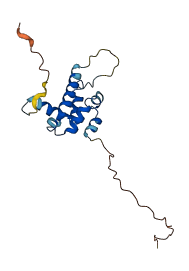
1 structures for Q0CQK7
| Entry ID | Method | Resolution | Chain | Position | Source |
|---|---|---|---|---|---|
| AF-Q0CQK7-F1 | Predicted | AlphaFoldDB |
No variants for Q0CQK7
| Variant ID(s) | Position | Change | Description | Diseaes Association | Provenance |
|---|---|---|---|---|---|
| No variants for Q0CQK7 | |||||
No associated diseases with Q0CQK7
No regional properties for Q0CQK7
| Type | Name | Position | InterPro Accession |
|---|---|---|---|
| No domain, repeats, and functional sites for Q0CQK7 | |||
1 GO annotations of cellular component
| Name | Definition |
|---|---|
| mediator complex | A protein complex that interacts with the carboxy-terminal domain of the largest subunit of RNA polymerase II and plays an active role in transducing the signal from a transcription factor to the transcriptional machinery. The mediator complex is required for activation of transcription of most protein-coding genes, but can also act as a transcriptional corepressor. The Saccharomyces complex contains several identifiable subcomplexes: a head domain comprising Srb2, -4, and -5, Med6, -8, and -11, and Rox3 proteins; a middle domain comprising Med1, -4, and -7, Nut1 and -2, Cse2, Rgr1, Soh1, and Srb7 proteins; a tail consisting of Gal11p, Med2p, Pgd1p, and Sin4p; and a regulatory subcomplex comprising Ssn2, -3, and -8, and Srb8 proteins. Metazoan mediator complexes have similar modular structures and include homologs of yeast Srb and Med proteins. |
1 GO annotations of molecular function
| Name | Definition |
|---|---|
| transcription coregulator activity | A transcription regulator activity that modulates the transcription of specific gene sets via binding to a DNA-bound DNA-binding transcription factor, either on its own or as part of a complex. Coregulators often act by altering chromatin structure and modifications. For example, one class of transcription coregulators modifies chromatin structure through covalent modification of histones. A second class remodels the conformation of chromatin in an ATP-dependent fashion. A third class modulates interactions of DNA-bound DNA-binding transcription factors with other transcription coregulators. |
1 GO annotations of biological process
| Name | Definition |
|---|---|
| regulation of DNA-templated transcription | Any process that modulates the frequency, rate or extent of cellular DNA-templated transcription. |
No homologous proteins in AiPD
| UniProt AC | Gene Name | Protein Name | Species | Evidence Code |
|---|---|---|---|---|
| No homologous proteins | ||||
| 10 | 20 | 30 | 40 | 50 | 60 |
| MDPQPGDQAQ | QPPPPTLTHP | RFTLELEFVS | SLANPYYLSH | LAVNYPNLLG | INKSGDDNDT |
| 70 | 80 | 90 | 100 | 110 | 120 |
| NDSGDPDAQA | FAAYLAYLYS | YWKTPEYAQF | LTHPGATLRA | LRLLQEDTFR | RDIIRPQVIE |
| 130 | 140 | 150 | |||
| GLAGTGIENE | QGGTEANNPG | EAEGEQTKGT | ADQQDGSSKT |