Q09208
Gene name |
sra-6 (AH6.10) |
Protein name |
Serpentine receptor class alpha-6 |
Names |
Protein sra-6 |
Species |
Caenorhabditis elegans |
KEGG Pathway |
cel:CELE_AH6.10 |
EC number |
|
Protein Class |
|
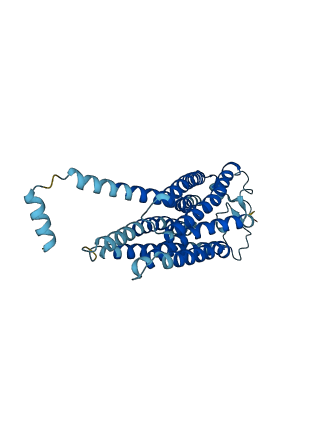
Descriptions
The autoinhibited protein was predicted that may have potential autoinhibitory elements via cis-regPred.
Autoinhibitory domains (AIDs)
Target domain |
|
Relief mechanism |
|
Assay |
cis-regPred |
Accessory elements
No accessory elements
Autoinhibited structure

Activated structure
1 structures for Q09208
| Entry ID | Method | Resolution | Chain | Position | Source |
|---|---|---|---|---|---|
| AF-Q09208-F1 | Predicted | AlphaFoldDB |
No variants for Q09208
| Variant ID(s) | Position | Change | Description | Diseaes Association | Provenance |
|---|---|---|---|---|---|
| No variants for Q09208 | |||||
No associated diseases with Q09208
1 regional properties for Q09208
| Type | Name | Position | InterPro Accession |
|---|---|---|---|
| domain | Luciferase-like domain | 4 - 326 | IPR011251 |
2 GO annotations of cellular component
| Name | Definition |
|---|---|
| cilium | A specialized eukaryotic organelle that consists of a filiform extrusion of the cell surface and of some cytoplasmic parts. Each cilium is largely bounded by an extrusion of the cytoplasmic (plasma) membrane, and contains a regular longitudinal array of microtubules, anchored to a basal body. |
| integral component of membrane | The component of a membrane consisting of the gene products and protein complexes having at least some part of their peptide sequence embedded in the hydrophobic region of the membrane. |
2 GO annotations of molecular function
| Name | Definition |
|---|---|
| G protein-coupled receptor activity | Combining with an extracellular signal and transmitting the signal across the membrane by activating an associated G-protein; promotes the exchange of GDP for GTP on the alpha subunit of a heterotrimeric G-protein complex. |
| olfactory receptor activity | Combining with an odorant and transmitting the signal from one side of the membrane to the other to initiate a change in cell activity in response to detection of smell. |
1 GO annotations of biological process
| Name | Definition |
|---|---|
| detection of chemical stimulus involved in sensory perception | The series of events in which a chemical stimulus is received and converted into a molecular signal as part of sensory perception. |
No homologous proteins in AiPD
| UniProt AC | Gene Name | Protein Name | Species | Evidence Code |
|---|---|---|---|---|
| No homologous proteins | ||||
| 10 | 20 | 30 | 40 | 50 | 60 |
| MSNLSCAAPD | VLERLDSFNM | KLSQFVDLLA | IILAFFASYF | AIKIVINQSF | FELSTKILLL |
| 70 | 80 | 90 | 100 | 110 | 120 |
| QNLFYTNLYQ | ISYGIEAIGM | LYRGFFMLSE | PCSILQSETS | CAPYFKVLMI | GTSGMIFGQT |
| 130 | 140 | 150 | 160 | 170 | 180 |
| GLLIERAFAT | FATTYKTKKS | VYIGVCISLI | VLVCSTSSGF | IILWDDPLEG | WTIGCFAVSK |
| 190 | 200 | 210 | 220 | 230 | 240 |
| SVVPRFNLFS | ILSTVLTLFN | LIVSIFIQRY | NKRFEFETRF | KVGARFQKQE | LIESTGAICF |
| 250 | 260 | 270 | 280 | 290 | 300 |
| LALSQFLWMF | MYSFGILILR | IIREDILPST | FYFWIAWCYT | MPFIALMFPV | LLIYRIRKTR |
| 310 | 320 | ||||
| ARRTEKMKGI | TTEKQTQDDH | IKQINAMWT |