Q03898
Gene name |
FIN1 (YDR130C, YD9302.05C) |
Protein name |
Filament protein FIN1 |
Names |
Filaments in between nuclei protein 1 |
Species |
Saccharomyces cerevisiae (strain ATCC 204508 / S288c) (Baker's yeast) |
KEGG Pathway |
sce:YDR130C |
EC number |
|
Protein Class |
|
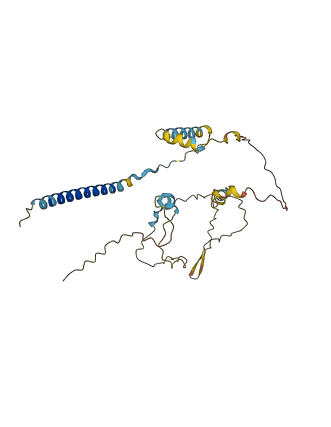
Descriptions
The autoinhibited protein was predicted that may have potential autoinhibitory elements via cis-regPred.
Autoinhibitory domains (AIDs)
Target domain |
|
Relief mechanism |
|
Assay |
cis-regPred |
Accessory elements
No accessory elements
Autoinhibited structure

Activated structure
1 structures for Q03898
| Entry ID | Method | Resolution | Chain | Position | Source |
|---|---|---|---|---|---|
| AF-Q03898-F1 | Predicted | AlphaFoldDB |
13 variants for Q03898
| Variant ID(s) | Position | Change | Description | Diseaes Association | Provenance |
|---|---|---|---|---|---|
| s04-716609 | 4 | K>R | No | SGRP | |
| s04-716606 | 5 | S>N | No | SGRP | |
| s04-716507 | 38 | L>S | No | SGRP | |
| s04-716461 | 53 | I>M | No | SGRP | |
| s04-716309 | 104 | Q>R | No | SGRP | |
| s04-716299 | 107 | D>E | No | SGRP | |
| s04-716301 | 107 | D>Y | No | SGRP | |
| s04-716153 | 156 | Q>R | No | SGRP | |
| s04-716132 | 163 | S>L | No | SGRP | |
| s04-716120 | 167 | S>N | No | SGRP | |
| s04-716115 | 169 | T>A | No | SGRP | |
| s04-716072 | 183 | E>G | No | SGRP | |
| s04-715950 | 224 | M>V | No | SGRP |
No associated diseases with Q03898
Functions
10 GO annotations of cellular component
| Name | Definition |
|---|---|
| astral microtubule | Any of the spindle microtubules that radiate in all directions from the spindle poles and are thought to contribute to the forces that separate the poles and position them in relation to the rest of the cell. |
| cytoplasm | The contents of a cell excluding the plasma membrane and nucleus, but including other subcellular structures. |
| intermediate filament | A cytoskeletal structure that forms a distinct elongated structure, characteristically 10 nm in diameter, that occurs in the cytoplasm of eukaryotic cells. Intermediate filaments form a fibrous system, composed of chemically heterogeneous subunits and involved in mechanically integrating the various components of the cytoplasmic space. Intermediate filaments may be divided into five chemically distinct classes: Type I, acidic keratins; Type II, basic keratins; Type III, including desmin, vimentin and others; Type IV, neurofilaments and related filaments; and Type V, lamins. |
| kinetochore | A multisubunit complex that is located at the centromeric region of DNA and provides an attachment point for the spindle microtubules. |
| mitotic spindle | A spindle that forms as part of mitosis. Mitotic and meiotic spindles contain distinctive complements of proteins associated with microtubules. |
| nucleus | A membrane-bounded organelle of eukaryotic cells in which chromosomes are housed and replicated. In most cells, the nucleus contains all of the cell's chromosomes except the organellar chromosomes, and is the site of RNA synthesis and processing. In some species, or in specialized cell types, RNA metabolism or DNA replication may be absent. |
| protein phosphatase type 1 complex | A protein complex that possesses magnesium-dependent protein serine/threonine phosphatase (AMD phosphatase) activity, and consists of a catalytic subunit and one or more regulatory subunits that dictates the phosphatase's substrate specificity, function, and activity. |
| spindle microtubule | Any microtubule that is part of a mitotic or meiotic spindle; anchored at one spindle pole. |
| spindle pole | Either of the ends of a spindle, where spindle microtubules are organized; usually contains a microtubule organizing center and accessory molecules, spindle microtubules and astral microtubules. |
| spindle pole body | The microtubule organizing center in fungi; functionally homologous to the animal cell centrosome. |
2 GO annotations of molecular function
| Name | Definition |
|---|---|
| microtubule binding | Binding to a microtubule, a filament composed of tubulin monomers. |
| structural constituent of cytoskeleton | The action of a molecule that contributes to the structural integrity of a cytoskeletal structure. |
5 GO annotations of biological process
| Name | Definition |
|---|---|
| deactivation of mitotic spindle assembly checkpoint | A positive regulation of the mitotic metaphase/anaphase transition that results from deactivation of the mitotic spindle assembly checkpoint. |
| intermediate filament cytoskeleton organization | A process that is carried out at the cellular level which results in the assembly, arrangement of constituent parts, or disassembly of cytoskeletal structures comprising intermediate filaments and their associated proteins. |
| mitotic sister chromatid segregation | The cell cycle process in which replicated homologous chromosomes are organized and then physically separated and apportioned to two sets during the mitotic cell cycle. Each replicated chromosome, composed of two sister chromatids, aligns at the cell equator, paired with its homologous partner. One homolog of each morphologic type goes into each of the resulting chromosome sets. |
| mitotic spindle organization | A process that is carried out at the cellular level which results in the assembly, arrangement of constituent parts, or disassembly of the microtubule spindle during a mitotic cell cycle. |
| protein localization to kinetochore | Any process in which a protein is transported to, or maintained at, the kinetochore. |
No homologous proteins in AiPD
| UniProt AC | Gene Name | Protein Name | Species | Evidence Code |
|---|---|---|---|---|
| No homologous proteins | ||||
| 10 | 20 | 30 | 40 | 50 | 60 |
| MSNKSNRRSL | RDIGNTIGRN | NIPSDKDNVF | VRLSMSPLRT | TSQKEFLKPP | MRISPNKTDG |
| 70 | 80 | 90 | 100 | 110 | 120 |
| MKHSIQVTPR | RIMSPECLKG | YVSKETQSLD | RPQFKNSNKN | VKIQNSDHIT | NIIFPTSPTK |
| 130 | 140 | 150 | 160 | 170 | 180 |
| LTFSNENKIG | GDGSLTRIRA | RFKNGLMSPE | RIQQQQQQHI | LPSDAKSNTD | LCSNTELKDA |
| 190 | 200 | 210 | 220 | 230 | 240 |
| PFENDLPRAK | LKGKNLLVEL | KKEEEDVGNG | IESLTKSNTK | LNSMLANEGK | IHKASFQKSV |
| 250 | 260 | 270 | 280 | 290 | |
| KFKLPDNIVT | EETVELKEIK | DLLLQMLRRQ | REIESRLSNI | ELQLTEIPKH | K |