Q03347
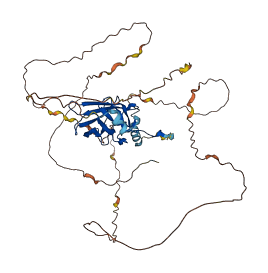
Descriptions
The autoinhibited protein was predicted that may have potential autoinhibitory elements via cis-regPred.
Autoinhibitory domains (AIDs)
Target domain |
|
Relief mechanism |
|
Assay |
cis-regPred |
Accessory elements
No accessory elements
Autoinhibited structure

Activated structure
19 structures for Q03347
| Entry ID | Method | Resolution | Chain | Position | Source |
|---|---|---|---|---|---|
| 1EAN | X-ray | 170 A | A | 46-185 | PDB |
| 1EAO | X-ray | 140 A | A/B | 46-185 | PDB |
| 1EAQ | X-ray | 125 A | A/B | 46-185 | PDB |
| 1HJB | X-ray | 300 A | C/F | 60-182 | PDB |
| 1HJC | X-ray | 265 A | A/D | 60-182 | PDB |
| 1IO4 | X-ray | 300 A | C | 60-182 | PDB |
| 2J6W | X-ray | 260 A | A/B | 46-185 | PDB |
| 3WTS | X-ray | 235 A | A/F | 60-263 | PDB |
| 3WTT | X-ray | 235 A | A/F | 60-263 | PDB |
| 3WTU | X-ray | 270 A | A/F | 60-263 | PDB |
| 3WTV | X-ray | 270 A | A/F | 60-263 | PDB |
| 3WTW | X-ray | 290 A | A/F | 60-263 | PDB |
| 3WTX | X-ray | 280 A | A/F | 60-263 | PDB |
| 3WTY | X-ray | 270 A | A/F | 60-263 | PDB |
| 3WU1 | X-ray | 240 A | A | 55-177 | PDB |
| 4L0Y | X-ray | 250 A | A | 1-242 | PDB |
| 4L0Z | X-ray | 270 A | A | 1-242 | PDB |
| 4L18 | X-ray | 230 A | A/E | 48-214 | PDB |
| AF-Q03347-F1 | Predicted | AlphaFoldDB |
No variants for Q03347
| Variant ID(s) | Position | Change | Description | Diseaes Association | Provenance |
|---|---|---|---|---|---|
| No variants for Q03347 | |||||
1 associated diseases with Q03347
Without disease ID
7 GO annotations of cellular component
| Name | Definition |
|---|---|
| basement membrane | A collagen-containing extracellular matrix consisting of a thin layer of dense material found in various animal tissues interposed between the cells and the adjacent connective tissue. It consists of the basal lamina plus an associated layer of reticulin fibers. |
| chromatin | The ordered and organized complex of DNA, protein, and sometimes RNA, that forms the chromosome. |
| core-binding factor complex | A heterodimeric transcription factor complex that contains an alpha subunit (Runx1, Runx2 or Runx3 in human) that binds DNA and a non-DNA-binding beta subunit (CBFbeta), and binds to a consensus sequence 5'-YGYGGTY-3' found in several enhancers and promoters; the beta subunit enhances the DNA binding of the alpha subunit. |
| intracellular membrane-bounded organelle | Organized structure of distinctive morphology and function, bounded by a single or double lipid bilayer membrane and occurring within the cell. Includes the nucleus, mitochondria, plastids, vacuoles, and vesicles. Excludes the plasma membrane. |
| nucleoplasm | That part of the nuclear content other than the chromosomes or the nucleolus. |
| nucleus | A membrane-bounded organelle of eukaryotic cells in which chromosomes are housed and replicated. In most cells, the nucleus contains all of the cell's chromosomes except the organellar chromosomes, and is the site of RNA synthesis and processing. In some species, or in specialized cell types, RNA metabolism or DNA replication may be absent. |
| protein-containing complex | A stable assembly of two or more macromolecules, i.e. proteins, nucleic acids, carbohydrates or lipids, in which at least one component is a protein and the constituent parts function together. |
16 GO annotations of molecular function
| Name | Definition |
|---|---|
| ATP binding | Binding to ATP, adenosine 5'-triphosphate, a universally important coenzyme and enzyme regulator. |
| calcium ion binding | Binding to a calcium ion (Ca2+). |
| DNA binding | Any molecular function by which a gene product interacts selectively and non-covalently with DNA (deoxyribonucleic acid). |
| DNA-binding transcription activator activity, RNA polymerase II-specific | A DNA-binding transcription factor activity that activates or increases transcription of specific gene sets transcribed by RNA polymerase II. |
| DNA-binding transcription factor activity | A transcription regulator activity that modulates transcription of gene sets via selective and non-covalent binding to a specific double-stranded genomic DNA sequence (sometimes referred to as a motif) within a cis-regulatory region. Regulatory regions include promoters (proximal and distal) and enhancers. Genes are transcriptional units, and include bacterial operons. |
| DNA-binding transcription factor activity, RNA polymerase II-specific | A DNA-binding transcription factor activity that modulates the transcription of specific gene sets transcribed by RNA polymerase II. |
| DNA-binding transcription factor binding | Binding to a DNA-binding transcription factor, a protein that interacts with a specific DNA sequence (sometimes referred to as a motif) within the regulatory region of a gene to modulate transcription. |
| promoter-specific chromatin binding | Binding to a section of chromatin that is associated with gene promoter sequences of DNA. |
| protein heterodimerization activity | Binding to a nonidentical protein to form a heterodimer. |
| protein homodimerization activity | Binding to an identical protein to form a homodimer. |
| RNA polymerase II cis-regulatory region sequence-specific DNA binding | Binding to a specific upstream regulatory DNA sequence (transcription factor recognition sequence or binding site) located in cis relative to the transcription start site (i.e., on the same strand of DNA) of a gene transcribed by RNA polymerase II. |
| RNA polymerase II transcription regulatory region sequence-specific DNA binding | Binding to a specific sequence of DNA that is part of a regulatory region that controls the transcription of a gene or cistron by RNA polymerase II. |
| sequence-specific double-stranded DNA binding | Binding to double-stranded DNA of a specific nucleotide composition, e.g. GC-rich DNA binding, or with a specific sequence motif or type of DNA, e.g. promotor binding or rDNA binding. |
| transcription cis-regulatory region binding | Binding to a specific sequence of DNA that is part of a regulatory region that controls transcription of that section of the DNA. The transcribed region might be described as a gene, cistron, or operon. |
| transcription coactivator binding | Binding to a transcription coactivator, a protein involved in positive regulation of transcription via protein-protein interactions with transcription factors and other proteins that positively regulate transcription. Transcription coactivators do not bind DNA directly, but rather mediate protein-protein interactions between activating transcription factors and the basal transcription machinery. |
| transcription corepressor binding | Binding to a transcription corepressor, a protein involved in negative regulation of transcription via protein-protein interactions with transcription factors and other proteins that negatively regulate transcription. Transcription corepressors do not bind DNA directly, but rather mediate protein-protein interactions between repressing transcription factors and the basal transcription machinery. |
39 GO annotations of biological process
| Name | Definition |
|---|---|
| behavioral response to pain | Any process that results in a change in the behavior of an organism as a result of a pain stimulus. Pain stimuli cause activation of nociceptors, peripheral receptors for pain, include receptors which are sensitive to painful mechanical stimuli, extreme heat or cold, and chemical stimuli. |
| cellular response to transforming growth factor beta stimulus | Any process that results in a change in state or activity of a cell (in terms of movement, secretion, enzyme production, gene expression, etc.) as a result of a transforming growth factor beta stimulus. |
| central nervous system development | The process whose specific outcome is the progression of the central nervous system over time, from its formation to the mature structure. The central nervous system is the core nervous system that serves an integrating and coordinating function. In vertebrates it consists of the brain and spinal cord. In those invertebrates with a central nervous system it typically consists of a brain, cerebral ganglia and a nerve cord. |
| chondrocyte differentiation | The process in which a chondroblast acquires specialized structural and/or functional features of a chondrocyte. A chondrocyte is a polymorphic cell that forms cartilage. |
| definitive hemopoiesis | A second wave of blood cell production that, in vertebrates, generates long-term hemopoietic stem cells that continously provide erythroid, myeloid and lymphoid lineages throughout adulthood. |
| embryonic hemopoiesis | The stages of blood cell formation that take place within the embryo. |
| hair follicle morphogenesis | The process in which the anatomical structures of the hair follicle are generated and organized. |
| hemopoiesis | The process whose specific outcome is the progression of the myeloid and lymphoid derived organ/tissue systems of the blood and other parts of the body over time, from formation to the mature structure. The site of hemopoiesis is variable during development, but occurs primarily in bone marrow or kidney in many adult vertebrates. |
| in utero embryonic development | The process whose specific outcome is the progression of the embryo in the uterus over time, from formation of the zygote in the oviduct, to birth. An example of this process is found in Mus musculus. |
| liver development | The process whose specific outcome is the progression of the liver over time, from its formation to the mature structure. The liver is an exocrine gland which secretes bile and functions in metabolism of protein and carbohydrate and fat, synthesizes substances involved in the clotting of the blood, synthesizes vitamin A, detoxifies poisonous substances, stores glycogen, and breaks down worn-out erythrocytes. |
| myeloid cell differentiation | The process in which a relatively unspecialized myeloid precursor cell acquires the specialized features of any cell of the myeloid leukocyte, megakaryocyte, thrombocyte, or erythrocyte lineages. |
| myeloid leukocyte differentiation | The process in which a relatively unspecialized myeloid precursor cell acquires the specialized features of any cell of the myeloid leukocyte lineage. |
| myeloid progenitor cell differentiation | The process in which a precursor cell type acquires the specialized features of a myeloid progenitor cell. Myeloid progenitor cells include progenitor cells for any of the myeloid lineages. |
| negative regulation of CD4-positive, alpha-beta T cell differentiation | Any process that stops, prevents, or reduces the frequency, rate, or extent of CD4-positive, alpha-beta T cell differentiation. |
| negative regulation of cell population proliferation | Any process that stops, prevents or reduces the rate or extent of cell proliferation. |
| negative regulation of DNA-templated transcription | Any process that stops, prevents, or reduces the frequency, rate or extent of cellular DNA-templated transcription. |
| negative regulation of granulocyte differentiation | Any process that stops, prevents, or reduces the frequency, rate or extent of granulocyte differentiation. |
| negative regulation of transcription by RNA polymerase II | Any process that stops, prevents, or reduces the frequency, rate or extent of transcription mediated by RNA polymerase II. |
| neuron development | The process whose specific outcome is the progression of a neuron over time, from initial commitment of the cell to a specific fate, to the fully functional differentiated cell. |
| neuron differentiation | The process in which a relatively unspecialized cell acquires specialized features of a neuron. |
| neuron fate commitment | The process in which the developmental fate of a cell becomes restricted such that it will develop into a neuron. |
| ossification | The formation of bone or of a bony substance, or the conversion of fibrous tissue or of cartilage into bone or a bony substance. |
| positive regulation of angiogenesis | Any process that activates or increases angiogenesis. |
| positive regulation of CD8-positive, alpha-beta T cell differentiation | Any process that activates or increases the frequency, rate or extent of CD8-positive, alpha-beta T cell differentiation. |
| positive regulation of cell maturation | Any process that activates or increases the frequency, rate or extent of cell maturation. |
| positive regulation of DNA-templated transcription | Any process that activates or increases the frequency, rate or extent of cellular DNA-templated transcription. |
| positive regulation of granulocyte differentiation | Any process that activates or increases the frequency, rate or extent of granulocyte differentiation. |
| positive regulation of interferon-gamma production | Any process that activates or increases the frequency, rate, or extent of interferon-gamma production. Interferon-gamma is also known as type II interferon. |
| positive regulation of interleukin-2 production | Any process that activates or increases the frequency, rate, or extent of interleukin-2 production. |
| positive regulation of progesterone secretion | Any process that activates or increases the frequency, rate or extent of progesterone secretion. |
| positive regulation of transcription by RNA polymerase II | Any process that activates or increases the frequency, rate or extent of transcription from an RNA polymerase II promoter. |
| regulation of cell differentiation | Any process that modulates the frequency, rate or extent of cell differentiation, the process in which relatively unspecialized cells acquire specialized structural and functional features. |
| regulation of DNA-templated transcription | Any process that modulates the frequency, rate or extent of cellular DNA-templated transcription. |
| regulation of hair follicle cell proliferation | Any process that modulates the frequency, rate or extent of hair follicle cell proliferation. |
| regulation of signal transduction | Any process that modulates the frequency, rate or extent of signal transduction. |
| regulation of T cell anergy | Any process that modulates the frequency, rate, or extent of T cell anergy. |
| regulation of transcription by RNA polymerase II | Any process that modulates the frequency, rate or extent of transcription mediated by RNA polymerase II. |
| response to retinoic acid | Any process that results in a change in state or activity of a cell or an organism (in terms of movement, secretion, enzyme production, gene expression, etc.) as a result of a retinoic acid stimulus. |
| skeletal system development | The process whose specific outcome is the progression of the skeleton over time, from its formation to the mature structure. The skeleton is the bony framework of the body in vertebrates (endoskeleton) or the hard outer envelope of insects (exoskeleton or dermoskeleton). |
5 homologous proteins in AiPD
| UniProt AC | Gene Name | Protein Name | Species | Evidence Code |
|---|---|---|---|---|
| Q13950 | RUNX2 | Runt-related transcription factor 2 | Homo sapiens (Human) | PR |
| Q13761 | RUNX3 | Runt-related transcription factor 3 | Homo sapiens (Human) | PR |
| Q01196 | RUNX1 | Runt-related transcription factor 1 | Homo sapiens (Human) | PR |
| Q08775 | Runx2 | Runt-related transcription factor 2 | Mus musculus (Mouse) | PR |
| Q63046 | Runx1 | Runt-related transcription factor 1 | Rattus norvegicus (Rat) | PR |
| 10 | 20 | 30 | 40 | 50 | 60 |
| MRIPVDASTS | RRFTPPSTAL | SPGKMSEALP | LGAPDGGPAL | ASKLRSGDRS | MVEVLADHPG |
| 70 | 80 | 90 | 100 | 110 | 120 |
| ELVRTDSPNF | LCSVLPTHWR | CNKTLPIAFK | VVALGDVPDG | TLVTVMAGND | ENYSAELRNA |
| 130 | 140 | 150 | 160 | 170 | 180 |
| TAAMKNQVAR | FNDLRFVGRS | GRGKSFTLTI | TVFTNPPQVA | TYHRAIKITV | DGPREPRRHR |
| 190 | 200 | 210 | 220 | 230 | 240 |
| QKLDDQTKPG | SLSFSERLSE | LEQLRRTAMR | VSPHHPAPTP | NPRASLNHST | AFNPQPQSQM |
| 250 | 260 | 270 | 280 | 290 | 300 |
| QDARQIQPSP | PWSYDQSYQY | LGSITSSSVH | PATPISPGRA | SGMTSLSAEL | SSRLSTAPDL |
| 310 | 320 | 330 | 340 | 350 | 360 |
| TAFGDPRQFP | TLPSISDPRM | HYPGAFTYSP | PVTSGIGIGM | SAMSSASRYH | TYLPPPYPGS |
| 370 | 380 | 390 | 400 | 410 | 420 |
| SQAQAGPFQT | GSPSYHLYYG | ASAGSYQFSM | VGGERSPPRI | LPPCTNASTG | AALLNPSLPS |
| 430 | 440 | 450 | |||
| QSDVVETEGS | HSNSPTNMPP | ARLEEAVWRP | Y |