P53857
Gene name |
YNL234W (N1142) |
Protein name |
Uncharacterized globin-like protein YNL234W |
Names |
|
Species |
Saccharomyces cerevisiae (strain ATCC 204508 / S288c) (Baker's yeast) |
KEGG Pathway |
sce:YNL234W |
EC number |
|
Protein Class |
|
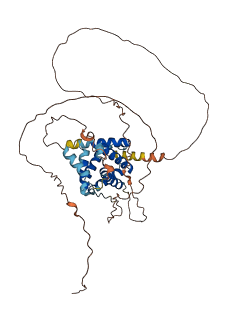
Descriptions
The autoinhibited protein was predicted that may have potential autoinhibitory elements via cis-regPred.
Autoinhibitory domains (AIDs)
Target domain |
|
Relief mechanism |
|
Assay |
cis-regPred |
Accessory elements
No accessory elements
Autoinhibited structure

Activated structure
1 structures for P53857
| Entry ID | Method | Resolution | Chain | Position | Source |
|---|---|---|---|---|---|
| AF-P53857-F1 | Predicted | AlphaFoldDB |
9 variants for P53857
| Variant ID(s) | Position | Change | Description | Diseaes Association | Provenance |
|---|---|---|---|---|---|
| s14-210241 | 3 | G>E | No | SGRP | |
| s14-210421 | 63 | S>N | No | SGRP | |
| s14-210439 | 69 | N>I | No | SGRP | |
| s14-210475 | 81 | R>H | No | SGRP | |
| s14-210618 | 129 | K>E | No | SGRP | |
| s14-210808 | 192 | Y>C | No | SGRP | |
| s14-210838 | 202 | L>S | No | SGRP | |
| s14-210951 | 240 | L>I | No | SGRP | |
| s14-211024 | 264 | T>N | No | SGRP |
No associated diseases with P53857
2 GO annotations of cellular component
| Name | Definition |
|---|---|
| cytoplasm | The contents of a cell excluding the plasma membrane and nucleus, but including other subcellular structures. |
| fungal-type vacuole membrane | The lipid bilayer surrounding a vacuole, the shape of which correlates with cell cycle phase. The membrane separates its contents from the cytoplasm of the cell. An example of this structure is found in Saccharomyces cerevisiae. |
4 GO annotations of molecular function
| Name | Definition |
|---|---|
| FAD binding | Binding to the oxidized form, FAD, of flavin-adenine dinucleotide, the coenzyme or the prosthetic group of various flavoprotein oxidoreductase enzymes. |
| heme binding | Binding to a heme, a compound composed of iron complexed in a porphyrin (tetrapyrrole) ring. |
| nitric oxide dioxygenase activity | Catalysis of the reaction: 2 NO + 2 O2 + NADPH + H+ = 2 nitrate + NADP+. |
| oxygen binding | Binding to oxygen (O2). |
2 GO annotations of biological process
| Name | Definition |
|---|---|
| cellular response to nitrosative stress | Any process that results in a change in state or activity of a cell (in terms of movement, secretion, enzyme production, gene expression, etc.) as a result of a nitrosative stress stimulus. Nitrosative stress is a state often resulting from exposure to high levels of nitric oxide (NO) or the highly reactive oxidant peroxynitrite, which is produced following interaction of NO with superoxide anions. |
| nitric oxide catabolic process | The chemical reactions and pathways resulting in the breakdown of nitric oxide, nitrogen monoxide (NO), a colorless gas only slightly soluble in water. |
No homologous proteins in AiPD
| UniProt AC | Gene Name | Protein Name | Species | Evidence Code |
|---|---|---|---|---|
| No homologous proteins | ||||
| 10 | 20 | 30 | 40 | 50 | 60 |
| MTGEKILHSQ | LLTNSDMSSG | NVHHTKPMMY | NVTLPSYNSS | SIGPVDNLKI | NERPGSHDHS |
| 70 | 80 | 90 | 100 | 110 | 120 |
| MRSEMSSKNS | GSDFMPQSIS | RSEGSVYQVK | IDRGDSPNTE | GFDFKVNARD | LLLLRMSWDI |
| 130 | 140 | 150 | 160 | 170 | 180 |
| LLREYLTPKE | LKVFQALLYS | NKHITSTERP | YLNTAPDGMI | SKTIDPTARP | RKTKQRDNDN |
| 190 | 200 | 210 | 220 | 230 | 240 |
| KVDTALFCSQ | FYDNLIAMDP | LLEEYFPSLK | HQAVSFCKVL | DSAIDNLENV | HVLDDYIVKL |
| 250 | 260 | 270 | 280 | 290 | 300 |
| GKRHSRILGI | KTVGFEVMGK | AFMTTLQDRF | GSFLTLELKN | LWGQLYSYLA | NCMITAGKDP |
| 310 | 320 | 330 | 340 | 350 | 360 |
| MEKIQPDFSY | NGDSVVLNFS | IPKLAMHDIS | TVNKLQMVKT | KNATIPHNIT | QVPTNKIPTE |
| 370 | 380 | 390 | 400 | 410 | 420 |
| ILLDNSSTPI | KSDRESTPPI | SPKGSGSTKP | SIGSSTVVES | NTKKNNYDEK | IHLLQKTAQQ |
| KNCSIM |