P36091
Gene name |
DCW1 (YKL046C, YKL259) |
Protein name |
Mannan endo-1,6-alpha-mannosidase DCW1 |
Names |
Defective cell wall 1, Endo-alpha-1->6-D-mannanase DCW1 |
Species |
Saccharomyces cerevisiae (strain ATCC 204508 / S288c) (Baker's yeast) |
KEGG Pathway |
sce:YKL046C |
EC number |
3.2.1.101: Glycosidases, ie enzymes hydrolyzing O- and S-glycosyl compounds |
Protein Class |
|
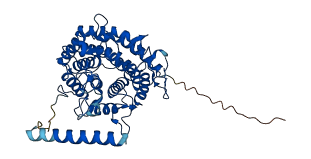
Descriptions
The autoinhibited protein was predicted that may have potential autoinhibitory elements via cis-regPred.
Autoinhibitory domains (AIDs)
Target domain |
|
Relief mechanism |
|
Assay |
cis-regPred |
Accessory elements
No accessory elements
Autoinhibited structure

Activated structure
1 structures for P36091
| Entry ID | Method | Resolution | Chain | Position | Source |
|---|---|---|---|---|---|
| AF-P36091-F1 | Predicted | AlphaFoldDB |
2 variants for P36091
| Variant ID(s) | Position | Change | Description | Diseaes Association | Provenance |
|---|---|---|---|---|---|
| s11-352186 | 28 | N>S | No | SGRP | |
| s11-350992 | 426 | K>R | No | SGRP |
No associated diseases with P36091
No regional properties for P36091
| Type | Name | Position | InterPro Accession |
|---|---|---|---|
| No domain, repeats, and functional sites for P36091 | |||
Functions
| Description | ||
|---|---|---|
| EC Number | 3.2.1.101 | Glycosidases, ie enzymes hydrolyzing O- and S-glycosyl compounds |
| Subcellular Localization |
|
|
| PANTHER Family | ||
| PANTHER Subfamily | ||
| PANTHER Protein Class | ||
| PANTHER Pathway Category | No pathway information available | |
3 GO annotations of cellular component
| Name | Definition |
|---|---|
| anchored component of plasma membrane | The component of the plasma membrane consisting of the gene products that are tethered to the membrane only by a covalently attached anchor, such as a lipid group, that is embedded in the membrane. Gene products with peptide sequences that are embedded in the membrane are excluded from this grouping. |
| cellular bud | A protuberance from a cell of an organism that reproduces by budding, which will grow larger and become a separate daughter cell after nuclear division, cytokinesis, and cell wall formation (when appropriate). The daughter cell may completely separate from the mother cell, or the mother and daughter cells may remain associated. |
| endoplasmic reticulum | The irregular network of unit membranes, visible only by electron microscopy, that occurs in the cytoplasm of many eukaryotic cells. The membranes form a complex meshwork of tubular channels, which are often expanded into slitlike cavities called cisternae. The ER takes two forms, rough (or granular), with ribosomes adhering to the outer surface, and smooth (with no ribosomes attached). |
1 GO annotations of molecular function
| Name | Definition |
|---|---|
| mannan endo-1,6-alpha-mannosidase activity | Catalysis of the random hydrolysis of (1->6)-alpha-D-mannosidic linkages in unbranched (1->6)-mannans. |
4 GO annotations of biological process
| Name | Definition |
|---|---|
| budding cell bud growth | The process in which the bud portion of a cell that reproduces by budding irreversibly increases in size over time by accretion and biosynthetic production of matter similar to that already present. |
| carbohydrate catabolic process | The chemical reactions and pathways resulting in the breakdown of carbohydrates, any of a group of organic compounds based of the general formula Cx(H2O)y. |
| cell wall organization | A process that results in the assembly, arrangement of constituent parts, or disassembly of the cell wall, the rigid or semi-rigid envelope lying outside the cell membrane of plant, fungal and most prokaryotic cells, maintaining their shape and protecting them from osmotic lysis. |
| fungal-type cell wall biogenesis | A cellular process that results in the biosynthesis of constituent macromolecules, assembly, and arrangement of constituent parts of a fungal-type cell wall. The fungal-type cell wall contains beta-glucan and may contain chitin. |
No homologous proteins in AiPD
| UniProt AC | Gene Name | Protein Name | Species | Evidence Code |
|---|---|---|---|---|
| No homologous proteins | ||||
| 10 | 20 | 30 | 40 | 50 | 60 |
| MLVNKVIGLL | GVLFATRFTN | AVELDLDNYE | SLQNATSLIA | YGLMDYYTGN | QYGKTVGMFS |
| 70 | 80 | 90 | 100 | 110 | 120 |
| DPYYWWEAGG | AWGCMLDYWF | FMDNDTYNDE | IIAAMIHQAG | DDNDYIPLNQ | STTEGNDDQA |
| 130 | 140 | 150 | 160 | 170 | 180 |
| FWGIAAMTAA | ERNFTNPPEN | EPQWLYLAQA | VFNTMALRWD | ADSCGGGLRW | QIFVWNSGYD |
| 190 | 200 | 210 | 220 | 230 | 240 |
| YKNTVSNGAL | FHIAARLARY | TGNQTYVDWA | EKVYEWMVGV | NLISNGTYKY | VYDGVSIDDN |
| 250 | 260 | 270 | 280 | 290 | 300 |
| CTKVTSYQWT | YNQGLLLAGS | AYLYNFTGSD | LWHTRTKEFL | NASQVFFHDG | IVYEAACQGP |
| 310 | 320 | 330 | 340 | 350 | 360 |
| NSCNTDQRSF | KAYFARFLGV | TAQLVPETRN | QIMSWLNTSA | IAAAKSCSGG | TDGHTCGLNW |
| 370 | 380 | 390 | 400 | 410 | 420 |
| FNGTWDGMYG | LGEQMSALEV | MVNTRALDKP | APYTAENGGS | SVGDGAAGTQ | AQPTNLAPLN |
| 430 | 440 | ||||
| ITKGSKAGAG | IITAVIGISI | VACALWLVF |