P27560
Gene name |
SAP3 |
Protein name |
Ribosome-inactivating protein saporin-3 |
Names |
SAP-3, SO-3, rRNA N-glycosidase |
Species |
Saponaria officinalis (Common soapwort) (Lychnis saponaria) |
KEGG Pathway |
|
EC number |
3.2.2.22: Hydrolyzing N-glycosyl compounds |
Protein Class |
|
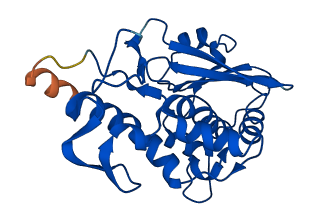
Descriptions
The autoinhibited protein was predicted that may have potential autoinhibitory elements via cis-regPred.
Autoinhibitory domains (AIDs)
Target domain |
|
Relief mechanism |
|
Assay |
cis-regPred |
Accessory elements
No accessory elements
Autoinhibited structure

Activated structure
1 structures for P27560
| Entry ID | Method | Resolution | Chain | Position | Source |
|---|---|---|---|---|---|
| AF-P27560-F1 | Predicted | AlphaFoldDB |
No variants for P27560
| Variant ID(s) | Position | Change | Description | Diseaes Association | Provenance |
|---|---|---|---|---|---|
| No variants for P27560 | |||||
No associated diseases with P27560
1 regional properties for P27560
| Type | Name | Position | InterPro Accession |
|---|---|---|---|
| conserved_site | Ribosome-inactivating protein conserved site | 143 - 159 | IPR017988 |
Functions
| Description | ||
|---|---|---|
| EC Number | 3.2.2.22 | Hydrolyzing N-glycosyl compounds |
| Subcellular Localization |
|
|
| PANTHER Family | ||
| PANTHER Subfamily | ||
| PANTHER Protein Class | ||
| PANTHER Pathway Category | No pathway information available | |
No GO annotations of cellular component
| Name | Definition |
|---|---|
| No GO annotations for cellular component |
2 GO annotations of molecular function
| Name | Definition |
|---|---|
| rRNA N-glycosylase activity | Catalysis of the hydrolysis of the N-glycosylic bond at A-4324 in 28S rRNA from rat ribosomes or corresponding sites in 28S RNA from other species. |
| toxin activity | Interacting selectively with one or more biological molecules in another (target) organism, initiating pathogenesis (leading to an abnormal, generally detrimental state) in the target organism. The activity should refer to an evolved function of the active gene product, i.e. one that was selected for. Examples include the activity of botulinum toxin, and snake venom. |
2 GO annotations of biological process
| Name | Definition |
|---|---|
| defense response | Reactions, triggered in response to the presence of a foreign body or the occurrence of an injury, which result in restriction of damage to the organism attacked or prevention/recovery from the infection caused by the attack. |
| negative regulation of translation | Any process that stops, prevents, or reduces the frequency, rate or extent of the chemical reactions and pathways resulting in the formation of proteins by the translation of mRNA or circRNA. |
No homologous proteins in AiPD
| UniProt AC | Gene Name | Protein Name | Species | Evidence Code |
|---|---|---|---|---|
| No homologous proteins | ||||
| 10 | 20 | 30 | 40 | 50 | 60 |
| DPNLKYGGTD | IAVIGPPSRD | KFLRLNFQSS | RGTVSLGLKR | ENLYVVAYLA | MDNANVNRAY |
| 70 | 80 | 90 | 100 | 110 | 120 |
| YFGTEITSAE | LTTLLPEATV | ANQKALEYTE | DYQSIEKNAK | ITEGDKTRKE | LGLGINLLST |
| 130 | 140 | 150 | 160 | 170 | 180 |
| LMDAVNKKAR | VVKNEARFLL | IAIQMTAEAA | RFRYIQNLVT | KNFPNKFNSE | DKVIQFQVNW |
| 190 | 200 | 210 | 220 | 230 | |
| SKISKAIYGD | AKNGVFNKDY | DFGFGKVRQV | KDLQMGLLMY | LGTTPNNAAD | RYRAEL |