P18410
Gene name |
SPO7 (YAL009W) |
Protein name |
Sporulation-specific protein SPO7 |
Names |
|
Species |
Saccharomyces cerevisiae (strain ATCC 204508 / S288c) (Baker's yeast) |
KEGG Pathway |
sce:YAL009W |
EC number |
|
Protein Class |
|
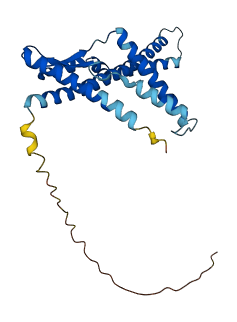
Descriptions
The autoinhibited protein was predicted that may have potential autoinhibitory elements via cis-regPred.
Autoinhibitory domains (AIDs)
Target domain |
|
Relief mechanism |
|
Assay |
cis-regPred |
Accessory elements
No accessory elements
Autoinhibited structure

Activated structure
1 structures for P18410
| Entry ID | Method | Resolution | Chain | Position | Source |
|---|---|---|---|---|---|
| AF-P18410-F1 | Predicted | AlphaFoldDB |
3 variants for P18410
| Variant ID(s) | Position | Change | Description | Diseaes Association | Provenance |
|---|---|---|---|---|---|
| s01-136043 | 63 | R>H | No | SGRP | |
| s01-136049 | 65 | A>V | No | SGRP | |
| s01-136162 | 103 | L>F | No | SGRP |
No associated diseases with P18410
No regional properties for P18410
| Type | Name | Position | InterPro Accession |
|---|---|---|---|
| No domain, repeats, and functional sites for P18410 | |||
5 GO annotations of cellular component
| Name | Definition |
|---|---|
| endoplasmic reticulum | The irregular network of unit membranes, visible only by electron microscopy, that occurs in the cytoplasm of many eukaryotic cells. The membranes form a complex meshwork of tubular channels, which are often expanded into slitlike cavities called cisternae. The ER takes two forms, rough (or granular), with ribosomes adhering to the outer surface, and smooth (with no ribosomes attached). |
| endoplasmic reticulum membrane | The lipid bilayer surrounding the endoplasmic reticulum. |
| integral component of membrane | The component of a membrane consisting of the gene products and protein complexes having at least some part of their peptide sequence embedded in the hydrophobic region of the membrane. |
| Nem1-Spo7 phosphatase complex | A protein serine/threonine phosphatase complex that is involved in nuclear envelope organization, and contains proteins known in budding yeast as Nem1p and Spo7p. |
| nuclear membrane | Either of the lipid bilayers that surround the nucleus and form the nuclear envelope; excludes the intermembrane space. |
1 GO annotations of molecular function
| Name | Definition |
|---|---|
| protein phosphatase regulator activity | Binds to and modulates the activity of a protein phosphatase, an enzyme which catalyzes of the removal of a phosphate group from a protein substrate molecule. |
7 GO annotations of biological process
| Name | Definition |
|---|---|
| lipid metabolic process | The chemical reactions and pathways involving lipids, compounds soluble in an organic solvent but not, or sparingly, in an aqueous solvent. Includes fatty acids; neutral fats, other fatty-acid esters, and soaps; long-chain (fatty) alcohols and waxes; sphingoids and other long-chain bases; glycolipids, phospholipids and sphingolipids; and carotenes, polyprenols, sterols, terpenes and other isoprenoids. |
| negative regulation of phospholipid biosynthetic process | Any process that stops, prevents, or reduces the frequency, rate or extent of the chemical reactions and pathways resulting in the formation of phospholipids. |
| nuclear envelope organization | A process that is carried out at the cellular level which results in the assembly, arrangement of constituent parts, or disassembly of the nuclear envelope. |
| positive regulation of phosphatidate phosphatase activity | Any process that activates or increases the frequency, rate or extent of phosphatidate phosphatase activity. |
| regulation of phospholipid biosynthetic process | Any process that modulates the frequency, rate or extent of the chemical reactions and pathways resulting in the formation of phospholipids. |
| reticulophagy | The selective autohagy process in which parts of the endoplasmic reticulum are loaded into autophagosomes, delivered to the vacuole, and degraded in response to changing cellular conditions. |
| sporulation resulting in formation of a cellular spore | The process in which a relatively unspecialized cell acquires the specialized features of a cellular spore, a cell form that can be used for dissemination, for survival of adverse conditions because of its heat and dessication resistance, and/or for reproduction. |
No homologous proteins in AiPD
| UniProt AC | Gene Name | Protein Name | Species | Evidence Code |
|---|---|---|---|---|
| No homologous proteins | ||||
| 10 | 20 | 30 | 40 | 50 | 60 |
| MEPESIGDVG | NHAQDDSASI | VSGPRRRSTS | KTSSAKNIRN | SSNISPASMI | FRNLLILEDD |
| 70 | 80 | 90 | 100 | 110 | 120 |
| LRRQAHEQKI | LKWQFTLFLA | SMAGVGAFTF | YELYFTSDYV | KGLHRVILQF | TLSFISITVV |
| 130 | 140 | 150 | 160 | 170 | 180 |
| LFHISGQYRR | TIVIPRRFFT | STNKGIRQFN | VKLVKVQSTW | DEKYTDSVRF | VSRTIAYCNI |
| 190 | 200 | 210 | 220 | 230 | 240 |
| YCLKKFLWLK | DDNAIVKFWK | SVTIQSQPRI | GAVDVKLVLN | PRAFSAEIRE | GWEIYRDEFW |
| 250 | |||||
| AREGARRRKQ | AHELRPKSE |