O08811
Gene name |
Ercc2 (Xpd) |
Protein name |
General transcription and DNA repair factor IIH helicase subunit XPD |
Names |
TFIIH subunit XPD, CXPD, DNA excision repair protein ERCC-2, DNA repair protein complementing XP-D cells, Xeroderma pigmentosum group D-complementing protein |
Species |
Mus musculus (Mouse) |
KEGG Pathway |
mmu:13871 |
EC number |
3.6.4.12: Acting on ATP; involved in cellular and subcellular movement |
Protein Class |
|
Descriptions
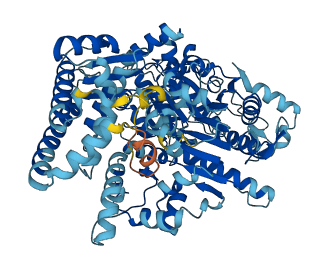
The autoinhibited protein was predicted that may have potential autoinhibitory elements via cis-regPred.
Autoinhibitory domains (AIDs)
Target domain |
|
Relief mechanism |
|
Assay |
cis-regPred |
Accessory elements
No accessory elements
Autoinhibited structure

Activated structure
1 structures for O08811
| Entry ID | Method | Resolution | Chain | Position | Source |
|---|---|---|---|---|---|
| AF-O08811-F1 | Predicted | AlphaFoldDB |
27 variants for O08811
| Variant ID(s) | Position | Change | Description | Diseaes Association | Provenance |
|---|---|---|---|---|---|
| rs3388886536 | 40 | L>M | No | EVA | |
| rs3388885061 | 44 | S>* | No | EVA | |
| rs3388873681 | 54 | A>P | No | EVA | |
| rs259552413 | 61 | R>Q | No | EVA | |
| rs3388886538 | 62 | A>D | No | EVA | |
| rs3388846262 | 91 | L>F | No | EVA | |
| rs3388881796 | 112 | R>K | No | EVA | |
| rs251237704 | 117 | I>V | No | EVA | |
| rs3388885530 | 120 | E>D | No | EVA | |
| rs257375503 | 150 | A>S | No | EVA | |
| rs246428743 | 182 | A>V | No | EVA | |
| rs3388873684 | 247 | M>T | No | EVA | |
| rs3388846243 | 272 | R>W | No | EVA | |
| rs3388865104 | 297 | V>M | No | EVA | |
| rs3388886906 | 365 | V>L | No | EVA | |
| rs3388885575 | 405 | T>N | No | EVA | |
| rs3396888089 | 421 | F>L | No | EVA | |
| rs3388873618 | 441 | S>Y | No | EVA | |
| rs3388886543 | 464 | L>P | No | EVA | |
| rs3388885545 | 495 | I>F | No | EVA | |
| rs3388858717 | 578 | S>I | No | EVA | |
| rs52046644 | 595 | I>V | No | EVA | |
| rs3388885533 | 598 | S>GLLTKVNPF* | No | EVA | |
| rs3388885076 | 629 | Q>H | No | EVA | |
| rs3388846317 | 636 | R>G | No | EVA | |
| rs3388878453 | 676 | L>F | No | EVA | |
| rs3388886498 | 688 | D>E | No | EVA |
No associated diseases with O08811
6 regional properties for O08811
| Type | Name | Position | InterPro Accession |
|---|---|---|---|
| conserved_site | DNA/RNA helicase, ATP-dependent, DEAH-box type, conserved site | 229 - 238 | IPR002464 |
| domain | Helicase-like, DEXD box c2 type | 8 - 280 | IPR006554 |
| domain | ATP-dependent helicase, C-terminal | 524 - 699 | IPR006555 |
| domain | RAD3-like helicase, DEAD | 72 - 256 | IPR010614 |
| domain | Helical and beta-bridge domain | 272 - 413 | IPR010643 |
| domain | Helicase superfamily 1/2, ATP-binding domain, DinG/Rad3-type | 7 - 283 | IPR014013 |
Functions
| Description | ||
|---|---|---|
| EC Number | 3.6.4.12 | Acting on ATP; involved in cellular and subcellular movement |
| Subcellular Localization |
|
|
| PANTHER Family | ||
| PANTHER Subfamily | ||
| PANTHER Protein Class | ||
| PANTHER Pathway Category | No pathway information available | |
10 GO annotations of cellular component
| Name | Definition |
|---|---|
| CAK-ERCC2 complex | A protein complex formed by the association of the cyclin-dependent protein kinase activating kinase (CAK) holoenzyme complex with ERCC2. |
| cytoplasm | The contents of a cell excluding the plasma membrane and nucleus, but including other subcellular structures. |
| cytosol | The part of the cytoplasm that does not contain organelles but which does contain other particulate matter, such as protein complexes. |
| MMXD complex | A protein complex that contains the proteins MMS19, MIP18 and XPD, localizes to mitotic spindle during mitosis, and is required for proper chromosome segregation. |
| nucleoplasm | That part of the nuclear content other than the chromosomes or the nucleolus. |
| nucleus | A membrane-bounded organelle of eukaryotic cells in which chromosomes are housed and replicated. In most cells, the nucleus contains all of the cell's chromosomes except the organellar chromosomes, and is the site of RNA synthesis and processing. In some species, or in specialized cell types, RNA metabolism or DNA replication may be absent. |
| spindle | The array of microtubules and associated molecules that forms between opposite poles of a eukaryotic cell during mitosis or meiosis and serves to move the duplicated chromosomes apart. |
| transcription factor TFIID complex | A complex composed of TATA binding protein (TBP) and TBP associated factors (TAFs); the total mass is typically about 800 kDa. Most of the TAFs are conserved across species. In TATA-containing promoters for RNA polymerase II (Pol II), TFIID is believed to recognize at least two distinct elements, the TATA element and a downstream promoter element. TFIID is also involved in recognition of TATA-less Pol II promoters. Binding of TFIID to DNA is necessary but not sufficient for transcription initiation from most RNA polymerase II promoters. |
| transcription factor TFIIH core complex | The 7 subunit core of TFIIH that is a part of either the general transcription factor holo-TFIIH or the nucleotide-excision repair factor 3 complex. In S. cerevisiae/humans the complex is composed of: Ssl2/XPB, Tfb1/p62, Tfb2/p52, Ssl1/p44, Tfb4/p34, Tfb5/p8 and Rad3/XPD. |
| transcription factor TFIIH holo complex | A complex that is capable of kinase activity directed towards the C-terminal Domain (CTD) of the largest subunit of RNA polymerase II and is essential for initiation at RNA polymerase II promoters in vitro. It is composed of the core TFIIH complex and the TFIIK complex. |
10 GO annotations of molecular function
| Name | Definition |
|---|---|
| 4 iron, 4 sulfur cluster binding | Binding to a 4 iron, 4 sulfur (4Fe-4S) cluster; this cluster consists of four iron atoms, with the inorganic sulfur atoms found between the irons and acting as bridging ligands. |
| 5'-3' DNA helicase activity | Unwinding a DNA helix in the 5' to 3' direction, driven by ATP hydrolysis. |
| ATP binding | Binding to ATP, adenosine 5'-triphosphate, a universally important coenzyme and enzyme regulator. |
| ATP hydrolysis activity | Catalysis of the reaction: ATP + H2O = ADP + H+ phosphate. ATP hydrolysis is used in some reactions as an energy source, for example to catalyze a reaction or drive transport against a concentration gradient. |
| damaged DNA binding | Binding to damaged DNA. |
| DNA helicase activity | Unwinding of a DNA helix, driven by ATP hydrolysis. |
| metal ion binding | Binding to a metal ion. |
| protein C-terminus binding | Binding to a protein C-terminus, the end of a peptide chain at which the 1-carboxyl function of a constituent amino acid is not attached in peptide linkage to another amino-acid residue. |
| protein N-terminus binding | Binding to a protein N-terminus, the end of any peptide chain at which the 2-amino (or 2-imino) function of a constituent amino acid is not attached in peptide linkage to another amino-acid residue. |
| protein-macromolecule adaptor activity | The binding activity of a protein that brings together two or more macromolecules in contact, permitting those molecules to function in a coordinated way. The adaptor can bring together two proteins, or a protein and another macromolecule such as a lipid or a nucleic acid. |
33 GO annotations of biological process
| Name | Definition |
|---|---|
| aging | A developmental process that is a deterioration and loss of function over time. Aging includes loss of functions such as resistance to disease, homeostasis, and fertility, as well as wear and tear. Aging includes cellular senescence, but is more inclusive. May precede death and may succeed developmental maturation (GO:0021700). |
| apoptotic process | A programmed cell death process which begins when a cell receives an internal (e.g. DNA damage) or external signal (e.g. an extracellular death ligand), and proceeds through a series of biochemical events (signaling pathway phase) which trigger an execution phase. The execution phase is the last step of an apoptotic process, and is typically characterized by rounding-up of the cell, retraction of pseudopodes, reduction of cellular volume (pyknosis), chromatin condensation, nuclear fragmentation (karyorrhexis), plasma membrane blebbing and fragmentation of the cell into apoptotic bodies. When the execution phase is completed, the cell has died. |
| bone mineralization | The deposition of hydroxyapatite, a form of calcium phosphate with the formula Ca10(PO4)6(OH)2, in bone tissue. |
| central nervous system myelin formation | The process in which the wraps of cell membrane that constitute myelin are laid down around an axon by an oligodendrocyte in the central nervous system. |
| chromosome segregation | The process in which genetic material, in the form of chromosomes, is organized into specific structures and then physically separated and apportioned to two or more sets. In eukaryotes, chromosome segregation begins with the condensation of chromosomes, includes chromosome separation, and ends when chromosomes have completed movement to the spindle poles. |
| DNA repair | The process of restoring DNA after damage. Genomes are subject to damage by chemical and physical agents in the environment (e.g. UV and ionizing radiations, chemical mutagens, fungal and bacterial toxins, etc.) and by free radicals or alkylating agents endogenously generated in metabolism. DNA is also damaged because of errors during its replication. A variety of different DNA repair pathways have been reported that include direct reversal, base excision repair, nucleotide excision repair, photoreactivation, bypass, double-strand break repair pathway, and mismatch repair pathway. |
| embryonic cleavage | The first few specialized divisions of an activated animal egg. |
| erythrocyte maturation | A developmental process, independent of morphogenetic (shape) change, that is required for an erythrocyte to attain its fully functional state. |
| extracellular matrix organization | A process that is carried out at the cellular level which results in the assembly, arrangement of constituent parts, or disassembly of an extracellular matrix. |
| hair cell differentiation | The process in which a relatively unspecialized cell acquires specialized features of a hair cell. |
| hair cycle process | A multicellular organismal process involved in the cyclical phases of growth (anagen), regression (catagen), quiescence (telogen), and shedding (exogen) in the life of a hair; one of the collection or mass of filaments growing from the skin of an animal, and forming a covering for a part of the head or for any part or the whole of the body. |
| hair follicle maturation | A developmental process, independent of morphogenetic (shape) change, that is required for a hair follicle to attain its fully functional state. |
| hematopoietic stem cell differentiation | The process in which a relatively unspecialized cell acquires specialized features of a hematopoietic stem cell. A stem cell is a cell that retains the ability to divide and proliferate throughout life to provide progenitor cells that can differentiate into specialized cells. |
| hematopoietic stem cell proliferation | The expansion of a hematopoietic stem cell population by cell division. A hematopoietic stem cell is a stem cell from which all cells of the lymphoid and myeloid lineages develop. |
| in utero embryonic development | The process whose specific outcome is the progression of the embryo in the uterus over time, from formation of the zygote in the oviduct, to birth. An example of this process is found in Mus musculus. |
| maturation of SSU-rRNA from tricistronic rRNA transcript (SSU-rRNA, 5.8S rRNA, LSU-rRNA) | Any process involved in the maturation of a precursor Small SubUnit (SSU) ribosomal RNA (rRNA) molecule into a mature SSU-rRNA molecule from the pre-rRNA molecule originally produced as a tricistronic rRNA transcript that contains the Small Subunit (SSU) rRNA, 5.8S rRNA, and the Large Subunit (LSU) in that order from 5' to 3' along the primary transcript. |
| multicellular organism growth | The increase in size or mass of an entire multicellular organism, as opposed to cell growth. |
| nucleotide-excision repair | A DNA repair process in which a small region of the strand surrounding the damage is removed from the DNA helix as an oligonucleotide. The small gap left in the DNA helix is filled in by the sequential action of DNA polymerase and DNA ligase. Nucleotide excision repair recognizes a wide range of substrates, including damage caused by UV irradiation (pyrimidine dimers and 6-4 photoproducts) and chemicals (intrastrand cross-links and bulky adducts). |
| nucleotide-excision repair, DNA duplex unwinding | The unwinding, or local denaturation, of the DNA duplex to create a bubble around the site of the DNA damage. |
| nucleotide-excision repair, DNA incision | A process that results in the endonucleolytic cleavage of the damaged strand of DNA. The incision occurs at the junction of single-stranded DNA and double-stranded DNA that is formed when the DNA duplex is unwound. |
| positive regulation of DNA binding | Any process that increases the frequency, rate or extent of DNA binding. DNA binding is any process in which a gene product interacts selectively with DNA (deoxyribonucleic acid). |
| positive regulation of mitotic recombination | Any process that activates or increases the frequency, rate or extent of DNA recombination during mitosis. |
| post-embryonic development | The process whose specific outcome is the progression of the organism over time, from the completion of embryonic development to the mature structure. See embryonic development. |
| regulation of mitotic cell cycle phase transition | Any process that modulates the frequency, rate or extent of mitotic cell cycle phase transition. |
| response to oxidative stress | Any process that results in a change in state or activity of a cell or an organism (in terms of movement, secretion, enzyme production, gene expression, etc.) as a result of oxidative stress, a state often resulting from exposure to high levels of reactive oxygen species, e.g. superoxide anions, hydrogen peroxide (H2O2), and hydroxyl radicals. |
| response to UV | Any process that results in a change in state or activity of a cell or an organism (in terms of movement, secretion, enzyme production, gene expression, etc.) as a result of an ultraviolet radiation (UV light) stimulus. Ultraviolet radiation is electromagnetic radiation with a wavelength in the range of 10 to 380 nanometers. |
| ribosomal small subunit biogenesis | A cellular process that results in the biosynthesis of constituent macromolecules, assembly, and arrangement of constituent parts of a small ribosomal subunit; includes transport to the sites of protein synthesis. |
| skin development | The process whose specific outcome is the progression of the skin over time, from its formation to the mature structure. The skin is the external membranous integument of an animal. In vertebrates the skin generally consists of two layers, an outer nonsensitive and nonvascular epidermis (cuticle or skarfskin) composed of cells which are constantly growing and multiplying in the deeper, and being thrown off in the superficial layers, as well as an inner vascular dermis (cutis, corium or true skin) composed mostly of connective tissue. |
| spinal cord development | The process whose specific outcome is the progression of the spinal cord over time, from its formation to the mature structure. The spinal cord primarily conducts sensory and motor nerve impulses between the brain and the peripheral nervous tissues. |
| transcription by RNA polymerase II | The synthesis of RNA from a DNA template by RNA polymerase II (RNAP II), originating at an RNA polymerase II promoter. Includes transcription of messenger RNA (mRNA) and certain small nuclear RNAs (snRNAs). |
| transcription elongation by RNA polymerase I | The extension of an RNA molecule after transcription initiation and promoter clearance at an RNA polymerase I specific promoter by the addition of ribonucleotides catalyzed by RNA polymerase I. |
| transcription-coupled nucleotide-excision repair | The nucleotide-excision repair process that carries out preferential repair of DNA lesions on the actively transcribed strand of the DNA duplex. In addition, the transcription-coupled nucleotide-excision repair pathway is required for the recognition and repair of a small subset of lesions that are not recognized by the global genome nucleotide excision repair pathway. |
| UV protection | Any process in which an organism or cell protects itself from ultraviolet radiation (UV), which may also result in resistance to repeated exposure to UV. |
3 homologous proteins in AiPD
| UniProt AC | Gene Name | Protein Name | Species | Evidence Code |
|---|---|---|---|---|
| P06839 | RAD3 | General transcription and DNA repair factor IIH helicase subunit XPD | Saccharomyces cerevisiae (strain ATCC 204508 / S288c) (Baker's yeast) | PR |
| A6QLJ0 | ERCC2 | General transcription and DNA repair factor IIH helicase subunit XPD | Bos taurus (Bovine) | PR |
| P18074 | ERCC2 | General transcription and DNA repair factor IIH helicase subunit XPD | Homo sapiens (Human) | PR |
| 10 | 20 | 30 | 40 | 50 | 60 |
| MKLNVDGLLV | YFPYDYIYPE | QFSYMLELKR | TLDAKGHGVL | EMPSGTGKTV | SLLALIVAYQ |
| 70 | 80 | 90 | 100 | 110 | 120 |
| RAYPLEVTKL | IYCSRTVPEI | EKVIEELRKL | LSFYEQQEGE | KLPFLGLALS | SRKNLCIHPE |
| 130 | 140 | 150 | 160 | 170 | 180 |
| VTPLRFGKDV | DGKCHSLTAS | YVRAQYQQDA | SLPHCRFYEE | FDIHGRQMPL | PAGIYNLDDL |
| 190 | 200 | 210 | 220 | 230 | 240 |
| KALGQRQGWC | PYFLARYSIL | HANVVVYSYH | YLLDPKIADL | VSKELARKAV | VVFDEAHNID |
| 250 | 260 | 270 | 280 | 290 | 300 |
| NVCIDSMSVN | LTRRTLDRCQ | SNLDTLQKTV | LRIKETDEQR | LRDEYRRLVE | GLREASVARE |
| 310 | 320 | 330 | 340 | 350 | 360 |
| TDAHLANPVL | PDEVLQEAVP | GSIRTAEHFL | GFLRRLLEYV | KWRLRVQHVV | QESPPAFLSG |
| 370 | 380 | 390 | 400 | 410 | 420 |
| LAQRVCIQRK | PLRFCAERLR | SLLHTLEIAD | LADFSPLTLL | ANFATLVSTY | AKGFTIIIEP |
| 430 | 440 | 450 | 460 | 470 | 480 |
| FDDRTPTIAN | PVLHFSCMDA | SLAIKPVFER | FQSVIITSGT | LSPLDIYPKI | LDFHPVTMAT |
| 490 | 500 | 510 | 520 | 530 | 540 |
| FTMTLARVCL | CPMIIGRGND | QVAISSKFET | REDIAVIRNY | GNLLLEMSAV | VPDGIVAFFT |
| 550 | 560 | 570 | 580 | 590 | 600 |
| SYQYMESTVA | SWYEQGILEN | IQRNKLLFIE | TQDGAETSVA | LEKYQEACEN | GRGAILLSVA |
| 610 | 620 | 630 | 640 | 650 | 660 |
| RGKVSEGIDF | VHHYGRAVIM | FGVPYVYTQS | RILKARLEYL | RDQFQIREND | FLTFDAMRHA |
| 670 | 680 | 690 | 700 | 710 | 720 |
| AQCVGRAIRG | KTDYGLMVFA | DKRFARADKR | GKLPRWIQEH | LTDSNLNLTV | DEGVQVAKYF |
| 730 | 740 | 750 | |||
| LRQMAQPFHR | EDQLGLSLLS | LEQLQSEETL | QRIEQIAQQL |