A2QFH1
Gene name |
fmn1 (An02g14530) |
Protein name |
Riboflavin kinase |
Names |
Flavin mononucleotide kinase 1 |
Species |
Aspergillus niger (strain CBS 51388 / FGSC A1513) |
KEGG Pathway |
|
EC number |
2.7.1.26: Phosphotransferases with an alcohol group as acceptor |
Protein Class |
|
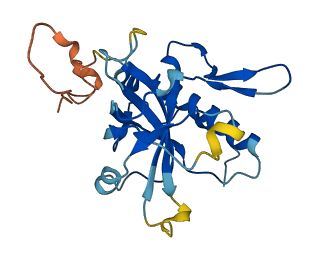
Descriptions
The autoinhibited protein was predicted that may have potential autoinhibitory elements via cis-regPred.
Autoinhibitory domains (AIDs)
Target domain |
|
Relief mechanism |
|
Assay |
cis-regPred |
Accessory elements
No accessory elements
Autoinhibited structure

Activated structure
1 structures for A2QFH1
| Entry ID | Method | Resolution | Chain | Position | Source |
|---|---|---|---|---|---|
| AF-A2QFH1-F1 | Predicted | AlphaFoldDB |
No variants for A2QFH1
| Variant ID(s) | Position | Change | Description | Diseaes Association | Provenance |
|---|---|---|---|---|---|
| No variants for A2QFH1 | |||||
No associated diseases with A2QFH1
1 regional properties for A2QFH1
| Type | Name | Position | InterPro Accession |
|---|---|---|---|
| domain | Riboflavin kinase domain, bacterial/eukaryotic | 18 - 172 | IPR015865 |
Functions
| Description | ||
|---|---|---|
| EC Number | 2.7.1.26 | Phosphotransferases with an alcohol group as acceptor |
| Subcellular Localization |
|
|
| PANTHER Family | ||
| PANTHER Subfamily | ||
| PANTHER Protein Class | ||
| PANTHER Pathway Category | No pathway information available | |
No GO annotations of cellular component
| Name | Definition |
|---|---|
| No GO annotations for cellular component |
3 GO annotations of molecular function
| Name | Definition |
|---|---|
| ATP binding | Binding to ATP, adenosine 5'-triphosphate, a universally important coenzyme and enzyme regulator. |
| metal ion binding | Binding to a metal ion. |
| riboflavin kinase activity | Catalysis of the reaction: ATP + riboflavin = ADP + FMN + 2 H(+). |
3 GO annotations of biological process
| Name | Definition |
|---|---|
| FMN biosynthetic process | The chemical reactions and pathways resulting in the formation of FMN, the oxidized form of flavin mononucleotide (riboflavin 5'-(dihydrogen phosphate)), which acts as a coenzyme for a number of oxidative enzymes including NADH dehydrogenase. |
| phosphorylation | The process of introducing a phosphate group into a molecule, usually with the formation of a phosphoric ester, a phosphoric anhydride or a phosphoric amide. |
| riboflavin biosynthetic process | The chemical reactions and pathways resulting in the formation of riboflavin (vitamin B2), the precursor for the coenzymes flavin mononucleotide (FMN) and flavin adenine dinucleotide (FAD). |
No homologous proteins in AiPD
| UniProt AC | Gene Name | Protein Name | Species | Evidence Code |
|---|---|---|---|---|
| No homologous proteins | ||||
| 10 | 20 | 30 | 40 | 50 | 60 |
| MRPDRPRDPV | TGPDEGPESP | YPIRMSGPVI | KGFGRGSKEL | GIPTANIPAD | ELSQHPELSV |
| 70 | 80 | 90 | 100 | 110 | 120 |
| GVYYGVVALD | PARFSTGETV | LPAVLSIGYN | PFYKNESKSI | EIHIMPPLSA | PSPTATTSTD |
| 130 | 140 | 150 | 160 | 170 | 180 |
| GQVTFHKLPD | FYGTPLNLLI | LGYIRPEYDY | ISSEALIEDI | RVDCEVARRS | LQRPAYRCYL |
| 190 | 200 | 210 | |||
| DARAVEDPAC | GGDDCGIVVD | AIDGGAMRGM | RFCI |